

Should You Buy a Reclaimed Oak Table or New?
Should you buy a reclaimed oak table or choose new oak furniture instead?
If you’re trying to decide between a reclaimed oak table and a new oak dining table, you’re not alone. Many people are drawn to the warmth and character of reclaimed oak, while others prefer the clean grain and uniformity of new timber. This guide compares both options in detail – helping you make an oak furniture decision that suits your style, budget and space.
In this article about reclaimed oak tables, we have covered:
- Should you buy a reclaimed oak table or choose new oak furniture instead?
- What counts as reclaimed oak and what doesn’t?
- How does reclaimed oak perform compared to new oak?
- Which oak style works better in your home?
- Is reclaimed oak actually cheaper?
- What are the risks of reclaimed oak and how do you avoid them?
- When does reclaimed oak make the most sense?
- When is new oak the smarter choice?
- Can you combine reclaimed and new oak in one design?
- Tablemaker’s expert advice on choosing oak tables
- Quick checklist to choose the right oak table
- Frequently asked questions about reclaimed and new oak tables
- Final thoughts: which oak table is right for you?
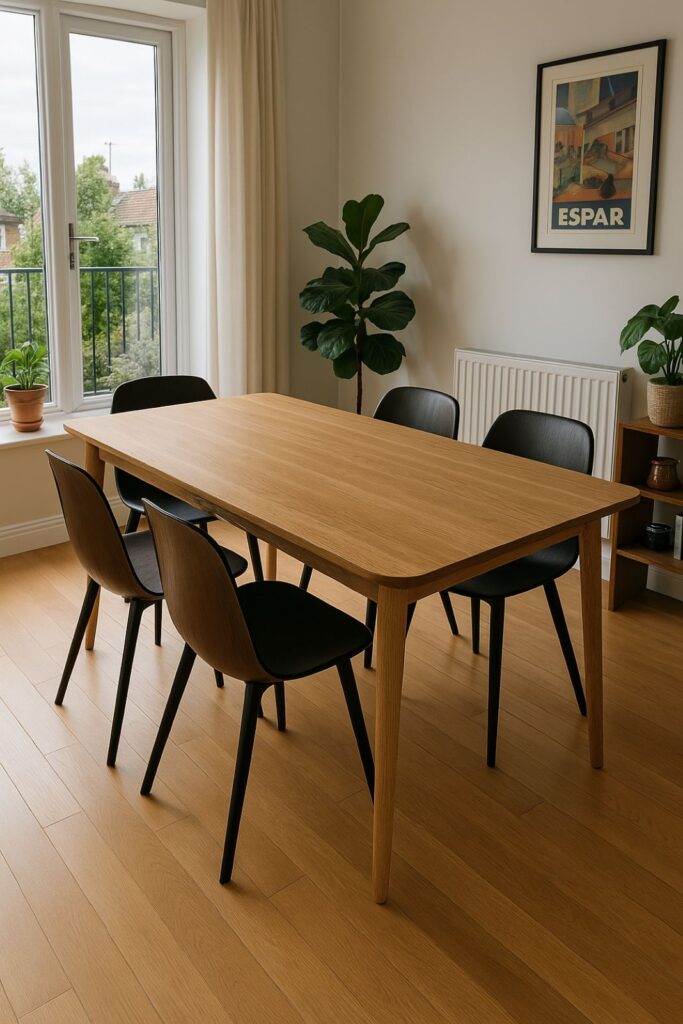
An AI photo of a oak dining table by Tablemaker.
What counts as reclaimed oak and what doesn’t?
True reclaimed oak is wood that’s been salvaged from a previous structure – not just made to look old. Common sources include:
Beams from agricultural barns
Railway sleepers
Structural timber from dismantled buildings
Be cautious with marketing phrases like “reclaimed style” or “rustic look”. These often refer to new oak that’s been distressed or stained, rather than wood that’s genuinely been used before.
How to spot authentic reclaimed oak:
Aged markings like nail holes, dark patches or saw marks
Visible variation in colour and grain
Source information from the supplier
Signs that it’s been cleaned, denailed and kiln dried
Buying from a reputable reclaimed wood supplier helps you avoid imitations and guarantees the material has been properly prepared.
Pro Tip: New oak gives you predictable results if you need matching furniture or a clean finish.
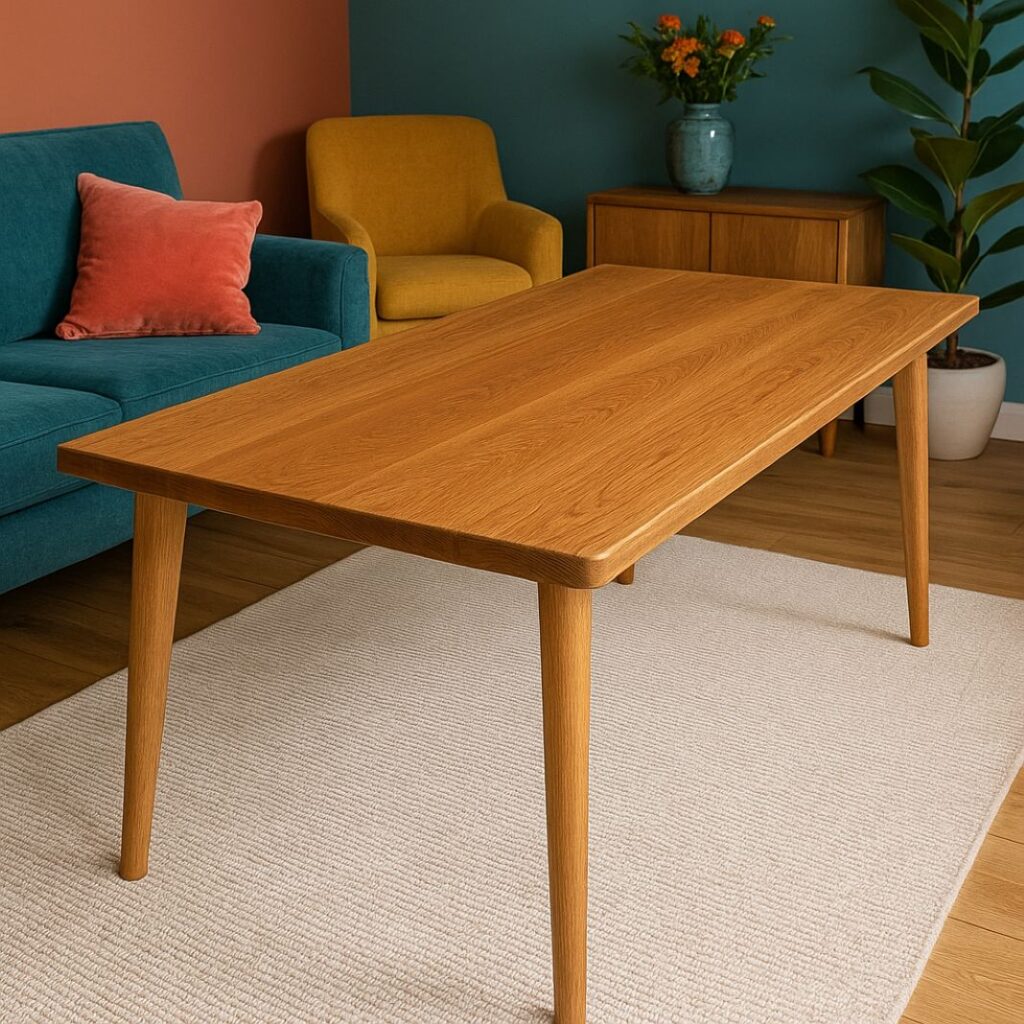
An AI photo of an oak table by Tablemaker.
Pro Tip: Reclaimed oak isn’t always cheaper — factor in the cost of prep and finishing.
How does reclaimed oak perform compared to new oak?
Strength and stability
Reclaimed oak is often very stable, having already gone through decades of natural expansion and contraction. That means it’s less likely to warp. However, it can contain hidden weaknesses if not carefully inspected. Reclaimed wood durability depends on its previous use and how well it’s been restored.
New oak, particularly when it’s kiln dried and graded to BS EN 942 standards, is dense and structurally reliable. It’s ideal for large dining tables and precise joinery. Its oak table strength is especially suited to long, wide formats.
Moisture content and movement
Reclaimed oak generally has a lower and more stable moisture content. New oak adjusts to its environment over time, which may cause minor surface changes like small cracks.
Grain consistency and surface feel
New oak has a smoother texture and more even grain – perfect if you want a modern oak dining table. Reclaimed oak has more variation and texture, which gives it visual depth and a natural aged feel.
Book a Free Table Consultation
Not sure which oak is right for your space? Speak to a Tablemaker expert today.
Speak to ExpertWhich oak style works better in your home?
Where reclaimed oak shines:
Farmhouse kitchens or rustic interiors
Heritage homes with period features
Loft flats and industrial-style spaces
Reclaimed oak furniture adds character and blends with architectural history.
When new oak is a better fit:
Contemporary or minimal interiors
Scandinavian or Japandi styles
Homes needing matching furniture sets
Its clean grain and light tone work well in modern spaces with simple lines.
Whether you’re making a practical choice or a design led decision, think about how your space is used day to day. Some styles thrive on uniformity. Others benefit from texture and irregularity.
Is reclaimed oak actually cheaper?
The price story
Reclaimed wood may seem cheaper at first, but once you factor in denailing, sanding and finishing, the cost can equal or exceed new oak. New oak has clearer pricing and often less prep required.
Maintenance needs
Reclaimed oak may need extra care. Its texture can hold dirt, and older grain sometimes absorbs finishes unevenly. New oak is easier to clean and treat evenly.
Long-term value
A well-built reclaimed oak table can become a family heirloom, especially when crafted by a skilled maker. But the same goes for high quality new oak furniture. Think in terms of long table lifespan and cost per year of use.
What are the risks of reclaimed oak and how do you avoid them?
Potential issues:
Hidden metal or screws inside the wood
Lead paint or historic finishes with toxic residue
Cracks, splits or soft grain areas
Surface damage from insects or decay
How to protect your investment:
Ask where the wood was sourced and how it was cleaned
Check it was kiln dried to remove moisture
Confirm it’s been metal scanned before cutting
Choose makers like Tablemaker who specialise in reclaimed oak tables and inspect every board carefully
Using a “reclaimed oak table checklist” when shopping helps avoid mistakes and ensures you’re buying safe, quality furniture.
When does reclaimed oak make the most sense?
Reclaimed oak is best when you want:
A statement table with history and texture
Sustainable or low waste furniture choices
A piece that naturally softens a modern space
Something that looks lived-in straight away
It’s especially popular in interior design for rustic oak dining tables and showpiece kitchen furniture.
When is new oak the smarter choice?
New oak might suit you more if:
You’re working to a tight deadline and need reliable delivery
You want matching sets with consistent colour
You like pale oak finishes or want to stain the piece to fit a room
You prefer a simpler maintenance routine
It’s the best option for clients who want control, coordination and clear finishes.
Can you combine reclaimed and new oak in one design?
Yes, and it works well. A hybrid oak table can give you the best of both.
Examples include:
A reclaimed top with new oak legs for strength and balance
New oak frames with reclaimed oak inlays
Using reclaimed oak veneer bonded to engineered cores
This mixed oak furniture style offers design flexibility, keeps costs down and gives you visual warmth with structural reliability. It’s an ideal choice when you want to compare oak tables that offer both charm and modern practicality.
Tablemaker’s expert advice on choosing oak tables
We work with both reclaimed and new oak daily. Here’s what we always do:
Scan all reclaimed oak for nails and old fixings
Flatten and prepare boards before assembly
Match new oak for colour and grain if needed
Always ask your furniture maker how they process reclaimed wood. If they can’t answer clearly, find someone who can.
Quick checklist to choose the right oak table
| Consideration | Reclaimed Oak | New Oak |
|---|---|---|
| Appearance | Weathered, unique, full of detail | Clean, consistent, light-toned |
| Cost | Variable with hidden prep costs | Easier to estimate and plan |
| Eco value | High – reuses timber | High if FSC certified |
| Performance | Stable but varies by board | Predictable and uniform |
| Best for | Rustic, heritage or statement | Modern, minimal or matched |
Frequently asked questions about reclaimed and new oak tables
Is reclaimed oak safe for use in homes? Yes, when properly treated and checked for metal or toxins.
Will reclaimed oak furniture last as long? Often yes – sometimes longer – especially if made from structural beams.
Can I get a modern look using reclaimed oak? Yes. It depends on how it’s cut, shaped and finished.
Is new oak furniture better for dining tables? Not always. It depends on your design goals and maintenance preference.
Final thoughts: which oak table is right for you?
Both reclaimed and new oak can make excellent investment furniture. Reclaimed oak is perfect if you value uniqueness, sustainability and timeless charm. New oak is right if you want uniformity, ease and design control.
Still unsure? Reach out to Tablemaker for personalised advice. We’ll help you compare oak tables and find the one that fits your home and your lifestyle.
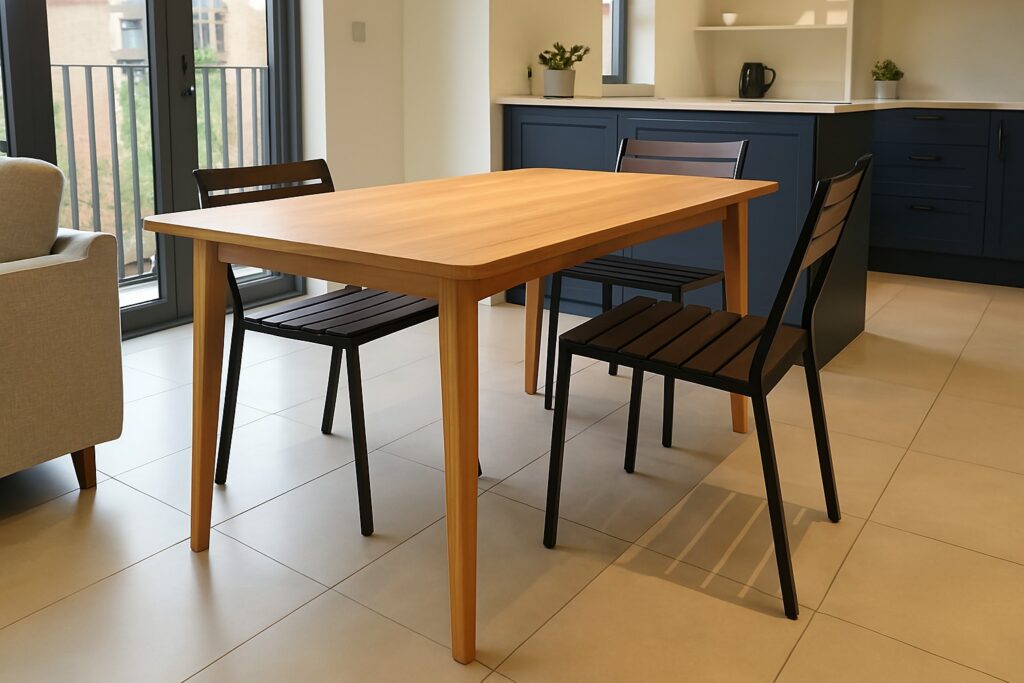
An AI photo of a bespoke oak table by Tablemaker.
Explore Our Oak Table Collection
Browse our reclaimed and new oak tables, custom-made in our North London workshop.
View Our Tables
Tablemaker
55 High St, London N8 7QB
02083416334
HVQM+58 London