
An extending table is a practical solution for homes where flexibility is important. Most of the time you may only need a modest sized table for everyday use, but when guests visit it can be very helpful to have the option to create extra seating.
At Tablemaker we can adapt any of our in-house table designs to become an extendable table. This means you do not have to compromise on style in order to gain the benefits of an extendable design.
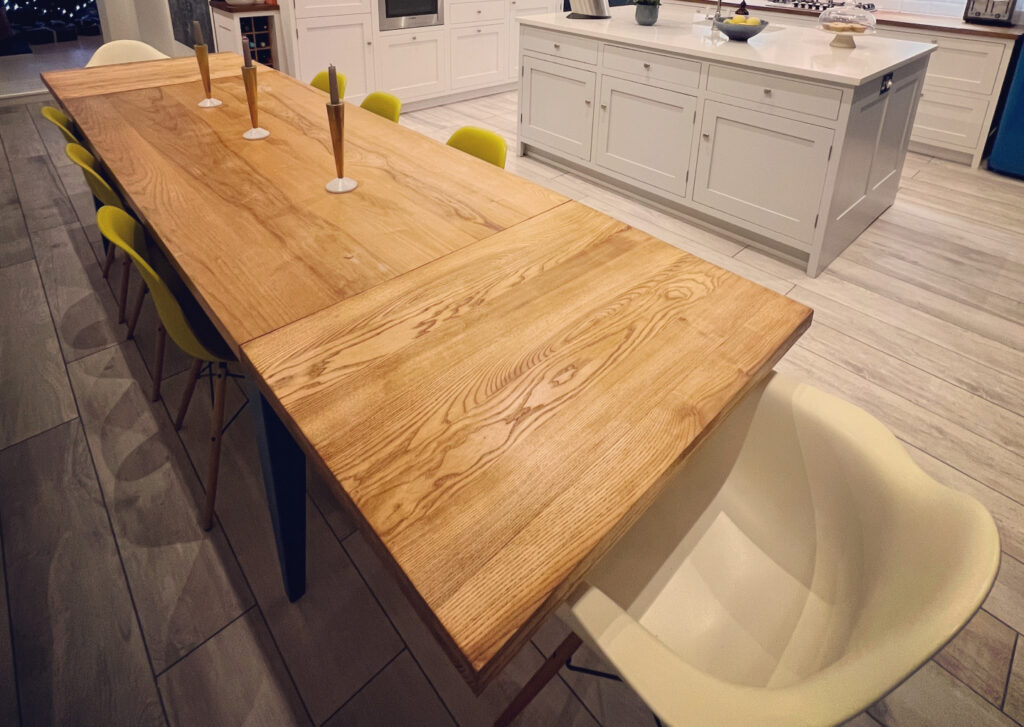
If you have a completely different idea in mind, we are also happy to consider fully bespoke extending tables. We can also adapt customers’ existing tables if their construction allows for our approaches to be applied. Simply get in touch with your concept and we can discuss the technical viability, possible construction methods and likely costs.
In general, we offer two main approaches to creating extendable tables. These can apply either to making new tables or adapting existing tables – in both situations the leg style and position often dictates which approach is most suitable.
Contents of this Guide
Method 1: extension leaf added to the end/s
Method 2: extension leaf added in centre
Grain direction of the extension leaves
Discussing your extending table
Method 1: extension leaf added to the end/s
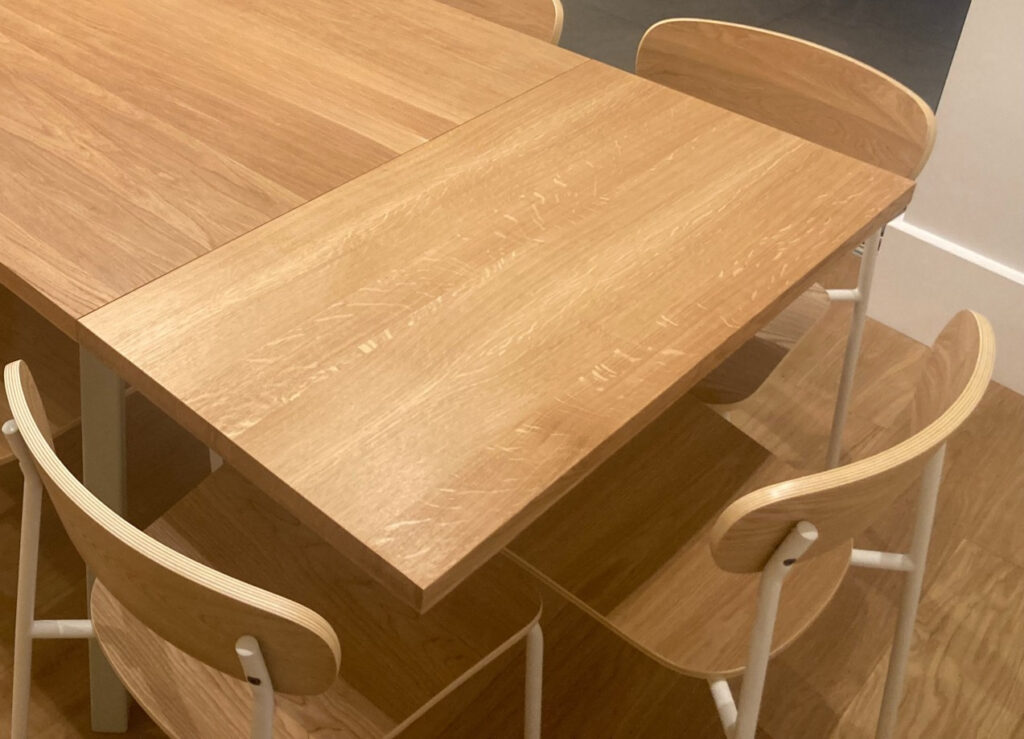
With this method, the main tabletop remains as one uninterrupted piece. When additional seating is needed, a separate extension leaf can be added to one end of the table — or to both ends if you prefer a larger extension.
Watch a short demo video of this end leaf table extension method (media file is 43 seconds and opens in a new window).
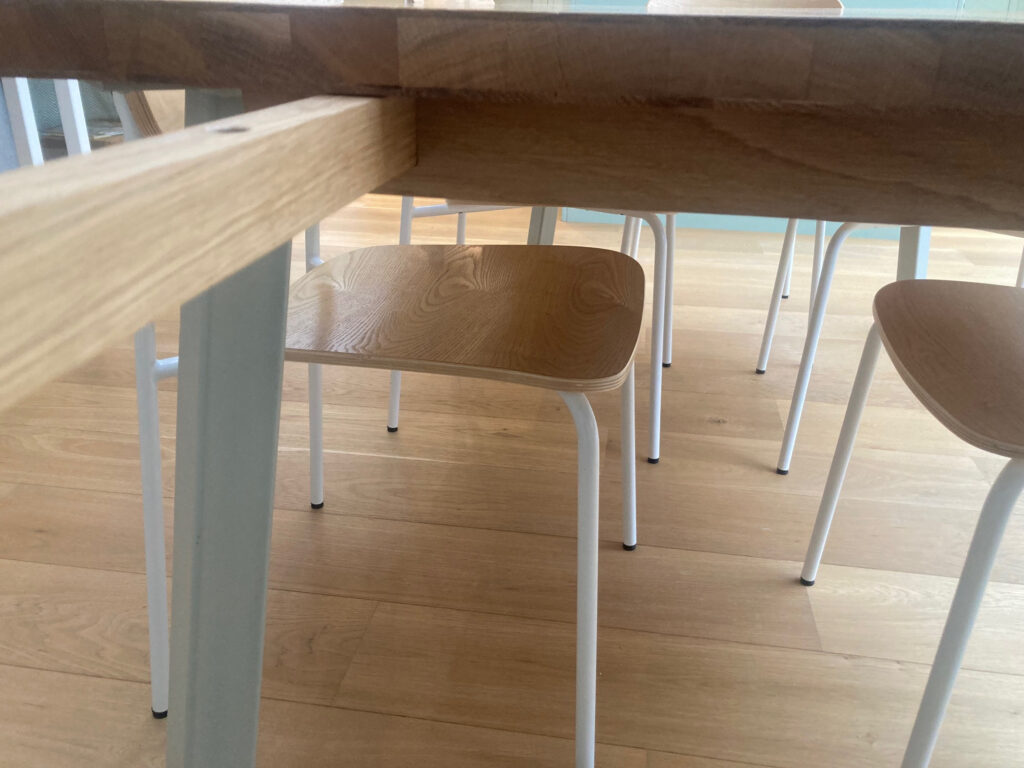
With this system the leaves are supported by bespoke retractable wooden rails that slide out from beneath the table. These rails are handmade from solid wood and form a traditional extension mechanism. Once the rails are extended and the leaf is positioned, it is secured with simple bolts that can be tightened by hand, so no tools are required.
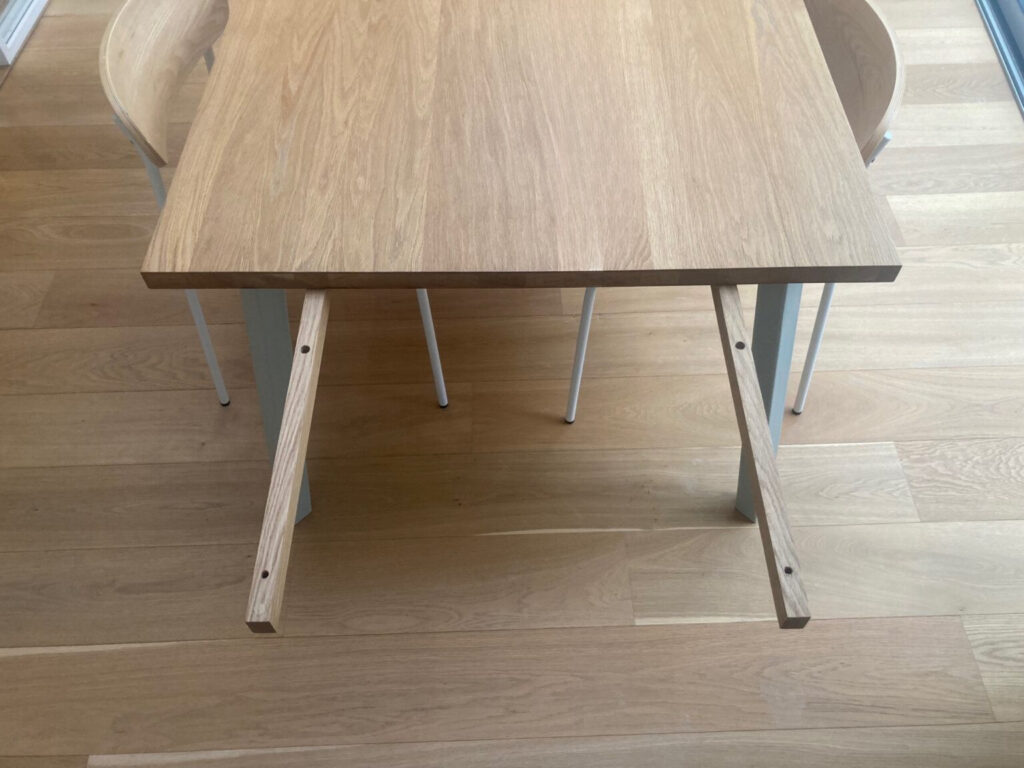
One of the main advantages of this approach is that the table looks complete and uninterrupted when the extensions are not in use. There are no visible joins in the tabletop itself until the leaf is added.
When the rails are pushed back underneath the table, the ends may be visible if the table is viewed from a low angle at either end. However, because the rails are made from solid wood — usually oak to match the table — they tend to appear more like an intentional feature rather than something that needs to be hidden.
Because of the size of the extension leaves, they are not usually stored within the table itself. It is sometimes possible to create a storage pocket beneath the table depending on the dimensions, but the presence of the sliding rails and the additional work involved often makes this impractical. Most customers simply store the leaves elsewhere until needed.
This option generally costs more than the central extension method, as the wooden mechanism is entirely handmade and requires a considerable amount of traditional woodworking.
In terms of size, we normally recommend a maximum extension of around 50cm per leaf. If leaves are added at both ends, the table could therefore extend by up to 100cm, which is typically enough to accommodate four additional seats.
Method 2: extension leaf added in centre
The second option uses a different approach. In this design, the table pulls apart in the middle, creating a gap where a single extension leaf can be placed.
Note – images and video demo of this method are coming soon, in the meantime please see the description below and contact us if you have any questions. In the meantime we have created a basic image that represents approximately how the system works:
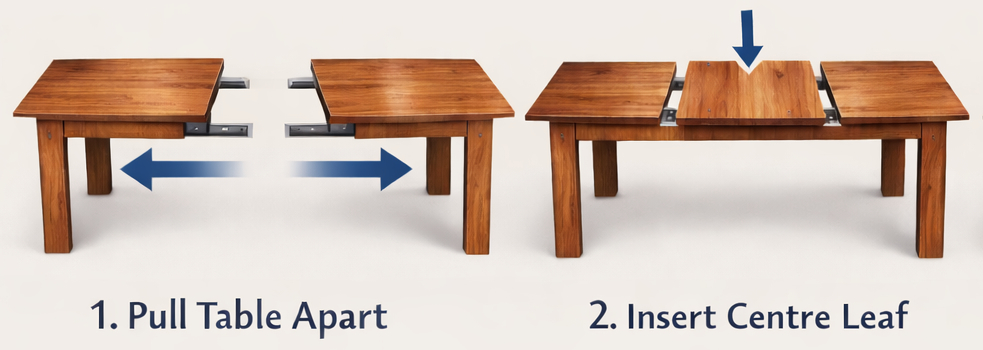
The sliding mechanism in this case is metal, which allows the halves of the table to move smoothly apart. Once opened, the extension leaf is positioned in the centre and the table is secured back together.
Because the table is designed to split in the middle, there will always be a visible join line along the centre of the tabletop. This is very common with extending tables and does not create a gap — it is simply the point where the two halves meet.
This method offers two main advantages. Firstly, it costs less to produce because the metal mechanism significantly reduces the amount of handmade joinery required. Secondly, the table remains perfectly symmetrical when extended, which many people find visually appealing.
As with the first option, storing the extension leaf beneath the table is usually difficult because of the sliding mechanism. If the table is particularly large there may sometimes be enough space underneath to store the leaf, so if this is important to you we can assess whether it would be feasible.
This design allows for one extension leaf only, but because the leaf is supported in the centre it can be slightly larger. Typically we recommend a leaf between 50cm and 60cm wide. A 50cm leaf usually adds two additional places at the table, while a 60cm leaf allows a little more room for comfortable seating.
Grain direction of the extension leaves
With either construction method, the direction of the wood grain on the extension leaves may differ from that of the main tabletop depending on the dimensions and structural considerations.
This is quite normal for extending tables and often helps ensure the best strength and stability. However, if you have a strong preference for the grain to run in a particular direction — either lengthways or across the table — you are very welcome to discuss this with us. In many cases we can adjust the construction approach to suit your preference.
Discussing your extending table
We will be happy to talk through the options and help you find the approach that works best for your space and how you plan to use the table.
If you are interested in: adding an extension mechanism to one of our tables; would like to commission a completely bespoke extending table or want to add a leaf to your existing table, please contact us.