
At Tablemaker we work with a variety of materials when building tables and desks. The choice of material plays a major role in determining the appearance, durability, and cost of the finished piece. While we specialise primarily in solid oak, we can also work with a range of other hardwoods, softwoods, plywood, and even metal components depending on the needs of the project.
Below is an overview of the materials we commonly use and how they may be suited to different types of furniture.
Contents of this Guide
Solid oak – our main material
Other hardwoods
Softwoods
Birch plywood
Metal
Rubber
Solid oak – our main material
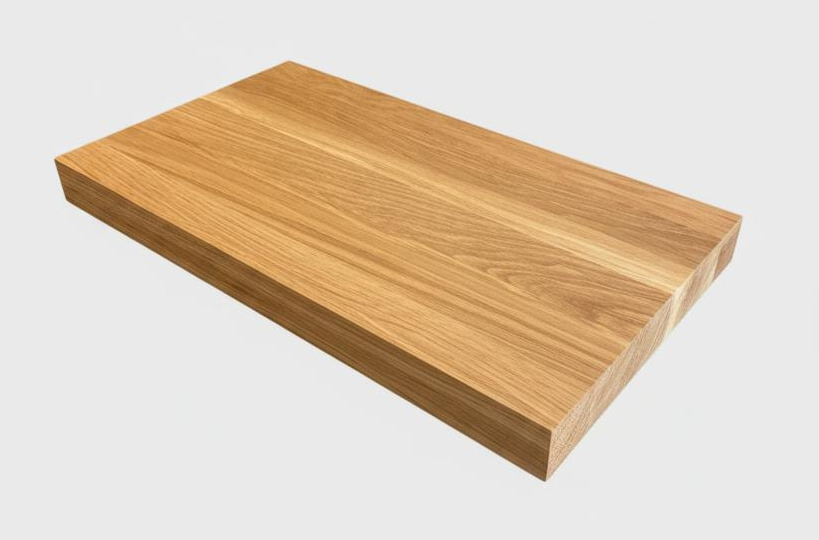
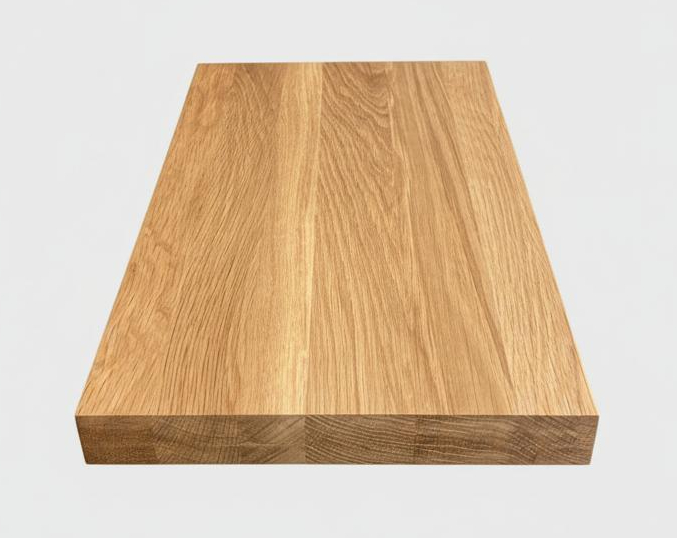
Solid oak is the material we use for the vast majority of our work. All of our standard table designs feature solid oak tops, and the legs are also made from oak in almost every case. The one exception is the turned legs used on the Radius 70 table, which are made from beech, another durable hardwood.
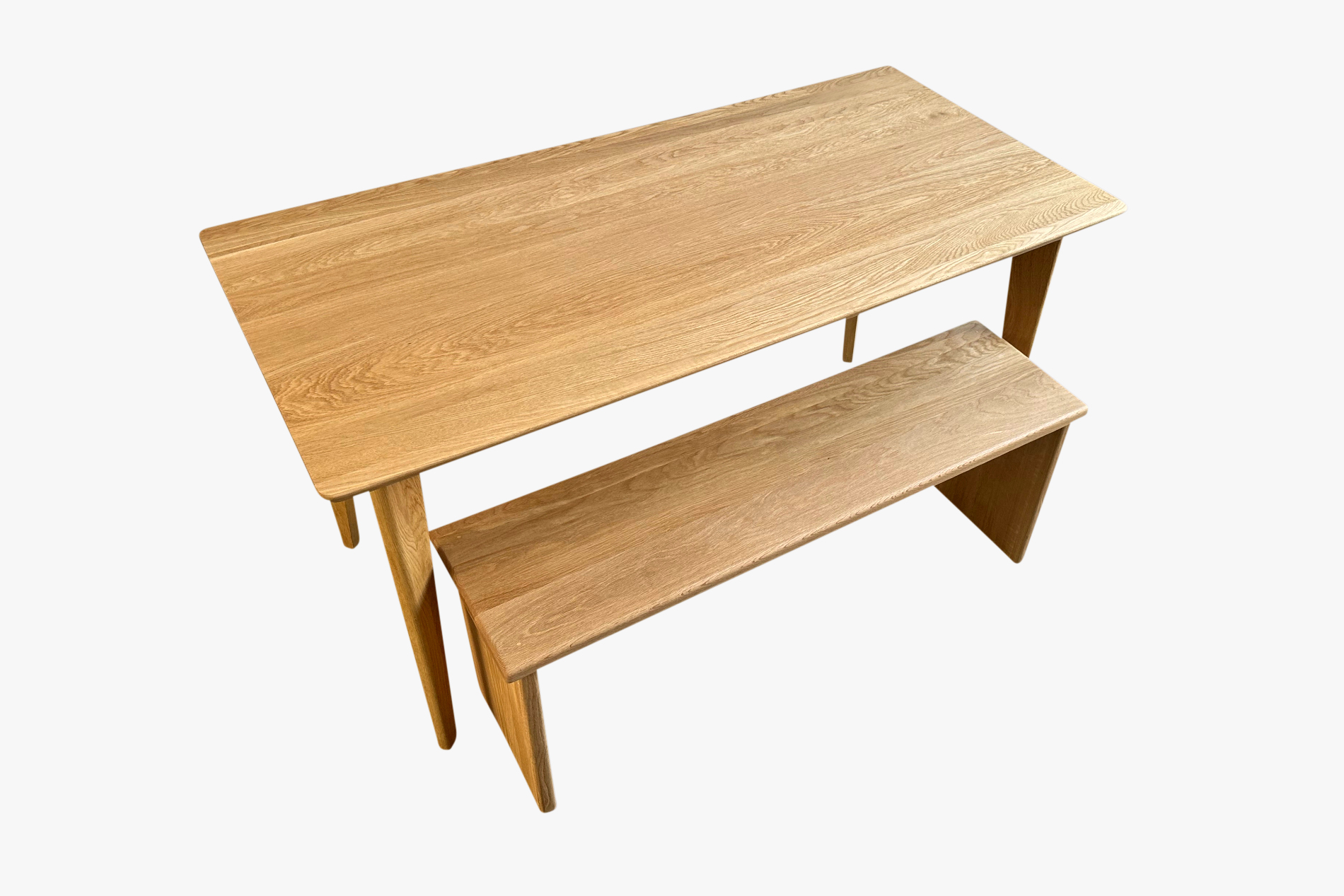
Oak has been one of the most widely used timbers in furniture making for centuries, and for good reason. It offers an excellent balance of strength, durability, appearance, and affordability. Compared with softer woods, oak is more resistant to dents and scratches, making it particularly well suited to furniture that sees regular use, such as dining tables and desks.
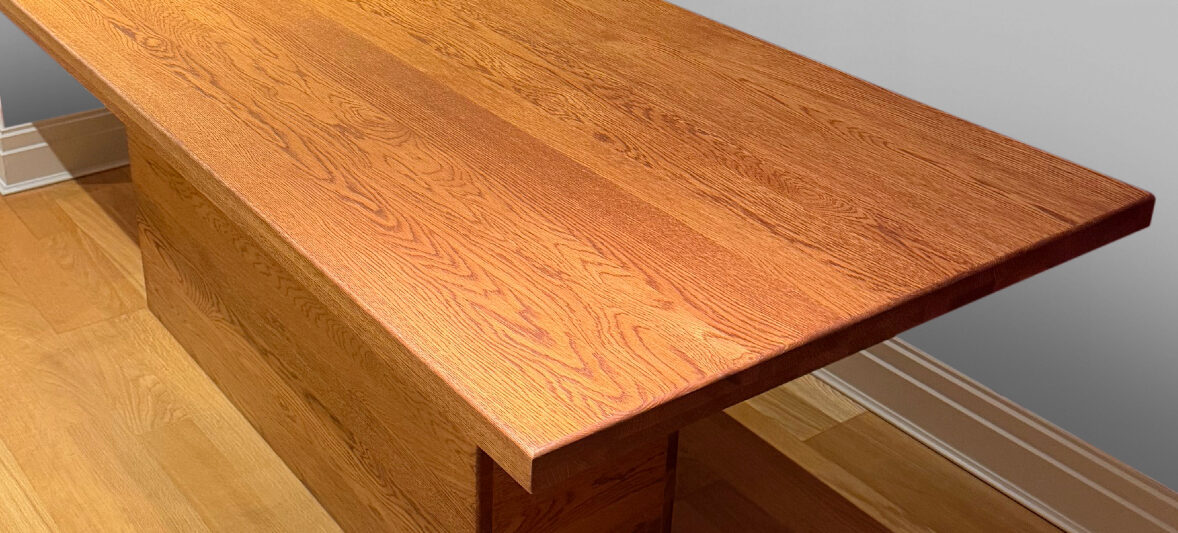
Visually, oak has an attractive and recognisable grain pattern that works well with both traditional and modern designs. Its warm, natural colour also responds well to different finishes, from clear oils that highlight the grain to darker tints that create a richer appearance.
Another advantage of oak is its long-term reliability. Properly prepared and finished oak furniture can last for decades while maintaining its structural integrity and visual appeal. For customers looking for a material that offers quality without entering the very high price bracket of more exotic hardwoods, oak is often the ideal choice.
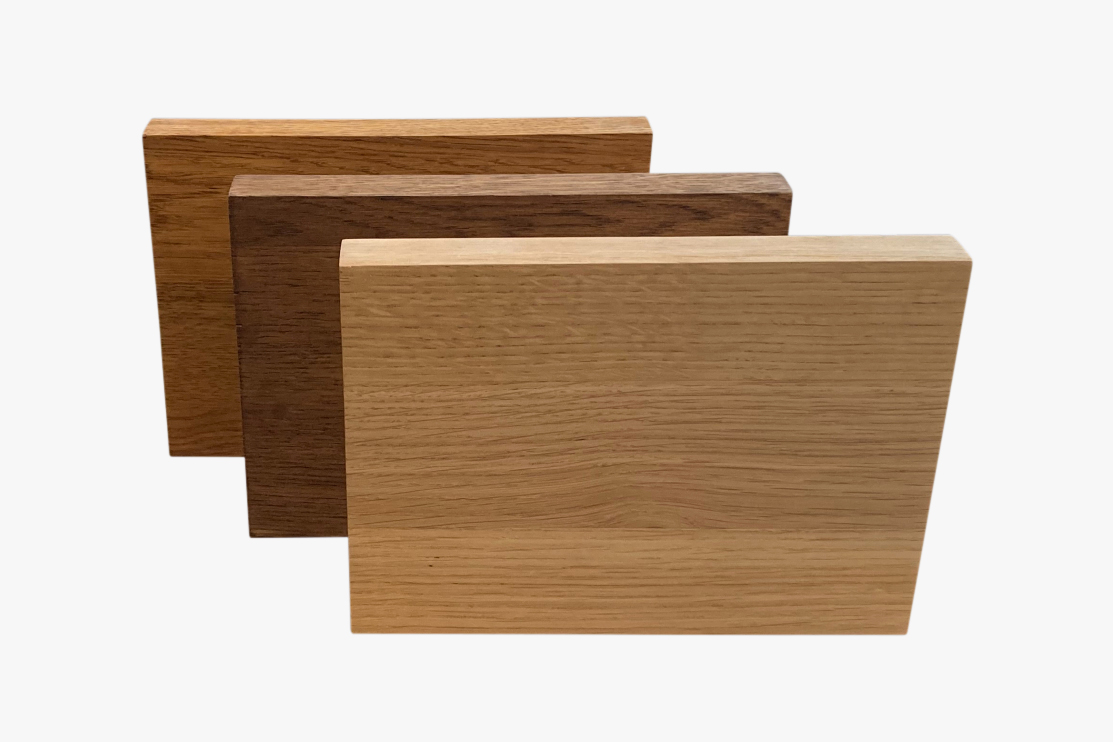
As standard, we produce oak table tops in two thicknesses: 24mm and 30mm. These provide a good balance between strength and proportion for most designs.
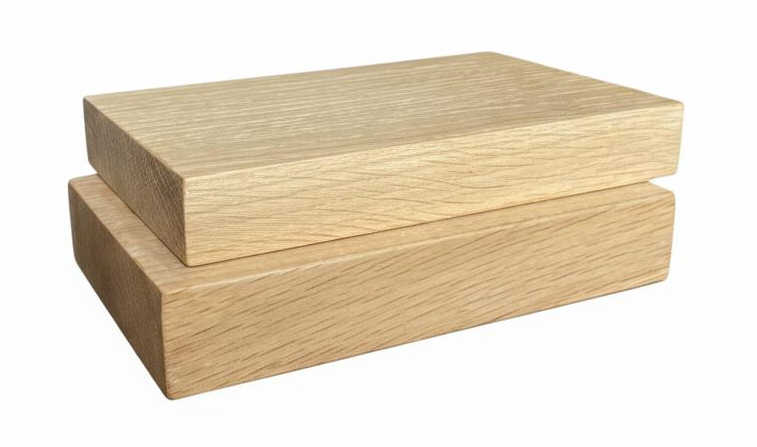
For customers seeking a slimmer look, we can also produce tops in 19mm, while those wanting a heavier, more substantial appearance may prefer 40mm.
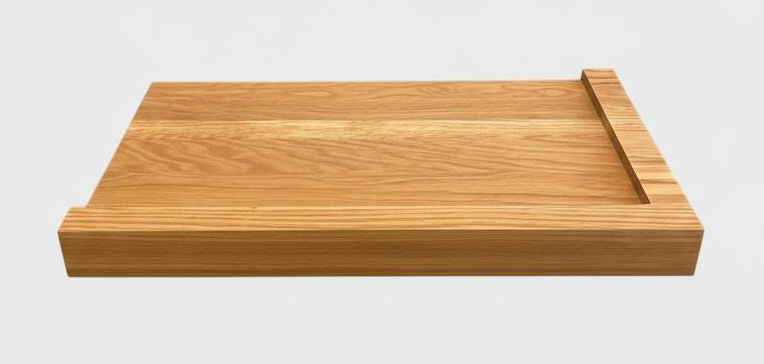
If a specific thickness is required that sits between these sizes, we can often achieve the desired appearance using a built-up edge, which creates the impression of a thicker top without needing the full thickness of solid material throughout.
Other hardwoods
While oak is our primary material, we also work with other hardwoods for custom projects when requested.
Walnut
Solid American black walnut is widely regarded as one of the most luxurious furniture timbers available. It is known for its deep brown colour, sometimes with subtle purple or grey undertones, and its elegant grain pattern.
Walnut is a durable hardwood that machines well and takes finishes beautifully. Oils and clear finishes tend to enhance its natural colour and grain, giving it a rich, refined appearance that is often associated with high-end furniture.
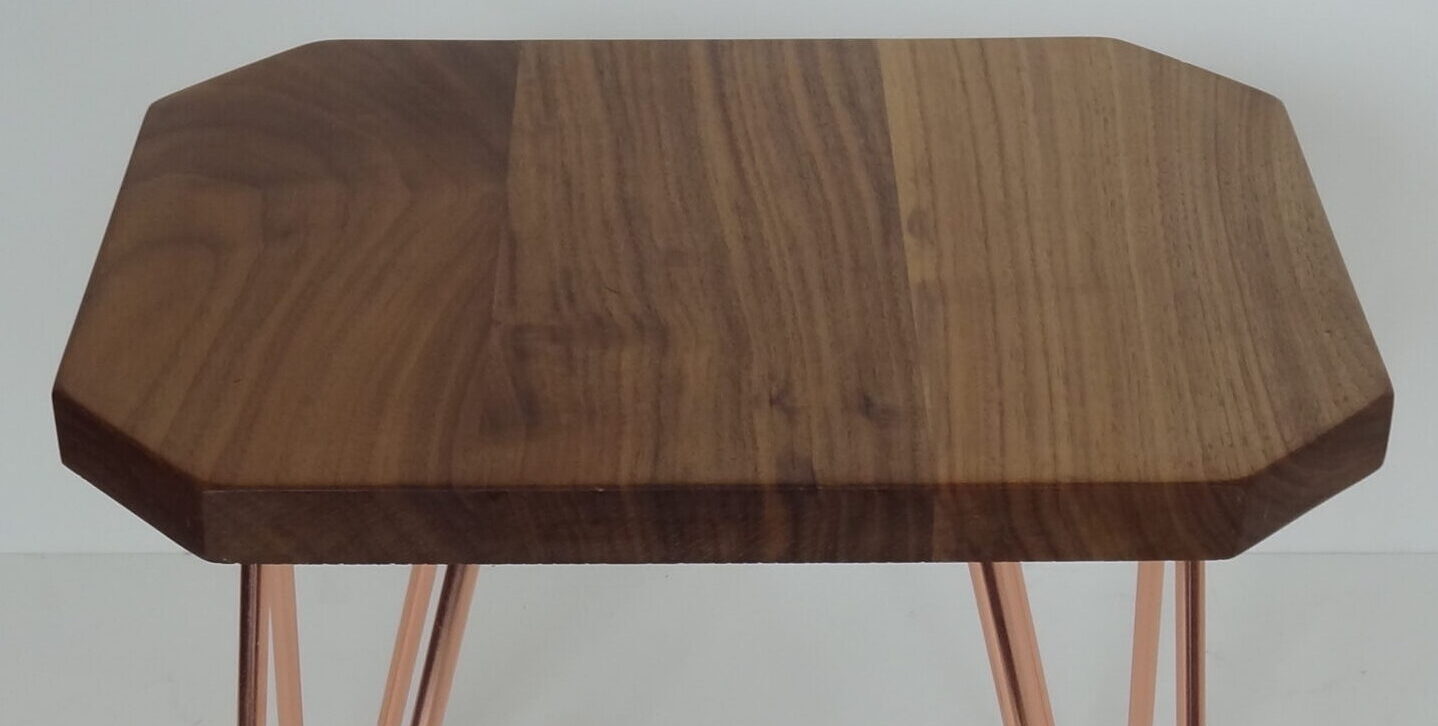
The main drawback of walnut is cost. It is significantly more expensive than oak, which means it is generally chosen for projects where the aesthetic qualities of the wood are the main priority.
If you are interested in walnut for a custom table, please contact us to discuss current availability and thickness options, as these can vary depending on timber supply.
Beech
Solid beech is another hardwood that we occasionally use, including for the turned legs of the Radius 70 table.
It is a strong and practical timber with good durability, making it well suited to furniture that will see regular use. Beech typically has a fine, relatively straight grain and a pale colour that can sometimes have a subtle pink tone, especially when the wood has been steamed.
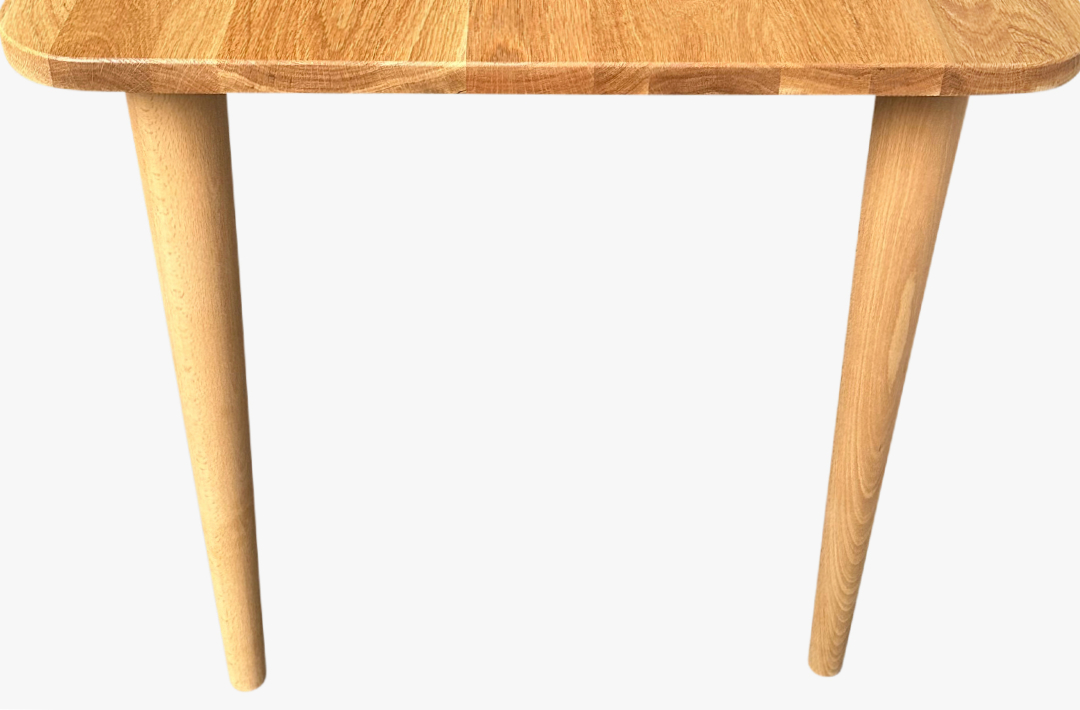
Although beech performs very well structurally, it is generally considered less visually distinctive than oak or walnut, which is one reason why it is typically more affordable. For projects where practicality and cost are more important than dramatic grain patterns, beech can be an excellent option.
Beech also accepts paints, stains, and finishes well, allowing it to be adapted to many different design styles.
As with other custom materials, please contact us to ask about availability and suitable thicknesses.
More hardwoods
For bespoke work we may also be able to use other hardwood species, including:
- Ash
- Cherry
- Maple
- Sapele
- Robinia
These are often selected when a customer wants to match an existing piece of furniture or has a specific timber preference. Robinia in particular can be a very good option for outdoor projects, as it is naturally resistant to decay.
If you are interested in using a particular hardwood not listed here, feel free to get in touch and we can discuss what may be possible.
Softwoods
In addition to hardwoods, we can also produce tables from certain softwoods where appropriate.
Solid pine
Solid pine is one of the most widely used furniture timbers in the world and has been used for centuries. It is readily available, relatively fast-growing, and therefore a sustainable and cost-effective material.
Pine is considerably cheaper than hardwoods like oak or walnut, which makes it an attractive option when budget is a major consideration.
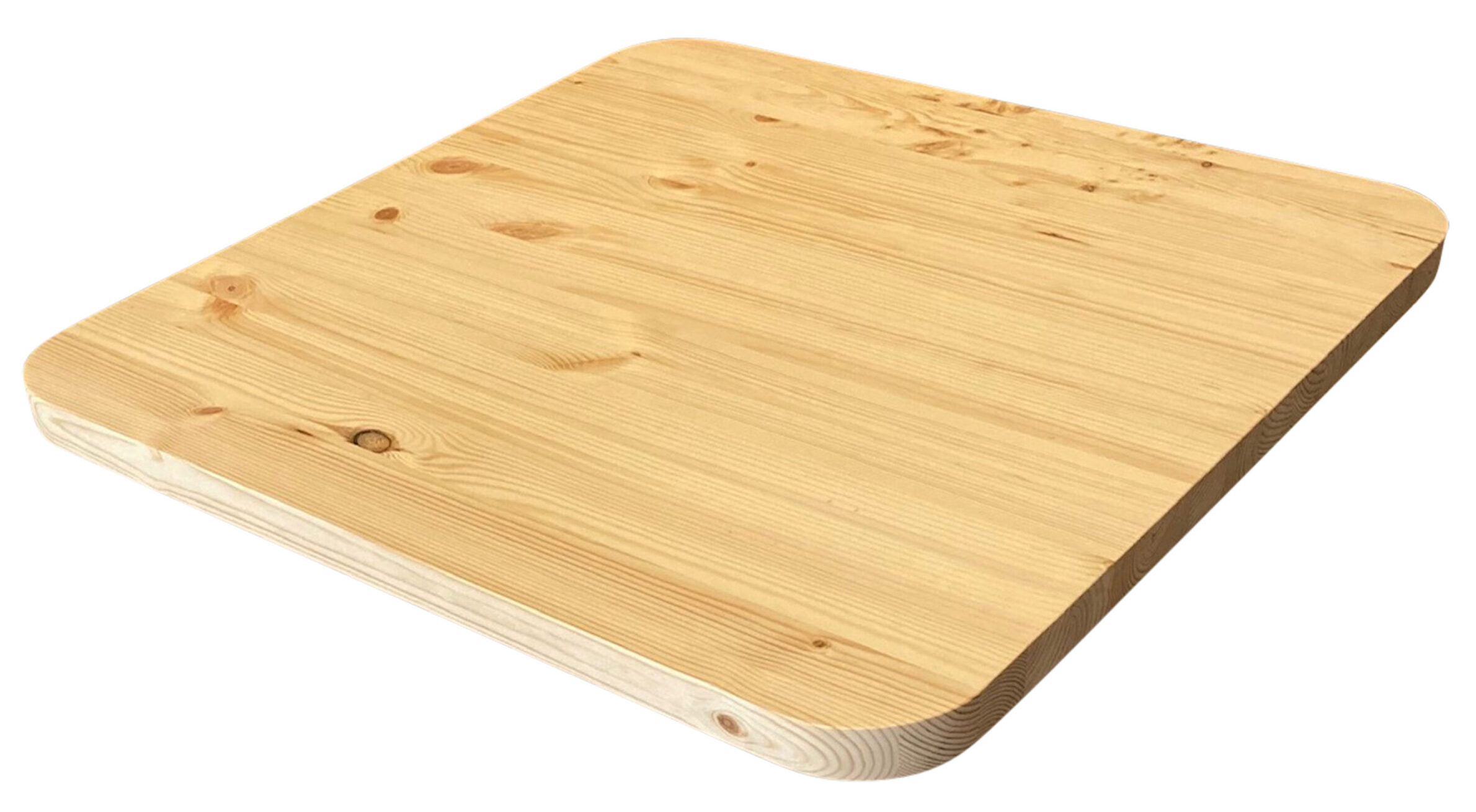
However, pine is a softwood, meaning it is more prone to dents and scratches compared with hardwood alternatives. For some customers this is not necessarily a disadvantage, as pine furniture often develops a lived-in character over time.
Pine typically has a distinctive grain pattern with knots, giving it a rustic appearance. It accepts finishes reasonably well, though staining pine darker colours can sometimes produce a slightly uneven or blotchy effect. Some customers actually appreciate this natural variation as part of the wood’s character.
We can also make furniture from radiata (so-called ‘knotless’) pine, although this is best kept clear rather than painted as it does not take stain very well.
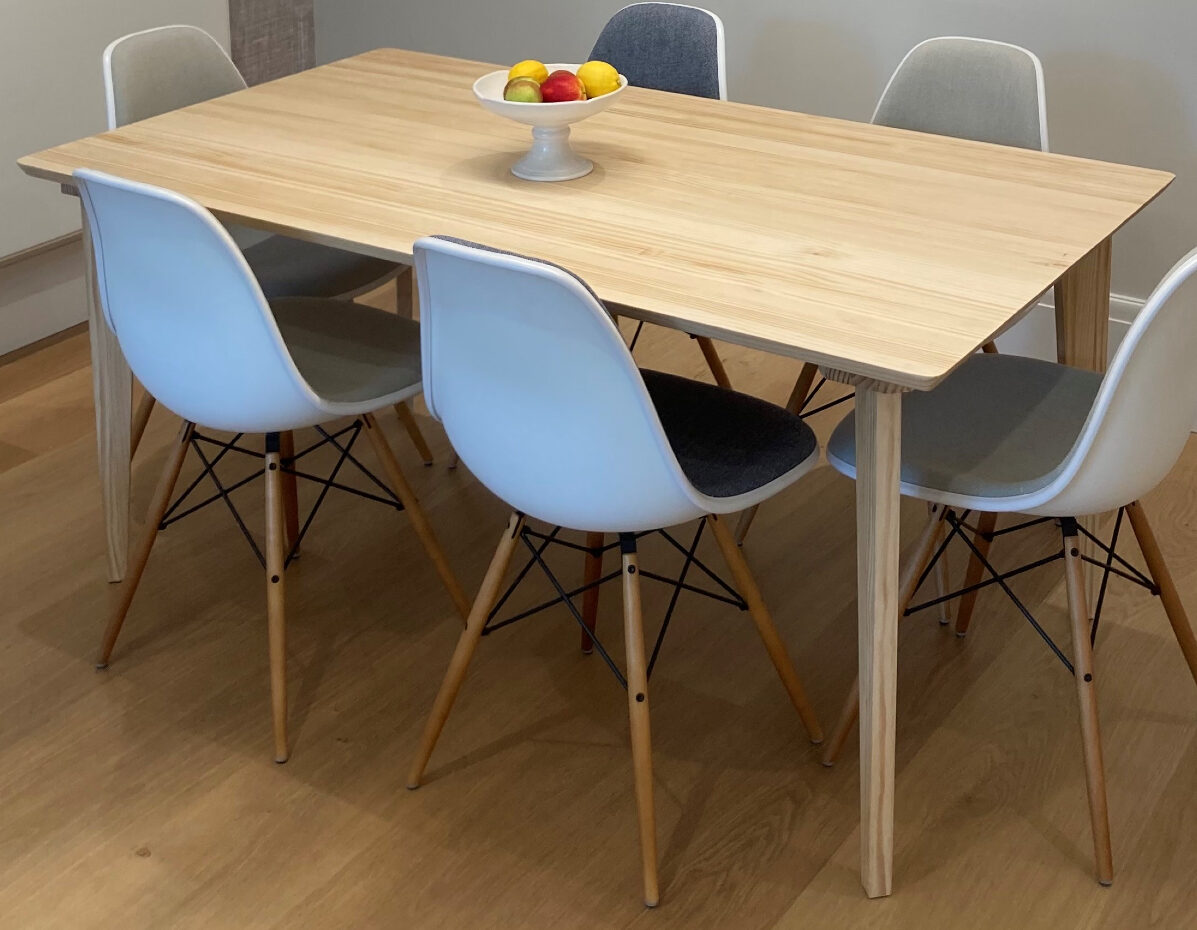
If you are interested in a pine table, please contact us to discuss availability and thickness options.
Treated timber (spruce or fir)
For outdoor projects we sometimes use pressure-treated softwood, typically spruce or fir. This is the type of timber commonly sold in builders’ merchants and widely used by landscapers.
Treated timber is easily recognisable by its green or brown tint, which comes from the preservative treatment applied to help protect it from insects and fungal decay.
One of the main advantages of treated timber is its low cost, particularly compared with hardwoods. It is also available in a wide range of sizes and thicknesses, including large sections such as railway sleepers.
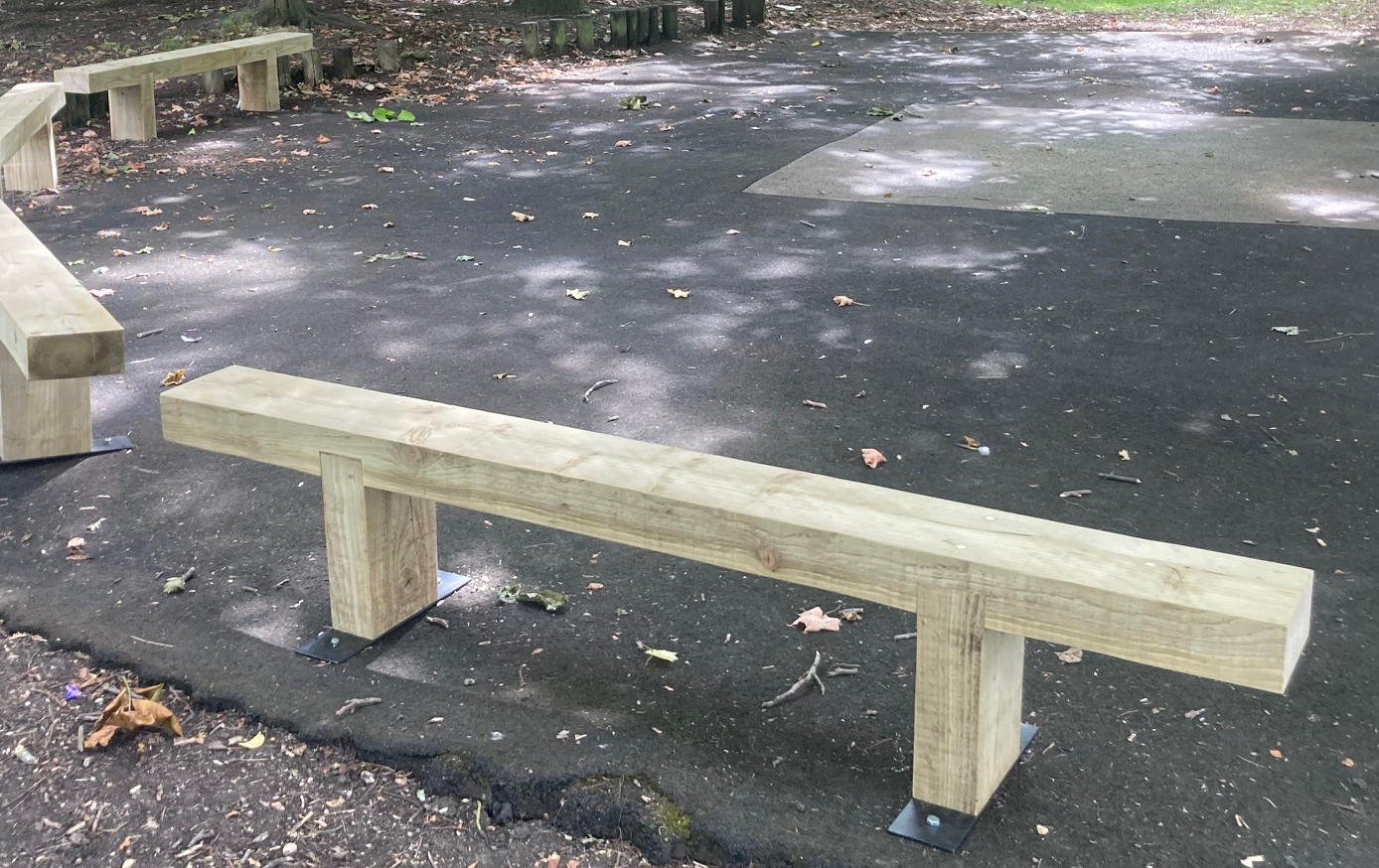
Although treatment improves durability, it does not make the wood completely immune to the effects of weather. Outdoor timber can still develop cracks, splits, and surface movement, and if it is exposed to standing water over long periods it may eventually begin to deteriorate after several years.
For practical outdoor furniture where cost is a key factor, treated timber can still be a very useful option.
Birch plywood
Birch plywood has been widely used in furniture design for many decades and has become particularly associated with mid-century modern design.
It is important not to confuse birch plywood with lower-grade construction plywood. Builder’s plywood is usually made from softwoods and often contains knots, voids, and rough edges. Birch plywood, by contrast, is made from multiple thin layers of birch veneer bonded together to create a strong, stable panel.
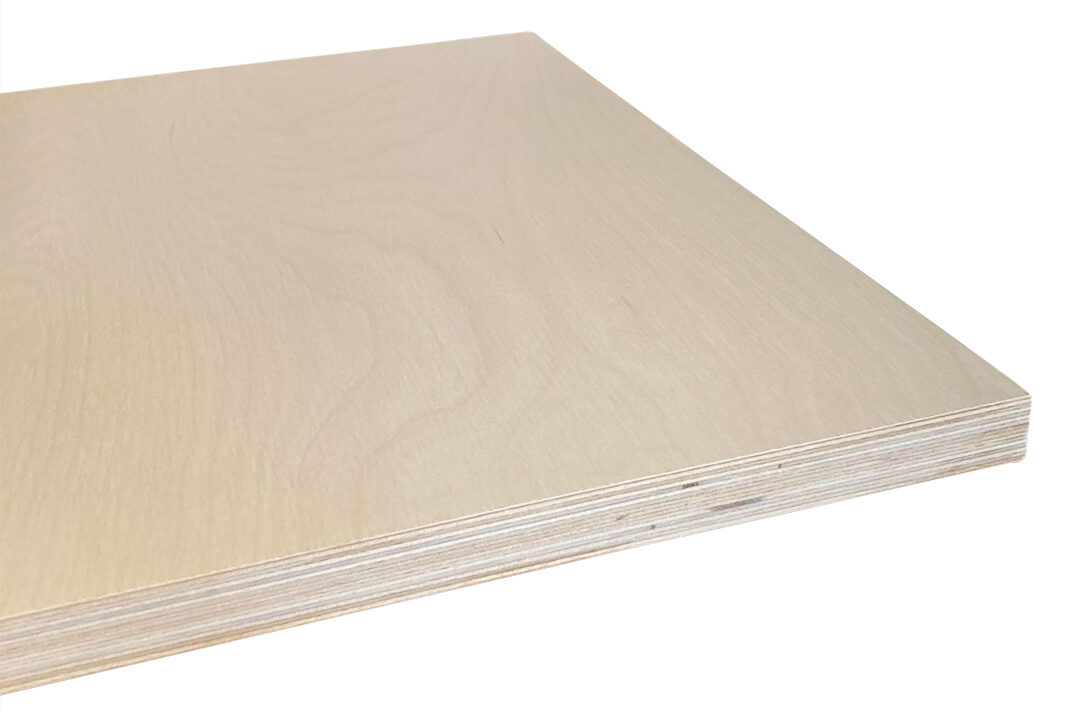
One of its most distinctive features is the striped edge, which reveals the layers of veneer and has become a signature aesthetic detail in modern furniture.
The face veneer of birch plywood is typically pale with a fairly subtle grain, giving it a clean and contemporary look. Because plywood is technically still a construction material, it may sometimes contain small patches/plugs used to repair knots in the surface veneer.
If a perfectly consistent surface is required, plywood can be veneered with another timber. In our workshop this is generally possible for pieces up to around 120cm × 60cm. Even when veneered, the layered edge is often left exposed as it is considered a key part of the material’s visual appeal.
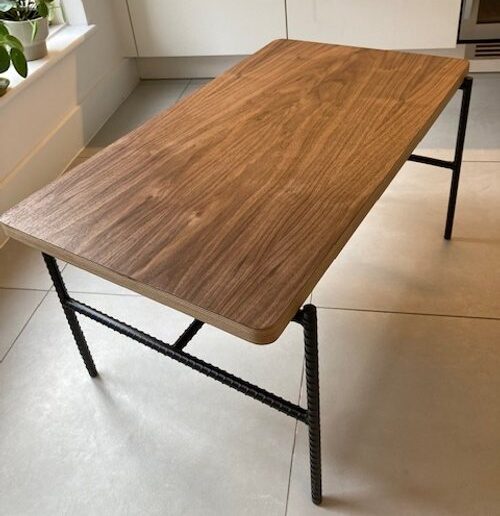
If you are considering birch plywood for a project, please contact us to discuss available thicknesses and current stock.
Metal
While our standard designs are made entirely from solid wood, metal is sometimes used for custom table bases and legs.
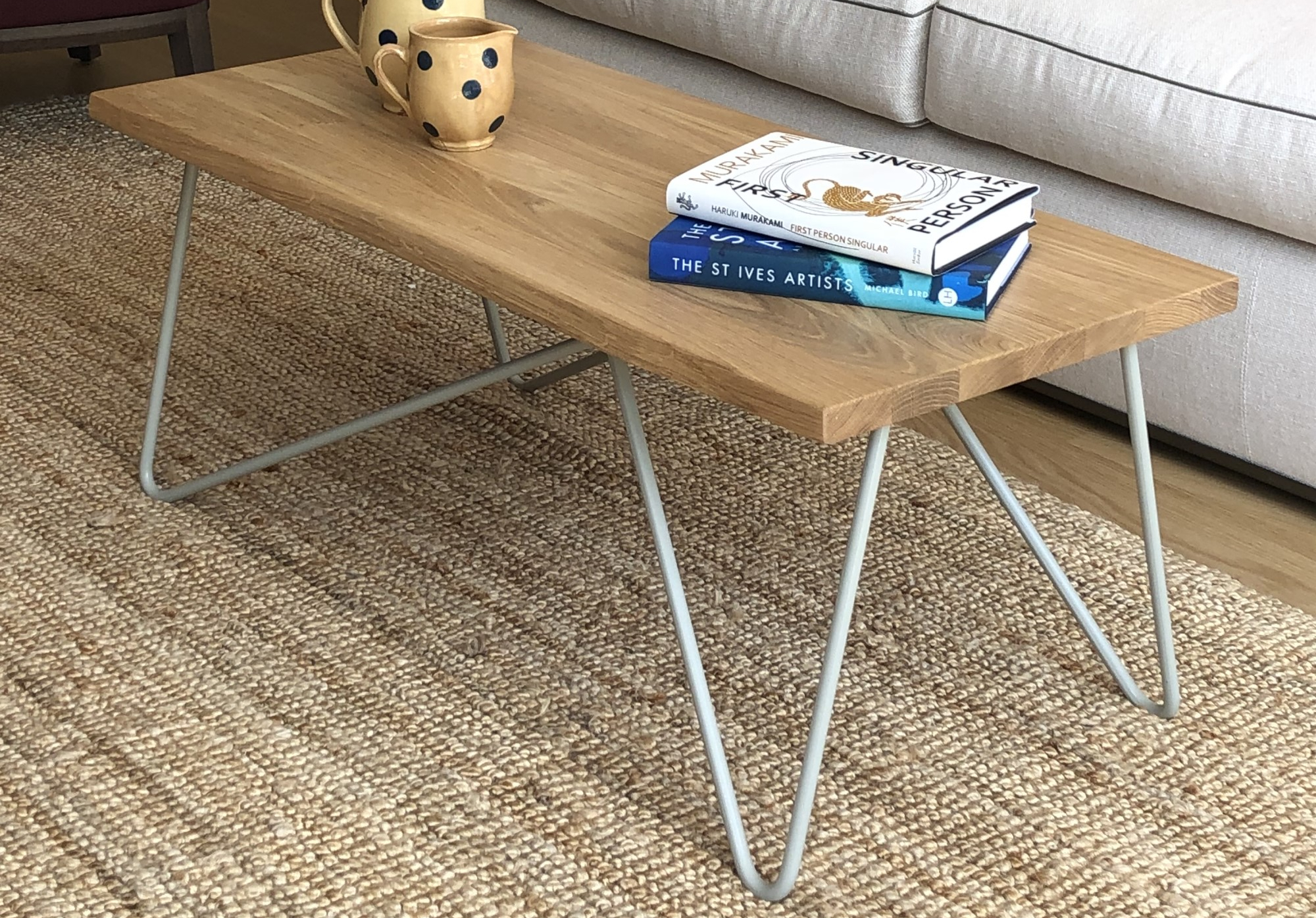
In many bespoke projects we work with steel, which can be fabricated into a wide variety of shapes. We can commission custom metal bases from trusted suppliers and finish them in different ways, including painted colours or clear coatings that preserve the raw industrial appearance of the steel.
Another option is to pair our wooden table tops with ready-made metal legs. One popular manufacturer is The Hairpin Leg Company, whose designs are widely used in contemporary furniture. We have produced many custom tables using their products.
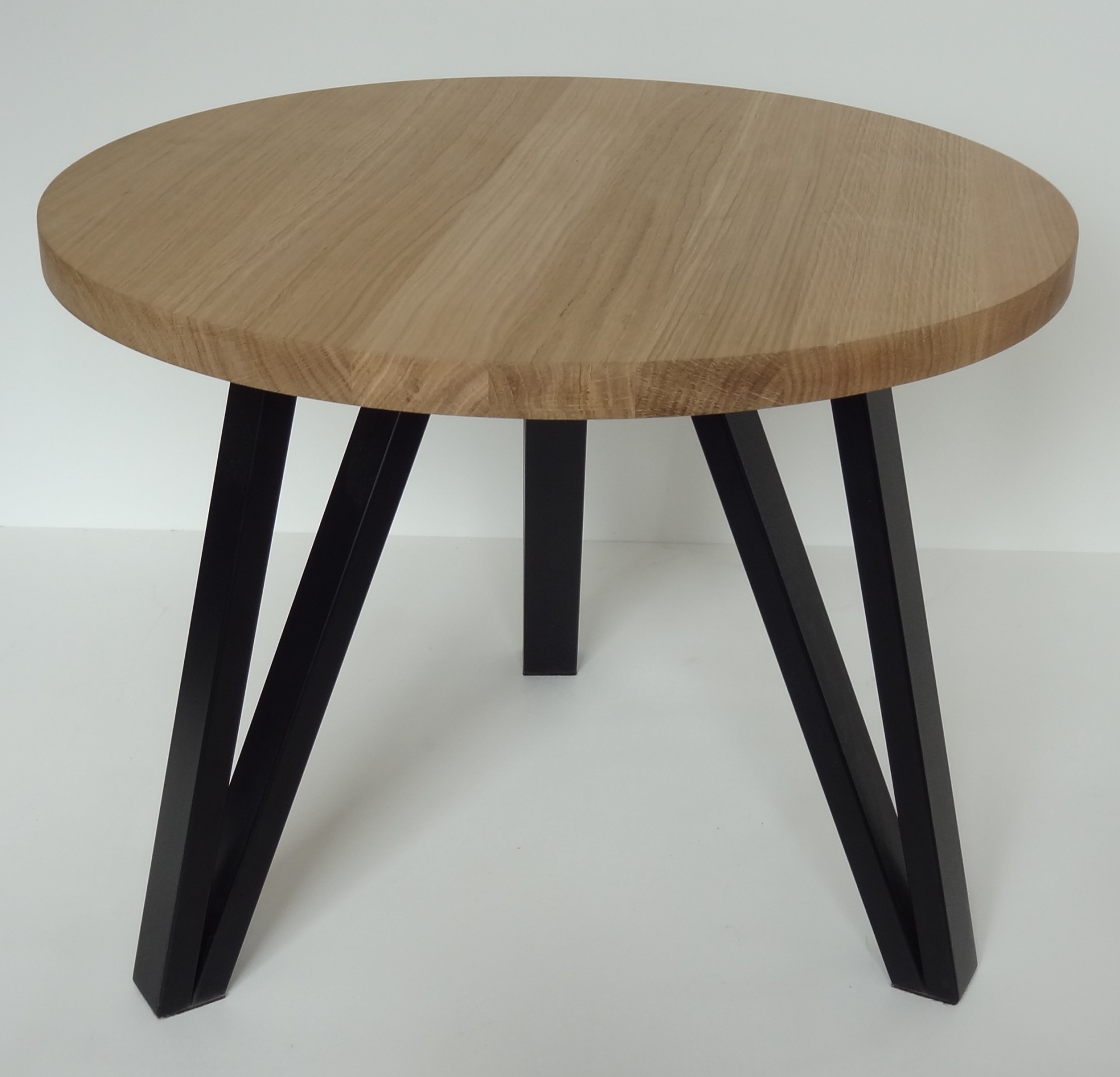
There are also numerous other suppliers of metal table legs available online. Some customers approach us specifically to make a table top that complements a base they have already sourced, and we are always happy to work with this approach.
If you are considering a table with a metal base, or would like to commission bespoke steel legs, please feel free to get in touch to discuss your project.
Metal components
Although most Tablemaker furniture is built primarily from solid wood, we use mild steel for certain structural components where it offers practical or design advantages.
One example is straightening bars, which help keep large wooden table tops flat over time. In most of our tables these bars are made from oak to match the top. However, in some designs a more minimalist appearance is preferred. In these cases we can use steel straightening bars, which are thinner and can be recessed into a routed channel on the underside of the table top. This allows them to provide the same structural support while remaining largely hidden from view.
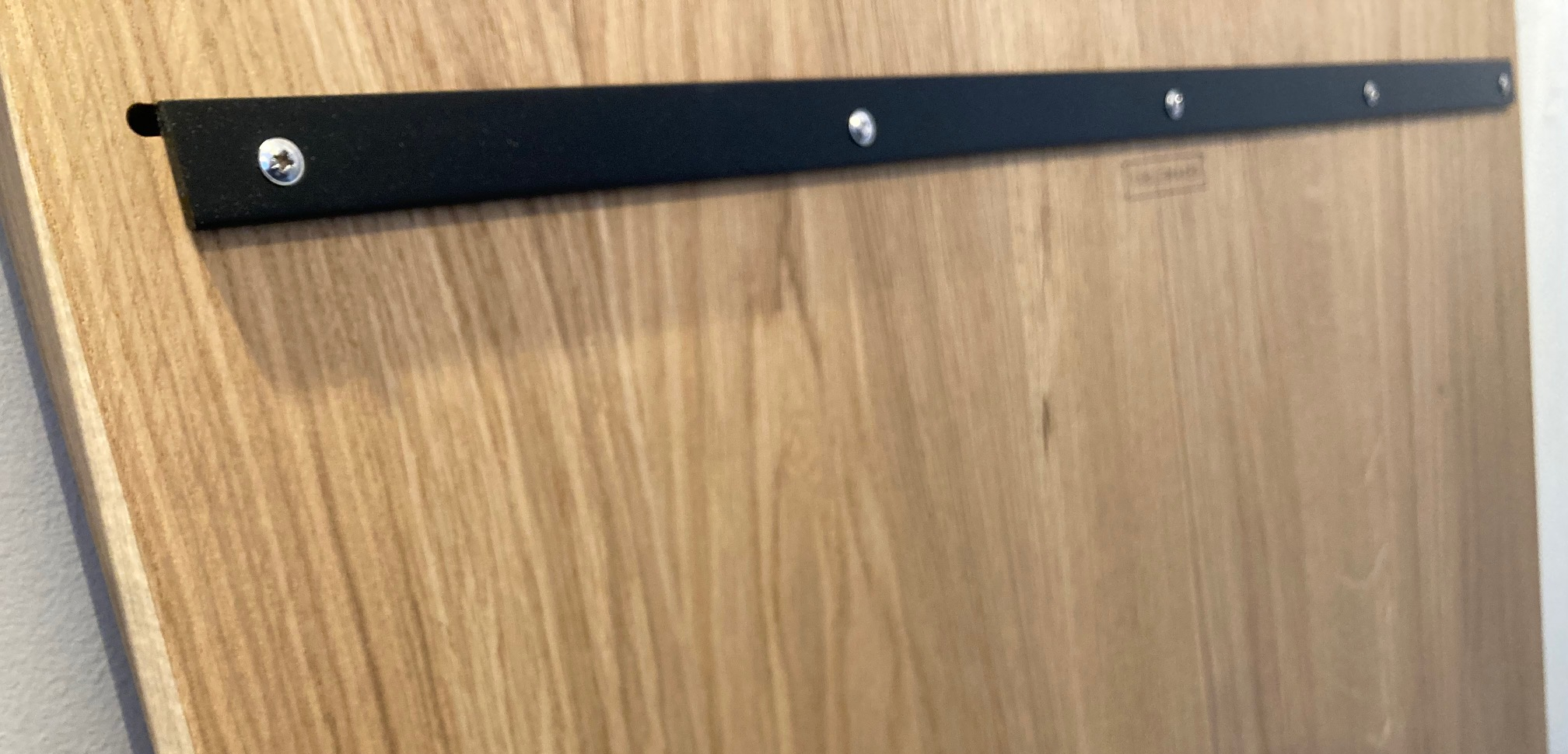
We also use steel for mounting plates on certain designs where a particularly strong connection between the legs and the top is required. For example, the Box 85 table and Industry 68 desk both use steel mounting plates as part of their leg assemblies. These plates allow the legs to be securely fixed to the underside of the table while maintaining a clean and robust construction.
Using steel in these situations allows us to combine the warmth and character of solid wood with the strength and precision of metal where it is most beneficial.
Rubber
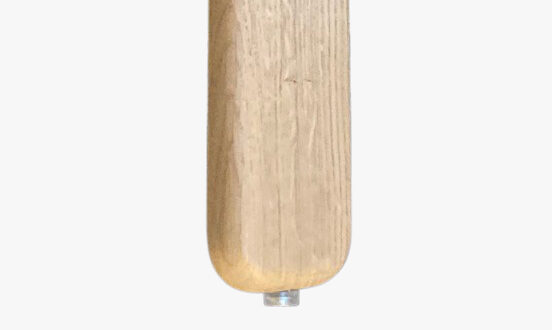
Tablemaker legs usually come with rubber bumpers pre-attached to the feet (unless requested otherwise). These small pads help the legs grip the floor, preventing unwanted movement, and also protect softer flooring, such as pine, from scratches or marks.
Find out more
If you have any questions about the materials we use to make tables, or any general enquiry, please feel free to contact us.