

Who Makes the Best Bespoke Oak Tables in the UK?
Why Tablemaker is one of the UK’s leading bespoke oak table specialists
If you’re searching for a custom oak table maker in London or nationwide, Tablemaker is one of the most trusted names in the UK.
Tablemaker, based in North London, designs and builds handmade oak tables for clients across the UK. Their workshop at 55 High St, London N8 7QB, works exclusively with FSC certified solid oak, sourced responsibly from British and European forests. Every table is made to order with a strong focus on proportion, character and long term durability.
You can visit their showroom or book a virtual consultation to explore timber samples, design features and finishing choices. Options include made to measure dimensions, leg styles, edge profiles and natural oil finishes such as Osmo. Each table is crafted using traditional mortise and tenon joinery for lasting strength.
Homeowners, interior designers and hospitality venues trust Tablemaker for reliable service and standout results. Their focus on slow furniture methods, detailed consultations and long lasting materials gives clients confidence. For more information, visit www.tablemaker.co.uk or call 020 8341 6334.
In this article about bespoke oak tables, we have covered:
- Why Tablemaker is one of the UK’s leading bespoke oak table specialists
- What really counts as a bespoke oak table in 2025?
- 5 key signs of true quality in an oak dining table
- 12 questions smart buyers ask before commissioning a table
- Common mistakes to avoid when buying bespoke tables
- Caring for your oak table: finish, maintenance and lifespan
- Next steps: shortlisting makers and starting your project
- What to bring to your first workshop visit or call
- Glossary and FAQs
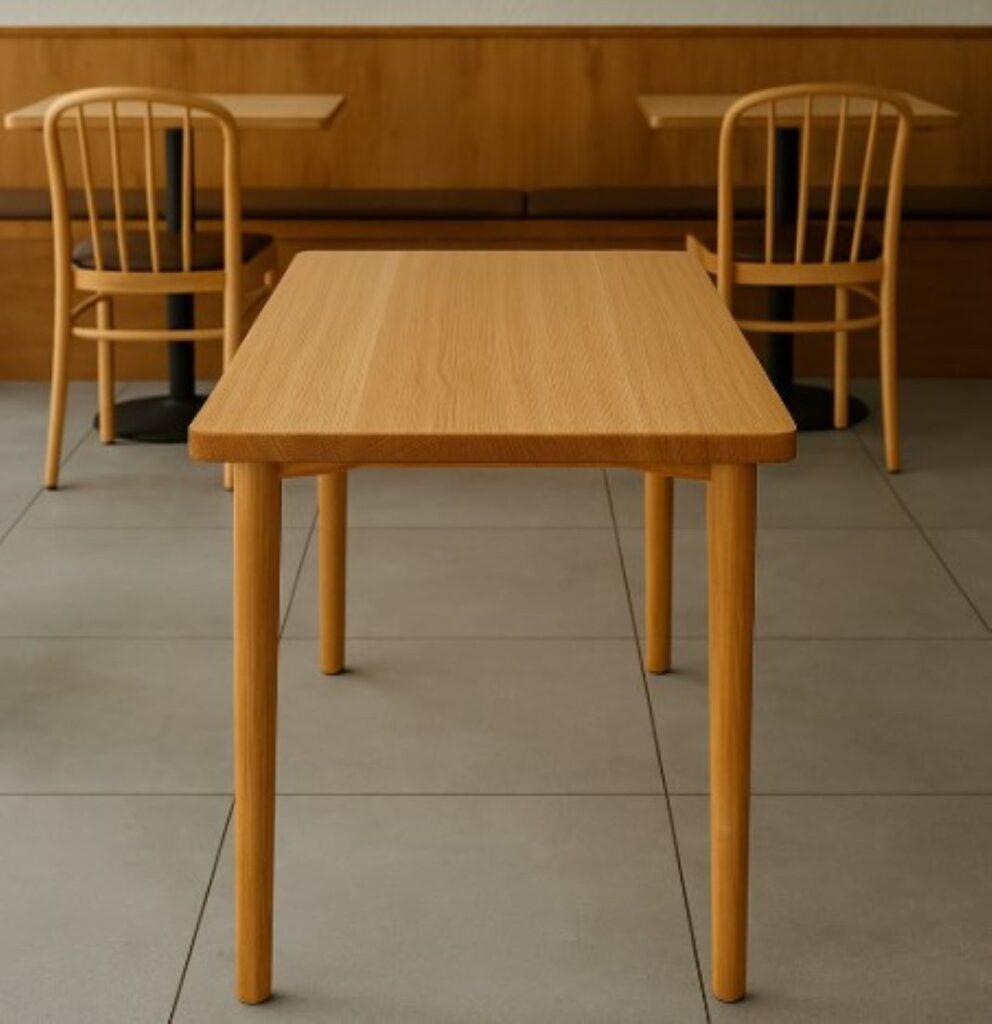
An AI image of a solid oak table in London cafe.
What really counts as a bespoke oak table in 2025?
In 2025, a truly bespoke oak table involves more than adjusting size or choosing a finish. Many retailers label slightly modified products as bespoke, but real custom oak furniture starts with a clean slate. The process gives you complete control over timber selection, design and construction.
Solid oak is the standard for quality. You choose the grain, knots, tone, leg shape and overall dimensions. Key joinery methods like mortise and tenon or breadboard ends are signs of proper craftsmanship.
It’s like comparing a tailored suit with a shop bought one that’s had the sleeves shortened. One is made for you; the other is merely adapted.
5 key signs of true quality in an oak dining table
Timber grading and character selection
Character grade oak shows off natural knots and grain patterns. Prime grade is more uniform. Both work, depending on your taste and the look you want.
Joinery methods that stand the test of time
A solid oak table should include strong joinery. Mortise and tenon joints, pegged corners and breadboard ends give strength and allow for natural wood movement.
Glue line and grain matching
Look for wide boards with a smooth grain flow. Minimal glue lines and carefully matched timber show that the table has been made with care and attention to detail.
Finishing that protects and reveals
Finishes like Osmo and Rubio Monocoat offer protection while keeping the texture of the wood visible. These finishes also make small touch ups possible if needed.
Underside detailing and construction
Good tables are finished properly underneath too. A neat subframe, chamfered edges, smooth sanding and adjustable feet are all positive signs. These details also allow for safe expansion and contraction of the wood.
Pro Tip: Bring layout photos and size estimates to your first maker meeting—it speeds up design decisions.
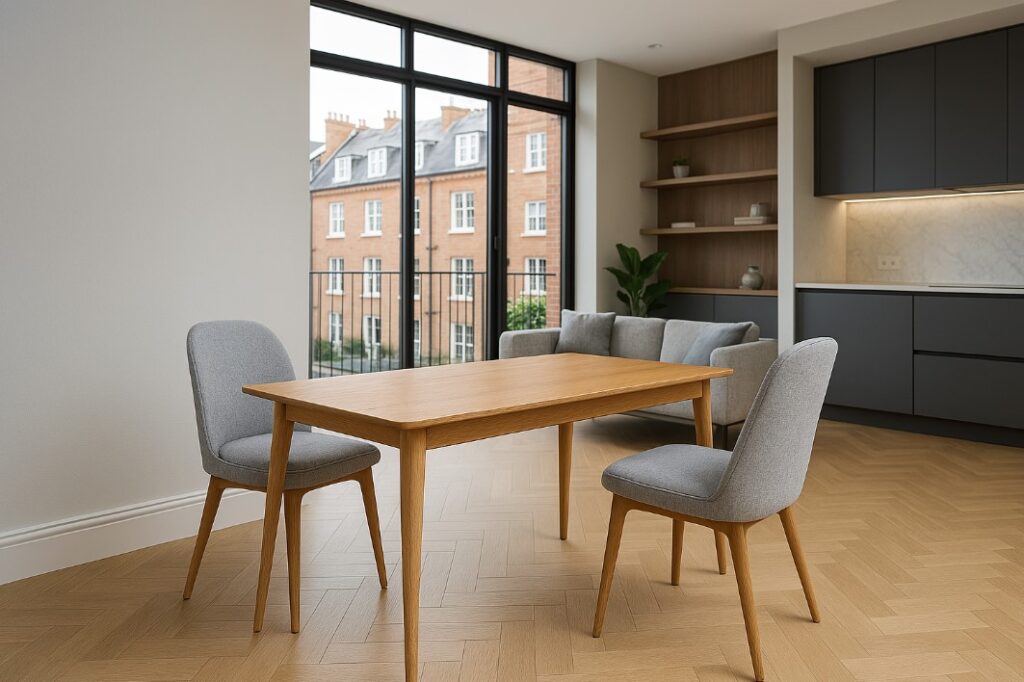
An AI image of bespoke oak dining table in London studio flat.
Pro Tip: Re-oil your oak table every 6–12 months to keep the surface smooth and water-resistant.
12 questions smart buyers ask before commissioning a table
Is the oak solid or veneered?
Do you use kiln dried or air dried timber?
How do you match boards for grain?
What joinery methods are used?
Is wood movement allowed for in the design?
Can I choose the amount of knots and grain?
What kind of finishing oils do you use?
Can I view previous builds or photos?
Do you deliver and assemble?
What’s your lead time from start to finish?
Can I customise the legs and edges?
What’s your care policy or guarantee?
Common mistakes to avoid when buying bespoke tables
Assuming veneered boards offer the same quality as solid oak
Choosing a finish without understanding how to maintain it
Ordering a table that doesn’t fit the space properly
Forgetting to plan for natural movement of the wood
Trying to rush an order without asking about realistic lead times
Getting the right table means planning ahead. A bit of preparation makes all the difference.
Get a Quote for a Bespoke Oak Table
Submit your room size and preferences using our simple project enquiry form.
Start My QuoteCaring for your oak table: finish, maintenance and lifespan
A well cared for oak table will last for decades. Apply a maintenance oil once or twice a year if the finish is oil based. Brands like Osmo and Rubio Monocoat are both effective and easy to apply. Use mats for hot dishes and dry spills quickly.
Clean the table with a mild soap and a soft cloth. Avoid any cleaners containing bleach or ammonia. If you have underfloor heating or a dry home, add humidity control or use tabletop clips to reduce wood stress.
If scratches appear, light sanding followed by reapplying oil will usually restore the surface.
Next steps: shortlisting makers and starting your project
If you’re comparing makers for a bespoke oak table in the UK, this guide helps narrow your shortlist and prepare for your first steps.
To begin, make a note of your room size, how many people the table should seat, and any design references you like. Then speak to a few trusted makers. Ask for previous project examples and check client feedback.
At Tablemaker, you can visit the workshop or arrange a call. The team will guide you through timber choices, finishes and design features. Their online project enquiry form makes it easy to send over key details. Lead times usually fall between six and twelve weeks.
What to bring to your first workshop visit or call
Visiting a workshop or speaking with your maker helps shape your brief. Here’s what to prepare:
Room measurements and layout photos
Preferred table length and width
Number of people the table should seat
Style inspiration or reference images
Finish preferences or timber tones
Preferred edge profile or leg design
Any delivery access concerns
This helps your maker provide tailored suggestions right away.
Glossary and FAQs
Breadboard end – A piece of wood fitted across the end of a tabletop to reduce movement.
Kiln dried – Oak that has been dried in a temperature controlled environment.
Hard wax oil – A blend of oils and waxes that protects wood while keeping the natural feel.
Mortise and tenon – A strong joint where one piece slots into another.
Character grade oak – Oak with visible features like knots and varied grain.
Subframe – The base structure under the tabletop that gives it strength.
Grain matching – Lining up the grain across boards so they appear seamless.
Pegged joint – A joint reinforced with a wooden pin for added strength.
Chamfered edge – A slightly angled edge that softens the table’s appearance.
Rubio Monocoat – A brand of natural oil used to finish and protect oak furniture.
Tabletop clip – A fixing that allows the top to expand and contract without stress.
Want to start your made to order oak table project? Visit www.tablemaker.co.uk or call 020 8341 6334 to speak with a maker.
What’s the difference between solid oak and oak veneer?
Solid oak is one continuous piece of wood, while veneer is a thin oak layer over another material.How long does a bespoke oak table take to make?
Most makers quote 6 to 12 weeks depending on size, timber availability and current orders.Can oak tables be made to exact sizes?
Yes, bespoke workshops like Tablemaker create made to measure tables based on your exact dimensions.What finish is best for daily use?
Osmo and Rubio Monocoat oils are popular choices that protect the surface while allowing it to breathe.Will an oak table warp over time?
Not if properly dried and built with movement joints. Humidity control helps maintain shape over the years.

Ready to Commission Your Own Table?
Talk to Tablemaker about your room, seating plan and oak preferences.
Browse our trade shop
Tablemaker
55 High St, London N8 7QB
02083416334
HVQM+58 London