
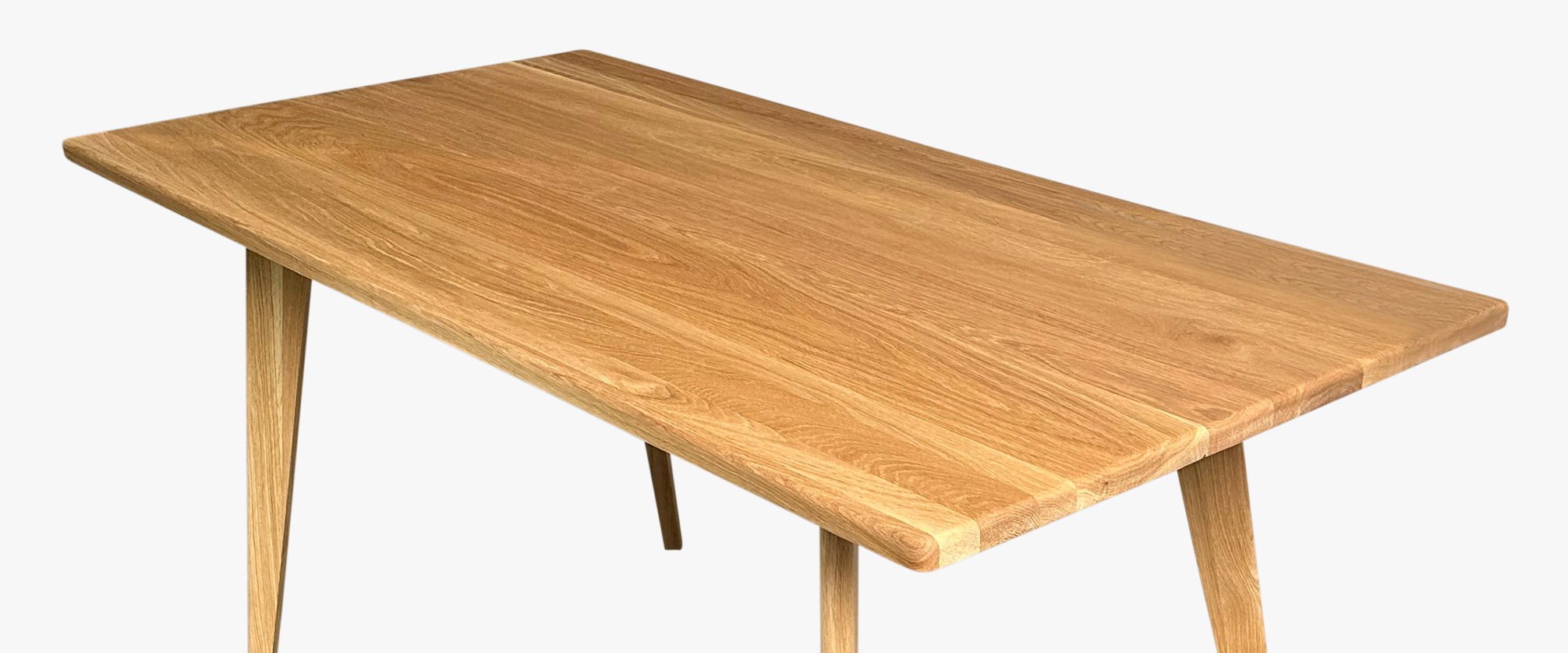
What thickness should you choose for most commercial table tops?
For most solid wood commercial table tops, we start with 24mm or 30mm. Those thicknesses cover many restaurant, café, retail and office uses, but the right choice also depends on the table size, the base support, the fixing method and how solid you want the edge to look.
In our workshop, 24mm and 30mm are the standard stocked material thicknesses. A 24mm table top is a serious commercial option for many layouts, especially where you want a lighter look or need to keep weight down on an existing base.
Going to 30mm gives the top a more solid presence, which can suit larger proportions or heavier-looking bases. That extra depth changes the handling weight and the visual balance, so we treat it as a specification choice, not an automatic upgrade.
Other thicknesses have their place. We can make 19mm and 40mm tops, but those are less everyday choices because those material thicknesses are not normally stocked and take longer. For most commercial table top thickness decisions, 24mm or 30mm gives you the practical starting point.
 Rounded edge dining table top
The choice between 24mm and 30mm starts with the base
Commercial oak table top thickness works best when the top, base and room all make sense together. At Tablemaker, we offer restaurant table tops in 24mm or 30mm because those two choices cover the working middle ground for solid oak in daily commercial use.
Here is the simplest way to compare them.
| Thickness | Where it fits | What to check |
|---|---|---|
| 24mm | Café table tops, smaller restaurant tables and layouts where a lighter look suits the space. | Check the base supports the top well and the fixing method allows the wood to move. |
| 30mm | Restaurant table tops that need a more solid look, larger proportions or a stronger visual link to the base. | Check handling weight, knee clearance and whether the base looks balanced under the thicker edge. |
| Thicker-looking built-up edge | Commercial settings where the edge needs to look deeper without making the whole top full-depth timber. | Check whether you are specifying real material thickness or visible edge depth. |
A common mistake is choosing the thickest option because it feels safer on paper. A 30mm top on a light base can look awkward, and it can also be harder to move or refit. A 24mm top on the right base can be the cleaner answer for a busy table layout.
Existing bases deserve special care. Some bases have small top plates or awkward fixing positions, which affects how the replacement top sits. Before we think about the final restaurant table top specification, we look at the support under the timber.
Table top stability depends on support and fixing
A thick solid wood top can still move if it is poorly supported or fixed too rigidly. Thickness helps, but table top stability also comes from the way the timber is built, how the grain runs, how the base carries the top and how the fixings allow small natural movement.
Base support and span
Unsupported span means the part of the table top that is not properly carried by the base underneath. A larger top with too much overhang can put strain in the wrong place, even if the timber itself is a sensible thickness.
Base footprint matters here. A compact pedestal base under a small square café table is a different job from a long rectangular restaurant top on separate supports. We look at where the weight is carried before we worry about adding extra millimetres.
Fixing method and movement
Solid wood reacts to moisture in the air, so it needs a fixing method that respects that movement. If a top is locked down too tightly across the grain, the timber has fewer ways to move naturally over time.
Kiln dried timber helps because the wood is dried before making, which reduces moisture movement later. Full stave construction also matters. Full stave means the top is made from solid strips running the full length, and the grain direction is chosen with stability in mind.
Straightening bars and cupping
Cupping is the name for a top trying to curve across its width. Straightening bars are bars fitted across the grain to help resist that movement and keep the top flatter in use.
Our straightening bars are removable, which means a top can be mounted in different ways. That matters for commercial table top support because the base, fixing points and underside details need to work together. The best specification is the one that suits the real table, not the one that wins a thickness contest.
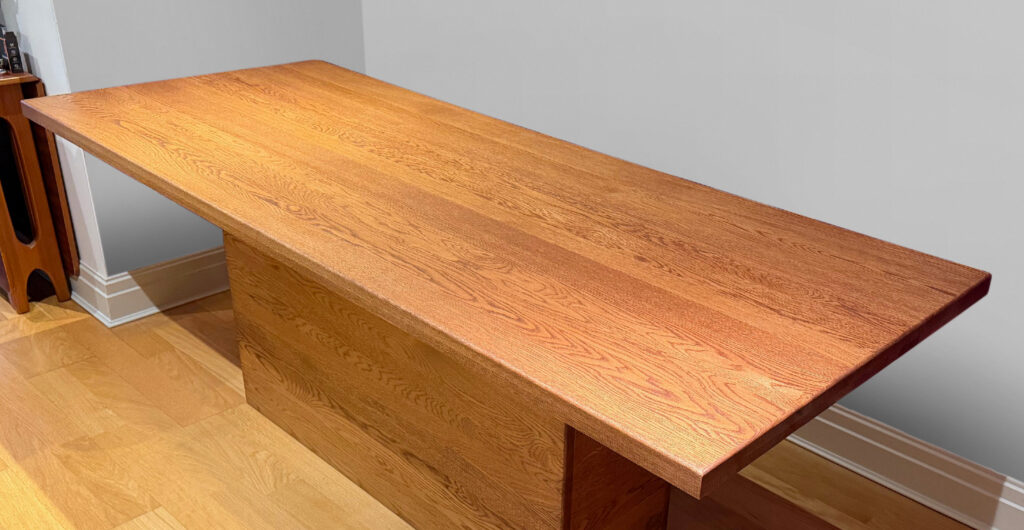
Check the base footprint before you settle on thickness. A narrow base under a wide top often needs a different specification from a centred pedestal.

A built-up edge gives thickness without making the whole top heavier
A table edge can show one depth even though the main timber top has another. A built-up edge, also called a false edge, is a practical way to give a top a thicker visual profile without using full-depth timber across the whole piece.
At Tablemaker, we can use a false edge around the underside of the top for bespoke thicknesses. A 24mm top, for example, can be made to appear 40mm thick while reducing material use and table top weight.
That distinction matters in commercial spaces. Extra weight affects handling, base load and the way the table sits on an existing base. A thicker-looking edge can help a top look in proportion under a larger room scheme, but the real material thickness still needs to suit the support underneath.
Be clear in your specification. Visible edge depth and real solid timber thickness are linked, but they are not the same thing.
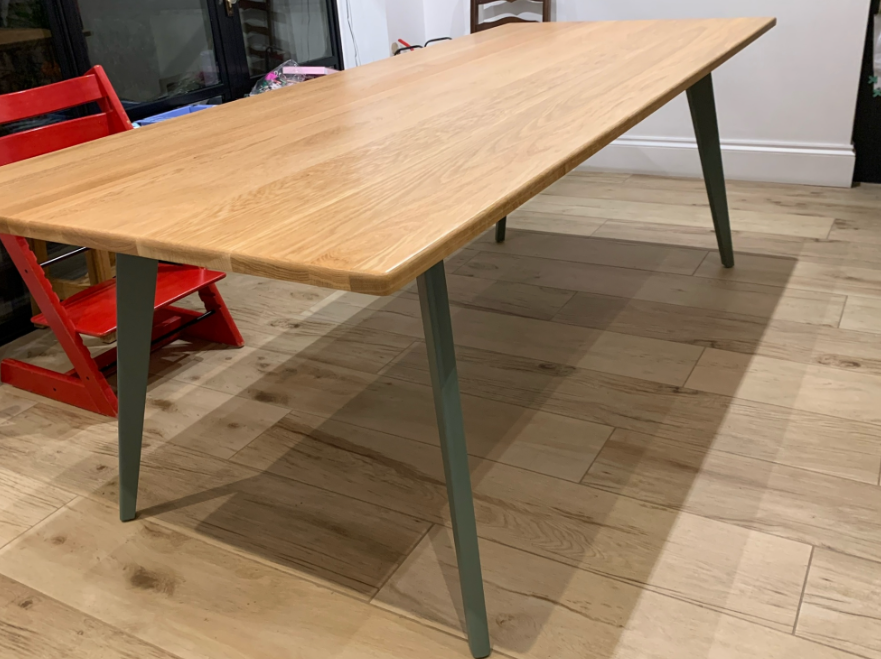
Treat visible edge depth and real timber thickness as separate decisions. A built-up edge can give a thicker look without the same weight as a full-depth top.
Existing bases set the limits before thickness does
Before ordering a table top for an existing base, check the base as carefully as the top. The safest-looking thickness can still be the wrong specification if the base plate is too small, the fixing points do not line up or the overhang is poorly judged.
Use these checks before you settle on a replacement restaurant table top:
- Base footprint: Look at how much of the top the base actually supports. A wide top on a narrow base needs more thought than a small square top on a centred pedestal.
- Overhang: Check how far the top extends beyond the support. Too much overhang can make the table feel poorly matched to the base.
- Fixing points need enough usable timber and the right fixing method. A desk top or table top supplied for a separate frame should suit the way that frame is drilled and attached.
- Screw depth: Make sure the fixings suit the top thickness. A thin top gives less room for error, and a thicker top still needs sensible fixing positions.
- Knee clearance should be checked with the base in mind. A thicker edge or a built-up underside can change how the table works for people sitting at it.
Standards give useful context, but they do not replace a proper top-and-base specification. The British Standards Institution lists BS EN 15372:2023 as the British Standard for safety, strength and durability requirements for non-domestic tables. That standard is about finished non-domestic tables, and it is not a public rule that tells you to order one fixed table top thickness.
Once you understand this, the job changes. You stop guessing between 24mm and 30mm and start checking the things that decide whether the top will work: support, fixing, movement, weight and edge depth. That is a much better way to buy a solid wood commercial top, because it turns a vague thickness choice into a clear specification.
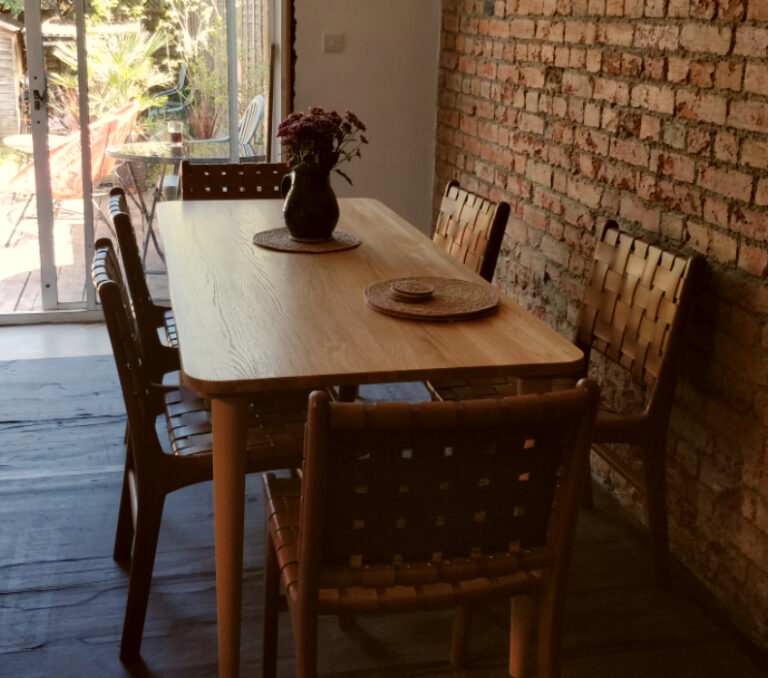
Questions we get asked about commercial table top thickness
Is 24mm thick enough for a solid oak restaurant table top?
Yes, 24mm can be a sound choice for many solid oak restaurant table tops when the base supports it properly and the fixing method suits solid wood. We treat it as a normal commercial option, especially where a lighter look is wanted.
Do thicker table tops warp less?
A thicker top does not remove the normal movement of solid wood. Grain direction, straightening bars, base support and fixing method all matter because solid wood still reacts to moisture over time.
Can I order a top that looks thicker than the material itself?
Yes, a built-up or false edge can make the visible edge look deeper than the main top. That can give a thicker look without adding the same weight as full-depth timber across the whole surface.
Are 19mm or 40mm table tops available?
We can make 19mm and 40mm tops, but those are not our standard stocked material thicknesses. They are better treated as special-case choices where the base, look or project brief calls for them.
Does the finish change the thickness I should choose?
The finish does not decide the thickness on its own. Our standard hardwax oil finish is water resistant, food safe and repairable, but the thickness decision still comes from the size, base support and fixing method.
This is general information, not professional advice.