
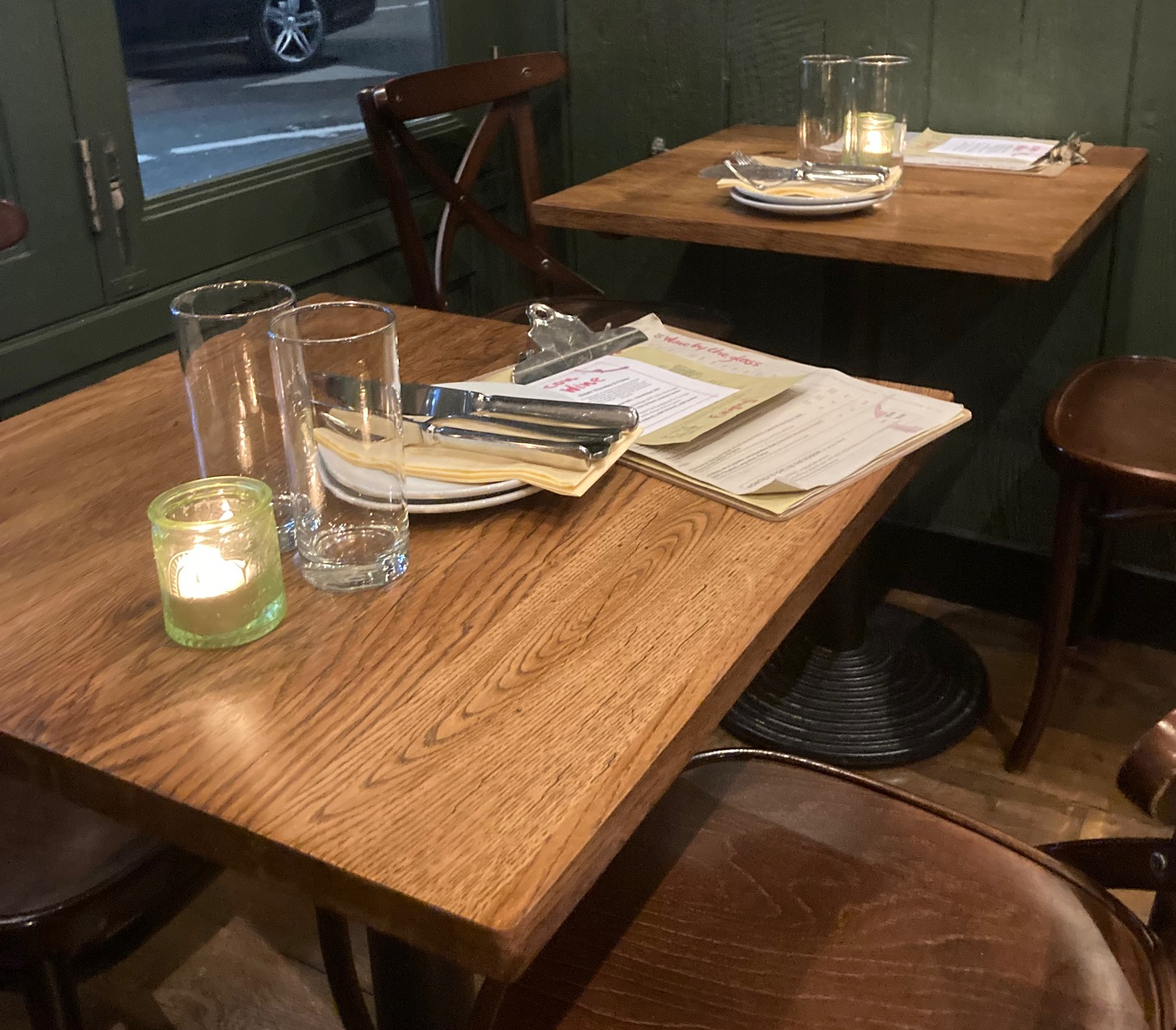
What should café owners look for when choosing table tops for a terrace or outdoor area?
Café owners should focus on material suitability, structural stability, sizing, base compatibility, maintenance, and future flexibility. A table top that looks right on day one can still become a poor choice outdoors if it reacts badly to rain, sunlight, temperature changes, uneven paving, or heavy daily use.
A terrace can look polished at opening time and tired by the end of the first season if the table tops were chosen on appearance alone. Outdoor service puts furniture through a particular kind of pressure. Rain lands suddenly, cups leave damp rings, chairs knock edges, and strong sun can change both colour and surface condition over time.
Many buying mistakes happen because owners treat outdoor table top materials as broadly interchangeable. They are not. Weather-resistant café tables vary widely in how they absorb moisture, cope with UV exposure, and respond to seasonal expansion and contraction.
Table of Contents
Overlooking material suitability for outdoor use
A common assumption is that any surface described as suitable for furniture will work outside. On a café terrace, that shortcut can become expensive. A top that performs well indoors may swell, fade, warp, or deteriorate once it is exposed to repeated wet and dry cycles.
“Weatherproof” and “weather-resistant” are often treated as if they mean the same thing. They do not. Weather-resistant usually means a material can cope with outdoor exposure for a period of time, provided it is used, maintained, and positioned properly.
Here is where the main differences tend to matter:
- Solid wood can work well outdoors if the species, construction, and finish are chosen carefully, but it will still move naturally with moisture and temperature.
- Veneered boards are usually a poor fit for exposed settings because water ingress at edges or joints can lead to lifting, bubbling, or substrate failure.
- Composite and laminate-based tops may cope better with moisture in some cases, yet prolonged UV exposure and edge damage can still shorten service life.
British Standards for outdoor furniture and timber grading systems can help frame quality expectations, but no standard removes the need to match the material to the site. A covered pavement terrace in central London poses different demands from a fully exposed coastal courtyard.
Solid wood vs veneer outdoors is one of the most misunderstood comparisons. Owners sometimes see a wood-look surface and assume the behaviour will be similar. In practice, a full solid wood top can often be refinished after wear, whereas a veneered surface has far less margin for sanding or repair once the face is damaged.
Finishes matter too. Hardwax oil finishes are often valued because they are maintainable and can be refreshed locally, which means that minor marks do not always require full replacement. Even so, no finish turns timber into an inert material. Moisture absorption, UV degradation, and surface warping remain part of the picture in outdoor use.
A rainy morning followed by a hot afternoon is enough to expose weak material choices. Terrace furniture durability is shaped by those ordinary shifts, not by showroom conditions.
Ignoring table top thickness and structural stability
Thickness affects more than appearance. It influences stiffness, weight, comfort, balance on the base, and how the top behaves over time outside.
Some buyers assume that a thicker top is automatically stronger. That is too simple. Excess thickness can add unnecessary weight without solving poor support, and an under-supported slab can still cup or bow if the construction underneath does not respect the way timber moves.
At workshop level, good structural joinery methods matter as much as headline thickness. Straightening bars, underframes, and sensible grain orientation all play a part in keeping a surface flatter and more stable. Tablemaker often uses removable straightening bars across the grain on solid tops because the aim is to reduce cupping while keeping the mounting practical and adaptable.
A quick table top thickness guide for outdoor use should include three checks:
- Match the thickness to the span and dimensions of the top.
- Check whether the support method distributes load properly.
- Make sure the chosen base can carry the weight and footprint safely.
Wind is often ignored in terrace table stability. A top that feels substantial indoors may become awkward if it is paired with a light base in an exposed outdoor seating area. By the same token, a heavy top on a weak or narrow pedestal can create a different problem, especially on paving that is slightly uneven.
Comfort also comes into it. A thick edge profile can look impressive, yet it may reduce knee clearance on smaller café tables or create a visually heavy effect in a compact terrace. Industry thickness standards are useful as a reference point, but the better question is whether the whole assembly feels stable, proportionate, and serviceable once drinks, plates, elbows, and outdoor conditions are added to the equation.
Underestimating the importance of sizing and layout
A terrace can lose capacity and still feel crowded if the table sizes are wrong. That sounds contradictory, but it happens often. Owners buy standard tops, place them tightly together, then realise staff cannot move easily and customers keep shifting chairs to let people pass.
Measurements taken from a product page rarely tell the whole story. Outdoor seating arrangement depends on chair width, turning space, access routes, door swings, planters, barriers, heaters, and the way customers actually arrive and sit down.
Before ordering, it helps to map the terrace in use rather than empty. Think about these practical points:
- Table spacing between occupied chairs, not just between table edges
- Walkways for trays, pushchairs, wheelchairs, and cleaning access
- Flexible layouts for pairs, groups, and occasional peak periods
UK accessibility guidelines should inform the layout from the start. A narrow route that technically fits furniture can still feel obstructed during service once bags, coats, and occupied chairs are added. Good space planning for terraces protects both flow and comfort.
Made-to-measure sizing can solve problems that standard dimensions create. A slightly narrower depth, a better corner radius, or a top sized to fit an existing line of bases can transform a difficult outdoor area. That sort of adjustment is often more useful than adding another table and hoping the space somehow works.
Picture two terraces with the same footprint. One uses off-the-shelf square tops and ends up with blocked paths and dead corners. The other uses a mix of compact two-person tables and a few joinable pieces, leaving clear walkways and better seating capacity without the cramped feel. That difference usually comes from planning, not luck.
Pro Tip: Always test different table base combinations on your actual terrace surface before making a bulk order to spot stability or compatibility issues.

Pro Tip: Request detailed material specifications and aftercare guides from suppliers to minimise future repair costs and downtime.
Neglecting fixing methods and table base compatibility
A surprising number of outdoor table problems begin underneath the top. Owners focus on the visible surface, then assume all bases, fixings, and drilling patterns are broadly interchangeable.
They are not. Table base compatibility affects stability, longevity, and safety. A top can be well made and still perform badly if it is mounted to the wrong support or fixed in a way that restricts natural movement.
When fixing table tops outdoors, four checks matter most:
- Confirm the base footprint suits the size and weight of the top.
- Use hardware suited to outdoor conditions, particularly where moisture may reach the fixings.
- Allow for timber movement if the top is solid wood.
- Check how the table behaves on uneven paving before putting it into service.
Undrilled table tops can be useful because they allow the mounting to be matched to the actual base rather than forced into a generic pattern. That matters for cafés reusing existing pedestal bases, changing suppliers, or working with awkward plate sizes. A pre-drilled top that does not align properly can lead to improvised solutions, including off-centre mounting or over-tightened fixings.
Outdoor conditions make bad mounting choices more obvious. Wind can catch larger tops. Water can sit around exposed hardware. Uneven ground can exaggerate any weakness in the base connection. Removable fixings, suitable washers, and sensible anchoring methods can all play a role, depending on the setup.
A secure outdoor table should feel planted without being over-engineered. If the top rocks during service, twists under load, or overhangs the base too far, the problem is rarely cosmetic.
Overlooking maintenance and long-term care
Many owners still buy on the promise of low effort. The phrase “maintenance-free” sounds attractive, but outdoor table maintenance always exists in some form. The real question is whether the upkeep is manageable and whether the surface can be repaired when wear appears.
Busy cafés place a lot of stress on outdoor tops. Sugar spills dry hard, cups leave moisture, menus drag across the grain, and cleaning happens quickly between covers. Even weather-resistant materials need routines that suit this level of use.
A sensible maintenance plan usually includes:
- Daily cleaning with products suitable for the surface
- Seasonal inspection for loose fixings, finish wear, and water traps
- Periodic refinishing or re-oiling where the material allows it
Cleaning solid wood tables calls for restraint. Harsh chemical sprays, soaking wet cloths, and abrasive pads can do more harm than many owners expect. For hardwax oil maintenance, a gentle cleaner and prompt drying are generally safer than aggressive degreasers, particularly on surfaces that are already exposed to fluctuating weather.
Repairable surfaces deserve more attention in buying decisions. A solid wood top with local staining or light scratching can often be refreshed through sanding and re-oiling, whereas a damaged non-repairable surface may need replacing outright. In practical terms, that changes the long-term cost and the look of the terrace over time.
UK climate conditions make seasonal checks worthwhile. Moist autumn air, frosty mornings, and sharp summer sun all leave different traces on furniture. A quick inspection at the start and end of the main outdoor season can catch finish wear before it turns into more detailed damage, especially around edges and fixing points.
Failing to consider adaptability and future needs
A terrace rarely stays exactly the same. Seating plans change, licensing conditions shift, neighbouring units open or close, and owners often revise layouts after seeing how customers actually use the space.
Short-term buying decisions ignore that reality. Fixed-size tops, inflexible drilling patterns, and surfaces that cannot be refinished or resized can lock a café into arrangements that stop making sense after one season.
Adaptable café tables tend to share a few useful traits. They can move between layouts, work with more than one base type, and remain serviceable after wear. For some operators, an undrilled top is valuable because it keeps future mounting options open. For others, the useful feature may be the ability to resize or refinish an existing top instead of discarding it.
Modular outdoor furniture concepts can help in tight urban terraces where covers change by time of day. Two smaller tables may serve better than one larger fixed unit if the lunch trade looks very different from weekend groups. Reconfigurable terrace tables are often less about novelty and more about operational common sense.
Adaptability also affects procurement waste. A top that can be repaired, re-mounted, or altered has a longer working life than one that becomes redundant the moment the layout changes. In a practical workshop context, that is often where bespoke adaptation has most value, particularly for cafés working around existing bases, awkward corners, or a revised seating plan.
Book a Free Outdoor Furniture Consultation
Get tailored advice on furnishing your café terrace for the best results in durability and design.
Book Your ConsultationThe hidden costs of getting it wrong
A poor table top choice does not always fail dramatically. More often, it creates a slow leak of time, money, and goodwill.
Imagine a terrace where two tops begin to wobble, one surface stains badly, and another starts to distort near the edge. None of those faults may force immediate closure, but staff spend service time rearranging tables, customers notice the condition, and replacements are ordered earlier than expected. The financial hit is only part of the story.
The hidden costs usually show up in a few ways:
- Earlier replacement cycles than planned
- Disruption during service while faults are managed
- A weaker impression of cleanliness, care, or overall quality
- More waste from disposing of furniture with little repair potential
Operational impact of table failures can be awkward to measure precisely, yet the effects are familiar across hospitality. Unstable furniture slows table turns, creates complaints, and adds friction to everyday service. Customer perception is shaped by those details, particularly on a terrace where the furniture is highly visible from the street.
Sustainability in café furniture is tied to lifespan as much as materials. A top that lasts, can be refinished, and can move to a new base usually has a more sensible lifecycle than a cheaper option that needs replacing after a short period outdoors. Environmental impact frameworks often look at durability and service life for that reason.
Cheap decisions are not always low-cost decisions. The full bill may arrive later through downtime, repeat purchasing, and a terrace that never quite feels settled.
Rethinking outdoor table tops: a practical perspective
Many of the common mistakes come from treating terrace furniture as a finishing touch. In daily café use, table tops are working surfaces exposed to weather, cleaning, impact, and constant handling.
A better approach is to judge each option by how it performs over time. That means looking at material behaviour, thickness, support, fit with the base, layout efficiency, maintenance routine, and the chance that the setup will need to change later.
The key points are straightforward:
- Choose outdoor table top materials for actual exposure, not just appearance.
- Check structural stability, including support methods and base compatibility.
- Plan sizes around circulation, accessibility, and service flow.
- Favour surfaces and fixing methods that can be maintained or adapted.
- Think in terms of working life, not just purchase price.
Choosing terrace table tops well usually comes down to respecting real use. A café terrace asks a lot from a surface, so the most reliable decisions are the ones grounded in durability, repairability, and a layout that still works on a busy afternoon.
Speak to a Table Top Specialist
Discuss your unique terrace space and explore custom solutions that fit your specific needs.
Contact a Specialist
Tablemaker
55 High St, London N8 7QB
02083416334
HVQM+58 London