
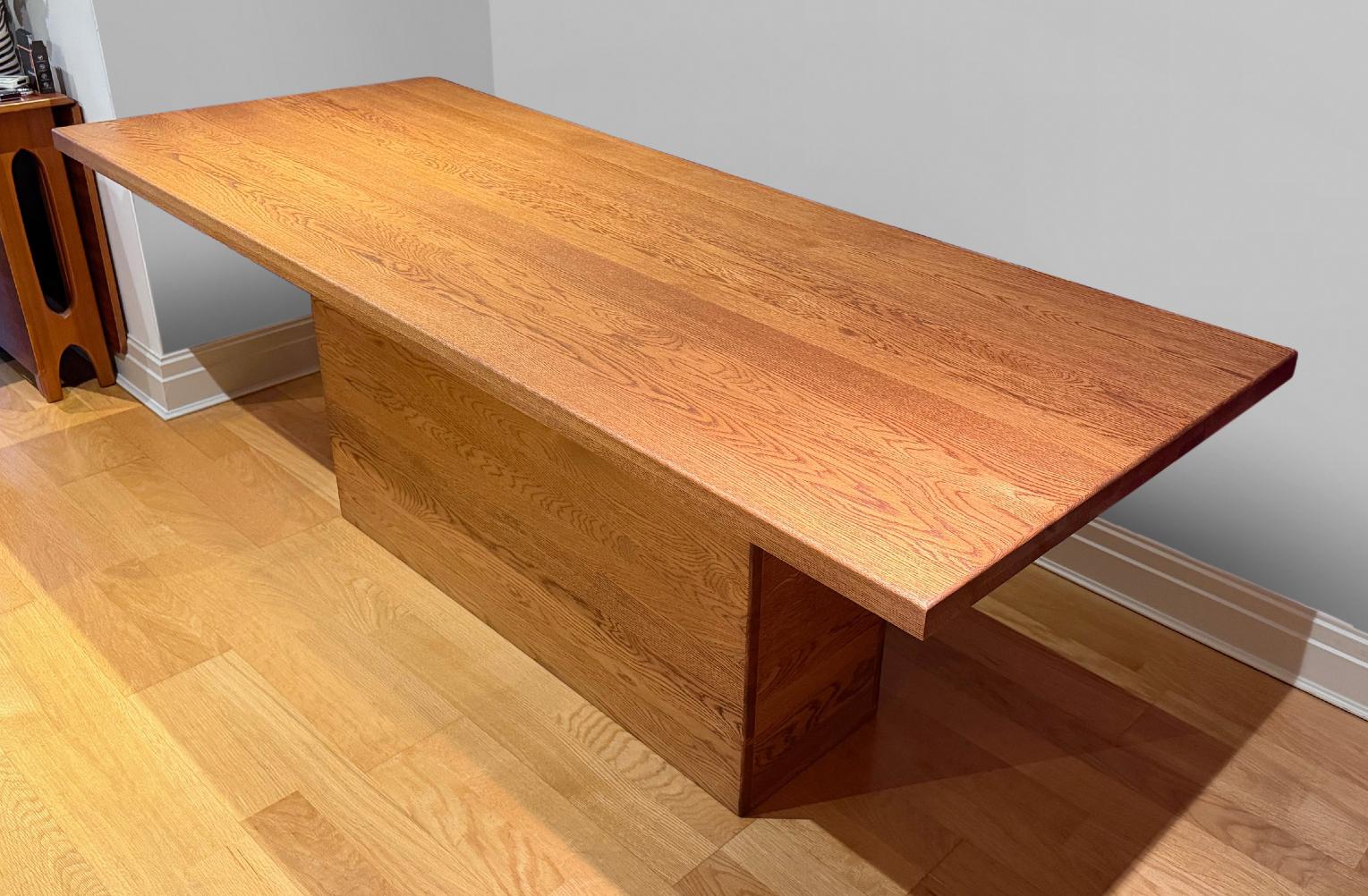
Can an existing table base safely take a solid wood top?
Yes, sometimes it can, but only if the base is strong enough, stable enough, and fitted in a way that allows the timber to move naturally. A solid wood top places different demands on a base than veneer, glass, laminate, or engineered board, so weight, fixing points, proportions, and movement allowance all need to be checked before anything is attached.
Table of Contents
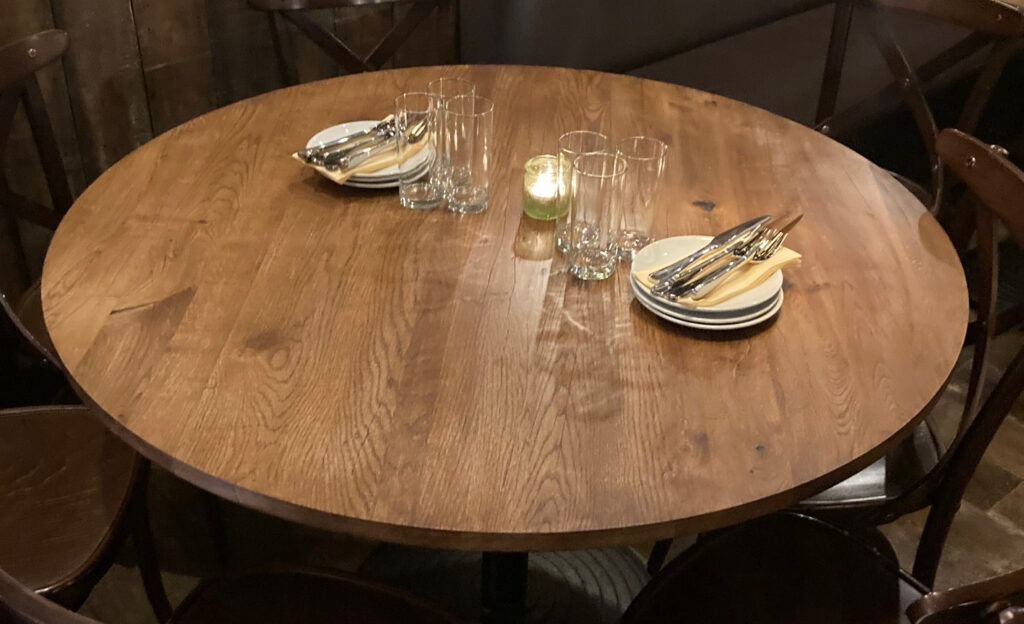
Understanding table base compatibility
A mismatched table usually looks fine at first glance. Then the top feels too heavy for the legs, the fixings sit in the wrong place, or the whole thing develops a wobble after a few weeks of use.
Some bases are built with solid timber in mind. Others are meant for lighter tops and never had to cope with the extra weight or seasonal movement of real wood. That difference matters more than many people expect.
- Bases that often work well include solid timber frames, welded steel bases with broad fixing points, and pedestal bases designed for heavier dining tops.
- Bases that need caution include lightweight hairpin legs, thin flat-pack frames, narrow pedestal bases, and bases with very limited fixing areas.
- Bases that often struggle include folding frames, lightweight café legs made for thin laminate tops, and damaged or uneven second-hand frames.
Weight is the first question. A solid oak top can be far heavier than a veneered panel of the same size, especially once thickness increases. If the original base was designed around a thin manufactured top, the load-bearing capacity may simply be too low.
Fixing method comes next. Some suitable table frames have rails, corner blocks, or metal plates that allow secure attachment. Others offer only a few central holes, which can leave the edges unsupported or force the top to be fixed too rigidly.
Size changes the picture as well. A compact square top on a sturdy base may work perfectly. A wide rectangular top with generous overhang can place far more stress on the same frame, particularly if people lean on the ends or slide the table across the floor.
Furniture designers and woodworking workshops usually assess compatibility by looking at the whole assembly, not one part in isolation. A base can be well made and still be the wrong match for a particular top if the proportions, thickness, or fixing layout are off.
The unique demands of solid wood table tops
Solid wood is strong, but it is not static. It responds to changes in humidity across the year, which means that the top can expand and contract slightly across the grain.
Movement matters
That movement is normal. It does not mean the timber is faulty. It means the fixing system needs a little flexibility built in, so the top can shift by small amounts without splitting around screws or stressing the base.
Imagine a top fixed tightly through round holes at every point. Once indoor moisture levels change, the wood tries to move but the fixings resist it. That is when problems can start, including cracks, distortion, or strain around brackets.
Weight and thickness matter too
Solid wood tops are usually thicker than many factory-made tops, and thickness adds weight quickly. A chunky top may look balanced on a substantial base, but the same piece can overwhelm a lighter frame both visually and structurally.
Grain direction also plays a part. Wood movement happens mainly across the width, not along the length, so fixing solid wood tops requires the base and brackets to work with that pattern. Better workshop construction often reflects this from the start through sensible board layout, stable moisture content, and details such as straightening bars where appropriate. Tablemaker, for example, uses construction features that account for real timber behaviour rather than treating the top as an inert panel.
Timber suppliers, joinery standards, and experienced makers all work from the same practical reality: a solid wood top needs support, but it also needs permission to move.
Pro Tip: Choose fixing brackets that allow the wood to move with seasonal changes to reduce risk of cracks and warping.
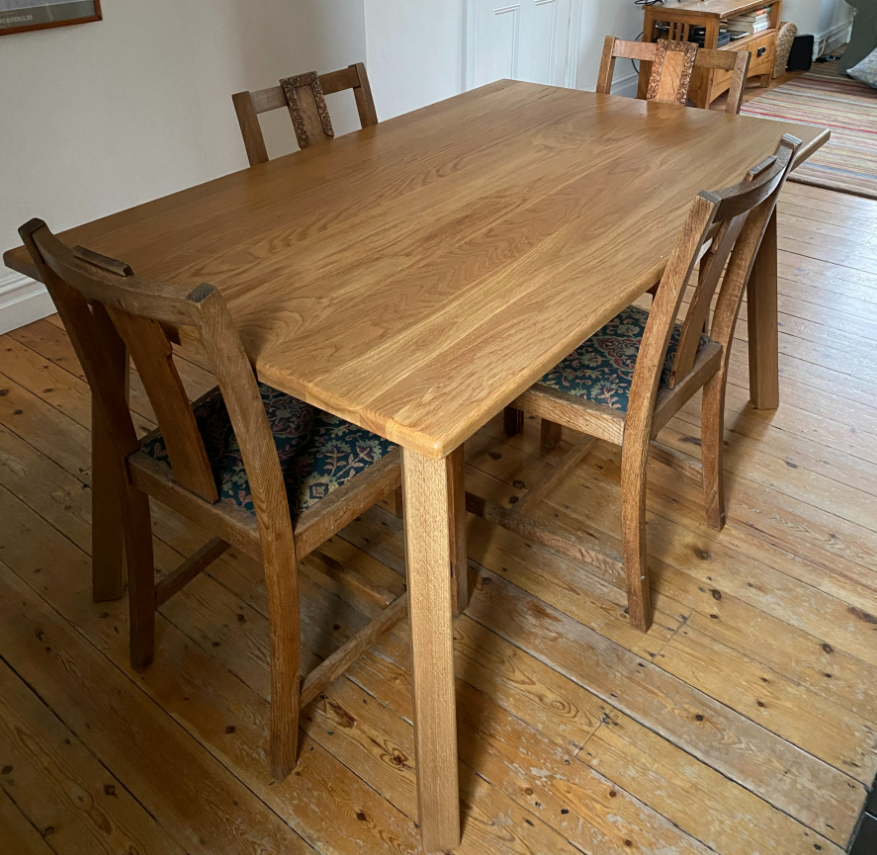
Pro Tip: Before attaching a solid wood top, set the table base on a perfectly level surface to spot hidden alignment or stability issues.
Assessing and preparing your existing table base
Before ordering or fitting a new top, give the base a proper inspection. You do not need specialist equipment for a first assessment, but you do need to look closely and be honest about what you find.
- Check for wobble and twist. Place the base on a flat floor and press gently on each corner. If one leg lifts or the frame rocks, the problem needs sorting before a heavier top goes on.
- Inspect joints and welds. Look for loose bolts, cracked welds, split timber joints, or signs of past repairs that have started to fail.
- Measure the fixing areas. Note where screws or brackets can actually go, and whether those points line up with a sensible support pattern for the new top.
- Test level and alignment. A base can feel firm yet still sit slightly out of square, which can create stress once the top is fixed.
- Look for weak spots. Thin rails, shallow brackets, or narrow mounting plates may need reinforcement if the top is large or thick.
A timber base may need tightening, regluing, or fresh pilot holes if old fixings have worn the original positions. Metal frames often need less repair work, but they can still have awkward fixing points that were intended for a different type of top.
If the base has only a small central plate, support at the edges may be inadequate for a wide top. If the legs sit too far inward, overhang becomes more noticeable and tipping risk can increase. Those are the sorts of details that change a project from simple swap to adaptation job.
Minor preparation might include replacing tired fasteners, adding movement-friendly brackets, or correcting small level issues. Serious wobble, cracked joints, or poor geometry usually point to a base that needs repair first or replacement altogether.
Fixing methods for solid wood tops on existing bases
Attaching the top is not just about holding it down. The aim is to secure it firmly while allowing controlled movement across the grain.
Some methods handle that balance well. Others create trouble later.
- Slotted brackets allow screws to hold the top while still giving the timber room to move. These are often a sensible option where rails or fixing plates already exist.
- Z-clips fit into a groove in the apron or support rail and let the top shift slightly as humidity changes. They work well on some timber bases, provided the frame is made to accept them.
- Figure-eight fasteners pivot slightly and can accommodate small movement. They are commonly used where there is enough thickness and access for correct fitting.
- Plain screws through round holes are usually the risky option for solid wood if they lock the top too tightly in place.
Screw placement matters as much as bracket choice. A fixing that is perfect near one edge may be wrong at the centre, depending on grain direction and how the base is built. Expansion gaps and slotted holes are small details, yet they often make the difference between a stable top and one that starts to complain with the seasons.
Existing bases can sometimes be adapted for better fixings. A workshop may add timber rails, alter bracket positions, or prepare new mounting points that suit a solid top properly. That kind of adjustment is often more reliable than trying to force a rigid frame to behave like a movement-friendly one.
Sizing, weight, and proportion considerations
Picture a delicate metal base with a thick oak top that projects far beyond the legs. The contrast may look striking in a photo, but daily use can expose the weak point very quickly.
Top thickness should suit both the span and the character of the base. A thinner solid wood top can still feel substantial, especially in a smaller room, whereas a very thick top can make the base look under-scaled and put more strain on the fixing points.
Overhang needs thought as well. A little overhang is normal and often desirable. Too much can create use at the edges, which affects stability and changes how the table feels when someone leans, writes, or rests an arm near the corner.
A few practical sizing prompts help here:
- Match heavier tops with broader, more planted bases.
- Treat large overhangs with caution on pedestal or narrow-leg designs.
- Consider how the table will be moved, including stairs, doorways, and flooring.
- Think about centre of gravity, especially for family dining tables or commercial use.
Visual balance matters, but safety and function come first. Furniture designers often work by eye and proportion, yet they also know that an elegant table still needs enough support where it counts.
Where a base is almost suitable, modest changes can widen the safe range. Extra rails, thicker mounting plates, or revised leg positioning may make a previously marginal frame workable for a made-to-measure top. That is often where bespoke sizing becomes useful, because the right answer may be a slightly narrower width or a reduced thickness rather than an all-or-nothing decision.
Get a Professional Assessment
Arrange an expert review to check if your table base can safely support a solid wood top and gain clear guidance on next steps.
Book an AssessmentWhen to consider bespoke solutions or professional help
Some retrofits are straightforward. Others call for proper workshop input.
Large tops, unusual bases, and awkward fixing layouts usually sit in the second group. The same applies where the table has sentimental value, commercial use, or a high risk of damage if the fitting goes wrong.
Professional help is worth considering if any of the following apply:
- The base is old, repaired, or slightly unstable.
- The new top is especially thick, wide, or heavy.
- The fixing points do not allow for wood movement.
- The base shape is unusual, including central pedestals or custom metalwork.
- The top needs precise shaping, cut-outs, or sizing to fit an existing frame.
A specialist workshop can assess whether the base can be adapted safely, what fixing method suits it, and whether the top dimensions need adjusting. In some cases, a bespoke top solves the problem neatly because the shape, thickness, and underside details are built around the base from the outset. Tablemaker sits in that space where sizing flexibility and workshop adaptation can matter more than choosing a standard off-the-shelf panel.
DIY still has a place. Tightening a solid frame, measuring fixing centres, or replacing basic brackets may be perfectly reasonable for a capable home improver. Once structural changes, unusual joinery, or movement-related fixing decisions enter the picture, experience becomes far more useful than guesswork.
Common misconceptions and practical realities
Myth: Any base will do.
A base may physically hold a top for a short time and still be a poor long-term match. Lightweight frames often cope with static display better than everyday use, particularly once people lean on the edges or move the table across the room.
Myth: If it lines up, it fits.
Bolt holes lining up does not mean the base is suitable for solid timber. Fit tolerance, support pattern, and movement allowance all matter. A neat first installation can still lead to cracks or distortion later if the fixing method is wrong.
Myth: Solid wood is just a heavier version of any other top.
Weight is part of the story, although wood movement is the real difference. Engineered boards tend to stay more dimensionally stable, whereas solid timber needs a little freedom across the grain. Treating both materials the same way is a common source of trouble.
Myth: A perfect finish means no adjustment was needed.
Many successful retrofits involve invisible adaptation underneath. Extra brackets, altered screw positions, trimmed dimensions, or reinforcement can all sit out of sight. The finished table may look effortless because someone took the awkward details seriously.
Furniture repair specialists see this often in reused dining bases and old desk frames. The project fails less from ambition than from assumptions about how simple the swap will be.
Looking ahead: making adaptable furniture choices
Retrofitting a solid wood top can be a very sensible move if the base is worth keeping and the pairing is thought through properly. It encourages a more durable view of furniture, where parts can be repaired, adapted, and refined instead of discarded at the first limitation.
Three ideas are worth carrying forward:
- Choose structures that can be opened up, repaired, and re-fixed without damage.
- Favour materials that age well and can be refinished after years of use.
- Leave room for future changes in size, base style, or function when possible.
That longer view changes the whole decision. A table stops being a sealed product and becomes a useful object with a life beyond its first setup. Workshops that build with repairability and adaptability in mind, including Tablemaker, make that approach much more practical.
The best result is rarely the quickest swap. It is the one where top, base, fixing method, and proportion work together well enough to keep serving the room for years.
Order a Custom-Made Table Top
Commission a solid wood top built to the exact dimensions and fixing needs of your existing table base for a perfect fit.
Get a Custom Quote
Tablemaker
55 High St, London N8 7QB
02083416334
HVQM+58 London