Posted on

Quality Control in Mass-Produced vs. Custom Commercial Furniture

Quality Control in Mass-Produced vs. Custom Commercial Furniture = Tablemaker

Quality Control in Mass-Produced vs. Custom Commercial Furniture

What is the difference in quality control between mass-produced and custom commercial furniture?

Quality control (QC) in commercial furniture varies significantly between mass-produced and custom-made pieces. Mass production applies systemised checks, automation, and batch testing to maintain consistency at scale. In contrast, custom furniture is inspected piece by piece, with hands-on oversight and direct maker involvement. Commercial buyers benefit from understanding these two approaches, helping them ensure their choices meet both durability demands and operational expectations.

Introduction: Why Quality Control Determines Commercial Furniture Performance

In commercial environments, furniture must handle more than occasional use. It is exposed to constant contact, frequent movement, and high footfall. From café chairs to hotel reception desks, durability is shaped by the quality control processes behind each item. This article explores how mass-produced and custom furniture manage QC differently – and why those differences matter when choosing furniture for demanding spaces.

Pro Tip: Always test samples under real lighting conditions to catch colour mismatches early.

Pro Tip: Involve the maker before finalising finishes and joinery—it avoids costly redesigns.

How does production philosophy influence quality control in commercial furniture?

Mass production prioritises consistency. QC is embedded in each stage through systems such as Lean manufacturing and Six Sigma, helping to minimise error and maintain uniformity. Standardised materials and methods ensure predictable results, forming the backbone of quality assurance in production environments.

Custom furniture takes a more individualised approach. Makers rely on visual checks, tactile judgment, and experience to guide the process. Adjustments are made manually to ensure each item meets specific expectations.

These different philosophies affect everything from tolerance thresholds to workflow structure. Both methods can achieve contract-grade QC, but they serve different commercial needs.

Furniture That’s Built to Last

Tired of replacing worn-out chairs and tables? Our contract-grade furniture meets commercial QC standards from day one.

Discuss Durable Designs

What does quality control look like in mass-produced commercial furniture?

Factories use automated tools – such as CNC routers and conveyor lines – to deliver consistent results. Quality checks are placed at multiple QC inspection stages throughout production. Batch sampling identifies defects before full production runs are completed.

Key metrics include yield rates, defect percentages, and calibration records. These figures help maintain repeatability, which is especially important in large-scale hospitality or retail projects.

Despite the advantages of automation, minor flaws may still occur if only samples are assessed. Buyers need to understand where mass production delivers best and where to apply extra scrutiny.

How is quality control managed in custom-made commercial furniture?

In custom workshops, quality control is achieved through ongoing manual inspection. Timber is selected individually, joinery is tested as it is fitted, and finishes are tailored to suit the material. Decisions are guided by tools like moisture meters and the maker’s hands-on expertise.

Each piece undergoes complete evaluation rather than representative sampling. While this allows for greater precision and personalisation, it also means small variations between units are likely.

This model suits venues that prioritise uniqueness and craftsmanship. However, it may not meet the consistency needed for repeatable orders.

Elevate your space with Tablemaker’s custom commercial furniture, designed for daily performance and made to reflect your brand’s identity.

How do material selection and preparation affect quality?

Material preparation plays a vital role in furniture performance. Mass producers rely on engineered panels or composite boards pre-graded for strength and moisture control. Kiln-drying is used to reduce movement risk, and materials are prepared in large batches.

In contrast, custom makers hand-select FSC-certified solid timber. Each board is evaluated for grain, stability, and tone. Moisture is tested on a per-piece basis to ensure stability in real-world use.

Understanding how timber is prepared helps explain why seemingly identical items can perform so differently under pressure.

How does joinery influence structural strength and long-term durability?

Joinery quality directly affects strength and stability. Factories use CNC technology to create consistent joints that meet commercial load ratings. These are often validated through testing protocols such as EN 16139 and BIFMA.

Custom furniture often features joints that are adjusted to suit the grain, stress points, or design of each piece. This approach can deliver excellent individual strength, though it may be harder to replicate precisely.

When choosing commercial furniture – especially for high-traffic commercial environments – it is important to understand how joinery choices support long-term durability and furniture performance under load.

How do finishing methods differ between mass and custom furniture?

Factory finishes are applied through automated spray systems. These offer consistency in texture and colour, and finishes are usually tested under EN 15185 standards for durability and abrasion resistance.

In custom workshops, finishes are applied by hand. Makers adjust layers based on the timber’s absorbency and tone, often using oils, waxes, or lacquers. This creates depth and variation that may not be present in machine-applied coatings.

The choice between these approaches often depends on setting. High-turnover venues may prefer hard-wearing consistency, while more design-focused spaces can benefit from custom finishes with visible character.

What testing standards apply to commercial furniture?

Mass producers usually follow a clear set of industry standards – including EN 15372, EN 16139, and ISO 9001 – covering load, fire safety, and durability. These standards are documented and traceable, which is important for procurement teams.

Custom makers may use the same materials and techniques but might not conduct official testing unless specified. Some will offer informal evidence or conduct small-scale internal tests.

In any commercial project where safety, compliance, or performance is critical, it is essential to ask for proof of testing and understand the scope of quality assurance in production.

What happens to QC when you scale up furniture orders?

Mass production excels at scale. Whether you order ten units or two hundred, dimensions, finish, and structural performance will be consistent. Spec sheets and batch records support accurate replication and batch variation control.

Scaling with custom furniture introduces more variables. Grain pattern, tone, and finishing can shift slightly between batches – even when designs are matched.

Buyers planning large or multi-site installations should discuss these differences early to avoid unwanted variation.

How do documentation, traceability and warranty terms differ?

Mass-produced furniture is backed by formal documentation, including serial numbers, calibration records, and structured warranty terms. This system allows buyers to trace batches, submit claims easily, and plan replacements.

In contrast, custom shops may offer more limited paperwork. Some rely on informal assurance or simple care guidelines. While service can still be strong, gaps in documentation could lead to uncertainty.

Red flags to watch for:

  1. Lack of a clearly defined warranty period.

  2. Vague or missing written warranty terms.

  3. No tracking system for batches or individual items.

  4. Verbal promises with no written follow-up.

  5. No clear process for managing replacements or faults.

When sourcing commercial furniture, buyers should always clarify how documentation and support are handled.

Which QC Model Fits Your Commercial Space? Practical Use-Case Guidance

Each type of space benefits from different QC strengths:

  1. Restaurants and cafés often require durability and fast replacements, making mass-produced options ideal.

  2. Hotels may combine both models – mass production for guest rooms and custom designs for lobbies.

  3. Offices tend to favour repeatability in shared spaces, with bespoke options reserved for reception or executive zones.

  4. Boutique spaces can showcase brand identity with custom pieces that highlight craftsmanship. can showcase brand identity with custom pieces that highlight craftsmanship.

Choose the QC model that best fits your durability needs, budget, and aesthetic goals.

QC Evaluation Checklist: Questions to Ask Any Furniture Supplier

  1. Which quality control and commercial standards do you follow (e.g. EN 16139, BIFMA, ISO 9001)?

  2. Can you walk me through your QC inspection stages?

  3. What testing or durability evidence do you provide?

  4. How is consistency maintained across production runs?

  5. What tolerances do you allow in finish, dimensions, and joinery?

  6. Do you track production batches or provide serialisation?

  7. What does your warranty include and exclude?

  8. Can I view long-term use examples of your commercial furniture in similar venues?

Conclusion: Making an Informed Choice Between Mass-Produced and Custom QC

Each QC model brings distinct strengths. Mass-produced furniture offers reliable outcomes, shorter lead times, and repeatability with full documentation. Custom-made furniture delivers focused craftsmanship, in-depth material consideration, and design-led flexibility.

By understanding how quality assurance in production affects performance, buyers can make more confident procurement decisions that suit the real demands of their commercial space.

Glossary: Quality Control Terms Explained

  • Batch Testing – Sampling a portion of products from a larger group to assess defects or inconsistencies.

  • Tolerance – The acceptable margin of error in measurements or finishes.

  • Traceability – The ability to track each item back to a production run or supplier.

  • Moisture Content – The percentage of water within timber, which affects movement and durability.

  • Calibration Logs – Records showing the adjustment and accuracy of measurement tools or machines.

  • Joinery – The method by which furniture components are joined, such as mortise-and-tenon or dowel joints.

  • Compliance Documentation – Certificates or records that show products meet required safety or performance standards.

  • Yield Rate – The proportion of products that meet quality requirements during production.

  • Batch Variation Control – Processes used to maintain consistency between production runs.

  • Furniture Performance Under Load – How well furniture maintains strength and stability when bearing weight or stress.

  • Inspection Stages – Key points in the production process where quality is checked for compliance and consistency.

  • High-Traffic Commercial Environments – Public or business settings where furniture is subjected to frequent use and higher wear.

Downloadable Tool: Procurement QC Checklist

Use the following checklist to guide conversations with furniture suppliers and assess the reliability of their quality control process:

  • What quality control and commercial standards do you follow (e.g. EN 16139, BIFMA, ISO 9001)?

  • Can you walk me through your QC inspection stages?

  • What testing or durability evidence do you provide?

  • How is consistency maintained across production runs?

  • What tolerances do you allow in finish, dimensions, and joinery?

  • Do you track production batches or provide serialisation?

  • What does your warranty include and exclude?

  • Can I view long-term use examples of your commercial furniture in similar venues?**

Bespoke Without the Guesswork

Get custom pieces with full documentation, joinery specs, and lifecycle QC insight — no compromises.

Bespoke Oak Tables

Tablemaker

55 High St, London N8 7QB

02083416334

HVQM+58 London


Posted on

The Interior Designer’s Checklist for Working With a Furniture Maker

The Interior Designer’s Checklist for Working With a Furniture Maker -Tablemaker

The Interior Designer’s Checklist for Working With a Furniture Maker

What should an interior designer prepare before working with a furniture maker?

To ensure a smooth collaboration, interior designers should prepare a clear project brief, accurate technical drawings, confirmed material choices, and a realistic budget. These essentials align design goals with what is practically achievable. This helps avoid delays and ensures a streamlined process from concept through to installation.

Define Your Project Brief and Design Intent Clearly

Start by creating a precise and well-organised brief. This document should clearly outline the purpose of the furniture, who will use it, how it supports the space, and the overall design story. Makers need more than aesthetic references. They require defined functions, client priorities, and clearly stated constraints.

Avoid broad or vague goals. Include information such as the target style, materials under consideration, expected use cases, and any influences from the wider design scheme. Doing so helps the maker understand exactly what you need. It also ensures fewer revisions throughout the process. Providing a well-documented design intent helps streamline custom furniture collaboration and supports effective design collaboration from the outset.

Pro Tip: Always test samples under real lighting conditions to catch colour mismatches early.

Pro Tip: Involve the maker before finalising finishes and joinery—it avoids costly redesigns.

Compile Essential Measurements and Technical Drawings

Detailed drawings transform your concept into a buildable design. Provide scaled elevations, critical dimensions, and tolerances. Ensure these are clearly labelled and cross-checked. Without precise information, there is a higher risk of build errors or delays.

Incorporate FF&E schedules or GA drawings if they are relevant, especially in commercial projects. Mark up spatial flow, access zones, and any site limitations that could affect the design. Pay close attention to installation tolerances and physical access during delivery. Using a comprehensive technical drawings checklist ensures smoother production.

Need Custom Furniture Built to Spec

Ensure your designs are built precisely and beautifully by expert makers who understand design intent.

Get a Custom Quote

Finalise Material Choices and Preferred Finishes

Material decisions influence both the appearance and performance of the finished piece. Identify your timber species, veneers, finish types, and whether sustainability certifications are required. Communicate preferences early, as makers often need time to source specific materials.

Use accurate language to describe textures and tones. For example, matte lacquer, open-grain ash, or waxed oak. Indicate where materials will be touched frequently or exposed to wear. This ensures the appropriate level of durability and reduces surprises during fabrication. When choosing wood species for furniture, consider both visual appeal and practicality. Choosing responsibly sourced timber and low-VOC finishes can further align the project with sustainable design principles.

For designers working on bespoke desks or workstations, Tablemaker solid wood desk tops provide a highly customisable and durable surface option. Their range includes sizes and finishes that suit contemporary and traditional schemes alike, making them ideal for design-led interiors.

Establish Your Budget and Understand Cost Factors

Clarify your budget from the beginning. Break it down where necessary to reflect different cost drivers. Timber grade, labour time, joinery complexity, and finish quality all influence pricing. Ask for detailed breakdowns or price ranges to better understand the trade-offs involved.

Incorporate value engineering where appropriate. For example, reducing the number of curved components or selecting a standard timber section can reduce costs without compromising structural integrity. Discussing these elements early improves outcomes and helps maintain the project schedule. Understanding furniture maker pricing factors allows designers to anticipate and manage potential adjustments. For bespoke furniture builds, early budget clarity helps avoid last-minute changes.

Confirm Lead Times and Align Project Schedules

Furniture production involves several key stages. These include material acclimatisation, cutting, assembly, finishing, and curing. Each one requires sufficient time, especially with specialist finishes or non-standard materials. Understand how these timelines impact your overall programme.

Ask your maker for a production schedule and align it with your project’s critical path dates. Allow extra time for delivery, installation, and snagging. Consider environmental factors, such as humidity, which can influence drying times and material behaviour. Planning for furniture production lead times helps prevent avoidable delays.

Share Reference Images and Functional Requirements

Support your written brief with curated visual references. These might include mood boards, previous projects, or carefully selected imagery. Combine these with detailed functional notes. Be sure to include information about load capacity, clearances, storage requirements, and ergonomic considerations.

Images help convey proportions, style, and finish tone. Functional details ensure that the piece serves its intended purpose. Together, they provide the maker with both design direction and technical clarity, reducing the risk of misinterpretation. Including visual and functional reference points ensures accurate outcomes. Incorporate ergonomic design principles to enhance comfort and usability.

Review Construction Methods and Feasibility with the Maker

Once your concept is clear, review the structural feasibility with your furniture maker. Discuss joinery options, structural support, and material limitations. Some visually compelling designs can prove impractical to construct or maintain over time.

Leverage your maker’s experience and insight. They can advise on weight distribution, long spans, and hidden fixings that contribute to stability. Use these discussions to refine the specification where needed, without compromising the design. Exploring bespoke furniture feasibility early in the process prevents structural challenges later on.

Questions to Ask Your Furniture Maker

  1. What joinery method would you recommend for this type of piece?

  2. Are there any structural concerns with this design?

  3. How do you manage material movement over time?

  4. Can this detail be executed within the current budget?

  5. Are there simpler alternatives that would preserve the design intent?

These questions encourage a collaborative discussion and ensure both form and feasibility are addressed in equal measure.

Approve Samples, Prototypes and Any Mock-Ups

Test your ideas before full production using samples and prototypes. Review grain direction, finish consistency, and colour matching. If the design includes bespoke elements, such as a curved drawer or a flush handle, request a physical mock-up for evaluation.

This stage serves as a form of quality control. It also builds trust between designer and maker by confirming that design choices are viable and well-executed. Document all feedback thoroughly to ensure alignment. Sample approvals and prototype testing help to reduce production risks.

Plan Delivery Logistics, Access Routes and Installation Needs

Make sure the finished piece can be delivered and installed without issue. Measure every access point it will pass through. This includes doorways, stairwells, and lifts. Account for the furniture’s weight, its manoeuvrability, and how it will be packaged.

  1. Measure all access points, including doorways, hallways, and ceiling heights.

  2. Confirm lift and stair access for the delivery route.

  3. Coordinate installation timings with other trades on site.

Be aware of site conditions, such as restricted delivery hours or the need for floor protection. Taking these steps prevents unnecessary delays or property damage. Planning for custom furniture installation at this stage avoids challenges during the final phase of the project.

Glossary of Common Joinery Terms

  1. Mortise and Tenon: A classic joint where a projection (tenon) fits tightly into a cavity (mortise), offering strength and stability.

  2. Dovetail Joint: Interlocking ‘tails’ and ‘pins’ that resist being pulled apart. Often used in drawer construction.

  3. Mitre Joint: Two angled cuts join to form a corner. Commonly seen in picture frames or trim.

  4. Biscuit Joint: A thin oval-shaped ‘biscuit’ is glued into slots in adjoining pieces. It strengthens alignment.

  5. Domino Joint: Similar to a biscuit but created with a Festool Domino tool. Offers precision and strength for large-scale pieces.

Understanding these terms helps you communicate more effectively with your maker. It also helps you assess the craftsmanship involved in the final product.

Complete Final Quality Checks and Formal Sign-Off

Before installation, conduct a careful and structured inspection of the finished piece. Look for defects such as uneven finishes, exposed fixings, or irregular joints. Confirm that all specifications match the approved drawings.

Use a checklist to guide your review. Take photos of key areas and record any outstanding issues. Only sign off when everything meets your expectations. This final check ensures accountability and concludes the project on a professional note. A documented furniture quality checklist protects both parties and provides a clear record of standards met.

Want a Done-for-You Furniture Production Plan?

We turn your concept into a build-ready roadmap that makers can follow with zero confusion.

View Offers

Tablemaker

55 High St, London N8 7QB

02083416334

HVQM+58 London


Posted on

How to Select the Perfect Table Style for Your Food Service Venue

How to Select the Perfect Table Style for Your Food Service Venue

How to Select the Perfect Table Style for Your Food Service Venue

What makes table style so important in a food service venue?

The style of tables in a hospitality venue does more than just enhance the decor. It influences guest comfort, service efficiency, dwell time, and how your brand is perceived. Selecting the right table style aligns with your operational needs and helps create a memorable, seamless dining experience.

An AI photo showcasing different food venue table styles.

Introduction: Why Table Style Shapes the Entire Guest Experience

As soon as someone enters a café, bistro or restaurant, they interact with a table. It is where they sit, place their belongings, and begin to form their first impressions. The shape, size, material and layout of tables influence how people feel, how long they stay, and how easily your staff can move around. Tables are not just practical; they set the tone, shape service flow, and enhance the overall atmosphere.

Pro Tip: Always test table height with the actual chairs you’ll be using before final purchase.

An AI photo of a food service oak table.

Pro Tip: For small spaces, mixing table shapes improves flow and guest comfort without sacrificing capacity.

Know Your Venue: Coffee Shop, Restaurant, Bistro or Hybrid Space?

Each food service venue type comes with unique guest behaviours and operational rhythms. Quick service restaurants (QSRs) focus on rapid turnover and compact seating. Cafés may cater to guests who work or socialise for extended periods. Fine dining venues prioritise space, privacy, and aesthetics. Defining your venue type helps you choose commercial dining furniture tailored to both functional and aesthetic needs. Whether you manage a casual café or hybrid space, selecting the best tables for food service venues is a foundation for long-term success.

Furniture Planning Consultation

Need help choosing tables that match your space and brand? Our specialists help you plan it right the first time.

Book Consultation

How Table Shapes Influence Space, Service Flow and Customer Comfort

The shape of a table directly affects how space is used and how comfortable it feels. Round tables foster intimacy and free-flowing movement, making them ideal for sociable dining and relaxed seating clusters. Square and rectangular tables make efficient use of space and are well-suited to group dynamics in high-footfall environments. Their placement can influence service flow, affecting circulation paths and potential choke points. Strategic combinations of shapes can enhance visual cohesion and create ergonomic, accessible layouts. This consideration is a key part of effective table layout optimisation for busy venues.

Choosing the Right Materials: Durability, Aesthetic and Daily Use

The choice of material plays a vital role in the longevity and upkeep of your tables. Solid wood offers warmth and texture but requires regular care and refinishing. High-pressure laminates (HPL) are highly durable, resistant to heat and stains, and easy to maintain, making them ideal for busy food service venues. Sealed compacts or engineered surfaces provide modern aesthetics with practical benefits. Consider how daily use, moisture, cleaning routines and menu style influence your ideal material. For expertly crafted wooden tables, manufacturers like Tablemaker provide reliable, commercial-grade options for restaurant table design.

Ergonomics Done Right: Table Height, Surface Area and Proportions

Getting table ergonomics right is essential for guest comfort. Appropriate table height, adequate knee and elbow room, and proportionate surface area all contribute to a positive dining experience. British Standards such as BS EN 527 and BS EN 15372 offer guidance on optimal dimensions, structural safety and user comfort. Avoid mismatched seating combinations and ensure tables offer suitable clearance and plate spacing. These ergonomic principles help reduce customer discomfort and improve dwell time. Both factors are key to enhancing the overall guest seating experience.

Table Bases and Stability: The Foundations of a Good Dining Experience

Stable tables are essential for a professional and satisfying dining experience. Pedestal bases offer enhanced accessibility and help prevent obstruction, while four-legged options provide traditional strength and structure. Weighted bases or adjustable glides allow for better floor levelling, especially on uneven surfaces. Consistent table stability contributes to smoother service, prevents spills, and reinforces guest confidence in your venue’s quality standards.

Aligning Table Style with Your Brand Identity and Atmosphere

Table style should echo your venue’s visual identity. Rustic cafés might choose timber with a natural grain, while industrial eateries may favour steel frames and reclaimed finishes. Material texture, shape, and colour palette should reinforce the mood, whether that is cosy, minimalist, or luxurious. Tables help define ambience and unify the space visually. A cohesive approach supports café interior cohesion and strengthens brand presence. Specialist suppliers like Tablemaker offer custom solutions that integrate furniture with broader brand storytelling.

Designing for Flexibility: Modular and Mixed Table Layouts

Flexibility in table layouts enhances operational adaptability. Mix two-seaters, four-seaters and occasional communal tables to suit different group sizes. Moveable and reconfigurable layouts support events, seasonal changes and peak-hour demands. Modular designs with compact footprints and tessellating shapes enable quick rearrangement without disrupting flow. Investing in flexible, space-smart table solutions ensures future-proof versatility and supports broader hospitality furniture planning goals.

Indoor vs Outdoor Table Styles: What Changes and Why It Matters

Outdoor dining introduces unique requirements for furniture. Materials must endure temperature fluctuations, UV exposure, rain and regular cleaning. Weather-resistant café tables made from treated hardwoods, powder-coated metals or plastic composites offer durability and ease of care. Finishes should resist fading and warping. Maintaining consistency in style between indoor and outdoor areas is ideal. However, durability and performance should take priority in external environments.

Glossary of Common Material Terms

High-pressure laminate (HPL): A durable, heat- and stain-resistant surface used in commercial dining furniture. Ideal for venues with high turnover and frequent cleaning.

Compact laminate: A solid core surface made of multiple layers of kraft paper and resin, offering durability and a sleek, modern appearance.

Powder-coated metal: A metal surface coated with a dry powder that is cured under heat. It provides corrosion resistance and vibrant colour finishes for both indoor and outdoor use.

Sealed hardwood: Natural wood treated with protective coatings to resist moisture, wear and spills. Offers warmth and texture with added resilience.

Patina: A natural change in surface appearance over time, especially on wood, resulting from ageing and use. This is often seen as adding character.

Moisture-resistant core: A specially engineered table core that resists swelling, warping and degradation in humid or wet conditions.

Maintenance and Longevity: What to Expect from Each Table Style

Each table material has its own maintenance rhythm. Solid wood requires sealing and occasional refinishing but gains character over time. Laminate and compact materials resist wear, stains and heat, making them low-maintenance. Regular cleaning protocols should match hospitality standards to retain aesthetic and functional quality. Venues with heavy footfall should plan for wear-and-tear patterns and ensure easy-care surfaces. Transparent expectations protect your investment and help furniture remain fit for purpose.

A Simple Framework for Choosing Your Ideal Table Style

You can simplify table selection by mapping key operational priorities:

  1. Define your venue type and service model.

  2. Match table shape to guest comfort and traffic flow.

  3. Choose durable materials suited to your pace and style.

  4. Follow ergonomic guidance for height and spacing.

  5. Design layouts with adaptability in mind.

This framework supports confident decision-making and ensures your tables align with business goals and guest needs. It is a key part of any effective hospitality furniture planning process.

Conclusion: Balancing Style, Function and Value for Your Venue

Well-chosen tables do more than fill a space. They bring form, comfort, identity and long-term value to your food service venue. When style supports functionality and functionality enhances guest comfort, the result is a cohesive, guest-friendly environment. Whether you are outfitting a cosy café or designing a high-capacity restaurant, selecting the perfect table style helps shape memorable experiences and supports sustainable operational success.

Custom Table Design Services

Want tables that reflect your venue’s unique vibe? We design and deliver made-to-fit furniture for cafés and restaurants.

Shop Custom Tables

Tablemaker

55 High St, London N8 7QB

02083416334

HVQM+58 London
 

Posted on

How Table Shape Influences Customer Flow and Table Turnover in Busy Restaurants

How Table Shape Influences Customer Flow and Table Turnover in Busy Restaurants -Tablemaker

How Table Shape Influences Customer Flow and Table Turnover in Busy Restaurants

How does table shape affect flow, speed, and revenue in restaurants?

Table shape has a quiet but powerful influence on how a restaurant operates. It directs customer flow, shapes staff efficiency, and affects how quickly tables turn. Choosing the right shape can create seamless service, especially in a busy dining room. Even small changes in geometry can noticeably enhance the guest experience and increase revenue per square metre. This guide by Tablemaker offers an insight into all table shape aspects.

An AI photo displaying different restaurant table shapes.

Introduction: How Table Shape Affects Flow, Speed, and Revenue

Picture a busy Saturday night. One restaurant feels effortless and coordinated. Another feels tight, with staff and guests squeezing past each other. Often, the difference lies in table shape. Beyond layout, geometry sets the pace of movement, service, and guest comfort. Circular, square, or rectangular tables each influence how a room functions.

Think of the dining area as a stream in motion. Table shapes become the stones that redirect the flow. Some shapes create smooth turns, while others produce sharp angles. Many operators focus on appearance or maximising the number of seats. However, shape is the hidden force shaping movement and timing. Over time, these details make a measurable difference in service speed and guest turnover.

Pro Tip: Oval tables are underused but often solve space and flow issues better than rectangles or rounds.

An AI photo of a restaurant oak table top.

Pro Tip: Even a 10 cm increase in clearance can significantly reduce staff fatigue and improve speed.

How Table Geometry Changes the Way Customers Move Through a Space

Movement patterns within a restaurant follow arcs, loops, and turns shaped by the layout. Table geometry plays a defining role in whether that movement flows or stalls.

Round Tables and Movement Flow

Circular tables, which have no corners, make turning easier. They ease movement and reduce awkward contact during peak hours. These benefits come at a cost, as more space is needed around them. This requirement limits overall capacity.

Square and Rectangular Shapes in Tight Spaces

Square tables create sharper turns and increase congestion in narrow paths. Rectangular tables help form natural aisles, which streamline walkways. However, when placed too closely, even rectangular shapes can lead to high-density traffic, reduced clearance, and increased movement friction.

Real Movement vs Floor Plans

Floor plans can suggest ideal flow, but reality often differs. Observing how staff and guests actually move helps identify where geometry helps or hinders. Recognising these real-world flow patterns is essential to diagnosing bottlenecks.

Get a Restaurant Layout Audit

Unlock hidden flow issues and increase your seat-to-space ratio with our expert guidance.

Call Tablemaker

The Strengths and Weaknesses of Round, Square, Rectangular and Oval Tables

Each table shape affects layout, comfort, and turnover differently:

Circular Tables

  1. Encourage conversation and group connection.

  2. Visually soften the space.

  3. Reduce overall capacity due to their footprint.

  4. Cause movement issues if too closely packed.

Square Tables

  1. Work well for modular arrangements.

  2. Help manage capacity during quiet and busy periods.

  3. Add more corners, which may cause obstruction.

Rectangular Tables

  1. Maximise seating density.

  2. Simplify serving paths.

  3. Work best in straight or linear layouts.

Oval Tables

  1. Combine the benefits of round and rectangular forms.

  2. Fit well in irregular spaces with tight flow zones.

Choosing a shape aligned with service style, whether fast-paced or leisurely, can improve both function and ambience.

How Table Shape Influences Dwell Time, Comfort, and Group Behaviour

Why Circular Tables Encourage Lingering

Circular tables promote group connection and make everyone feel equally involved. They invite longer stays and relaxed conversation. This makes them well suited to venues with a slower rhythm.

Rectangle and Square Dynamics

Rectangular tables give structure. People at the ends often steer the conversation, while those on the sides engage less. This layout tends to lead to shorter meals. Square tables feel more compact, especially in tight spaces, which may reduce comfort and shorten visits.

Behaviour-Informed Seating Choices

By observing how guests interact with each shape, owners can influence dwell time, interaction styles, and table turnover to suit their goals.

The Impact of Table Shape on Staff Movement, Reachability, and Service Efficiency

Table Shape and Server Route Efficiency

Service speed depends on how easily staff can move through the room. Table shape determines the paths servers follow and how quickly they reach each guest.

How Servers Experience Different Shapes

Circular tables allow equal access, though spacing becomes an issue near walls. Rectangular tables offer straight, defined paths that help maintain rhythm. Square tables often lead to cramped corners and inefficient routes.

Staff describe moving around circular tables as “looping,” which works in open spaces but feels tiring in compact layouts. Rectangular setups reduce these loops, making service quicker and less physically demanding. Narrow turning radii around square or overly tight table setups can slow service and increase fatigue.

Clearance and Labour Efficiency

Even a small drop in clearance can slow staff and add strain. Efficient paths reduce fatigue and increase output. Mapping staff routes based on table shape improves labour use and service timing. Planning with pathing efficiency in mind ensures smoother circulation and fewer service interruptions during high-pressure shifts.

How Table Shape Affects Turnover, Capacity, and Revenue per Square Metre

Capacity Optimisation by Shape

Each table shape offers different seating and turnover outcomes. Rectangles generally provide the best space-to-seat ratio, which is ideal for fast-paced service. Round tables feel open and comfortable but reduce total capacity.

Finding the Best Yield Per Square Metre

Square tables balance efficiency and flexibility but require careful placement. Oval tables blend elegance with practical seating density. Selecting the right shape requires understanding both space needs and the pace of service. Ultimately, layout efficiency plays a major role in determining how much revenue can be generated within a fixed footprint.

Choosing the Right Table Shape for Different Restaurant Concepts

Aligning Shape with Concept

Different restaurant types need different shapes to support their service rhythms.

Fast-Casual and Quick-Service: Use rectangular two-tops for speed and capacity.

Fine Dining: Choose circular or oval tables to encourage longer stays and comfort.

Small Urban Cafés: Use square tables that can be rearranged easily.

Social or Brunch Venues: Mix shapes for flexibility and visual variety.

Booth-Heavy Layouts: Rectangular and square tables work best in fixed spaces.

Fire Safety and Access Regulations

Layouts must comply with fire codes and accessibility standards. UK guidelines typically require aisles to be at least 1,200mm wide. Overusing large, round tables can block these spaces and create safety issues. Always check regulations when finalising a layout.

Accessibility for Wheelchair Users

Inclusive planning must consider how each shape supports wheelchair access. Rectangular tables with open ends allow better access than enclosed shapes. Turning space and reach distance also play a role in table placement.

Small Layout Tweaks That Improve Flow Without Changing the Whole Floor Plan

Micro-Adjustments That Improve Movement

A full renovation is not always necessary to fix flow issues. Minor changes can make a noticeable impact:

  1. Rotate rectangular tables slightly to open walking paths.

  2. Stagger square tables to create flexibility.

  3. Use oval or round tables in corners to soften tight turns.

  4. Adjust chair angles for better clearance.

  5. Rebalance two-tops and four-tops based on peak hour needs.

Common Table Shape Mistakes to Avoid

  1. Using large round tables in compact areas.

  2. Misplacing square tables where corners cause traffic issues.

  3. Forgetting clearance gaps between table rows.

  4. Overloading dining zones with four-tops instead of flexible two-tops.

Conclusion: Creating a Dining Room That Supports Fast, Smooth Service

Table shape is more than a visual choice. It directly affects comfort, speed, and profitability. When chosen thoughtfully, it helps staff serve faster and guests feel more at ease.

Review your current layout. Are there bottlenecks? Do servers struggle in specific zones? Adjusting the shapes and placements of your tables could be the simplest and most cost-effective way to improve service.

Geometry shapes performance. With the right table setup, even a small dining room can feel calm, efficient, and ready to deliver an excellent experience. Reach out to Tablemaker today for more expert guidance on table shapes.

Design for Profit, Not Just Aesthetics

Let our hospitality layout specialists optimise your space for revenue and rhythm.

Start My Table Plan

Tablemaker

55 High St, London N8 7QB

02083416334

HVQM+58 London
 

Posted on

8 Ways Real Timber Beats Laminates in High-Traffic Commercial Spaces

8 Ways Real Timber Beats Laminates in High-Traffic Commercial Spaces -Tablemaker

8 Ways Real Timber Beats Laminates in High-Traffic Commercial Spaces

What makes real timber better than laminate in high-traffic commercial areas?

Real timber offers longer-lasting strength, resilience, and repair options that laminate cannot match. In fast-paced hospitality settings, it endures heavy use, harsh cleaning routines, and environmental stress, delivering stronger long-term value and visual appeal.

An AI photo of timber vs laminate tables

Introduction: Why Timber Still Outperforms Modern Laminates

Picture a busy café on a Saturday morning. Tables are full. Mugs clink. Cutlery drops. Prams brush past corners. Staff wipe down surfaces between customers. This is not a staged setting. It reflects the daily demands placed on commercial furniture.

In a high-traffic hospitality environment, surface appearance becomes secondary to performance. Hospitality furniture must endure impact, moisture, heat, and frequent cleaning. Laminates may seem sufficient initially, but in real-world venues, they wear out quickly. Real timber maintains its strength and appearance over time. This guide outlines eight reasons timber consistently outperforms laminate in demanding commercial environments.

Pro Tip: Always confirm that your timber supplier offers FSC or PEFC certification to meet sustainability standards.

An AI photo of a custom oak table top.

Pro Tip: Refinishing a solid timber table can add another 5 years to its service life for a fraction of the cost of replacement.

What does high-traffic furniture use look like in practice?

“High-traffic” in hospitality is not just a marketing term. It describes constant turnover, repeated cleaning, and sustained wear.

While a domestic table might serve one or two meals per day, a café or restaurant table could be used by over 100 guests in a single day. It will be wiped repeatedly, bumped by chairs and trays, and exposed to heat and spills. These routines cause micro-abrasions and stress.

Laminate materials often fail under this intensity. Their thin surface layers degrade, and the core lacks the strength for long-term use. Solid timber tolerates high-impact use and wears more slowly, making it ideal for heavy-use contract-grade furniture.

Book a Free Timber Furniture Consultation

Let us help you choose the right materials for your venue’s unique needs.

Call Tablemaker

1. How does timber handle wear compared to laminate in commercial spaces?

Solid timber is dense and consistent throughout. Laminates rely on a decorative printed layer over a manufactured core like MDF or particleboard.

That surface might resist light wear. Once it is compromised, however, the core offers no durability. In contrast, high-density hardwoods such as oak and beech resist compression and mechanical damage.

Timber is more effective in commercial settings, our Tablemaker experts find. It resists daily impacts and can be refinished to maintain its surface. Laminates cannot be repaired. Once damaged, replacement becomes the only option, shortening restaurant table lifespan.

Key takeaways:

  • Timber is solid throughout, providing long-lasting surface strength.

  • Laminate’s surface wears quickly and cannot be repaired.

  • Timber is more cost-effective over time in high-use environments.

2. Why are timber edges stronger in high-traffic environments?

Edges and corners endure the most impact. Customers, trolleys, chairs, and cleaning staff frequently knock into them.

Laminate edges are protected with glued-on bands. These can chip, peel, or break away under pressure. Once exposed, the core material absorbs moisture and deteriorates. Delamination issues are especially common with chipped laminate edges.

Timber has no separate edge. The same material continues throughout. It can be shaped, repaired, and restored, even after heavy wear.

Key takeaways:

  • Laminate edge banding often chips and peels.

  • Timber corners are repairable and age better.

  • Solid edges prevent moisture damage and extend lifespan.

3. Can timber resist cleaning products and heat better than laminate?

Commercial tables must tolerate frequent exposure to cleaning chemicals, steam, moisture, and heat.

Laminate surfaces often warp or bubble when exposed to high temperatures. Moisture penetrates their seams and reaches the inner core. This leads to swelling, delamination, and surface breakdown.

Timber treated with durable finishes like acid-catalysed or polyurethane lacquer resists these effects. The finish seals the surface and prevents damage, even with daily cleaning.

Key takeaways:

  • Timber finishes create a sealed, durable barrier.

  • Laminate seams allow moisture and heat to cause damage.

  • Timber withstands rigorous cleaning routines without degrading.

4. Why is refinishing timber an advantage in commercial venues?

One of timber’s key advantages is that it can be restored. Light sanding and a fresh coat of lacquer can remove years of wear.

This reduces the need for replacements and cuts waste. Many businesses include timber refinishing in regular maintenance cycles.

Laminates do not offer this option. When damaged, they must be replaced completely.

Key takeaways:

  • Timber can be refinished multiple times.

  • Refinishing extends lifespan and reduces waste.

  • Laminates cannot be repaired once damaged.

5. How does timber enhance aesthetics over time?

Timber gains character with age. Over time, its surface develops a natural sheen and depth that add warmth to interiors.

Laminate surfaces lose their printed finish and visual appeal. Gloss fades and patterns wear away, leaving the surface looking tired.

For businesses that prioritise atmosphere and style, timber offers lasting visual impact.

Key takeaways:

  • Timber develops an attractive, natural patina.

  • Laminate loses gloss and fades unevenly.

  • Aged wood adds character and warmth to interiors.

6. What makes timber more sustainable than laminate?

Timber is a renewable material. With proper sourcing and certification, it supports circular economy practices.

Laminate furniture is made from synthetic resins and paper bonded to engineered cores. These are not recyclable and typically end up in landfill.

Timber can be reused or repurposed. A single table may last decades, reducing waste and environmental impact.

Key takeaways:

  • Timber is renewable and recyclable.

  • Laminate components are difficult to separate or recycle.

  • Timber supports circular economy goals and long-term value.

Are there times when laminate still makes sense?

Yes. Laminates may be suitable for short-term use or low-traffic spaces, such as seasonal cafés or budget-driven fit-outs. In these situations, upfront cost takes priority over longevity.

7. Why does laminate fail structurally in commercial use?

Laminate tables are built on MDF or particleboard cores. These materials absorb moisture over time, even with surface protection.

Once exposed, the core swells and softens. The table may begin to warp, bow, or split, even if the surface looks intact.

Timber has no internal seams or layers. It remains stable under pressure and continues performing in high-use environments.

Key takeaways:

  • Laminate substrates swell when exposed to moisture.

  • Structural failure in laminates happens internally.

  • Solid wood maintains integrity under pressure.

8. What is the long-term financial value of timber tables?

Timber may cost more initially, but it requires fewer replacements and can be renewed.

Laminates often require full replacement when damaged. This increases operational costs, downtime, and waste.

For operators managing multiple venues, timber offers consistency, resilience, and strong return on investment. This directly impacts contract furniture performance in long-term hospitality use.

Key takeaways:

  • Timber offers a better total cost of ownership.

  • Refurbishment reduces downtime and replacement costs.

  • Laminate tables need frequent replacement, increasing long-term spend.

How to choose durable timber tables for commercial hospitality

To make the best long-term investment, use this quick reference guide when evaluating timber furniture for your venue:

  1. Hardwood species: Choose oak, ash, or beech for superior strength and wear resistance.

  2. Finish type: Look for acid-catalysed or polyurethane lacquers that are rated for commercial use.

  3. Board thickness: A top thickness of 30mm or more improves durability and visual presence.

  4. Edge design: Rounded, bullnose, or bevelled edges reduce impact damage.

  5. Joinery quality: Prioritise mortise-and-tenon or dowel joints for better structural integrity.

  6. Sustainability credentials: Ask for FSC or PEFC certification to confirm ethical sourcing.

  7. Manufacturer support: Ensure the supplier provides maintenance guidance and aftercare options.

Conclusion: The long-term case for solid timber in commercial spaces

In hospitality venues, material performance is critical. Timber consistently outlasts laminates in strength, aesthetics, and long-term cost control. It withstands constant use, repeated cleaning, and daily impacts without degrading.

It also aligns with sustainability goals, supports brand identity, and reduces operational disruption. For businesses that value durability and return on investment, solid wood remains the benchmark choice for high-traffic durability and commercial reliability. Contact Tablemaker, the best commercial furniture supplier in London for more expert advice today.

See Our Contract-Grade Timber Range

Explore durable, repairable furniture built for busy hospitality settings.

View Products

Tablemaker

55 High St, London N8 7QB

02083416334

HVQM+58 London


Posted on

How to Extend the Life of Your Restaurant Tables: A Maintenance Plan for Busy Spaces

How to Extend the Life of Your Restaurant Tables A Maintenance Plan for Busy Spaces -Tablemaker

How to Extend the Life of Your Restaurant Tables: A Maintenance Plan for Busy Spaces

Why does restaurant table lifespan matter in fast-paced venues?

Restaurant tables are some of the hardest-working fixtures in any hospitality venue, from high-street cafés to formal dining spaces. Each day, they endure spills, scrapes, heat, and constant cleaning. These tables do more than just provide a surface. They shape how guests experience your space. When you have a solid maintenance plan, you reduce replacement costs, boost your brand image, and keep operations flowing smoothly. Investing in restaurant furniture care also supports sustainability and minimises environmental impact.

An AI photo of a restaurant dining table in Mayfair, London.

What really damages restaurant tables (and how to prevent it)

Damage usually does not result from major accidents. It builds up slowly, through repeated minor actions. Hot dishes can create thermal shock, which leaves marks. Cutlery or centrepieces may cause surface abrasion. Harsh chemicals remove protective coatings, and cloths that leave moisture behind can cause long-term issues. Even a slightly unstable base leads to increased wear. You can prevent this damage by using heat-resistant pads, choosing pH-neutral cleaners, and tightening loose fixings early. Understanding these restaurant table damage causes helps guide better upkeep.

Pro Tip: Always let tables dry fully before resetting to prevent trapped moisture damage.

An AI image of made to measure tables for cafes in UK – Tablemaker

Pro Tip: Create a recurring calendar reminder for monthly and quarterly maintenance checks.

What is a good daily table care routine for busy restaurants?

You should think of table care like mise en place. These are small habits that stop bigger problems from developing. Before opening, check tables for stability and residue. During service, clean with microfibre cloths that do not scratch the finish. After closing, conduct a thorough clean using the correct non-abrasive products. These small resets—just 30 seconds or 10 seconds—can go a long way. By following a consistent table care checklist, you keep your tables in top condition without slowing down your team. Establishing a restaurant table cleaning schedule is key to protecting dining furniture on a daily basis.

Book a Maintenance Consultation

Find out how we can help your venue extend furniture life and reduce costs.

Call Expert

How often should tables be maintained beyond daily cleaning?

Keeping tables in great condition requires more than daily wiping. Each week, degrease surfaces to remove any built-up residue. Once a month, check for dull finishes, loose edges, or other signs of fatigue. Every quarter, secure all fixings and check joints—especially with wood or composite tables. These regular tasks make up a reliable restaurant maintenance plan and help avoid costly repairs. Creating a long-term hospitality furniture upkeep routine protects your investment.

Sample Maintenance Timeline

To make routines easy to manage, follow a pattern like this:

  1. Daily: Check for wobbles, wipe down surfaces, and complete a full clean after service.

  2. Weekly: Degrease surfaces and inspect for minor wear (e.g. every Monday).

  3. Monthly: Polish wood, check table edges, and touch up finishes (e.g. first Sunday).

  4. Quarterly: Tighten joints, check for wood movement or damage, and plan repairs if needed.

By aligning care tasks with your regular schedule, you maintain standards without overburdening staff.

What cleaning products should restaurants use or avoid on tables?

Cleaning products have a significant effect on table life. You should avoid cleaners with high acid or alkaline content because they wear away finishes. Antibacterial wipes often contain solvents that can damage coatings. Choose pH-balanced cleaners and avoid silicone polishes, which leave a sticky buildup. Commercial-grade degreasers are ideal for busy service environments. Look for eco-friendly options to protect finishes and support sustainable restaurant cleaning practices. Choosing the best products for restaurant tables helps extend their durability without compromising safety.

How should different table materials be maintained?

Each table material behaves differently and needs specific care. Wood reacts to heat and moisture, so coasters and careful drying are essential. Laminate resists scratches but may peel at the edges. Veneer has a delicate top layer, so gentle handling is best. Metal can corrode if moisture is left too long. Outdoor tables need UV protection and waterproof coatings. By understanding the strengths and vulnerabilities of each material, you apply the right care every time. Following the correct cleaning guide for wood, laminate, veneer or metal ensures your commercial table lifespan is fully optimised.

How does restaurant layout impact table wear?

The location of your tables makes a noticeable difference. Sunlight causes fading, especially on wood or veneer. Tables near the kitchen or front door experience more humidity, temperature shifts, and frequent knocks. Uneven flooring can lead to wobble, which causes damage over time. You can reduce wear by identifying these high-risk areas and making small layout adjustments to minimise exposure. A smart restaurant layout helps reduce furniture wear caused by foot traffic and sunlight damage.

How do staff habits influence table durability?

The way your team handles tables is just as important as the products you use. Dragging trays, stacking items roughly, or using the wrong cleaner can all take their toll. Training is essential. You can use quick, focused modules to build good habits and prevent common errors. A team that takes care of surfaces helps protect them and extends their durability. Encouraging staff training for table care supports restaurant maintenance goals across all departments.

Quick Staff Training Framework: Spot – Prevent – Report

This three-step routine fits easily into daily briefings:

  1. Spot: Help staff recognise wobble, surface damage, or signs of chemical wear.

  2. Prevent: Remind them to lift objects, dry tables properly, and stick to approved cleaners.

  3. Report: Make it easy to log damage so it is fixed early. You could use a simple notebook or a digital tool.

When everyone knows what to look for and how to act, table care becomes part of your team culture.

Common Mistakes to Avoid

Watch out for these habits that cause long-term damage, created by Tablemaker – your expert commercial furniture supplier in London:

  1. Never use bleach sprays or unlabelled cleaning products.

  2. Do not drag jugs, vases, or heavy items across the surface.

  3. Fix or report wobbly tables instead of working around them.

  4. Avoid abrasive pads or dirty cloths that scratch or streak.

  5. Do not rest heavy trays directly on exposed wood or veneer.

When should restaurants repair, restore or replace tables?

Knowing when to act helps you manage costs. Surface-level scratches or fading can often be restored. Loose bases or minor cracks usually only require adjustments. However, if the damage is deep, widespread, or affects the structure, replacement may be the better option. Use clear criteria such as cost, safety, and visual standards to determine whether repairs are still worthwhile. Recognising table refurbishment signs early helps avoid unnecessary disruption.

What are the benefits of proper table maintenance in restaurants?

Table care pays off over time. Fewer replacements mean lower capital costs. Guests notice when surfaces are clean and well maintained. Staff can work more efficiently when everything is in good condition. Maintenance helps you avoid complaints and preserve your brand’s reputation. A clean, polished table signals pride in your venue—and guests respond positively. Good table care also improves return on investment and helps extend restaurant furniture life.

How can restaurants build a long-term culture of table care?

You achieve better results when care becomes part of the daily rhythm. Train new staff on table upkeep from their first day. Create simple standard procedures so everyone understands what is expected. Assign responsibility to team leads and conduct occasional audits. Acknowledge and reward staff who maintain high standards. When table care becomes routine, rather than a chore, the whole team benefits from the results. Embedding ongoing table care into your hospitality standards ensures consistency throughout the year.

Need Help Choosing Cleaning Products?

Get our curated list of safe, effective cleaning solutions for restaurant tables.

View Range

Tablemaker

55 High St, London N8 7QB

02083416334

HVQM+58 London


Posted on

The 2026 Definitive Guide to Buying Sustainable Commercial Furniture

The 2026 Definitive Guide to Buying Sustainable Commercial Furniture -Tablemaker

The 2026 Definitive Guide to Buying Sustainable Commercial Furniture

What is the best way to buy sustainable commercial furniture in 2026?

To buy sustainable commercial furniture in 2026, prioritise verified materials, long-term durability, chemical safety, and circular design. Look for third-party certifications like FSC, PEFC, and REACH, and request clear documentation. Choose furniture that meets environmental and performance standards throughout its lifecycle to support responsible sourcing and eco-friendly procurement.

An AI image of a sustainable commercial table in a store.

Introduction: How Sustainable Furniture Buying Is Changing in 2026

Commercial furniture sustainability has entered a new phase in 2026, where the focus has shifted from aesthetics to accountability. Eco-friendly procurement is now guided by data, durability, and traceable supply chains.

A buyer in a sunlit office flips through a specification sheet filled with unfamiliar sustainability terms: VOC levels, FSC chain of custody, modular design. This simple act highlights a wider shift in 2026, where commercial furniture buying has evolved from prioritising appearance to demanding traceability, lifecycle impact, and accountability.

In the past, decisions focused on colour and form. Today, they require evidence of responsible sourcing, durable construction, and measurable environmental performance. “Green” claims no longer stand on their own. Procurement briefs now insist on results that align with government buying standards, British Standards Institution protocols, and client ESG objectives.

Sustainability has become a benchmark, not just a marketing term.

Pro Tip: A strong warranty is one of the clearest indicators of real durability.

An AI image of a sustainable commercial table being treated.

Pro Tip: Always ask for VOC emissions test results, not just a ‘low-VOC’ label.

What “Sustainable Commercial Furniture” Really Means for Buyers Today

Understanding commercial furniture sustainability in 2026 means recognising that it includes not just eco-materials but a wide range of performance and lifecycle criteria. Sustainability in 2026 is a multi-layered concept that includes traceable materials, responsible sourcing, strong performance, low environmental impact, and circular design. Buyers now approach furniture in the same way they approach food labels. They want transparency, clarity, and compliance with internal procurement criteria.

Truly sustainable furniture uses FSC or PEFC-certified wood, recycled metals, and low-VOC finishes. It must last, support ethical manufacturing, and account for carbon footprint, emissions, and disposal impact. Recycled content alone is not sufficient. Buyers need to understand how materials are processed and how the product performs over time.

Transparency and durability are essential. Understanding sustainability as a structured framework helps buyers ask better questions and avoid misleading claims.

Book a Sustainability Procurement Audit

Let us assess your current sourcing process and align it with modern sustainability standards.

Book My Audit

The Four Foundations of a Sustainable Furniture Purchase

Sustainable purchasing rests on four critical pillars. Each one contributes to product integrity and long-term value:

1. Responsible Materials

Buyers should select FSC or PEFC-certified wood, low-VOC finishes, and recycled or responsibly sourced metals and plastics. It is important to always demand verification.

2. Durable Construction

Procurement teams should inspect joinery, load capacity, Martindale ratings, and ensure compliance with EN standards. Durable products reduce waste and protect long-term investments.

3. Chemical Safety

Sustainability also means chemical safety. Confirm REACH compliance, check formaldehyde ratings, and verify emissions testing. Prioritising safe materials helps to protect indoor air quality.

4. Circularity

Modular designs, repair options, and take-back schemes allow for longer product use and reduce environmental impact. Each feature contributes to a more circular approach to commercial furniture.

Neglecting any of these pillars compromises both sustainability and lifecycle value.

Choosing the Right Materials: Timber, Metals, Plastics, Fabrics & More

Touching furniture in 2026 reveals more than aesthetics. It reflects origin, intent, and performance. FSC or PEFC-certified solid timber provides both warmth and sustainability. Powder-coated recycled steel ensures strength and minimal emissions. Bioplastics and recycled polypropylene offer flexibility, though their environmental processing impact should be carefully assessed.

Textiles must meet commercial performance as well as environmental standards. Buyers should opt for solution-dyed fabrics, PFAS-free treatments, and high abrasion resistance. Use Martindale ratings to assess expected longevity.

Each material is suitable for specific environments. Metals excel in transit spaces. Wipeable surfaces work best in hospitality. Breathable fabrics are well suited to offices. Matching materials to use cases enhances both sustainability and long-term function.

Sustainability Certifications and Standards Buyers Can Trust in 2026

Certifications are essential tools for verifying sustainability claims. They help ensure credibility and enable confident procurement:

  • FSC / PEFC: Validates sustainable wood sourcing.

  • REACH: Confirms chemical safety compliance.

  • VOC Testing: Indicates low-emissions products.

  • BS EN Standards: Certifies strength, safety, and durability.

  • Martindale Ratings: Tests fabric wear resistance.

Buyers should always request documentation, not just logos. Reliable suppliers provide performance reports, compliance certificates, and source data.

Durability, Strength and Real-World Performance Requirements

Durability is fundamental to sustainability. In commercial spaces, furniture must withstand regular and heavy use. Standards like BS EN 1728 and EN 16139 confirm a product’s reliability.

Evaluate construction quality, material resistance, and warranty terms. Buyers should assess abrasion, stress, and impact resilience to ensure longevity.

Choosing well-built furniture leads to fewer replacements, reduced lifecycle emissions, and greater long-term value.

Chemical Safety, VOCs and Healthy Indoor Air Considerations

Furniture can emit VOCs – volatile organic compounds – from finishes, adhesives, or foams. These emissions impact indoor air quality and can compromise wellbeing.

To minimise this, select products with low-VOC ratings, REACH-compliant components, and MDF certified to E0 or E1 formaldehyde levels. Always request laboratory test results to confirm chemical safety.

Healthy indoor air supports both wellbeing and productivity. It also reflects thoughtful, environmentally aware design.

How to Check a Supplier’s Sustainability Claims and Supply Chain Transparency

Buyers in 2026 must verify claims rather than assume them. They expect documentation that proves traceability and welcomes scrutiny.

Ask for FSC or PEFC chain-of-custody certificates, REACH compliance reports, emissions test results, and transparent supply chain information. Trustworthy suppliers respond clearly and provide relevant documentation.

Transparency and responsiveness are now among the strongest indicators of supplier credibility.

Spotting Greenwashing in 2026: What Buyers Should Watch For

Marketing can often mask weak products behind appealing language. Terms such as “eco”, “green”, or “natural” are often vague without supporting evidence.

Buyers should be cautious of inflated statistics, unclear claims, and missing documentation. It is essential to question buzzwords and request hard proof.

Procurement decisions now reward specificity. The most credible suppliers provide the clearest and most verifiable claims.

Balancing Cost, Value and Long-Term Lifecycle Impact

Sustainable purchasing is not about spending more – it is about securing long-term value. Initial investment can reduce future ownership costs and support ESG outcomes.

Compare lifecycle performance, repair options, and material quality. A durable, modular item is often more cost-effective than a cheaper alternative that wears out quickly.

Use total cost of ownership models to support responsible and financially sound procurement.

Circular Design Essentials: Modularity, Repairability and Take-Back Schemes

Circular design allows furniture to remain useful long after purchase. Buyers now expect features such as modularity, component repair, and take-back options.

Prioritise designs with replaceable parts and accessible components. Ask suppliers about reuse initiatives and return policies.

These capabilities help organisations reduce waste, save costs, and meet sustainability commitments.

How to Assess and Compare Sustainable Furniture Suppliers

Evaluation goes beyond product catalogues. It includes how clearly a supplier communicates, the documentation they provide, and how they support clients post-sale.

Buyers should ask:

  • Are all certifications and test results current?

  • Is chain-of-custody documentation available?

  • Are emissions and materials disclosures transparent?

  • Does the warranty offer full coverage?

Reliable suppliers make these details accessible and welcome informed questions.

The Buyer’s Pre-Purchase Sustainability Checklist

Before placing an order, buyers should review the following:

  1. Material Verification: Are the woods certified? Are the plastics recycled?

  2. Durability Assurance: Do products meet EN standards and carry warranties?

  3. Chemical Safety: Is the furniture VOC, MDF, and REACH compliant?

  4. Supply Chain Transparency: Are claims verified by proper documents?

  5. Circularity: Can furniture be repaired, reused, or returned?

  6. Lifecycle Value: Has total cost and projected use been evaluated?

Sustainability ROI: Measuring Long-Term Impact and Value

Sustainability in commercial furniture is not just ethical – it is financially strategic. By measuring sustainability return on investment (ROI), buyers can demonstrate the value of long-lasting, responsibly sourced furniture.

This includes:

  • Extended lifespan that lowers repurchase cycles.

  • Reduced maintenance and repair costs over time.

  • Lower annual emissions through fewer replacements.

  • Healthier workplaces due to cleaner materials and air quality.

Sustainability becomes most powerful when paired with cost efficiency and measurable business outcomes.

Frequently Asked Questions

Q: Is bamboo considered sustainable for commercial furniture?
A: Bamboo grows quickly and can be sustainable, but it depends on how it is processed and whether the supply chain is transparent. Always verify certifications.

Q: Do all recycled materials count as sustainable?
A: Not necessarily. Some recycled materials require energy-intensive processing or lack durability. Always assess the full lifecycle impact.

Q: What’s the best certification to look for in wood furniture?
A: FSC and PEFC are the most widely trusted for timber products. Look for valid and traceable chain-of-custody documentation.

Q: Can sustainable furniture still meet high design standards?
A: Yes. Many manufacturers, such as Tablemaker in London, now offer modular and repairable designs that also meet aesthetic and performance goals.

Closing Guidance: Making Confident, Future-Ready Furniture Decisions

Procurement in 2026 is built on accountability and clear standards. Choosing commercial furniture today requires alignment with ESG goals, improved indoor environments, and reduced lifecycle emissions.

Informed decisions are supported by transparency, durability, and credible certification. Buyers are shaping not only their workplaces, but also the future of sustainable design and sourcing.

This guide by Tablemaker gives you the tools to make well-informed choices. With every purchase, you are contributing to a healthier, more resilient, and future-ready environment.

Get Help Choosing Certified Furniture

We help businesses source furniture that meets real environmental and performance criteria.

View Range

Tablemaker

55 High St, London N8 7QB

02083416334

HVQM+58 London


Posted on

7 Dining Table Designs That Instantly Match Your Venue’s Personality

7 Dining Table Designs That Instantly Match Your Venue’s Personality -Tablemaker

7 Dining Table Designs That Instantly Match Your Venue’s Personality

How does dining table design influence your venue’s personality and atmosphere?

Dining table design shapes the emotional feel of a venue, guides customer behaviour, and subtly strengthens your brand. Whether it’s a cosy café, a fine-dining restaurant, or a lively bistro, tables anchor the guest experience. Their materials, forms, and finishes influence how people move through your space and how they remember it. For venue owners seeking table design inspiration, understanding how each style impacts guest flow, mood, and brand perception is essential.

An AI image of a solid oak dining table.

1. Round Pedestal Tables: Ideal for Social, Relaxed, Conversation-Led Spaces

Round pedestal tables support relaxed interaction and open conversation. With no corners, guests sit on equal footing, which encourages inclusivity and shared experience. These tables also reduce visual clutter and improve legroom.

They work particularly well in small cafés and brunch settings where flow, comfort, and a casual tone are important. A round restaurant table in warm wood softens a room full of straight lines and anchors the space with warmth.

Key Benefits:

  1. They enhance social interaction and inclusivity.

  2. They improve guest flow and legroom.

  3. They work well in open-plan, casual venues.

Layout Mistake to Avoid:

  • Avoid placing round tables in narrow spaces or corridors where movement is already restricted, as this can disrupt seating ergonomics.

Ask Yourself:

  • Do you want to encourage shared conversation?

  • Is the layout spacious enough to accommodate a circular footprint?

  • Will guests have enough leg clearance around the pedestal base?

Pro Tip: Match table materials to your lighting. Oak reflects warmth while metal can cool the mood fast.

Pro Tip: Always measure your clearance zones before committing to a table style. Poor spacing ruins flow.

2. Scandinavian-Style Oak Tables: Perfect for Clean, Modern, Minimalist Concepts

Scandinavian oak tables bring calm, clarity, and light into interior spaces. Their pale finishes and simple lines reflect daylight and enhance the sense of spaciousness. These minimalist dining tables are ideal for wellness-focused venues, Nordic-inspired menus, or interiors with clean lines.

They complement biophilic design elements such as greenery and natural textures. These oak tables support brand coherence for health-led concepts and help shape a visual tone rooted in purity and intention.

Key Features:

  1. Pale oak tones reflect light and open up small rooms.

  2. Clean, minimalist lines complement wellness-focused brands.

  3. Straight edges support efficient layout planning and operational flow.

Layout Mistake to Avoid:

  • Avoid mixing with bold or ornate decor that disrupts the minimalist feel and visual harmony.

Ask Yourself:

  • Do you want your venue to feel airy, light, and uncluttered?

  • Are the interiors already leaning toward Nordic or natural styles?

  • Will guests benefit from a clean and distraction-free setting?

3. Rustic Farmhouse Tables: Best for Warm, Characterful, Comfort-Driven Cafés

Rustic restaurant tables add texture, character, and warmth through exposed grain, natural imperfections, and tactile surfaces. These farmhouse dining tables reinforce venue identities built around comfort, nostalgia, and slower-paced hospitality.

They are ideal for bakeries, brunch spots, and artisanal cafés. A rich patina forms over time, adding a layer of storytelling to the experience. When combined with warm lighting and soft furnishings, they create a setting that encourages guests to relax.

Material Highlights:

  1. Hand-finished wood offers authenticity and warmth.

  2. Visible grain patterns add depth and charm.

  3. Patina develops with age and guest interaction.

Layout Mistake to Avoid:

  • Avoid combining with sleek or industrial elements that undermine the rustic tone.

Ask Yourself:

  • Do you want to create a nostalgic or artisanal atmosphere?

  • Will natural imperfections and ageing surfaces complement your brand?

  • How will this design choice affect long-term maintenance and mood setting?

Upgrade Your Venue’s Visual Identity

Discover custom furniture packages that elevate your entire guest experience.

Get Your Free Design Consult

4. Industrial Metal-Base Tables: A Strong Match for Urban, Edgy, Contemporary Venues

Industrial metal-base tables add structure, contrast, and an urban sensibility to design. With dark wood tops and powder-coated or raw steel bases, these modern urban venue tables are suitable for street-food hubs, contemporary restaurants, or interiors with exposed finishes.

They provide visual weight and high durability, making them ideal for fast-paced, high-traffic settings. When balanced with soft textures, light oak, or greenery, these tables can create contrast without overwhelming the space.

Material Features:

  1. Steel bases provide structural durability.

  2. Wood tops soften visual intensity and support atmosphere setting.

  3. Balanced contrast supports edgy, modern hospitality settings.

Layout Mistake to Avoid:

  • Avoid filling small rooms with multiple heavy pieces, as this reduces spatial flexibility and disrupts hospitality layout standards.

Ask Yourself:

  • Does your venue reflect an urban, industrial style?

  • Will these materials align with your existing fit-out?

  • Do you need furniture that withstands frequent use and supports operational flow?

5. Fine-Dining Oak Tables with Polished Finishes: Designed for Refined, High-End Ambience

Polished oak tables introduce a sense of elegance and composure to hospitality environments. With darker tones, reflective surfaces, and sculpted profiles, these tables support a slower dining rhythm and elevate presentation.

They work best in softly lit rooms where intimacy, formality, and sophistication are part of the experience. These luxury oak tables enhance atmosphere and reinforce premium service expectations.

Key Characteristics:

  1. Polished finishes create intimacy and visual depth.

  2. Sculpted edges elevate visual presentation and guest perception.

  3. Dark tones signal refinement and occasion.

Layout Mistake to Avoid:

  • Avoid placing fine-dining tables too close together, as this detracts from exclusivity and comfort.

Ask Yourself:

  • Is your venue designed for formal, longer dining sessions?

  • Do polished finishes align with your lighting scheme?

  • Will guests respond to a high-end, carefully curated experience?

6. Communal Solid-Oak Tables: Built for Sociable, Group-Focused Dining Experiences

Communal dining tables bring a high-energy, social element to any layout. These long restaurant tables increase seating density, encourage group interaction, and suit concepts that revolve around shared experiences.

They are particularly effective in food halls, casual dining venues, or social-first hospitality models. The use of solid oak ensures they can withstand frequent use while adding warmth to the setting.

Behavioural Benefits:

  1. They promote guest interaction and shared experiences.

  2. They increase operational efficiency through dense seating.

  3. They reinforce a dynamic, lively atmosphere and dining environment.

Layout Mistake to Avoid:

  • Avoid forcing communal tables into privacy-led venues or formal dining rooms where mood setting and guest expectations may clash.

Ask Yourself:

  • Does your venue benefit from a sociable, group-friendly setting?

  • Is your floorplan open enough for shared seating?

  • Will communal energy enhance or detract from your brand experience?

7. Compact Bistro Tables: The Go-To Option for Energetic, Space-Limited Café Settings

Compact bistro tables are ideal for quick-service environments where space is limited and guest turnover is high. Their efficient footprint suits small cafés, patios, and high-street venues with tight layouts.

Both square and round models are practical options. Square tables allow better use of corners and walls, while round ones keep foot traffic flowing smoothly.

Key Features:

  1. They enable quick turnover and efficient layouts in compact interiors.

  2. They fit seamlessly into tight spaces and outdoor areas.

  3. They support UK hospitality guidelines for guest flow and clearance.

Layout Mistake to Avoid:

  • Avoid using oversized chairs or over-decorating, as this restricts movement and reduces seating capacity.

Ask Yourself:

  • Does your layout rely on compact, high-turnover seating?

  • Are you trying to maximise floor capacity without compromising comfort?

  • Will smaller tables support the pace of your service style?

Choosing Tables That Reflect Your Venue’s Identity and Influence Guest Experience

Dining tables reflect your venue’s tone, pace, and overall design narrative. Everything from surface finish to base style communicates who you are and how guests should feel.

Begin by identifying the mood and behaviour you want to encourage. Should guests settle in and stay a while, or move through the space with energy? Table selection should follow that vision.

Common Mistakes to Avoid:

  • Avoid prioritising trends over practical design needs.

  • Do not disregard spatial requirements and guest flow.

  • Avoid selecting styles that clash with the venue’s overall identity.

Ask Yourself:

  • What emotions or behaviours do I want to encourage?

  • Does my table layout support guest comfort and operational goals?

  • Is there a clear relationship between design, function, and brand personality?

Every dining table style mentioned above is designed to match a particular hospitality setting, support a defined guest behaviour, and strengthen a venue’s personality with clarity. Consulting commercial furniture suppliers or hospitality design professionals can help refine choices. When chosen with purpose, tables serve as more than just furniture. They become anchors of mood, flow, and lasting brand identity.

Build a Layout That Boosts Guest Flow

Let’s plan your space around tables that optimise comfort and turnover.

View Tables

Tablemaker

55 High St, London N8 7QB

02083416334

HVQM+58 London
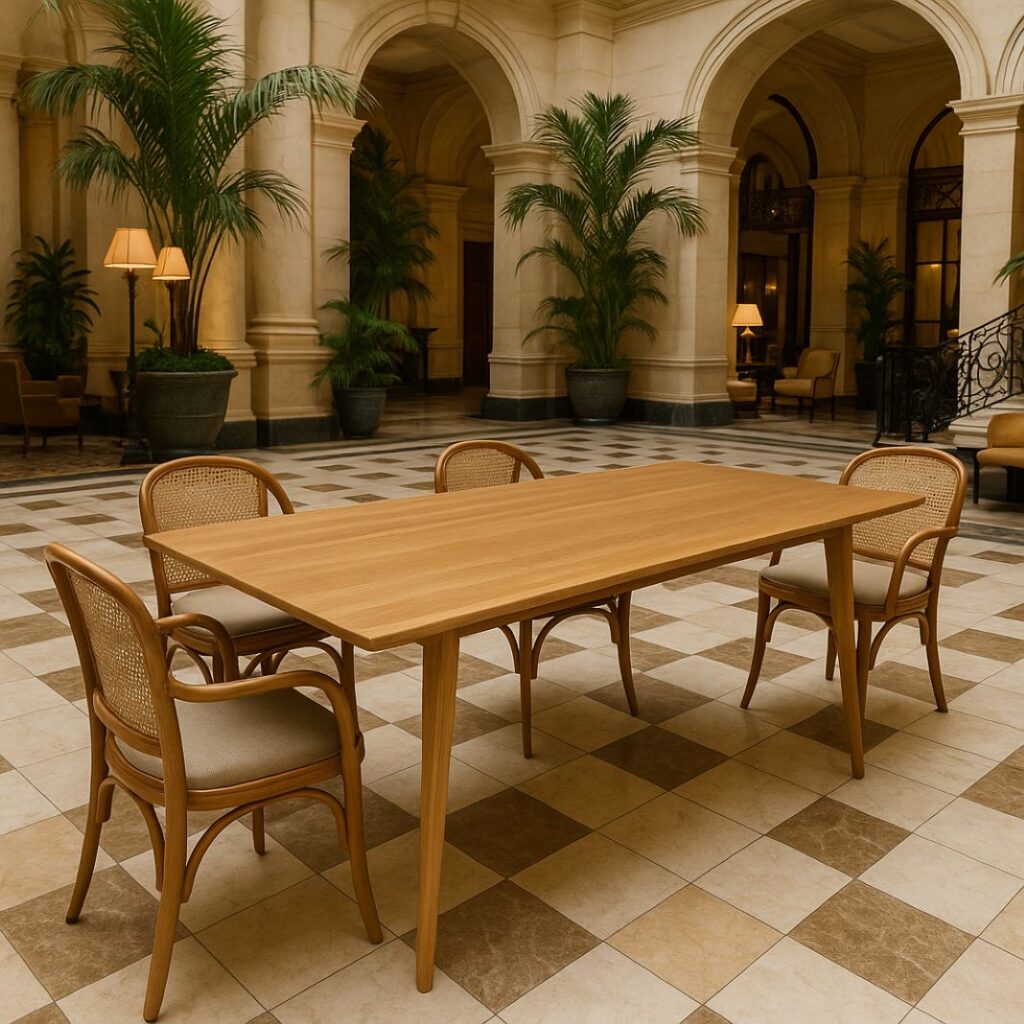
 

Posted on

Happy New Year from Tablemaker: A Heartfelt Thank You to Our Clients

Happy New Year from Tablemaker: A Heartfelt Thank You to Our Clients

Why is the New Year the perfect time to reflect and connect with our Tablemaker family?

As we step into a brand new year, there is no better time to pause, reflect, and express our deepest gratitude to everyone who made 2025 a remarkable year for Tablemaker. From bespoke oak dining tables to handcrafted coffee centrepieces, your trust in our craftsmanship has been the heartbeat of everything we do.

A Year of Craft, Connection and Custom Beauty

2025 was a year where furniture was more than functional—it became the soul of homes. We worked with homeowners, interior designers, and businesses who all shared one goal: to bring warmth, durability, and individuality into every space.

Your stories—celebrations around our custom oak tables, quiet coffee mornings with our handmade side tables, and family reunions framed by solid wood dining sets—have filled us with pride. Every table we create carries a memory. And in 2025, you gave us more memories than ever.

Thank You for Trusting Us With Your Vision

Every client brings a unique vision to life. Whether it was a minimalist Scandinavian aesthetic or a rustic farmhouse centrepiece, your imagination pushed our craftsmanship to new heights. Thank you for:

  • Choosing Tablemaker to be part of your homes and workspaces

  • Supporting British-made, sustainably sourced oak furniture

  • Sharing your finished spaces with us on social media and through testimonials

  • Recommending us to friends, family, and design communities

What’s Coming in 2026: More Craft, More Character

We have exciting things in store for the year ahead. 2026 will bring:

  • Expanded design consultations for made-to-measure dining tables

  • A refreshed showroom experience to inspire your next project

  • Even more eco-conscious choices in every piece we build

Our mission remains the same: to craft timeless tables that are as sturdy as they are stunning. Pieces that stand the test of time, just like the relationships we build with our clients.

Cheers to You and the Spaces We Shape Together

From all of us at Tablemaker, thank you for your continued support, trust, and creative collaboration. Here’s to another year of building memories—one table at a time.

Wishing you a joyful, peaceful, and prosperous New Year.

Warmest wishes,

The Tablemaker Team

Tablemaker

55 High St, London N8 7QB

02083416334

HVQM+58 London


Posted on

A Christmas Message from Tablemaker: Crafting Warmth and Connection This Festive Season

Merry Christmas -Tablemaker

A Christmas Message from Tablemaker: Crafting Warmth and Connection This Festive Season

Why is Christmas such a special time for craftsmanship and community at Tablemaker?

At Tablemaker, Christmas is more than a holiday; it’s a celebration of the connections made around the tables we create. Every oak grain, every polished edge, and every bespoke design becomes part of the stories families share throughout the year. And as the festive season arrives, those stories take centre stage — gatherings filled with laughter, clinking glasses, and the gentle glow of candlelight reflecting on hand-finished wood.

As 2025 draws to a close, we’d like to take a moment to thank all our clients, partners, and friends who’ve trusted us to craft the heart of their homes. Your passion for timeless design and sustainable craftsmanship has made this year one to remember.

An AI photo of a restaurant dining table at Christmas

Reflecting on a Year of Craft and Connection

This year, we’ve continued our commitment to creating handcrafted solid oak furniture that stands the test of time. From rustic farmhouse tables to sleek contemporary pieces, each design has carried our dedication to honest materials and enduring quality.

We’ve also expanded our custom design services, giving clients the chance to co-create unique furniture that fits their space perfectly — from boardroom to breakfast nook. The joy of seeing a piece come to life, knowing it will host generations of conversation and celebration, remains our greatest reward.


Looking Ahead to 2026: Sustainability and Innovation

As we look to the year ahead, Tablemaker will continue to push for sustainable sourcing and eco-conscious production. Our solid oak is responsibly harvested, our finishes are environmentally safe, and our methods are rooted in traditional joinery that values precision and longevity.

We’re also embracing new design technologies that allow for greater customisation, while maintaining the soul of handcrafted work. In 2026, expect more ways to bring your vision to life with materials and designs that are both classic and contemporary.


Wishing You a Joyful Christmas from the Tablemaker Family

From all of us at Tablemaker, we wish you a very Merry Christmas and a peaceful New Year. May your home be filled with warmth, good company, and a beautiful table at the heart of it all.

As the season of togetherness unfolds, remember: every meal shared, every toast raised, and every moment spent around your table adds another layer of meaning to the craft we cherish.

Thank you for letting Tablemaker be part of your story. Here’s to another year of creating, connecting, and celebrating life’s moments — one table at a time.

Browse Our Curated Christmas Dining Range

From compact extendables to handcrafted oak centrepieces, find your perfect fit.

View Tables

Tablemaker

55 High St, London N8 7QB

02083416334

HVQM+58 London