

How to Select the Perfect Table Style for Your Food Service Venue
What makes table style so important in a food service venue?
The style of tables in a hospitality venue does more than just enhance the decor. It influences guest comfort, service efficiency, dwell time, and how your brand is perceived. Selecting the right table style aligns with your operational needs and helps create a memorable, seamless dining experience.
In this article about food service table style, we have covered:
- What makes table style so important in a food service venue?
- Introduction: Why Table Style Shapes the Entire Guest Experience
- Know Your Venue: Coffee Shop, Restaurant, Bistro or Hybrid Space?
- How Table Shapes Influence Space, Service Flow and Customer Comfort
- Choosing the Right Materials: Durability, Aesthetic and Daily Use
- Ergonomics Done Right: Table Height, Surface Area and Proportions
- Table Bases and Stability: The Foundations of a Good Dining Experience
- Aligning Table Style with Your Brand Identity and Atmosphere
- Designing for Flexibility: Modular and Mixed Table Layouts
- Indoor vs Outdoor Table Styles: What Changes and Why It Matters
- Glossary of Common Material Terms
- Maintenance and Longevity: What to Expect from Each Table Style
- A Simple Framework for Choosing Your Ideal Table Style
- Conclusion: Balancing Style, Function and Value for Your Venue

An AI photo showcasing different food venue table styles.
Introduction: Why Table Style Shapes the Entire Guest Experience
As soon as someone enters a café, bistro or restaurant, they interact with a table. It is where they sit, place their belongings, and begin to form their first impressions. The shape, size, material and layout of tables influence how people feel, how long they stay, and how easily your staff can move around. Tables are not just practical; they set the tone, shape service flow, and enhance the overall atmosphere.
Pro Tip: Always test table height with the actual chairs you’ll be using before final purchase.
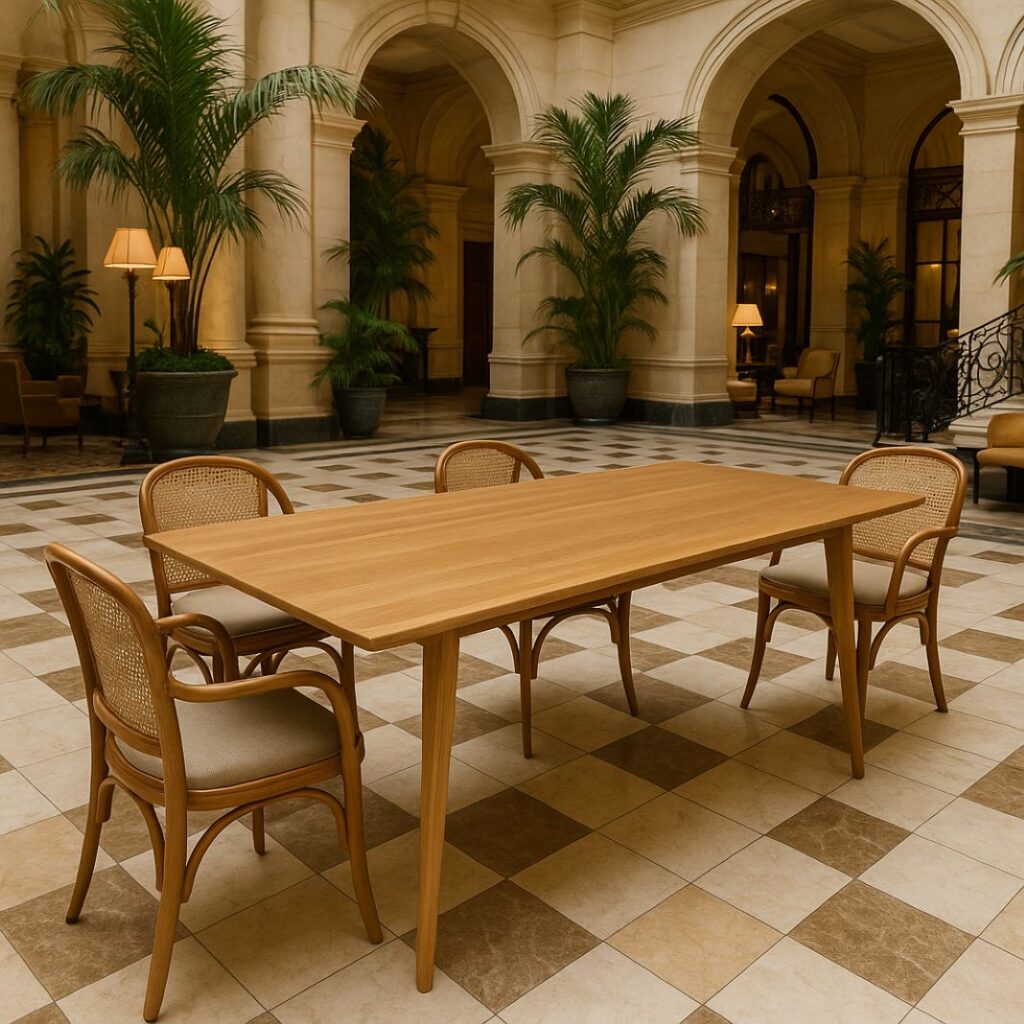
An AI photo of a food service oak table.
Pro Tip: For small spaces, mixing table shapes improves flow and guest comfort without sacrificing capacity.
Know Your Venue: Coffee Shop, Restaurant, Bistro or Hybrid Space?
Each food service venue type comes with unique guest behaviours and operational rhythms. Quick service restaurants (QSRs) focus on rapid turnover and compact seating. Cafés may cater to guests who work or socialise for extended periods. Fine dining venues prioritise space, privacy, and aesthetics. Defining your venue type helps you choose commercial dining furniture tailored to both functional and aesthetic needs. Whether you manage a casual café or hybrid space, selecting the best tables for food service venues is a foundation for long-term success.
Furniture Planning Consultation
Need help choosing tables that match your space and brand? Our specialists help you plan it right the first time.
Book ConsultationHow Table Shapes Influence Space, Service Flow and Customer Comfort
The shape of a table directly affects how space is used and how comfortable it feels. Round tables foster intimacy and free-flowing movement, making them ideal for sociable dining and relaxed seating clusters. Square and rectangular tables make efficient use of space and are well-suited to group dynamics in high-footfall environments. Their placement can influence service flow, affecting circulation paths and potential choke points. Strategic combinations of shapes can enhance visual cohesion and create ergonomic, accessible layouts. This consideration is a key part of effective table layout optimisation for busy venues.
Choosing the Right Materials: Durability, Aesthetic and Daily Use
The choice of material plays a vital role in the longevity and upkeep of your tables. Solid wood offers warmth and texture but requires regular care and refinishing. High-pressure laminates (HPL) are highly durable, resistant to heat and stains, and easy to maintain, making them ideal for busy food service venues. Sealed compacts or engineered surfaces provide modern aesthetics with practical benefits. Consider how daily use, moisture, cleaning routines and menu style influence your ideal material. For expertly crafted wooden tables, manufacturers like Tablemaker provide reliable, commercial-grade options for restaurant table design.
Ergonomics Done Right: Table Height, Surface Area and Proportions
Getting table ergonomics right is essential for guest comfort. Appropriate table height, adequate knee and elbow room, and proportionate surface area all contribute to a positive dining experience. British Standards such as BS EN 527 and BS EN 15372 offer guidance on optimal dimensions, structural safety and user comfort. Avoid mismatched seating combinations and ensure tables offer suitable clearance and plate spacing. These ergonomic principles help reduce customer discomfort and improve dwell time. Both factors are key to enhancing the overall guest seating experience.
Table Bases and Stability: The Foundations of a Good Dining Experience
Stable tables are essential for a professional and satisfying dining experience. Pedestal bases offer enhanced accessibility and help prevent obstruction, while four-legged options provide traditional strength and structure. Weighted bases or adjustable glides allow for better floor levelling, especially on uneven surfaces. Consistent table stability contributes to smoother service, prevents spills, and reinforces guest confidence in your venue’s quality standards.
Aligning Table Style with Your Brand Identity and Atmosphere
Table style should echo your venue’s visual identity. Rustic cafés might choose timber with a natural grain, while industrial eateries may favour steel frames and reclaimed finishes. Material texture, shape, and colour palette should reinforce the mood, whether that is cosy, minimalist, or luxurious. Tables help define ambience and unify the space visually. A cohesive approach supports café interior cohesion and strengthens brand presence. Specialist suppliers like Tablemaker offer custom solutions that integrate furniture with broader brand storytelling.
Designing for Flexibility: Modular and Mixed Table Layouts
Flexibility in table layouts enhances operational adaptability. Mix two-seaters, four-seaters and occasional communal tables to suit different group sizes. Moveable and reconfigurable layouts support events, seasonal changes and peak-hour demands. Modular designs with compact footprints and tessellating shapes enable quick rearrangement without disrupting flow. Investing in flexible, space-smart table solutions ensures future-proof versatility and supports broader hospitality furniture planning goals.
Indoor vs Outdoor Table Styles: What Changes and Why It Matters
Outdoor dining introduces unique requirements for furniture. Materials must endure temperature fluctuations, UV exposure, rain and regular cleaning. Weather-resistant café tables made from treated hardwoods, powder-coated metals or plastic composites offer durability and ease of care. Finishes should resist fading and warping. Maintaining consistency in style between indoor and outdoor areas is ideal. However, durability and performance should take priority in external environments.
Glossary of Common Material Terms
High-pressure laminate (HPL): A durable, heat- and stain-resistant surface used in commercial dining furniture. Ideal for venues with high turnover and frequent cleaning.
Compact laminate: A solid core surface made of multiple layers of kraft paper and resin, offering durability and a sleek, modern appearance.
Powder-coated metal: A metal surface coated with a dry powder that is cured under heat. It provides corrosion resistance and vibrant colour finishes for both indoor and outdoor use.
Sealed hardwood: Natural wood treated with protective coatings to resist moisture, wear and spills. Offers warmth and texture with added resilience.
Patina: A natural change in surface appearance over time, especially on wood, resulting from ageing and use. This is often seen as adding character.
Moisture-resistant core: A specially engineered table core that resists swelling, warping and degradation in humid or wet conditions.
Maintenance and Longevity: What to Expect from Each Table Style
Each table material has its own maintenance rhythm. Solid wood requires sealing and occasional refinishing but gains character over time. Laminate and compact materials resist wear, stains and heat, making them low-maintenance. Regular cleaning protocols should match hospitality standards to retain aesthetic and functional quality. Venues with heavy footfall should plan for wear-and-tear patterns and ensure easy-care surfaces. Transparent expectations protect your investment and help furniture remain fit for purpose.
A Simple Framework for Choosing Your Ideal Table Style
You can simplify table selection by mapping key operational priorities:
Define your venue type and service model.
Match table shape to guest comfort and traffic flow.
Choose durable materials suited to your pace and style.
Follow ergonomic guidance for height and spacing.
Design layouts with adaptability in mind.
This framework supports confident decision-making and ensures your tables align with business goals and guest needs. It is a key part of any effective hospitality furniture planning process.
Conclusion: Balancing Style, Function and Value for Your Venue
Well-chosen tables do more than fill a space. They bring form, comfort, identity and long-term value to your food service venue. When style supports functionality and functionality enhances guest comfort, the result is a cohesive, guest-friendly environment. Whether you are outfitting a cosy café or designing a high-capacity restaurant, selecting the perfect table style helps shape memorable experiences and supports sustainable operational success.
Custom Table Design Services
Want tables that reflect your venue’s unique vibe? We design and deliver made-to-fit furniture for cafés and restaurants.
Shop Custom Tables
Tablemaker
55 High St, London N8 7QB
02083416334
HVQM+58 London