

What Is Contract Furniture?
What is contract furniture and why is it used in commercial spaces?
Contract furniture refers to furniture that is purpose built for commercial use in environments such as offices, hotels, healthcare facilities, restaurants and educational institutions. Unlike residential furniture, it is manufactured to meet high performance demands for durability, compliance and frequent use. Contract grade furniture aligns with strict industry standards such as fire safety under Crib 5, structural integrity set by BS EN 16139 and ergonomic design specifications. These pieces are customisable, made from reliable materials and tested to last in public and high use spaces.
In this article about contract furniture, we have covered
- Introduction to Contract Furniture
- Defining Contract Furniture: Commercial Grade Design and Purpose
- Contract Furniture vs Residential Furniture: Core Differences
- Where Is Contract Furniture Used? (Offices, Hotels, Healthcare and More)
- Key Benefits of Contract Furniture
- What standards does contract furniture need to meet?
- Real Use Cases for Contract Furniture
- What materials are used in contract furniture?
- What upholstery options are suitable for commercial use?
- Is contract furniture customisable?
- How does ergonomics influence contract furniture design?
- Why is sustainability becoming a priority in commercial furniture?
- What warranty and aftercare can you expect with contract furniture?
- What is the buying process for contract furniture?
- Why choose Tablemaker for contract furniture?
- Final thoughts on choosing contract furniture
- FAQs

Introduction to Contract Furniture
Contract furniture plays a big part in shaping workplaces, public buildings and hospitality settings across the UK. It is chosen not just for how it looks but for how well it holds up to busy use. Whether you are sitting in a waiting room chair or working at a desk in an open plan office, chances are you are using contract furniture that has been picked for performance, reliability and comfort.
Defining Contract Furniture: Commercial Grade Design and Purpose
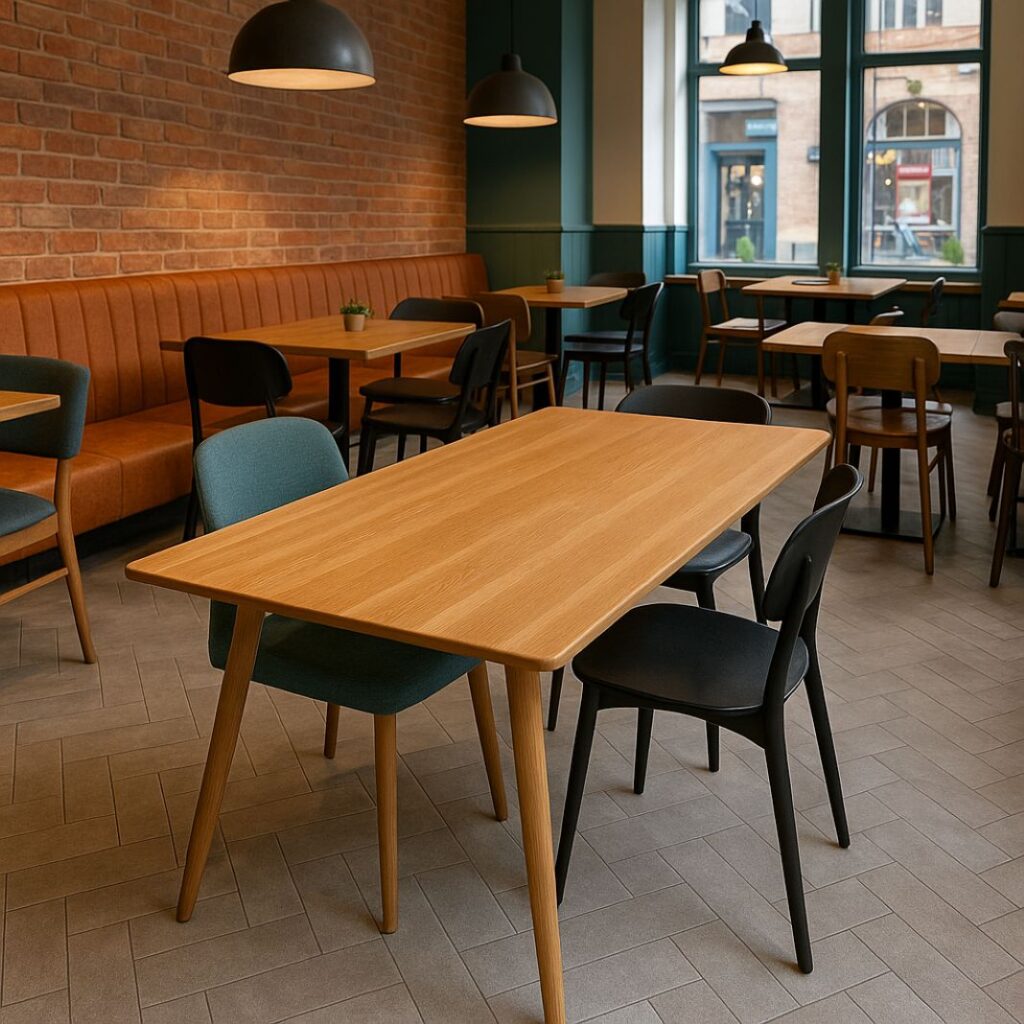
Contract furniture is designed for regular use in places like schools, offices, cafes and clinics. Unlike home furniture which is usually bought for style and comfort, commercial furniture needs to deal with people coming and going all day long. It is made using stronger materials and is built to a standard that makes it suitable for heavy use. For example, office chairs need to support posture for long working hours while restaurant tables need to be easy to clean and stable.
Contract Furniture vs Residential Furniture: Core Differences
The materials and design used in contract furniture are the biggest differences compared to furniture you would buy for your home. It uses things like engineered hardwood, reinforced plastics such as polypropylene and metal frames that do not easily bend or break. The finishes are chosen to be easy to clean and fabrics are tested using the Martindale rub test to check how well they stand up to wear. Contract furniture is expected to last longer and meet health and safety standards that home furniture does not.
Where Is Contract Furniture Used? (Offices, Hotels, Healthcare and More)
You will find contract furniture in all kinds of public and commercial places. Common examples include:
- Offices and co working spaces
- Cafés, pubs and restaurants
- Hotel rooms and lobbies
- Schools, colleges and universities
- GP surgeries, clinics and hospitals
- Libraries, waiting rooms and council offices
In each of these spaces the furniture needs to work hard, be safe and still look good. From stackable chairs in community halls to custom desks in modern workspaces, the furniture plays a key role in how the space is used each day.
Key Benefits of Contract Furniture
Built to Last
Commercial furniture is made with high traffic use in mind. It might be used every single day for years. That is why things like reinforced joints, thicker surfaces and industrial grade finishes are so common. It holds up better than standard household furniture over time.
Safe and Certified
There are rules that contract furniture has to follow. For example, Crib 5 rated fabrics are needed for fire safety in places like hotels or care homes. Furniture in schools must meet height and strength standards under BS EN 1729. These rules help protect staff, customers and visitors.
Matches Your Look
The finish matters too. Whether it is a powder coated metal frame in your brand colours or upholstery in fabric that fits your design scheme, contract furniture can be made to suit your space. You can often pick from a wide range of finishes and fabrics.
Good Value Over Time
Commercial furniture can cost more up front. But because it lasts longer and does not need replacing as often, it is usually the more cost effective choice for organisations and businesses.
What standards does contract furniture need to meet?
Fire, Strength and Durability
Most contract furniture in the UK needs to meet British and European safety and quality standards. These include:
- BS EN 16139: This applies to strength, durability and safety of seating used in non domestic areas
- BS EN 1729: Sets out dimensions and performance standards for furniture used in schools
- Crib 5: Fire safety requirement for upholstered seating used in public spaces
- ISO 9001: Quality control certification during the manufacturing process
Martindale Testing
Fabrics used in contract settings need to withstand constant use. The Martindale rub test measures a fabric’s resistance to abrasion. Contract grade fabrics generally score over 30,000 rubs. Some go well beyond that, making them ideal for healthcare furniture, hospitality settings and educational environments.
Industry Specific Requirements
- Healthcare facilities require surfaces that can be sanitised and fabrics that resist stains and disinfectants
- Schools need durable furniture with age appropriate dimensions
- Restaurants benefit from stackable seating and easy clean surfaces
Pro Tip: Always ask for certification details when buying commercial furniture. It ensures you meet legal fire safety and durability requirements, especially for public spaces like schools or clinics.
Pro Tip: Consider fabric cleanability and rub count before choosing upholstery. A high Martindale score and bleach-cleanable materials are ideal for busy or clinical environments.
Real Use Cases for Contract Furniture
Most people come into contact with contract furniture regularly. In restaurants, tables and chairs are often chosen for their easy maintenance and long life. In clinics and GP surgeries, seating needs to be supportive, safe and easy to clean. In offices, ergonomic chairs and adjustable desks support staff wellbeing and productivity.
Contract furniture helps spaces function well while still looking presentable. The right choices can also reflect brand identity and create a more comfortable experience for customers and staff. For more guidance on choosing the right seating, visit our guide to contract chairs for healthcare and hospitality or explore our customisable tables for workplace use.
What materials are used in contract furniture?
Engineered for strength and longevity
Contract furniture is manufactured using materials that are selected for their ability to withstand heavy use, cleaning and movement. Hardwoods such as oak and beech are frequently used in chair frames, while engineered boards including high pressure laminate and melamine faced chipboard are standard for desks and table tops. Metal frames are usually constructed from powder coated steel or aluminium and often welded for additional stability.
Plastics and composite materials
Injection moulded polypropylene is common for chairs used in schools, dining areas and outdoor spaces due to its resistance to impact, stains and moisture. High density polyethylene and fibreglass reinforced plastics are also used in certain seating ranges where added strength is required without adding unnecessary weight.
Surface finishes and coatings
Commercial surfaces need to stand up to frequent cleaning and the effects of humidity, abrasion and sunlight. Powder coating offers a wide colour selection and strong resistance to corrosion. For table tops and shelving, surfaces may be finished with laminate, veneer or linoleum. Many commercial table surfaces are now coated in antibacterial laminate for added hygiene.
What upholstery options are suitable for commercial use?
Contract grade fabrics and testing
Upholstered items must meet performance standards for durability, cleanability and fire resistance. Martindale rub scores are used to rate abrasion resistance. For commercial use, scores above 30,000 are standard. Tablemaker uses contract fabrics from leading suppliers which regularly exceed 50,000 rubs.
Vinyl, leather and bleach cleanable options
Vinyl and faux leather fabrics are popular in hospitality and healthcare as they are easy to clean, resistant to moisture and often bleach cleanable. We also offer options in genuine leather and antimicrobial coated textiles. Each option is suited to different settings depending on visual requirements, hygiene standards and comfort.
COM and custom colour schemes
We also offer COM, short for customer’s own material. This allows clients to supply fabrics that match their interior branding. We can provide guidance on compatibility and compliance with safety standards. A full palette of upholstery colours and textures can also be matched to your design scheme.
Need Furniture That Works as Hard as You Do?
We supply contract furniture that stands up to daily use in offices, cafes, schools and healthcare settings.
Request a QuoteIs contract furniture customisable?
Yes, contract furniture is often made to order. This allows for a wide range of frame styles, colours and materials to suit your space. At Tablemaker we offer custom dimensions, finish options and features such as linking chair tabs, stacking design, wipeable edges, writing tablets and castors.
Furniture for meeting rooms may include power access modules or cable management. Dining chairs for food courts may have linking brackets. Modular sofas for breakout spaces may include armrest options and integrated tables. Our experienced team can help you match the specification to the real use of your space.
How does ergonomics influence contract furniture design?
Ergonomics plays an important role in how contract furniture supports posture, comfort and productivity. In workplaces, chairs must support natural alignment and provide adjustment settings for height and back support. In education, student chairs and desks are designed in accordance with BS EN 1729 to accommodate a range of age groups and sizes.
Ergonomic contract seating helps reduce strain and fatigue during long use. Adjustable chairs with lumbar support, contoured seats and tilting mechanisms are now common in offices. In hospitality and leisure spaces, soft seating with correct seat depth and arm height can make a meaningful difference to user experience.
Why is sustainability becoming a priority in commercial furniture?
Organisations are increasingly considering the environmental impact of their furniture. This includes the origin of materials, the lifespan of products and how easily they can be recycled or repaired. Sustainable contract furniture includes items made from FSC certified wood, recycled metals and low emission adhesives. Water based coatings and fabrics with environmental certifications are also gaining popularity.
At Tablemaker, we work with suppliers who prioritise sustainable practices. Where possible, our products are designed to be disassembled for refurbishment or recycling. We also offer upholstery ranges with recycled content and timber sourced from responsibly managed forests. More details are available on our sustainability approach.
What warranty and aftercare can you expect with contract furniture?
Contract furniture usually comes with longer warranties than domestic furniture. This reflects the high performance standards and durable construction. Warranties typically range from five to twenty years depending on the item and use case. Items such as seating for high traffic areas or bespoke installations may include site specific agreements.
Aftercare is equally important. Tablemaker offers guidance on cleaning routines, repair options and fabric care. Replacement parts or refurbishment support are also available for many of our models. This ensures the product performs well over time and remains in good condition even with everyday use.
For advice on maintenance and care, you can visit our product support centre or speak to our team for tailored guidance.
What is the buying process for contract furniture?
The process of buying contract furniture usually starts with identifying your space requirements and intended use. This includes the number of users, type of activities, cleaning needs and design goals. From there, you will need to consider materials, certifications and lead times. At Tablemaker, we support clients with space planning, product selection and specification advice to help you make confident choices.
Most commercial orders involve customisation. This may be as simple as choosing a frame finish or as detailed as specifying fabric combinations, edge profiles or built in functionality. Once your order is confirmed, lead times vary depending on the scale and level of custom work. We advise allowing six to ten weeks for most custom commercial orders.
We also offer delivery and installation services to make sure everything arrives in perfect condition and is correctly assembled on site. For more detail, our ordering and delivery guide explains what to expect from start to finish.
Why choose Tablemaker for contract furniture?
At Tablemaker we specialise in designing and manufacturing commercial furniture that is built to work hard and last. From workplace tables to bespoke seating, our focus is on making furniture that looks good and performs well. Every piece is made with attention to comfort, compliance and quality.
Our team offers end to end support. That means help with layouts, advice on standards and guidance on materials. You can work with us to customise sizes, finishes and configurations that meet your brand and user needs. Whether you are furnishing a single meeting room or rolling out a full site refit, we are here to help.
You can explore our industries served to see how we support healthcare, hospitality, education and more.
Final thoughts on choosing contract furniture
Contract furniture plays an important part in creating safe, comfortable and productive environments. Whether it is a sofa in a hotel lobby, seating in a GP surgery or a table in a school canteen, the right furniture supports the way people work, relax and interact.
Choosing the right commercial furniture means thinking about more than just appearance. It involves making decisions about compliance, durability, comfort and layout. When you get these choices right, the result is a better experience for everyone who uses your space.
At Tablemaker, we are ready to help you choose commercial furniture that fits your budget, matches your design goals and stands up to everyday use. You can contact our team for guidance or visit our website to browse ranges by category or sector.
FAQs
What is the Martindale rub test in contract furniture?
The Martindale rub test measures how many times a fabric can be rubbed before it shows wear. A higher number means better durability. Contract grade fabrics usually start at 30,000 rubs and some exceed 100,000.
Can contract furniture be used at home?
Yes, contract furniture can be used in homes. However, it is usually more expensive and often comes without domestic fire safety labelling. Some people choose it for comfort or because of health needs.
What makes contract furniture more durable?
Contract furniture uses stronger frames, tougher fabrics and finishes that can handle cleaning and frequent use. Joints are reinforced and surfaces are built for high contact environments.
How do I check if contract furniture meets UK standards?
You should look for labels or specifications referencing BS EN 16139, Crib 5 and other relevant standards. Reputable suppliers like Tablemaker provide this information clearly on product pages or technical sheets.
What is COM in upholstery?
COM stands for Customer’s Own Material. It allows you to send in a fabric of your choice for use on your selected furniture, provided it meets performance and fire safety requirements.
Visit our blog page Commercial Interiors help & Furniture Buying Guides.

Customise Your Space with Made-to-Order Furniture
Choose finishes, fabrics and features that reflect your brand and meet your needs.
Browse our furniture shop
Tablemaker
55 High St, London N8 7QB
02083416334
HVQM+58 London