

Understanding Table Leg Position and Seating Capacity in Commercial Spaces
How does table leg position impact seating capacity in commercial venues?
Table leg position plays a practical role in how well a table functions in any hospitality or commercial environment. From seating arrangements and foot clearance to table stability and layout efficiency, the way legs are arranged under the surface can influence everything. Whether the space is a pub, café, restaurant, shared office or co-working hub, thoughtful leg placement helps create a comfortable setting where guests or clients feel welcome. At Tablemaker, we build custom commercial furniture with solid oak frames that are designed with real-world usability in mind.
In this article about commercial spaces, we have covered:

Why does table leg position affect space planning?
When choosing contract furniture for high-traffic interiors, it’s common to focus on table shape and finish while missing the importance of leg placement. Poor leg positioning restricts where chairs can go, creates awkward gaps and limits seating. Even a well-sized tabletop with badly spaced legs can reduce usable seating area.
For hospitality fit-outs where guest flow and capacity directly influence revenue, leg clearance and seating optimisation should be considered early. Every Tablemaker piece is constructed using traditional mortise and tenon joinery with sustainable solid oak. This gives us the flexibility to adjust leg spacing for each commercial floorplan, so the final piece works seamlessly in its setting.
Incorporating unique table leg formats like geometric metal structures or hyperbolic paraboloid bases, such as those developed by No Rock, can also help with uneven flooring and reduce table wobble in busy dining settings. These functional yet design-led options can play a major role in enhancing guest experience.
Pro Tip: If your space has uneven flooring, consider a self-stabilising or centre pedestal leg system for smoother use.

Pro Tip: Use AR planning apps or paper floorplans to test leg placement before ordering. This saves time and prevents bottlenecks in busy areas.
Smart leg positioning for better seating capacity
How far should table legs be from the edge?
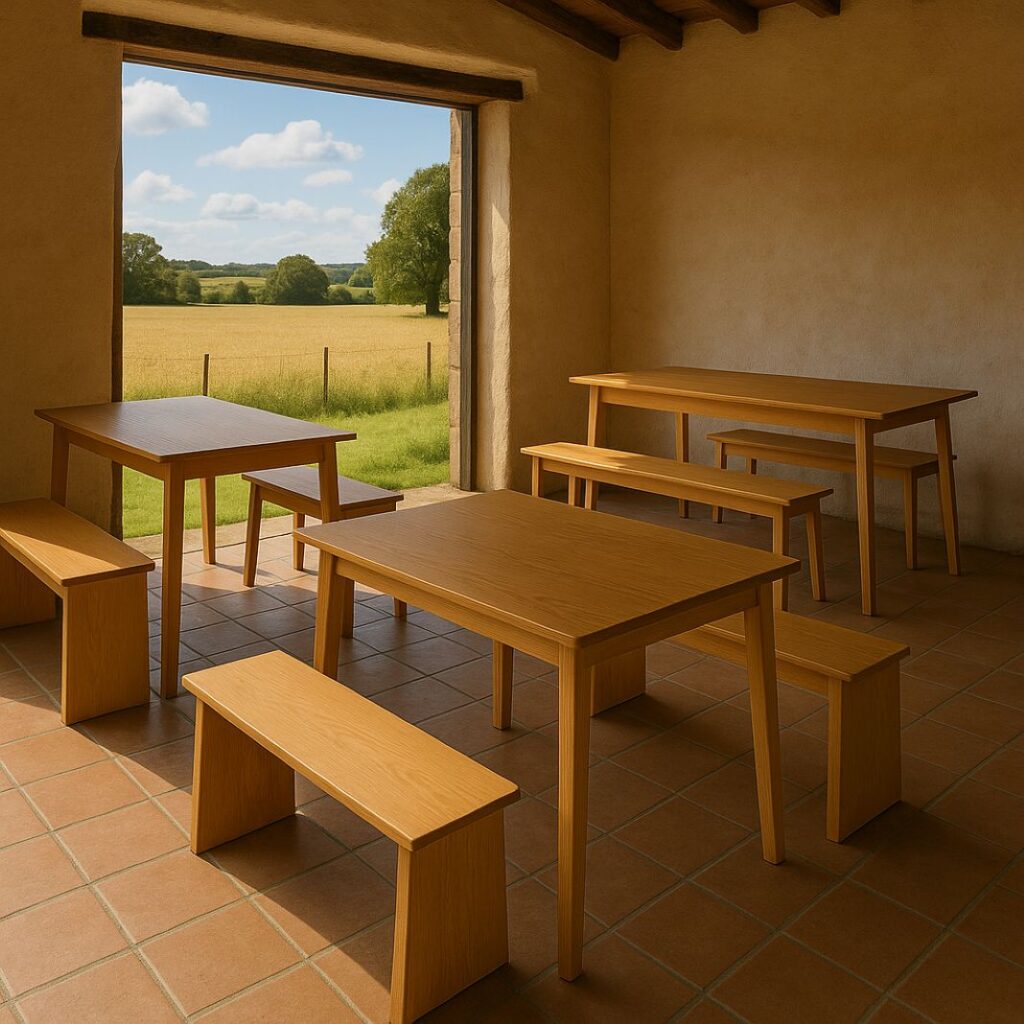
For most commercial dining tables, legs should be positioned around 38 to 50 centimetres from each end of the table. This placement supports efficient guest movement, avoids knee obstruction and maintains comfortable spacing between diners. Legs fixed at the corners often look clean but reduce side seating.
Based on commercial fit-out experience:
A 120 centimetre solid timber table works well for four diners
A 180 centimetre layout fits six guests without crowding
A 240 centimetre oak table supports eight to ten, depending on leg type and chair width
Venues needing adaptable layouts often benefit from trestle or pedestal bases which improve access. To learn more about seating suitability and table dimensions, view our guide to selecting table sizes.
Matching leg design to layout and footfall
In restaurants and cafés, poor table design can cause circulation problems. When leg frames extend too far out or in, they limit both capacity and staff movement. Smart positioning opens up floor space and speeds up service flow. At Tablemaker, we provide guidance based on actual restaurant layouts. For tight areas near corridors or wall seating, narrower frames or centrally aligned leg options reduce congestion without sacrificing table stability.
Further useful reading:
Get Expert Advice on Table Sizes
Not sure what size or style fits your space best? Speak with our team directly.
Request a Trade QuoteHow does table leg design affect strength and appearance?
Choosing a design that suits function and style
Leg style affects both how a table looks and how well it handles commercial use. From Scandinavian-style dining tables to industrial café furniture, the shape of the base influences structural support and interior design tone. We offer options such as square, tapered, splayed and hairpin legs. Each one distributes weight differently and suits different spaces.
For example, a 30 millimetre thick oak top sits best with square or tapered legs for balance. Smaller bistro tables benefit from slimmer supports, while shared workbenches or banquet seating require thicker base elements to prevent wobble and extend durability.
Design-led commercial interiors often look to incorporate statement leg styles that provide visual identity without losing practicality. Whether the focus is geometric design, industrial chic, or ergonomic functionality, leg shape can help reinforce a brand’s character.
Choosing the right material for daily use
We only use contract-grade solid oak for its grain definition, strength and surface resistance. Unlike veneered MDF or softwood options, solid hardwood withstands heavy usage. Our tables are treated with hardwax oil, which provides a long-lasting protective seal and brings out the natural tone of the timber.
If you are furnishing a venue with an existing palette or design scheme, we offer a range of oak samples to help you match finishes. This is especially useful for commercial interiors where branding and consistency matter.
Current trends in commercial table leg design
What materials and techniques are influencing modern furniture?
Designers and business owners are exploring fresh ideas in leg construction, particularly with digital prototyping. 3D printing is increasingly being used to model leg structures in lightweight metals or composite blends. While we continue to work with natural oak, we regularly adapt requests inspired by these emerging styles.
Clients also use Augmented Reality software to visualise room layouts and plan spacing. This helps decide whether a pedestal table or four-leg format fits better into the service flow. We are happy to work from floorplans produced using these tools to make sure your bespoke piece fits correctly and performs reliably.
Adjustable-height tables and reclaimed wood options are growing in popularity, particularly among environmentally conscious businesses and co-working setups. Our oak is always sustainably sourced, and we can advise on leg designs that meet the needs of adaptable or shared-use spaces.
Pairing sustainable leg materials with strong design aesthetics like industrial chic or contemporary minimalism is another growing trend. It aligns with brands that want to combine environmental awareness with interior style.
Why table leg placement matters for commercial clients
How does better leg placement improve usability?
Tables with correctly placed legs make better use of space. They give customers more room to relax and provide staff with clearer paths to serve guests efficiently. In high-footfall venues, this contributes directly to customer satisfaction, turnover speed and return visits.
A commercial table designed for proper chair spacing and layout flow improves every aspect of daily service. These practical choices influence how customers feel during their visit and how well the space operates during busy periods.
What should buyers look for in commercial tables?
Choose materials and techniques that stand up to commercial use. At Tablemaker, all of our furniture is built by hand in North London using solid oak, traditional woodworking and joinery that holds up long-term. We understand what hospitality and workspace venues need: reliable tables that look the part and perform well without the usual trade-offs.
If you are planning a refurbishment, opening a new venue or simply want a better layout from your furniture, we are ready to help. Visit tablemaker.co.uk to explore ideas, view our custom work and get advice from a team that knows both design and function.
Build the Perfect Table for Your Venue
Need tables that fit your layout and last? Let us help you design something that works and looks great.
Browse our furniture shop
Tablemaker
55 High St, London N8 7QB
02083416334
HVQM+58 London