

Can You Make a Solid Oak Table Top to My Measurements in the UK?
What does “to my measurements” mean for a solid oak table top?
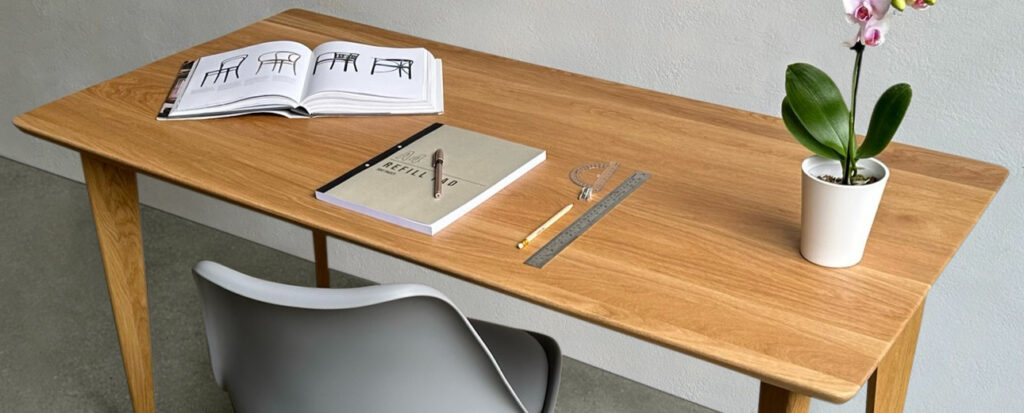
Having a solid oak table top made to your measurements in the UK usually means specifying the length, width and, in some cases, thickness to suit your particular space or base. Unlike off-the-shelf pieces, these tops can often be produced in millimetre-specific sizes, giving you tight control over fit and proportion. However, there are real limits imposed by the nature of the material and workshop capabilities.
What Can Usually Be Customised?
- Length and width Most solid oak table tops can be made to exact dimensions, with flexibility typically offered in 1cm increments. Whether it’s a 178cm desk top for a sit-stand frame or a 93cm-wide dining surface, precision is part of the service.
- Thickness Workshops may offer a small range of standard thicknesses, such as 2.5cm or 3cm, based on what provides stability without excessive weight. Thicker tops can sometimes be made but will involve material and support considerations.
- Edge overhang and shape If you are working with an existing frame, overhangs matter. A 3cm edge on all sides is common, but custom tops can tighten or loosen these proportions to suit.
That said, physical limitations remain. Timber boards have maximum widths and lengths based on available stock and how much movement the wood will tolerate over time. It’s helpful to think in terms of the space you have, the base you are using and how the table will behave through seasonal changes. Communicating clear, metric-based measurements early on shortens production time and avoids design issues later.
Table of Contents
How Solid Oak Behaves at Different Sizes
Compared with engineered wood, solid oak is both responsive and resilient. It expands and contracts slightly with changes in humidity and temperature, meaning larger pieces need structural support to resist warping over time.
Grain Direction Boards are laid to run grain lengthwise. This works with the grain’s natural movement patterns and reduces the chance of twisting.
Support Bars For wider tops, especially those over 90cm, straightening bars are fitted across the underside. These hold the surface flat and help resist cupping. Tablemaker uses removable wood or metal bars so the top can adapt to different mounting needs.
Thickness and Weight A thicker piece often means more durability but also more weight. A 3cm oak top across 200cm may require two people to move safely. If the top is going on a lightweight frame, thickness needs balancing with the base’s capacity.
These build decisions are not decorative extras. They form part of disciplined furniture making. Every dimension affects the joinery choices behind it. By understanding how material size, moisture response and structural stability link together, you’re more likely to receive a surface that lasts and performs as expected.
What Affects Lead Time for a Made-to-Measure Oak Top?
Made-to-order furniture does not have to mean long delays. Some UK workshops, including Tablemaker, produce custom oak tops within two to three weeks, depending on specifications.
Timing Factors
- Measurement challenge Simple rectangle tops move through the queue faster. Curved edges or cable cutouts may increase build time.
- Finish requirements Oil finishes are usually quicker to apply than multiple layers of stain or lacquer.
- Frame fit details If the top needs to align with pre-drilled brackets or unusual base shapes, more time is needed for checks and adjustments.
- Workshop load Production scheduling affects all lead times. Even fast workshops can experience peaks around bank holidays or late-year planning cycles.
Planning ahead helps, particularly if the top needs to arrive before a specific deadline. A clear brief with accurate sizes, finish preferences and base compatibility keeps the process moving efficiently.
How to Ensure Your Table Top Will Fit Your Base
You’ve got the frame, and now you need a top that fits it. Correct sizing is only part of the equation. Compatibility with your base is important for function and safety.
To Do Before Ordering:
- Measure overall size Include width and length, but also think about how much overhang you want or can allow. Overhang should not exceed 10 to 15cm without additional bracing.
- Check bracket positions If your frame has pre-fitted brackets, measure the distance between them. Share this with the workshop to confirm alignment.
- Note any obstructions Crossbars, legs and motor housings under sit-stand frames can create clearance issues. Sketch or photograph the frame underside to help explain.
- Decide on drilled or undrilled Desk tops from Tablemaker are usually supplied undrilled, allowing clients to position screws based on their frame. Pre-drilling is only advised when exact bracket positions are confirmed in advance.
Working with the workshop early on avoids mismatches and ensures your base can support the top properly. If you’re unsure, providing photos or a link to the frame model can bridge the gap between standard sizing and real-world fit.
Pro Tip: Ask your workshop if they offer underside straightening bars for larger tops to prevent future warping.
Pro Tip: Request a sample of finished oak if colour tone is crucial, especially for matching existing furniture.
Finish, Edges and Other Customisation Options
Beyond measurements, a table top’s finish and edge profile determine how it complements the space and withstands daily use.
Finish Tablemaker uses hardwax oil as the standard surface treatment because it provides a balance between protection, renewability and a natural feel. Unlike lacquer, which forms a plastic-like coating, hardwax oil penetrates the wood and can be spot-repaired if scratched.
Edge Profile Options often include:
- Square: clean and minimal
- Chamfered: subtle slant adds dimension
- Rounded: softened edges for shared or family use
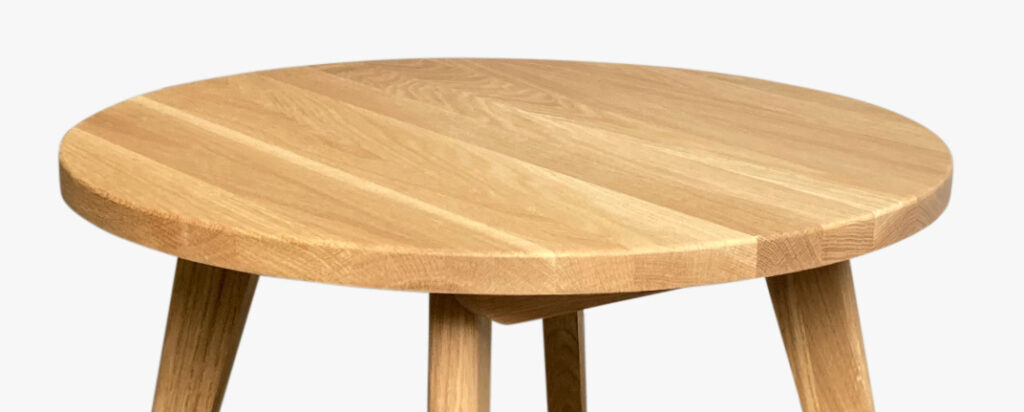
Colour Tone Oak naturally ranges from pale blonde to warm biscuit hues. Most workshops avoid artificial staining, preferring tones derived from the wood itself and subtle pigments in the oil.
Texture Smooth sanding is standard, though a brushed finish can bring out grain texture with slightly more character under touch.
Many of these choices do not alter lead time significantly, but unusual requests may require extra planning. Most clients stick to clear oil and square or chamfered edges, which suit both domestic and commercial settings.
When a Custom Oak Top Makes Sense, and When It Doesn’t
Custom oak tops are ideal when standard dimensions simply do not work. However, in some cases, a ready-made option may bring the same results with less challenge.
Useful Reasons to Go Custom
- You have an existing table base with uncommon bracket spacing
- The piece must fit inside a specific alcove, corner or shared desk environment
- You want matching tops for a series of built-in or connected units
When a Standard Size May Be Enough
- The space allows for flexibility and you’re buying the frame at the same time
- Precise dimensions are not noticeable or functionally necessary
- You’re working to a tight timeframe or budget
Custom does not mean better by default. In settings where the table may be temporary, frequently moved or sold later, standardised sizing ensures wider compatibility. On the other hand, if you expect the surface to live in one space for many years, getting the sizing right from the start often pays off.
A custom top also holds long-term value through its repairability. Solid oak can withstand daily wear and still be sanded or re-oiled years down the line, extending its use across changes in furniture or layout.
Start Your Custom Table Top Order
Send your measurements and base details to get a no-obligation quote from our UK workshop.
Request a QuoteHow to Start the Process with a UK Workshop
Beginning a made-to-measure order in the UK is usually straightforward. A good workshop will guide you through the process and clarify any details that affect the final result.
What to Prepare
- Accurate measurements Record your length and width needs in millimetres. Include thickness if known.
- Base details Share the type of base or frame you are using. Include dimensions between brackets or special requirements.
- Finish preferences Indicate if you want a particular texture, tone or edge profile beyond the default.
- Photos or sketches If fitting to a specific space or object, quick photos or basic drawings help avoid confusion.
- Lead time considerations Let the workshop know if you have a preferred delivery window.
At Tablemaker, most orders begin with an initial message confirming feasibility, followed by a quote and build schedule. Samples are also available to support finish selection or colour matching. Once confirmed, the top is built, finished and shipped directly from the UK workshop, reducing both transport time and potential damage in transit.
Starting with clear, thoughtful information ensures a better outcome at every stage.
Explore Finish and Edge Options
See how hardwax oils and edge profiles affect the look and feel of your oak top. Samples available.
View Finishes
Tablemaker
55 High St, London N8 7QB
02083416334
HVQM+58 London