

What Size Oak Table Is Best for My Restaurant Layout?
What size oak table works best in a restaurant layout?
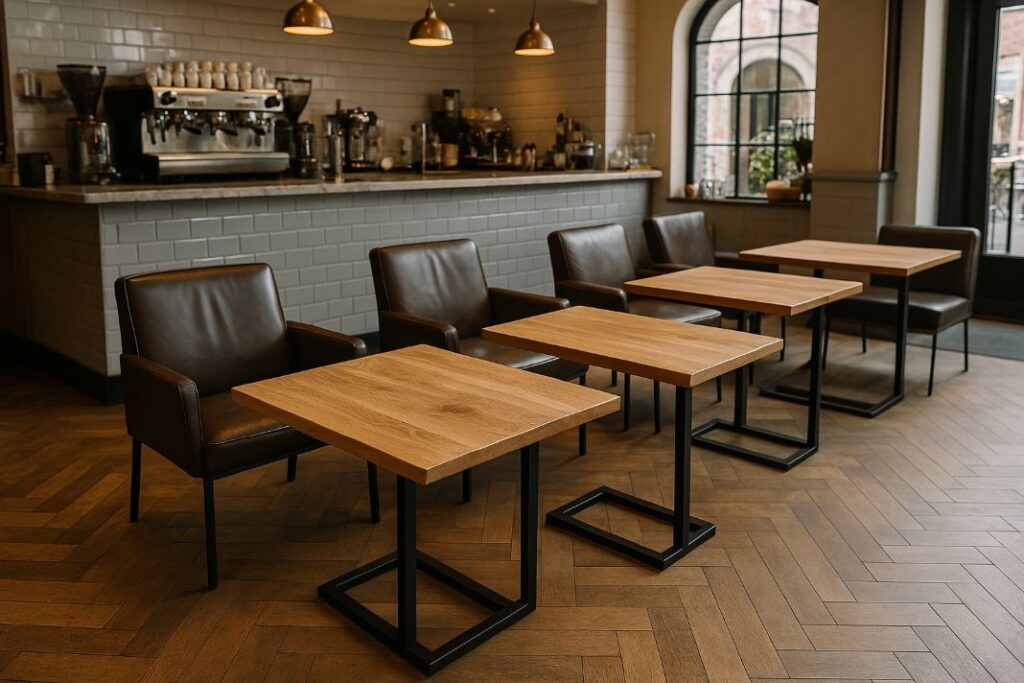
The best size oak table depends on the layout and space available. For small restaurants or cafés, compact square tables around 60 x 60 cm or round tables of 75 cm diameter work well, seating two guests comfortably while preserving walkway space. These can also be arranged in pairs for added flexibility.
In larger restaurants or open-plan venues, rectangular tables such as 90 x 240 cm are ideal for seating eight to ten guests while maintaining balanced spacing. Larger round tables, like 150 cm in diameter, offer elegant group dining without compromising on flow if central space allows.
Choosing the right size is about balancing seating capacity, clearance needs and the overall ambience you want to create.
In this article about oak tables for restaurants, we have covered:
- Why oak table material changes everything
- How oak tables affect restaurant design
- What are the standard oak table sizes and spacing rules?
- Customising oak tables for hospitality settings
- Why spacing is key in oak table layouts
- How Tablemaker designs the right table for your space
- Restaurant table planning checklist

Why oak table material changes everything
Because oak is denser and heavier than pine or MDF, it changes how tables fit into your layout. Heavier tables affect how easily they can be moved, how much legroom is available and how comfortable they feel in daily use. Table stability also varies depending on the leg design. These material differences influence not only seating comfort but also how your restaurant manages table configurations and traffic flow.
Pro Tip: Use extendable oak tables in mixed seating environments to save space without losing flexibility.
Pro Tip: Round tables may seem space-saving, but always check central clearance requirements before deciding.
How oak tables affect restaurant design
Oak’s distinct grain, natural tone and finish make it a visual highlight in any dining space. Rather than blending in, oak tables define the feel of the room. Their size and spacing must support both visual impact and comfort. Oak furniture works well with other hospitality elements like booths, lounge seating and bar areas, helping unify the interior layout.
Get Your Perfect Fit
Need oak tables designed to suit your space to the centimetre?
Get a custom quote from TablemakerWhat are the standard oak table sizes and spacing rules?
Although every restaurant has a different floor plan, these oak table measurements serve as a helpful guide:
Popular oak table dimensions by shape
Square oak tables
60 x 60 cm: seats 2
75 x 75 cm: seats 2 to 4
90 x 90 cm: seats 4
105 x 105 cm: seats 4 to 6
Round oak tables
75 cm diameter: seats 3 to 4
105 cm: seats 4 to 5
150 cm: seats 8 to 10
Rectangular oak tables
75 x 150 cm: seats 6
75 x 180 cm: seats 6 to 8
90 x 240 cm: seats 8 to 10
Space and clearance recommendations
Provide at least 60 cm per diner
Allow 90 cm between the table edge and nearby walls
Leave 105 to 120 cm between tables to form walkways
Include 45 to 60 cm of space for chair movement
These measurements promote restaurant traffic flow and enhance overall guest experience.
Customising oak tables for hospitality settings
Choosing bespoke oak tables for restaurants ensures the furniture fits your layout perfectly.
Flexible seating with extendable oak tables
Venues that serve a mix of small and large parties can benefit from extendable oak tables. These tables expand when needed and tuck away when space is limited. They are ideal for catering setups, event rooms and compact restaurant floors.
Matching table size to your dining format
Fast casual layouts often rely on smaller tables to seat more diners
Fine dining venues use larger spacing to support a quieter atmosphere
Cafés and bistros benefit from a blend of two and four seater options plus occasional shared seating
Hotels and pubs often require variable table sizes to support different zones within one space
Why spacing is key in oak table layouts
Oak furniture has a noticeable presence in a room. Tightly packed layouts reduce the effect of their visual appeal and can disrupt service. Choosing between bevelled and square edges helps refine comfort and cleaning ease. Proper spacing contributes to a more cohesive interior layout and improves seating capacity without sacrificing comfort.
How Tablemaker designs the right table for your space
Operating from North London, Tablemaker produces made to order oak restaurant tables that align with your floor plan and style.
What sets Tablemaker apart
Finish options include hardwax oil, natural seal or lacquer
Oak or steel legs can be positioned to suit your layout
Sustainably sourced solid oak is used throughout
From narrow cafés to wide open dining halls, Tablemaker provides furniture that supports both form and function.
Restaurant table planning checklist
Refer to this list to ensure your oak tables meet your restaurant’s needs:
Key oak table sizing tips
Allow 60 cm per guest
Leave 90 to 120 cm of aisle space between tables
Round tables help in small spaces but need more central clearance
Consider spacing for bar stools, booth edges and shared walkways
When custom oak tables are best
Unusual floor plans or fixed structures
Seating configurations that need to adapt throughout the day
Interior themes requiring precise oak finishes
Designs that enhance space planning and customer comfort
To order a fully custom oak table for restaurants, reach out to Tablemaker for samples, layout advice and planning support.
More Relevant Resources
Visit Britain – Business Advice – Guidance on setting up hospitality venues in the UK.
See Our Finishes in Person
Order a sample pack to view oak tones and finishes that match your venue.
Request your free sample pack
Tablemaker
55 High St, London N8 7QB
02083416334
HVQM+58 London