

What actually changes with a multi-site table top order?
A multi-site table top order changes the job from choosing sizes to controlling one clear specification across every location. We need to lock down measuring, finish approval, base fit, delivery timing and future replacements, because small local choices can create mismatched tops or installation delays.
For one room, a wrong corner shape or base detail is usually contained. Across a hotel, office, retail fit-out or restaurant rollout, the same small miss can repeat across several delivery points. One team may approve a finish, another may measure from an old base, and a third may assume a top arrives drilled for a fixing pattern that nobody checked.
Commercial table tops for several locations work best when we separate two ideas. Some choices need to stay consistent, such as the visible finish and general look. Other choices need to change by site, such as the exact size, corner shape, fixing note or delivery label.
A bulk table top order therefore needs a shared specification before it needs a purchase total. That shared document becomes the anchor for everything that follows.
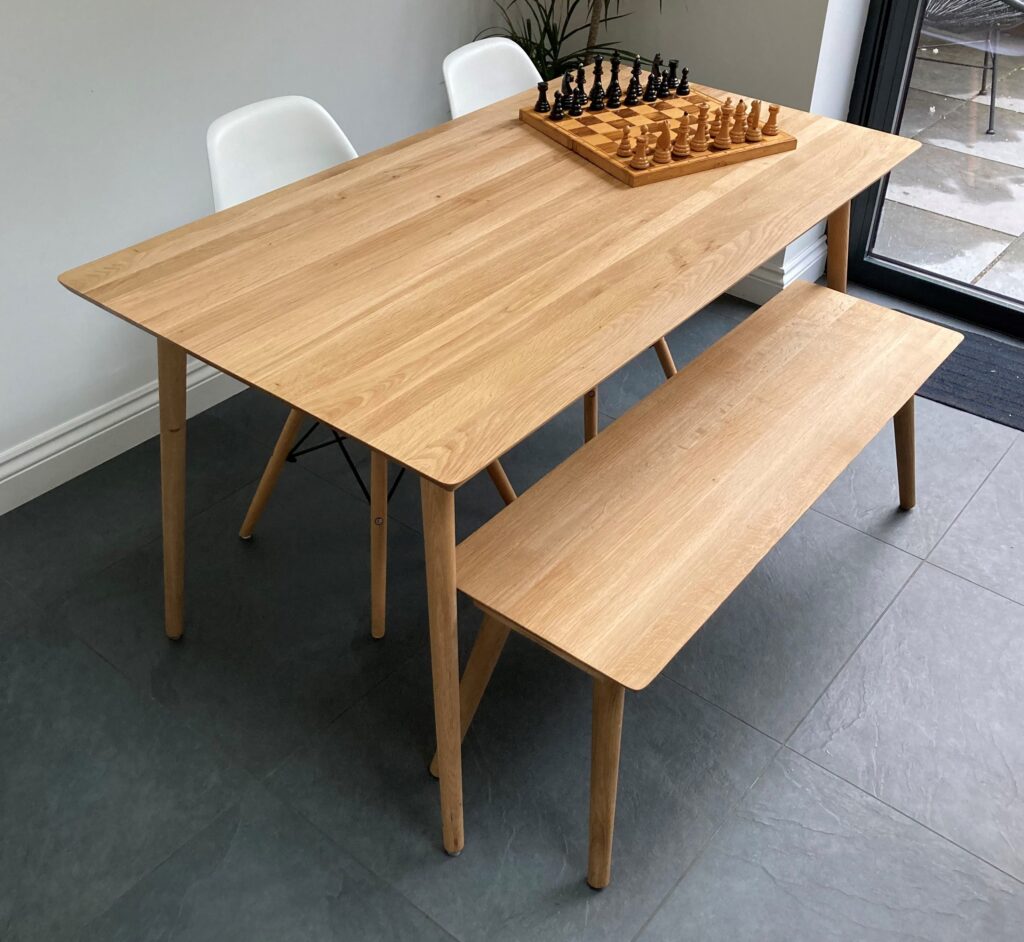 custom project – mid-century modern table
A shared schedule stops small errors multiplying
Scattered messages cause mistakes because each site starts working from a slightly different version of the order. A table top specification schedule gives every top a named place, a clear description and a single approval route.
At Tablemaker, we use clear specification details to make repeat and multi-site orders easier to control. Made-to-measure table tops can be set in 1 cm increments, so the schedule needs to capture exact sizes, not rough room notes. Where a visual check helps, computer-aided design, or CAD, mockups can support sign-off before production.
The schedule needs one line per top
Each top needs its own line because each top has its own job. A good line states the site name, room, size, shape, finish, edge, base type, fixing note and delivery window. Where a room has several matching tops, that line can be repeated with quantity added, but the room reference still matters.
Most problems start when an exception is buried in an email. A corner top beside a wall, a narrower top for a tight aisle, or a different base plate at one venue should appear clearly on the schedule. If somebody later asks why one top differs from the rest, the answer is in the document rather than in somebody’s inbox.
Samples need one sign-off route
Finish samples and finish swatches matter more when several people are involved. One sample decision should apply across the order unless a site has a clear reason to vary it.
Approval also needs one owner. If three teams approve three versions of a warm finish, the order can look correct on paper and still feel inconsistent across sites. A simple sign-off route keeps the visible choices aligned and makes exceptions easy to spot before they reach the workshop.
Standardise the look, vary the fit
Cross-site consistency comes from matching the choices people compare across locations and adapting the parts that make each space work. Identical tops can still produce different finished tables if bases, chairs, floors or layouts differ.
This comparison shows where we normally draw the line.
| Standardise across sites | Vary by site |
|---|---|
| Wood choice and finish family | Exact size for each room or base |
| General shape, such as square or round | Corner shape where circulation is tight |
| Thickness where the look needs to match | Fixing notes for mixed existing bases |
| Edge profile across customer-facing spaces | Delivery labels and room references |
| Finish sample or swatch approval | Site phasing where rooms open at different times |
Hardwax oil is a common finish for solid wood commercial table tops because it is water resistant, food safe and repairable. For restaurant table tops, clear, warm and dark hardwax oil finishes give a controlled way to keep the overall look consistent without treating every space as identical.
Accessibility belongs in the fit check as well. The Equality Act 2010 and the 2026 Code of Practice require service providers to think about disabled people’s access in advance, so table size, corner shape, base position and circulation need proper attention before the order is fixed.
Material choice also needs a clear head. Solid oak table tops suit many busy interiors because they can be repaired and refinished, but some sites may care more about outdoor exposure, low maintenance or chemical resistance. A good specification leaves room for that decision instead of forcing one product across every condition.
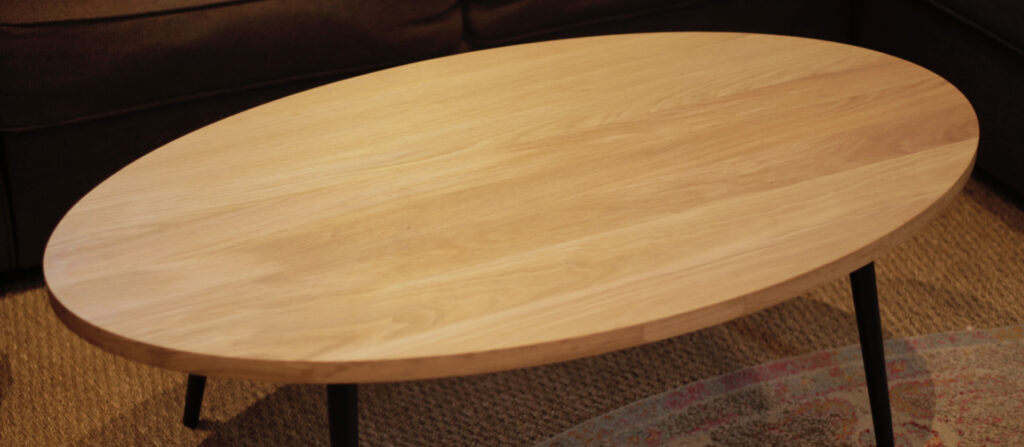 Oval Coffee Table
Keep one final schedule with a separate line for each top. A room name, size, finish and delivery label on every line makes later changes much easier to track.

Existing bases make fixing and movement matter
Three sites can all need replacement restaurant table tops, yet each site can have different existing bases underneath. One base may have a wide plate, another may have fixing holes in a different place, and another may change the final table height once a thicker top is added.
At Tablemaker, we treat existing bases as part of the specification, not an afterthought. Commercial restaurant table tops are available in square, round and fully custom shapes, and they are made to work with most commercial table bases, but the base still has to be checked before production.
Fixing matters because solid wood moves across its width as conditions change. Cupping is the shallow curve that can appear when a top pulls upwards or downwards across the grain. Straightening bars are bars fitted to the underside of a solid wood top to help minimise that movement.
Undrilled or carefully planned underside fixing can be useful where bases vary across a volume order. If every top arrives with holes set for one base pattern, the odd site with a different base becomes a problem at fitting stage. The safer route is to gather the base size, plate position, fixing pattern, top thickness and fixing method early.
Standards language also needs care. The British Standards Institution lists BS EN 15372:2023 as the current standard covering safety, strength and durability requirements for non-domestic tables. A top and a base still need to be treated as an assembled table for that type of claim, so the practical check is how the whole table is fixed, supported and used.
Replacement table tops can work well with existing bases when those base details are part of the brief from the start.
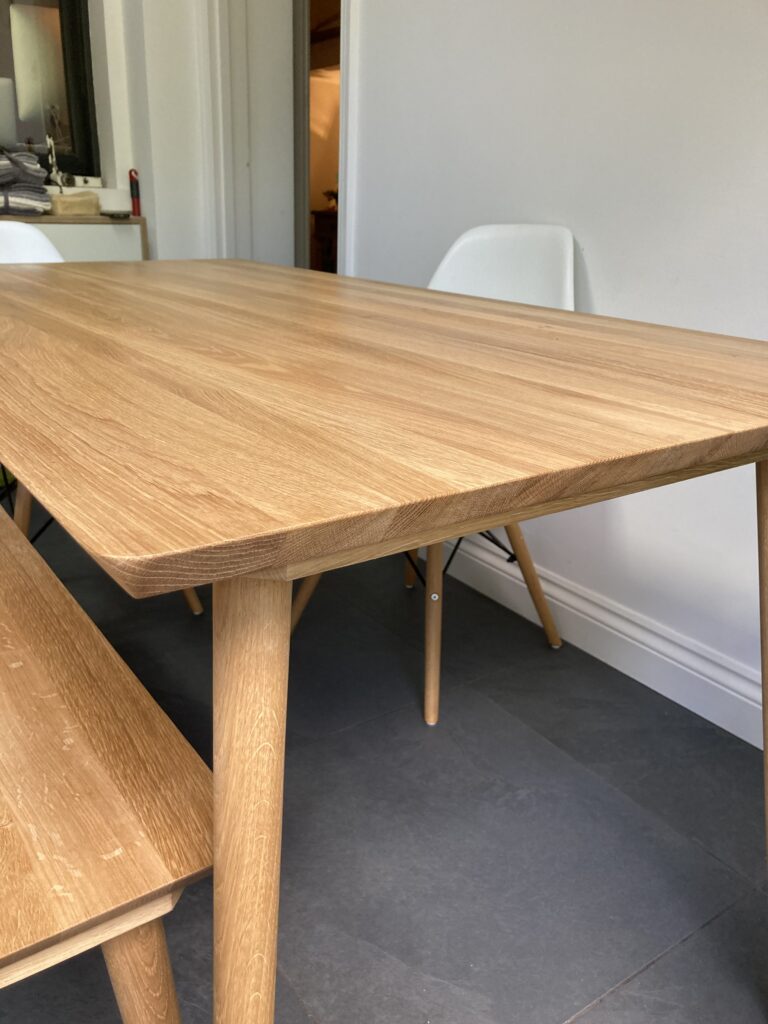
Confirm existing base details before any production starts. Plate position, fixing pattern and top thickness are the points that most often affect fit on site.
Phasing and replacements protect the whole order
When several sites are not ready at the same time, delivery phasing becomes part of the specification. A well-made top still causes friction if it arrives before a room is clear, after the fitting team has left, or with a label that does not match the site schedule.
Most made-to-order work is made and delivered within two to four weeks, depending on workload. For trade orders and volume orders, we still want the same discipline: approve the details early, group sites sensibly and keep the information for future replacement commercial table tops.
- Approve the specification before production. Size, finish, edge, base note and delivery label should be settled before workshop time is booked.
- Group sites by readiness where that makes the delivery cleaner. A finished room and a room still under fit-out should not be treated as the same delivery problem.
- Label the tops by site and room. A clear label saves time when several teams are handling the same order.
- Confirm delivery windows against site access. One missed handover can affect installers, cleaners and opening plans.
- Keep the final schedule. Later repairs, refinishing, resized tops or repeat orders become simpler when the original specification is still available.
Solid wood has a useful advantage here because it can be sanded, refinished, resized and repaired years after it arrives. That matters for a restaurant refurbishment, a hotel refresh or an office change where you want the next round of work to match the first as closely as possible.
A one-time bulk buy treats the order as a pile of units to get through the door. A repeatable specification treats each top as part of a longer plan, with the right size for its site, a finish that can be matched, and records that make future changes cleaner. The second approach asks for more care before production, but it leaves you with furniture that is easier to manage after opening day.
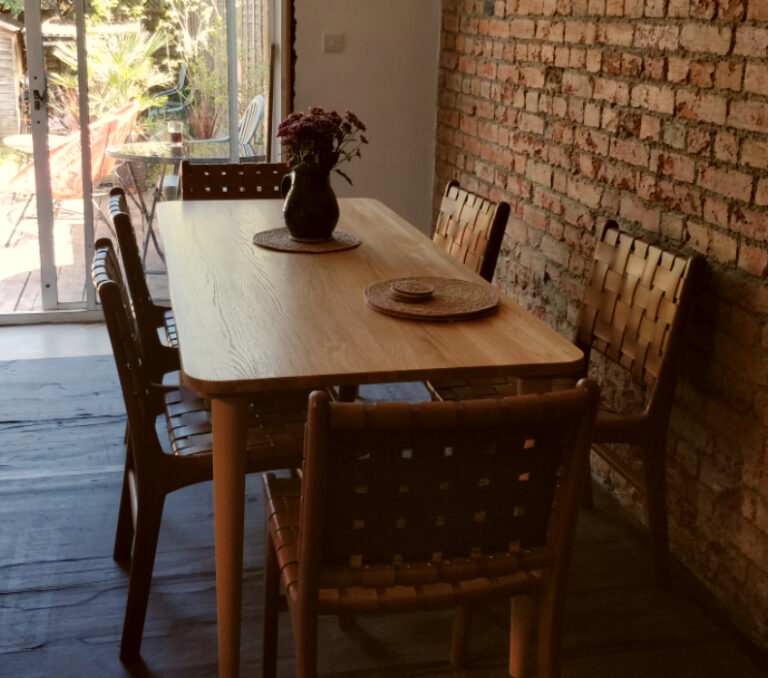
Questions we get asked about ordering table tops for several sites
Can we order different sizes and still keep the same look?
Yes. You can keep the same wood, finish, edge and thickness across sites, then vary the exact size or corner shape where each room needs it.
Do restaurant table tops arrive pre-drilled for bases?
Some projects need planned fixing positions, but varied existing bases often make undrilled or carefully checked underside fixing the safer choice. The base pattern should be confirmed before production.
How long should we allow for made-to-order table tops?
Most orders are made and delivered within two to four weeks, depending on workload. Multi-site orders need extra time for sign-off because the schedule, samples and delivery phasing need checking before production starts.
Can future replacement tops be matched to the first order?
Replacement is much easier when the original specification has been kept. The finish, size, edge and room reference give the workshop a clear starting point for a later match.
Are solid wood tops suitable for every commercial space?
Solid wood works well in many indoor commercial settings because it can be repaired and refinished. Some spaces have different priorities, so the material should be chosen against use, cleaning routine and site conditions.