

Are Extendable Oak Tables Worth It for Dining Rooms?
Are extendable oak tables worth it for most UK dining rooms?
Extendable oak tables provide practical seating flexibility without sacrificing style or durability. They are a smart option for UK households, especially where dining space is limited but occasional hosting is still part of life. Well-built models with strong extension mechanisms and solid oak construction tend to hold their value over time and handle regular use with ease. In compact dining rooms and open plan kitchen diners, these tables offer flexibility that fixed styles simply cannot.
In this article about extendable oak tables, we have covered:
- Are extendable oak tables worth it for most UK dining rooms?
- What makes a dining table ‘worth it’ in the first place?
- How long do oak extendable tables last?
- How do extendable oak tables actually work?
- The real pros and cons of extendable oak dining tables
- What breaks first in an extendable table?
- What real buyers say: regrets, wins, and surprises
- Is a fixed or extendable table better for small homes?
- Is an extendable oak table right for your home?
- Comparison: Fixed vs Extendable vs Drop-leaf Tables
- What to look for when buying an extendable oak dining table
- Why craftsmanship still matters (including one quiet example)
- How to care for an extendable oak table
- Final verdict: who should (and shouldn’t) buy one
- FAQs
What makes a dining table ‘worth it’ in the first place?
A dining table earns its value by being useful, durable, and suited to your lifestyle. For many British homes, that means accommodating occasional guests, surviving family life, and matching the surrounding decor.
When you calculate cost per year of use, solid oak tables often come out ahead. A well-maintained piece can last twenty years or more, offering strong return on investment. These investment pieces also serve as multiuse worktops for homework, crafts, remote working, and everyday dining.
Sentimentally, these tables often become central to family rituals. They are the scene of daily meals, birthdays, and celebrationsadding long-term emotional value to their practical use.
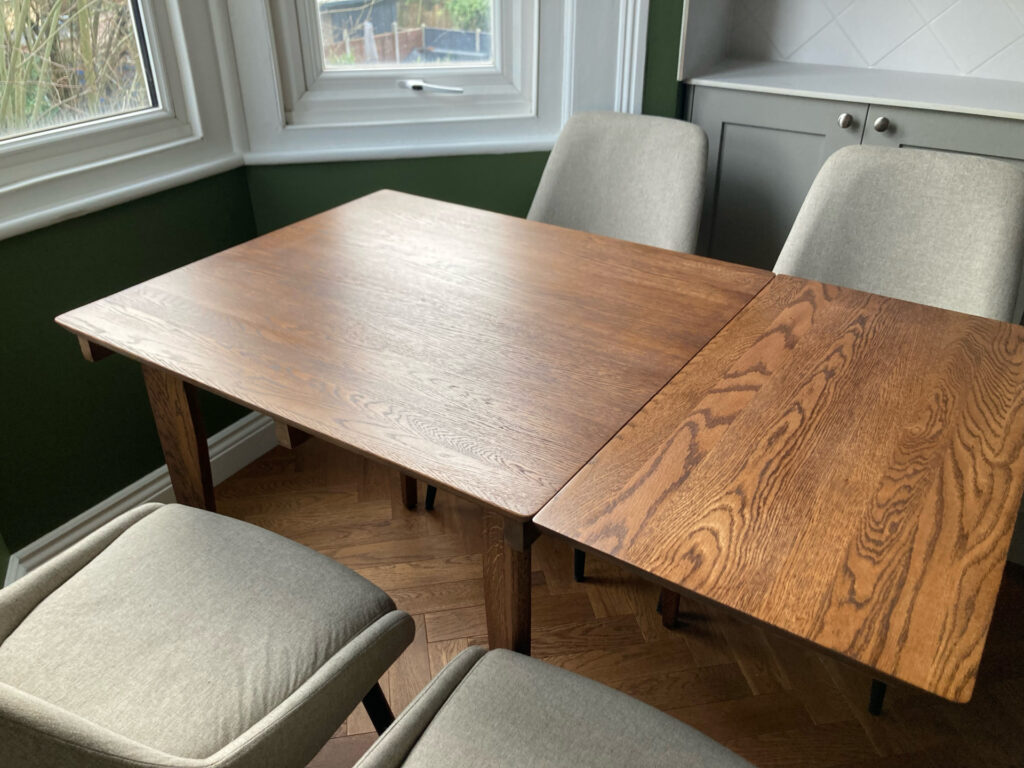
Pro Tip: Always check that the grain runs in the same direction across leaves to ensure visual continuity.
Pro Tip: Test the mechanism at least twice before buying to make sure it opens and locks smoothly.
How long do oak extendable tables last?
With proper care, extendable oak tables can last several decades. Their durability comes from the density of solid oak, expert joinery, and protective finishes like wax or oil. Many become heirloom furniture pieces passed down or resold with retained value.
How do extendable oak tables actually work?
Most extendable oak tables use either internal or external mechanisms to create more space when needed. The most common types include:
Butterfly extension: Leaves fold and store within the centre of the table
Telescopic runners: Table pulls apart with insertable leaves
Drop-leaf: Sides fold up or down on hinges
Look for quality indicators like rail glides, locking mechanisms, and leaf storage built into the structure. If seams align well and the mechanism glides without effort, that is usually a sign of good build.
Poor construction may lead to mechanism fatigue, misalignment, or structural instability. Joinery integrity, panel alignment, and grain continuation are key features to evaluate.
Want a Custom Oak Table That Fits Any Room?
Our made to measure oak tables are built for real homes, real meals, and real flexibility.
Free ConsultationThe real pros and cons of extendable oak dining tables
Pros
Flexible layout for smaller or multiuse rooms
Space saving dining furniture for compact homes
Long lasting with proper maintenance
Strong resale value when made from solid European oak
Visual warmth and timeless style that suits both classic and contemporary interiors
Cons
Weight can make solo operation difficult
Visible extension seams may affect visual consistency
Runner systems require occasional care
Premium build quality comes with a higher upfront cost
Some extended tables may have reduced lateral stability if poorly designed
What breaks first in an extendable table?
Wear and tear usually starts with the extension mechanism. Runners, sliders, and locking systems are subject to friction, debris, and force. Common problems include leaf misalignment, panel jamming, and locking clips losing tension.
Timber movement caused by moisture or heating systems can also distort alignment over time. Choosing seasoned oak and regularly inspecting mechanical components helps prevent most issues.
For homes with young children or frequent use, choosing a model with internal housing, reinforced glides, and easy locking clips will help maintain function.
What real buyers say: regrets, wins, and surprises
Feedback from owners typically focuses on day-to-day use:
“I wish we’d picked one with internal leaf storageit’s hard to find space for the panels.”
“The extension is smooth, but I have to clean the runners more than I thought.”
“We don’t extend it often, but it’s great for birthdays and holidays.”
“Even closed, there’s a fine seam line, but it doesn’t bother us.”
These insights reveal the importance of functional features like integrated storage, stable runners, and finish continuity.
Is a fixed or extendable table better for small homes?
In smaller homes or shared living areas, an extendable dining table often works better. It provides daily usability without dominating the space, and allows you to expand for guests. A fixed table may suit consistent seating needs, but limits adaptability.
Is an extendable oak table right for your home?
Suitable for you if:
You host friends or family occasionally
You need a compact table that adapts to larger groups
Your dining area is part of a multiuse or open plan room
You value long term table ownership and flexibility
Possibly unsuitable if:
You need permanent high-capacity seating
You prefer seamless furniture with no joins
You move home often and want lightweight furniture
Your dining lifestyle, guest habits, and room layout should guide your choice.
Comparison: Fixed vs Extendable vs Drop-leaf Tables
If you are unsure whether an extendable oak table is right for your home, this table offers a clear breakdown of how it compares to other popular options:
| Feature | Fixed Table | Extendable Table | Drop-leaf Table |
|---|---|---|---|
| Seating Flexibility | Low | High | Moderate |
| Best For | Daily consistent use | Occasional hosting | Very small dining areas |
| Space Efficiency | Least flexible | Space-saving when closed | Highly compact |
| Weight | Moderate | Heavy due to mechanism | Lightweight |
| Visual Consistency | Seamless grain | Minor join visibility | Exposed hinges |
| Mechanism Maintenance | None | Requires occasional care | Hinges may loosen |
| Leaf Storage Needed | No | Often yes | No |
| Price Range (typical) | Low to High | Mid to High | Low to Mid |
This overview helps you identify what works best for your space, usage habits, and preferences.
What to look for when buying an extendable oak dining table
Internal storage for leaf panels so they stay protected and easy to access
Smooth telescopic glides or geared runners with steel reinforcement
Solid oak top and base to ensure structural consistency
Grain matched surfaces so the extension blends with the rest of the table
Fastening clips or dowels that hold panels tightly together when extended
A central leg or wide base to support length and weight during use
Always test extension ease and table stability in showrooms or request video demonstrations when shopping online.
Why craftsmanship still matters (including one quiet example)
A well-built table makes all the difference. Small construction detailslike grain continuation, strong joinery, and precise extensionscan prevent long-term issues.
One workshop worth mentioning is Tablemaker. Their extendable oak tables use seasoned European timber, dovetail joints, and screw bolt anchoring for long-term reliability. Internal leaf housing is flush-fitted and extensions lock without shifting.
This level of build quality supports daily use and preserves alignment across decades. Craftsmanship ensures your table performs as beautifully as it looks.
How to care for an extendable oak table
Wipe with a damp cloth and dry thoroughly
Avoid dragging items across joints or seams
Clean runners gently with a cloth or soft brush every few months
Use Osmo Oil or beeswax depending on finish type to keep the wood nourished
Protect surfaces with mats, pads, and coasters
Keep in a room with stable humidity and avoid direct heat sources
Maintenance supports both appearance and mechanism longevity. A well-cared-for table keeps performing without fuss.
Final verdict: who should (and shouldn’t) buy one
A strong option for:
Homeowners who entertain occasionally
Families needing flexible space management
Buyers who want long-lasting, real wood furniture with function
Less ideal for:
Daily use by six or more people
Households prioritising minimalism or ultra-light furniture
People who dislike visible joins in design
Extendable oak tables give you adaptability without sacrificing build or visual appeal. For many households, that makes them a sensible and enjoyable choice.
Quick answers to common doubts
Can I repair an extendable mechanism? Yes. Joiners or furniture technicians can usually repair or replace faulty parts.
Do seams always show when the table is closed? Usually, but better models have minimal visibility thanks to matched grain and precision cuts.
Will a solid oak table warp over time? Not if made from seasoned timber and stored in stable conditions.
Are they hard to maintain? No. Light cleaning and occasional oiling is enough in most homes.
Will the leaves match the main surface? If made from the same batch and board cut, they should match closely in grain and tone.

Don’t Just Buy a Table, Invest in a Lifetime Piece
Discover solid oak tables crafted for daily use and generational quality.
See Our Oak Range
Tablemaker
55 High St, London N8 7QB
02083416334
HVQM+58 London