
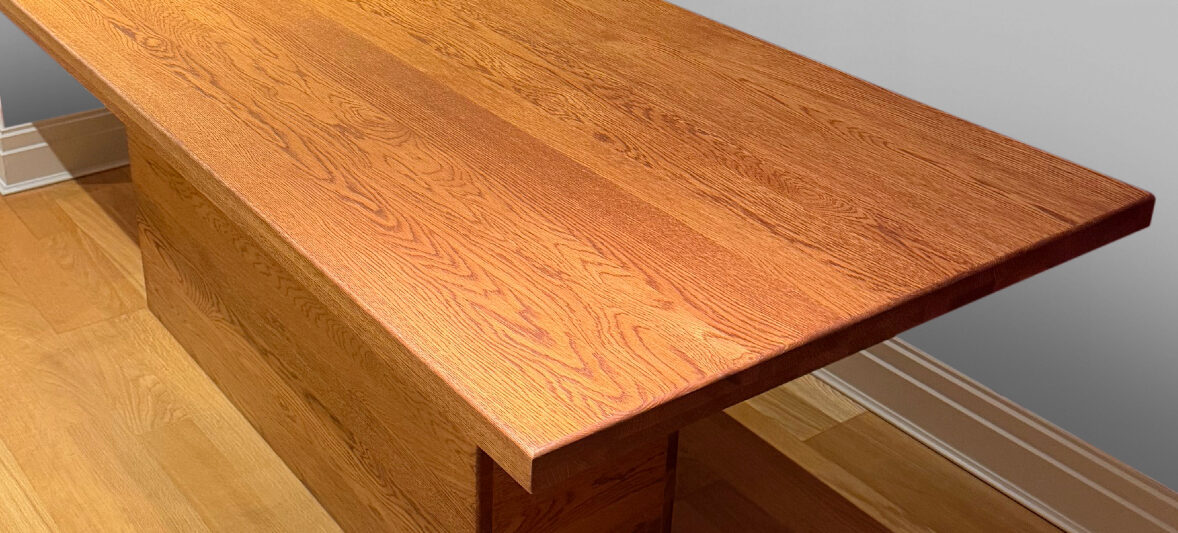
How do you choose a base for your solid wood table top?
We start with one rule: choose a base that suits the top’s size, weight and use, then check stability, fixing holes, wood movement and legroom together. A strong-looking base can still rock, restrict the timber or put the chair space in the wrong place.
Most buyers start with the look of the base. That is understandable, because the base sets the style of the finished table. The better first check is whether the top and base will work as one piece of furniture in daily use.
A simple order keeps the decision clear:
- Top size and weight. Start with the actual top you plan to use, including its thickness and material.
- Base footprint. Check how far the base spreads under the top, because a narrow footprint changes tipping and rocking risk.
- Fixing method. Match the base holes, brackets or mounting plates to the way solid wood needs to be fixed.
- Wood movement. Leave room for the top to move across the grain as the room changes through the year.
- Underside support. Look for straightening bars, rails or existing inserts before deciding where the base can go.
- Legroom and use. Make sure chairs, knees, arms and cables still fit once the top is fixed.
Manufacturer guidance matters here. If a base maker gives a top-size or load range, start there before using any rough sizing rule. If one of these checks fails, the base is wrong for that top or needs adapting before the top is made.
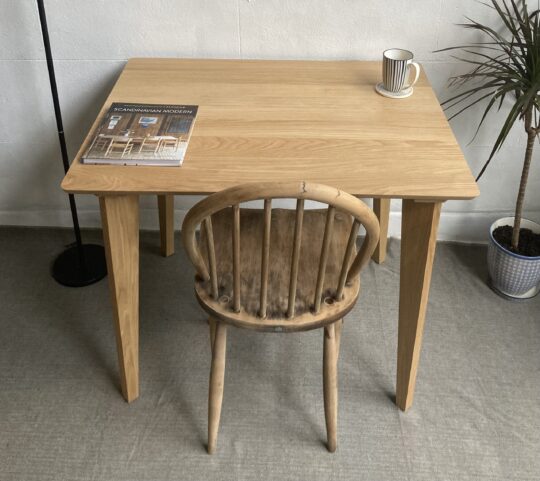
Base type changes the stability test
Base shape changes how a table carries weight and how it reacts when someone leans on an edge. The question is whether its footprint, fixing layout and structure suit the top.
Here is the practical difference between common base types.
| Base type | What it supports well | What to check |
|---|---|---|
| Pedestal base | A central support can leave the edges clear for chairs. | Check the maker’s top-size guidance and how the table behaves with pressure near the edge. |
| Four-leg base | Legs near the corners spread the load well across the top. | Check whether the legs, rails or apron block chairs or knees. |
| Trestle base | A trestle can support a long top through its length. | Check side-to-side stiffness and whether the feet get in the way. |
| Metal table frame | A frame can give broad support and a clean fixing layout. | Check that the fixing holes allow movement and that screws suit the top thickness. |
| Sit-stand desk frame | Adjustable frames can work well with solid wood desktops. | Check the frame maker’s desktop guidance and the space for fixings, controls and cable trays. |
Overhang has no single safe number that fits every base. A wide overhang on a broad, stiff frame behaves differently from the same overhang on a narrow central base. The centre of gravity matters too, because a table can feel stable under normal use yet move when someone presses down near a corner.
Domestic safety standards give useful context, but they do not replace checking your actual base. The British Standards Institution (BSI) standard BS EN 12521:2023 sets minimum safety, strength and durability requirements for domestic tables intended for adults. BSI also says that the standard does not apply to office tables, office desks, non-domestic tables, educational tables, certain outdoor tables or trestle tables. So a café table, office desk or shop fit-out needs its own suitability check.
A base that passes the visual test can still be the wrong match if its footprint, fixing layout or use case does not line up with the top.
Solid wood movement changes the fixing method
Solid wood needs a fixing method that holds the top securely and still lets it move a little across the grain. Secure does not mean locked solid.
Wood is hygroscopic, which means it takes on moisture from the surrounding air. The United States Department of Agriculture (USDA) Forest Products Laboratory explains that this moisture exchange affects how wood performs. In practical terms, a solid wood top changes slightly as room conditions change, even when the timber has been properly dried.
That movement is normal. Problems start when a base or frame traps the top so tightly that the wood has nowhere to move. Stress can then build around screws, brackets or inserts, and a wide top can become more likely to cup or split.
Clearance holes and pilot holes
A pilot hole is a smaller guide hole drilled into the wood before a screw goes in. It helps the screw drive cleanly and reduces the chance of damage around the fixing point.
A clearance hole is different. It is the hole in the base, bracket or mounting block that the screw passes through before it enters the wood. With solid wood, that clearance can matter because the screw needs to hold the top down without clamping every part so tightly that the wood cannot move.
With Tablemaker’s in-house legs, we use a mounting block with four pre-drilled 7mm clearance holes, so a 5mm screw can pass through with enough room for a little natural movement in the table top. That detail sounds small, but it shows the right idea. The fixing has to work with the material.
Metal frames need the same thought. Round holes, slotted holes, oversized holes and brackets all behave differently, so the fixing layout matters as much as the strength of the steel.
Threaded inserts and removable tops
Threaded inserts are metal fittings set into the underside of the wood so bolts can be used instead of ordinary wood screws. They are useful where a top will be taken off and refitted, such as on some desks or frames that may move between rooms.
Inserts are not needed for every solid wood table top. The right choice depends on the top thickness, the base design and how often the top will be removed. A permanent dining table on a suitable wooden base can need a different fixing method from a desktop fixed to a metal sit-stand frame.
Screw length also needs care. A screw has to bite properly into the top, but it must not come close to the finished surface. The fixing must hold the top down without trapping it across the grain.
 Box Base Table
Check the underside before you choose the fixing method. Rails, straightening bars and cable trays often decide where the base can sit.

Underside support must work with the base
A desk frame with a cross rail or cable tray can clash with the underside of a solid wood top before the first screw is fitted. A dining table top can have the same issue if straightening bars or rails sit where the base wants to fix.
Straightening bars are bars fitted across the grain to help reduce cupping, which is the tendency for a top to dish across its width. They support flatness, but they do not guarantee that a wide piece of timber will stay perfectly flat in every condition. Many are removable, which gives more options when a base needs a different fixing position.
At Tablemaker, we make solid wood tops to suit bases and frames people already own, so the underside layout is part of the job. A base is rarely being fixed to a blank slab. The fixing-hole layout, screw length, rail depth and any existing inserts all need to be seen as part of the same system.
Our desk tops are supplied undrilled as standard, so they suit most frames and bases. That gives flexibility, but it also means the fixing position should be chosen after the frame and underside have been checked. Drilling first and solving the clash afterwards is the awkward way round.
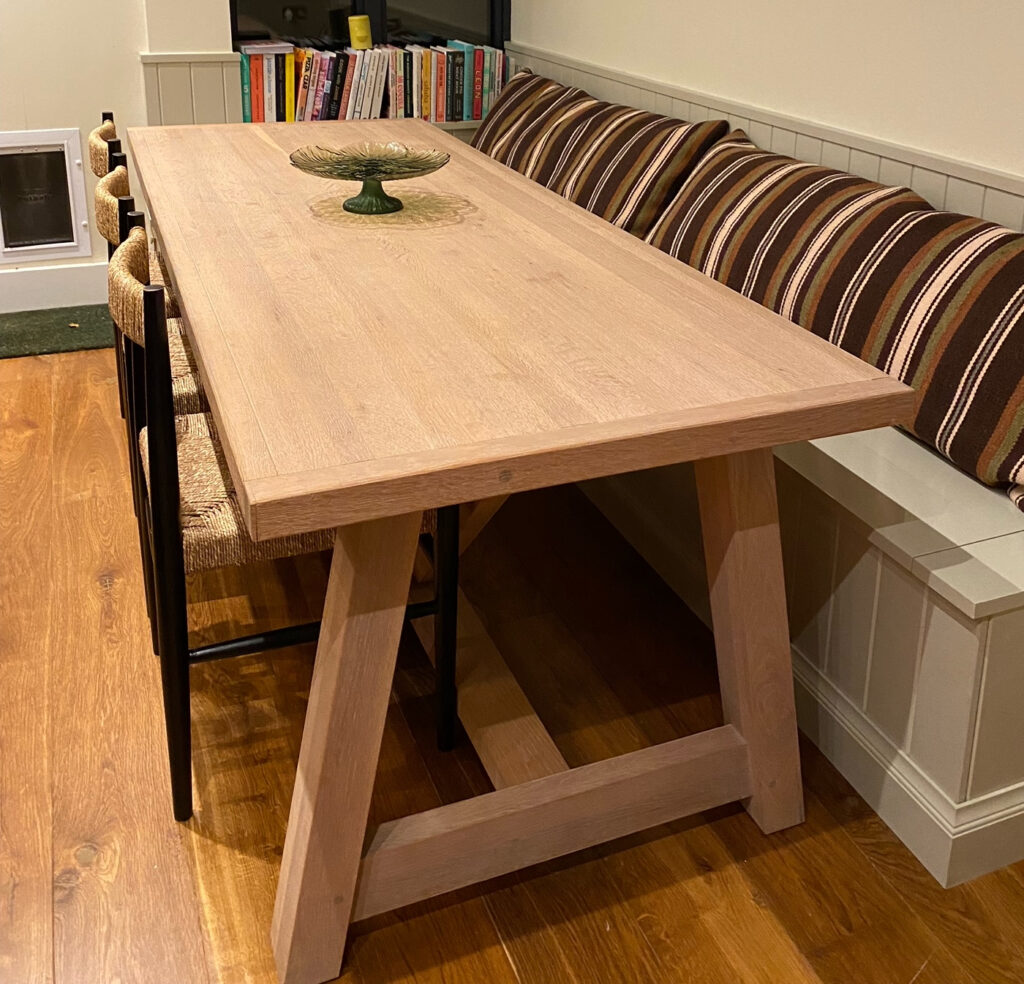
Use the maker’s own top-size guidance first, then confirm chair space and stability with the actual top thickness you plan to use.
The right base leaves the table usable
A base can support the top and still make the finished table annoying to use. Chair arms can hit a rail, knees can meet a deep apron, or a desk frame can block the exact place where a cable tray or monitor arm needs to sit.
Leg height, top thickness and frame depth all change the space under the table. Our standard default leg height is 71cm without the rubber bumper, and we also make custom height legs where the job needs them. Height alone does not settle the decision, because a thick top or deep frame can reduce knee room even when the legs are the right height.
Dining tables need enough clear space for chairs to pull in. Desks need knee room, cable access and a frame that does not fight the way you sit. Commercial tops need the same checks, with extra attention to how often the table will be moved or leaned on.
The base to prioritise is the one that supports the top as a moving piece of solid wood and still lets people use the table without working around the frame.
 Box base table
Questions we get asked about table bases for solid wood tops
Can I put a solid oak top on an existing desk frame?
Yes, an existing desk frame can work with a solid oak top if the frame is suitable for the top size and the fixings allow the wood to move across the grain. We would also check the frame width, hole layout and anything fixed under the desktop.
Do straightening bars stop a table top from warping?
Straightening bars help reduce cupping by supporting the top across the grain. They do not guarantee a perfectly flat top in every setting, so the fixing method and room conditions still matter.
Should a solid wood desktop come pre-drilled?
An undrilled desktop gives more flexibility because it can be matched to your exact frame. Pre-drilled holes only make sense when the base layout is already known and the fixing method suits solid wood movement.
Are threaded inserts worth using for a table top?
Threaded inserts are useful when a top will be removed and refitted, especially on some metal frames and desks. They are not always needed, so the base design and top thickness should guide the choice.
How much overhang is safe for a wooden table top?
We avoid giving one universal overhang number because base shape, footprint and use all change the answer. The base maker’s own top-size guidance is the best starting point, followed by a practical check for stability and chair space.
This is general information, not professional advice.