
Can venue tables be built around radiators and pillars?
Yes, venue tables and table tops can be made around radiators, pillars, pipe boxing and awkward corners, but the work starts with the room, not the timber. We assess the obstacle, measure it properly, choose the cut-out, check routes, plan support, approve a drawing or template, then build and finish.
A table around a fixed obstacle is a layout decision before it is a woodworking decision. The aim is to keep awkward space useful without creating a cramped table, a weak top or a route that staff and guests have to fight with.
Common cut-out forms include L-shaped tops, U-shaped tops and smaller notches. Each one has a place. A shallow radiator cut-out against a wall is a very different problem from a table around a pillar, where the shape can affect seating, bases and the underside of the top. The obstacle has to be measured as part of the room, not as a separate object.
The obstacle sets the brief
Good measuring records the real venue conditions, including the parts people forget because they look small. A few millimetres around a wall trim, skirting board or pipe boxing can decide whether a bespoke table top cut-out fits cleanly or needs reworking.
At Tablemaker, we would sooner see the awkward detail early than correct it after the top is made. Photos help, but measurements need to come from fixed room elements, not from movable tables, loose chairs or a temporary layout.
- Start from fixed points. Measure from walls, pillar faces, corners and other fixed features. Use millimetres, and mark where each measurement starts.
- Record the obstacle fully. For a radiator, include its height and how far it projects into the room. For a pillar, record each visible face and its position in relation to nearby walls.
- Include the small projections. Skirting, trims and pipe boxing matter. A missed 10mm depth on boxing or skirting can stop a top sitting where the drawing says it will sit.
- Add the working footprint. Mark the table base, chair pull-out and any staff route beside the table. Most people measure the room and forget the chairs.
- Use clear planning material. Annotated sketches, site photos and computer-aided design drawings all help us check the shape before timber is cut.
For complex radiator or pillar shapes, a cardboard or medium-density fibreboard template can be the safest way to capture the obstacle. A template also shows whether the cut-out leaves enough space for cleaning and whether the table edge still lands where a guest can use it.
The right cut-out protects useful space
A wall radiator and a central pillar ask for different answers. A radiator cut-out is often shallow or stepped because the obstacle comes out from the wall, but a table around a pillar can remove timber from a more awkward part of the edge.
The right shape is the one that saves usable seating or surface area. A clever-looking notch that leaves no knee room, traps dirt or clashes with a fixed base has not solved the layout problem.
| Cut-out shape | Best use | Main watch-out |
|---|---|---|
| L-shaped cut-out | A wall corner, radiator end or boxed-in return | The corner must still allow chair movement and cleaning access |
| U-shaped cut-out | A pillar or deeper feature that the table wraps around | Removing timber from the edge can affect support and base position |
| Small notch or stepped cut-out | A shallow radiator projection or pipe boxing | A small notch still needs tolerance, or the top can bind against the obstacle |
Round and rectangular tables should be judged by the space they leave around the obstacle, not by shape preference alone. A round top beside a pillar can waste an odd wedge of floor, while a rectangular top with a neat notch can sometimes keep a run of covers working. In another room, the reverse may be true.
Some cut-outs are the wrong answer. If the finished table leaves a dead zone, blocks the base or puts the chair into a route, a simpler top shape with a different base position can be the better working choice.
Measure from fixed points only, and include skirting, pipe boxing and wall trims in the notes. A small projection can change the cut-out more than the main obstacle.

Why clearance and access decide the layout
When a table sits close to a radiator or pillar, the gap around it has to do real work. Clearance allows for fit tolerance, cleaning, airflow around a radiator and normal movement around the table.
A tight fit causes problems; a usable gap earns its space. Our cut-out guidance allows a 3mm to 5mm clearance gap around fixed obstacles to reduce fit issues from seasonal wood movement. Solid wood moves across the grain as humidity changes, so a top that touches a pillar too closely can bind instead of sitting cleanly.
Access deserves the same attention as the cut-out. Chairs, table bases and guests’ legs are part of the real footprint, so the narrowest point around the table is the point that matters. The Home Office fire safety guidance for small and medium places of assembly treats the effective usable width of an escape route as the narrowest clear unobstructed point, including restrictions from fixtures and fittings.
Approved Document M, the access guidance for buildings other than dwellings, also matters where refreshment facilities need to be reached and used by different people. We do not turn a table drawing into legal advice, but we do expect venue teams to check their fire risk assessment and any access duties where a layout change affects routes. The shape should be approved only after the route around it has been checked in the room.
The table top still needs structure
A cut-out can look simple from above, especially on a clean drawing. The underside decides whether the finished solid wood table top stays stable, fixes properly to its base and copes with daily venue use.
Grain direction controls movement
Solid wood moves across the grain with seasonal humidity. That matters more once timber has been removed for a radiator notch or pillar cut-out, because the shape can leave narrow parts of the top under more stress.
Grain direction is the way the wood fibres run through the boards. In a solid oak table top, the boards need to be arranged so the top can move in a controlled way. Kiln dried timber helps reduce later movement, but it does not make solid wood static.
Support bars and bases carry the load
Straightening bars are bars fitted across the grain on the underside of a wide top to help keep it flatter. When a cut-out changes the underside, those bars may need to move or be supplemented so the top still has proper support.
At Tablemaker, we plan the underside as carefully as the visible cut-out, because the table has to work after months of service, not just on delivery. A top can be cut accurately and still wobble if the base lands in the wrong place or the fixings do not suit the new shape.
Hardwax oil also plays a practical role. It is our standard finish because it is water resistant, food safe, easy to clean and easy to repair, which suits solid wood commercial table tops that will be wiped, marked and maintained over time. The best cut-out is supported, not just accurate.
Add chair pull-out and staff routes to the drawing at the same time as the obstacle. A top that fits the wall can still fail if the usable space is too tight for movement.
The best awkward-space tables stay adaptable
Long-term use should shape the decision from the start. A made-to-measure commercial table top should solve the fixed obstacle without locking the venue into one fragile layout.
Existing bases can work well with bespoke venue table tops, provided the base spread and fixing points suit the cut-out. Desk tops and table tops are supplied undrilled as standard in our range, which keeps base choice flexible, but the base still has to match the load and shape of the finished top.
Repairability matters in a working venue. Solid wood can be sanded and refinished, and a hardwax oil finish can be repaired without replacing the whole surface. That changes the value of the piece over time, because a top around a radiator or pillar will still need to survive cleaning, wear and future layout changes.
Over the next 12 to 24 months, venue space will need to work harder as operators keep adjusting covers, service routes and fit-outs within rooms they already have. Awkward-space tables will matter most when they are planned as working furniture, with repairable surfaces, sensible clearances and enough flexibility to stay useful after the first layout changes.
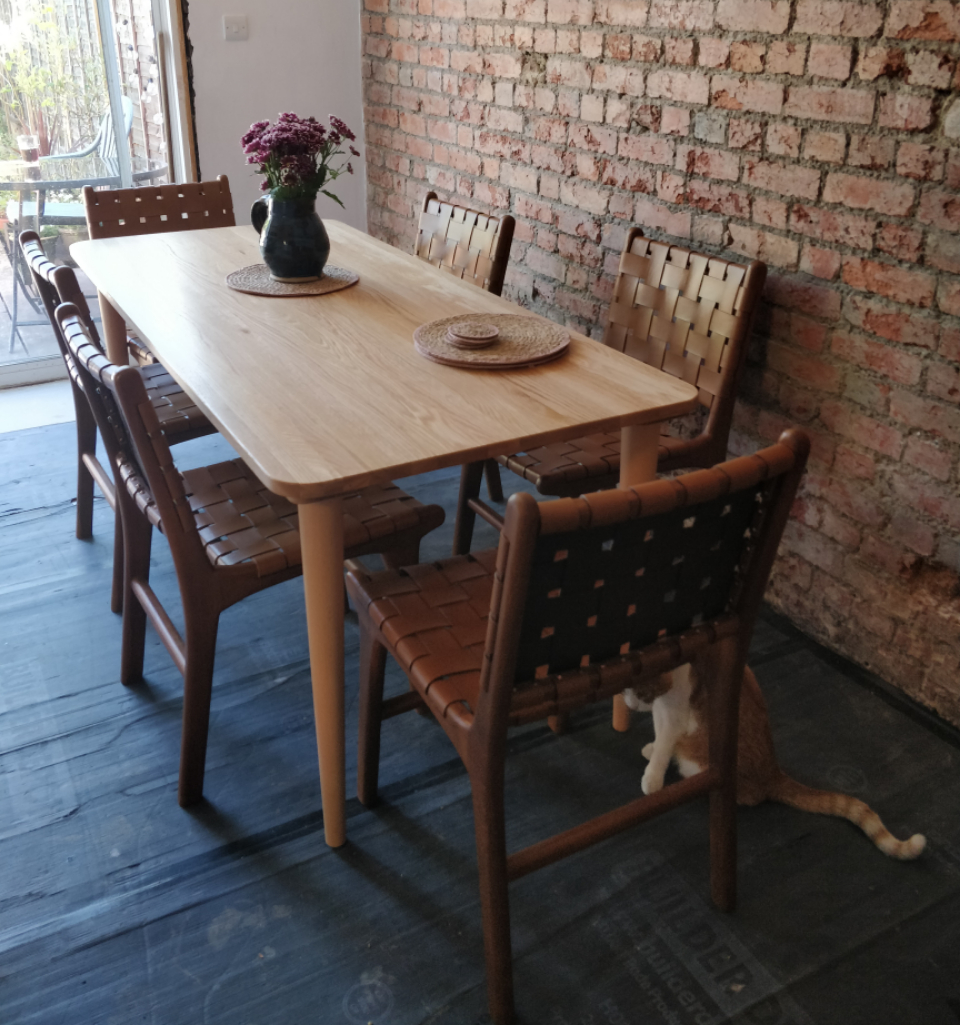 Custom order oak dining table – client photo
Questions we get asked about tables around obstacles
Can an existing table base be used with a custom top?
Yes, an existing base can often be used, but the base position must suit the cut-out and support the top properly. We look at the base spread, fixing points and where the weight will sit once timber has been removed.
Does every radiator table cut-out need a physical template?
No, clear measurements, photos and annotated sketches are enough for many simple shapes. A cardboard or medium-density fibreboard template becomes useful when the radiator, pillar or boxing has several faces or uneven projections.
Are round tables better for awkward venue corners?
Round tables can work well in some awkward rooms, but they can also waste space beside a wall, pillar or boxed-in corner. We judge the shape by the usable covers, chair movement and route left around it.
What finish works well for solid wood tables in cafés or restaurants?
Hardwax oil works well for commercial solid wood tables because it is water resistant, food safe, easy to clean and repairable. A marked area can be lightly sanded and recoated instead of replacing the whole top.
Can a made-to-measure top be returned if the measurements are wrong?
Made-to-measure orders cannot be returned for a size misjudgement. Order confirmations list the measurements for approval before work starts, so the checking stage matters.
This is general information, not professional advice.