
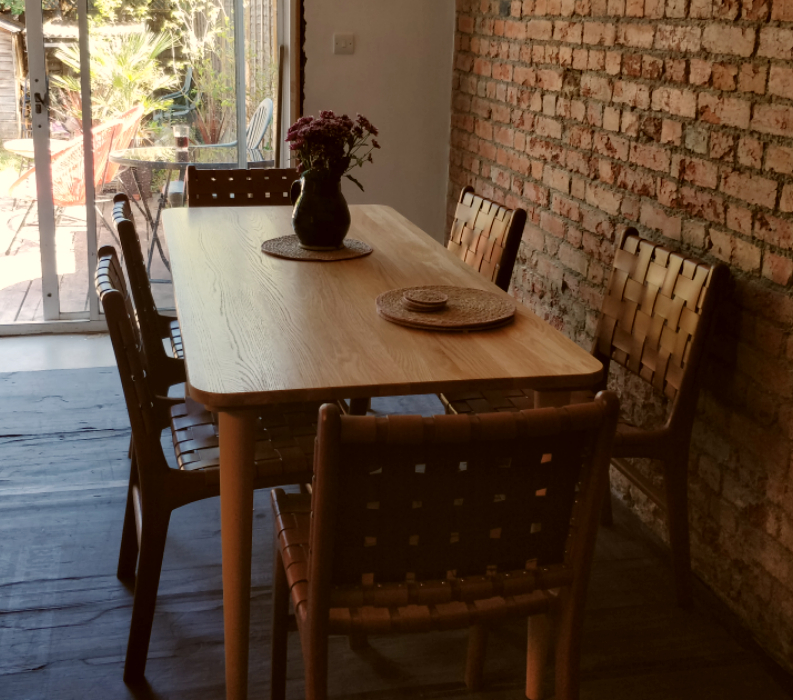
Can you replace table tops across a venue without replacing the bases?
Yes, you can replace table tops across a venue and keep the bases when the bases are sound, level and measured properly. We start with fit, stability, finished height and consistency because a new surface can change how each table sits, fixes and works in service.
Ordering new tops by appearance alone causes problems later. A table can look right on the order form and still fail on site because the drilling pattern does not match, the overhang is wrong, or the finished table height has changed.
Commercial replacement table tops can be made without bases and prepared for existing or third-party bases. The buying decision is about size, shape, timber, finish and edge detail. The fitting decision is about mounting plates, fixing points, underside clearance and whether the old base still deserves the new top.
Across a whole venue, repeatability matters. Square café tables, round bar tables and booth tops each need their own check, even when the refresh looks simple from the customer side of the room.
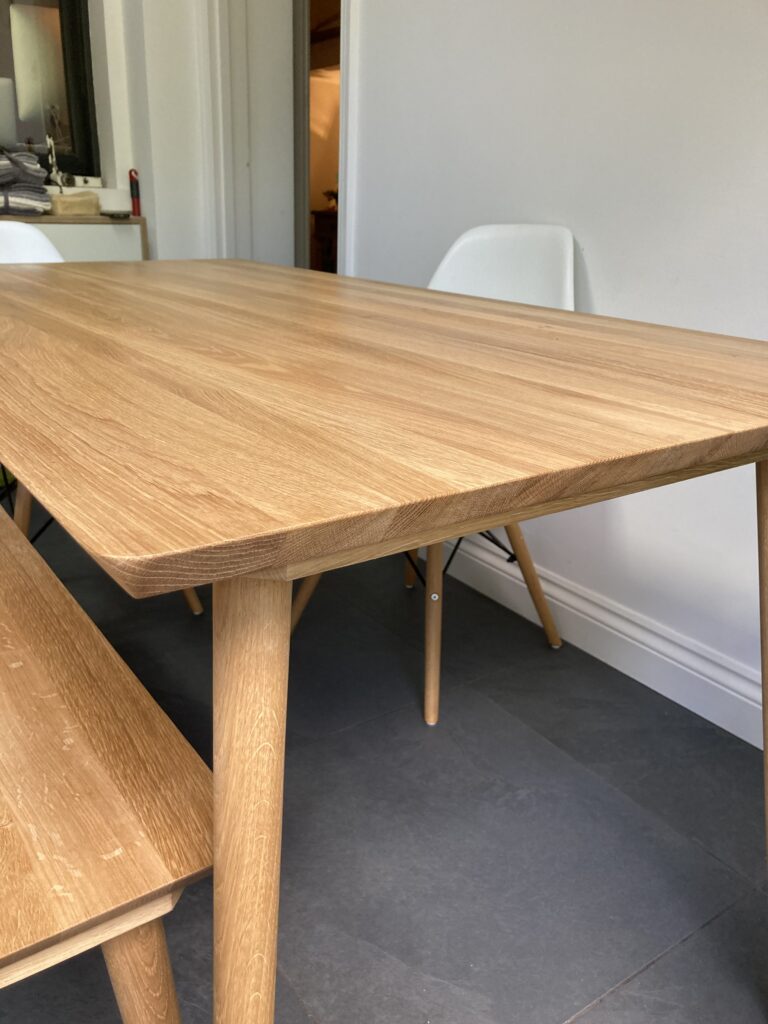
Base condition decides reuse
Keeping bases works well when the bases are stable, level, correctly proportioned and still suit your layout. A worn top can be replaced, but a failing base should not be hidden under a new surface.
Rocking, rusted fixings, loose mounting plates, weak joints and poor proportions all change the answer. A bigger or heavier top can make an old base less stable if the footprint is too small or the fixing plate lacks support. That turns a neat refresh into repeat adjustments after the tables go back into service.
Commercial table bases also sit inside a wider set of checks. BS EN 15372:2023 is the current British Standard for strength, durability and safety requirements for non-domestic tables, and access guidance such as Approved Document M Volume 2 may matter where tables affect how people use the space. We keep that level of detail proportionate, because your main decision is simpler: keep the base only when it gives the new top a reliable platform.
A venue audit prevents mismatch
A venue with square two-person tables, round bar tables and fixed booth tops is already dealing with several different jobs. The tables may look related, yet the bases, screw holes and mounting plates can vary enough to make one repeated order risky.
At Tablemaker, we would rather see the base details early than solve drilling surprises later. Screw holes are not standard across every base, so each base type needs measuring as its own group.
Use the audit to turn a room full of tables into clear ordering information:
- Group matching bases first. Put the same base shapes together and give each group a simple label, such as square pedestal base or round four-leg base.
- Record the existing top size, shape and finished table height for each group. If the old top is wrong, note what needs changing instead of copying the problem.
- Measure the mounting plate. Record its overall size, position under the top and where the fixing points sit.
- Mark the hole centres or drilling pattern from the actual base. Old screw positions on the removed top can help, but the base itself gives the safer measurement.
- Check underside clearance. Some bases have raised plates, brackets or fixings that clash with thick tops, straightening bars or booth layouts.
- Note tight edges, wall runs, booth corners and any tables that need a template or CAD drawing before production.
Good records make quotes clearer and reduce guesswork before pre-drilling is agreed. They also help you order future replacements without treating the same venue as a fresh puzzle each time.
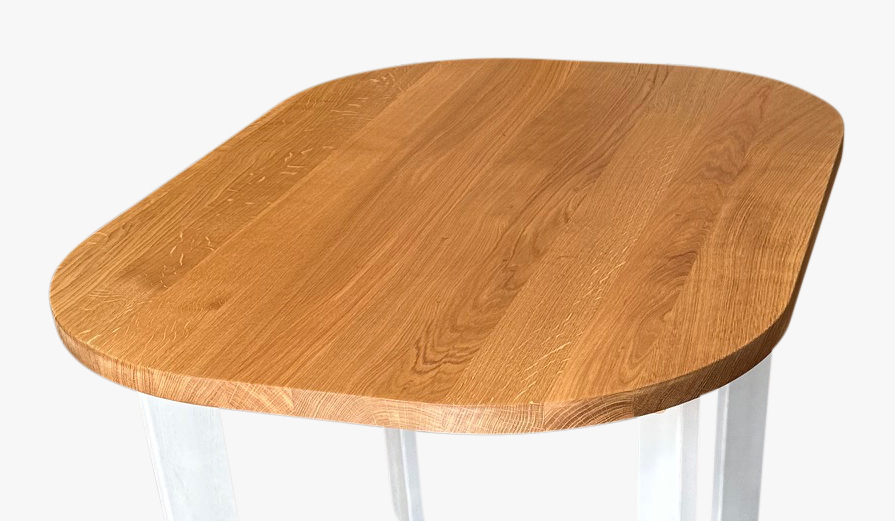 Race Track Shaped Table Top by Tablemaker
Measure the mounting plate from the actual base, not from the removed top alone. Old screw positions can mislead when the plate has shifted or the base type varies.

The specification must fit service
A replacement top can be the right colour and still be the wrong specification. Size, shape, thickness, finish and edge detail all affect how tables work for staff and customers during normal service.
Top size and shape set the footprint
Top size must suit both the base footprint and the way the table is used. A larger top may give more usable surface, although it also increases leverage on the base. Overhang needs enough room for chairs and knees without making the table easier to tip.
Non-standard shapes can solve awkward layouts. Round, oval, D-end, curved-edge and booth-specific tops all have a place where straight rectangles waste space or clash with seating. Wall-fixed tops and corner designs need more care because small measuring errors are harder to absorb on site.
Thickness, finish and edge decide daily use
Thickness changes the finished height of the table, so it should be chosen with the existing base in mind. Our standard solid wood commercial top thicknesses are 24mm and 30mm, with thicker options available where use is heavier, such as bars, shared worktops or bespoke counters.
Hardwax oil is our standard finish because it is water resistant, food safe, wipeable and repairable. That matters in commercial use because worn areas can be maintained without treating the whole top as disposable. Edge detail matters too. Sharp corners can take knocks in tight layouts, and softer profiles can be easier to live with in busy service.
Solid wood is a good choice when you want a repairable surface, but the top still has to suit the job. A fine specification on the wrong base remains the wrong table.
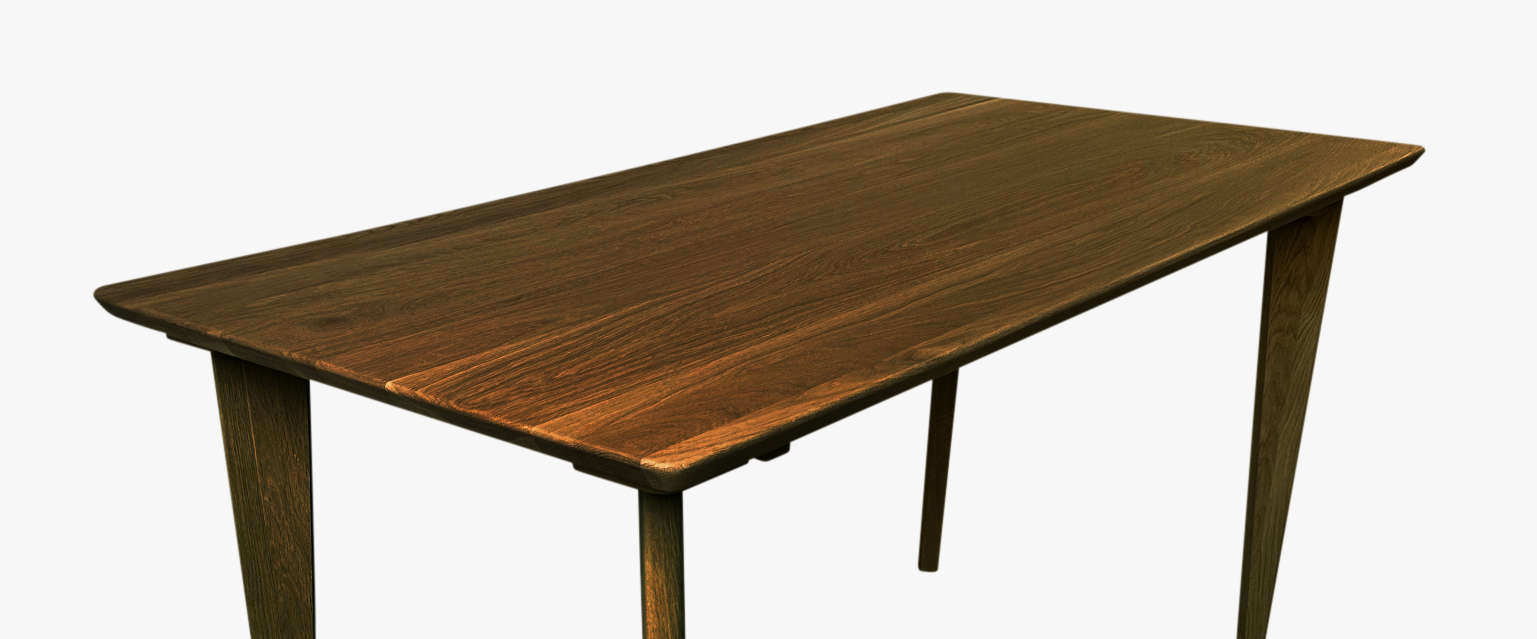 Dark tinted table top
Correct fixings keep tops stable
The fixing method matters as much as the new top. A wooden table top on a metal base can work well, provided the fixing plan suits the base and allows the wood to move.
Solid wood expands and contracts with moisture and humidity. Cupping means a top bending across its width, and it becomes more likely when wood movement is trapped or the top is poorly supported. Secure fixing matters, and rigid fixing across the grain can create problems over time.
Pre-drilling helps when it follows accurate measurements from the actual base. Guessing the hole pattern, copying one table without checking the rest, or assuming a supplier’s base plate is the same as yours can leave you with tops that need reworking before they can be used.
Straightening bars are fitted across the grain to help keep wider solid wood tops flatter. They are removable, so the top can be mounted in different ways, but their position still has to work with the fixing plate below. Share the base details before drilling is agreed, especially where metal bases, old screw holes or underside fittings leave little room for adjustment.
Agree one pilot top before a full batch starts. A single fitted sample can confirm overhang, height and fixing details before the same spec is repeated across the venue.
Batch planning protects consistency
When several tops are being replaced across a live venue, one good sample saves more trouble than a fast full order with unchecked assumptions. A pilot top lets you test the finished height, overhang, finish and fixing before the same choices repeat across the room.
Batch planning also protects consistency. Finish samples, templates and agreed drilling details give everyone the same reference point, from the workshop to the fit-out team. If you need to phase the change around service hours, keep the specification fixed and vary the schedule, because changing both at once invites mismatch.
At Tablemaker, we treat repeatability as part of the specification. Our made-to-order custom commercial table tops have a standard turnaround of 2 to 4 weeks, so it is practical to plan batches, spare tops or future replacements without turning the job into a full furniture refit.
One approach is to swap tired tops one by one as they fail, accepting small differences in height, edge, finish and fixing each time. The stronger approach is to treat the venue as a set of base types with a clear specification for each group. That second route gives you a cleaner refresh now and a simpler replacement path later.
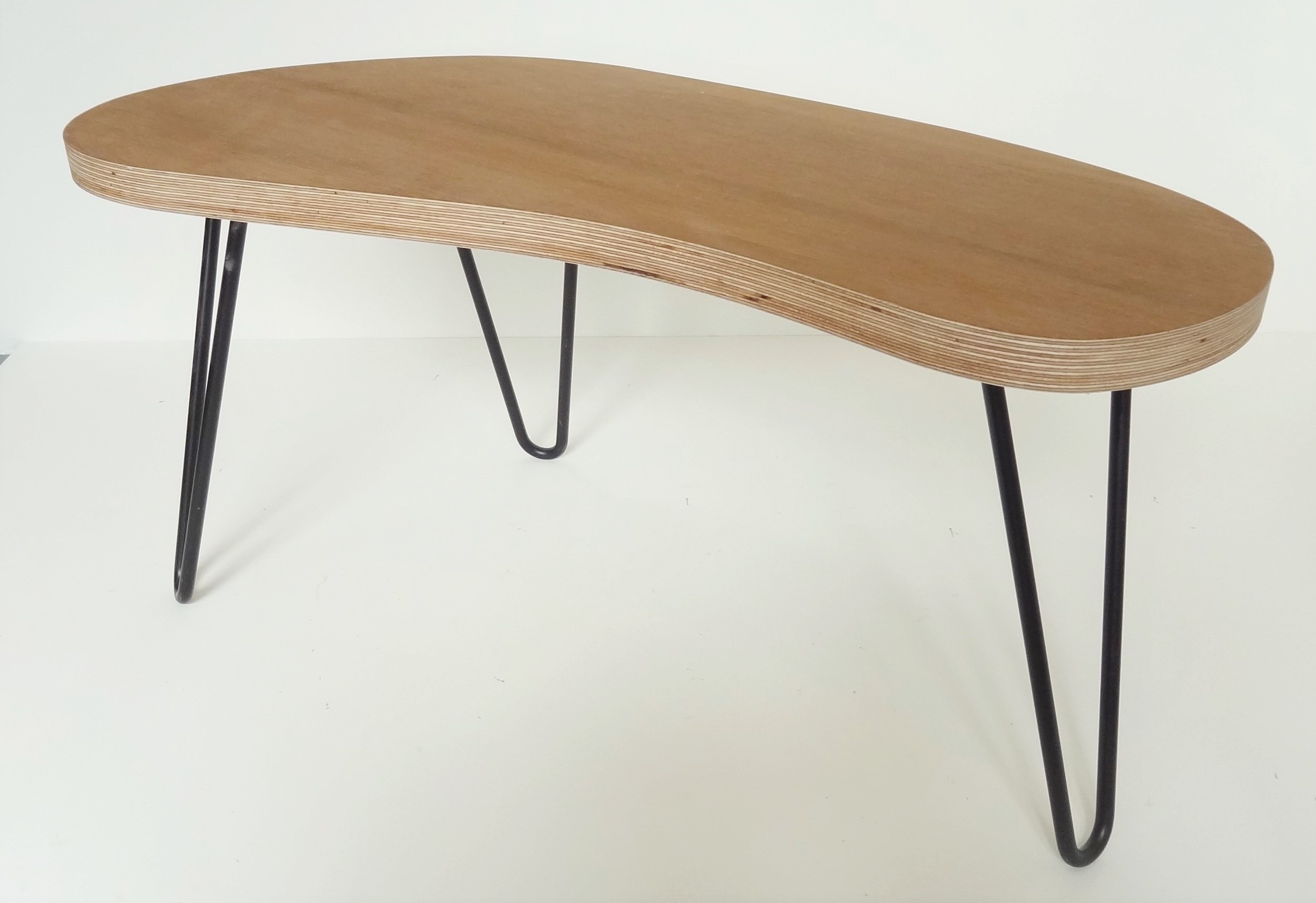 Stylish solid oak table top and legs
Questions we get asked about replacement table tops
Can new table tops be fitted to metal bases?
Yes, wooden tops can be fitted to metal bases when the fixing points, plate size and drilling pattern are checked first. The top also needs a fixing method that allows solid wood to move across the grain.
Should replacement table tops arrive pre-drilled?
Pre-drilling is useful when the measurements come from the actual bases being reused. We avoid treating screw holes as standard because base plates and fixing points vary.
Can every old base be reused?
No, some bases are too unstable, worn or poorly proportioned to justify reuse. A new top needs a base that stays level, holds fixings properly and supports the size being ordered.
How do we avoid mixed finishes across a venue?
Agree the timber, finish, edge detail and batch reference before ordering multiple tops. Samples and a pilot top help you check the look and service fit before repeating the specification.
Do thicker tops always make better commercial tables?
No, thicker tops add weight and change the finished table height. The right thickness depends on the base, the layout and how the table will be used.
This is general information, not professional advice.