
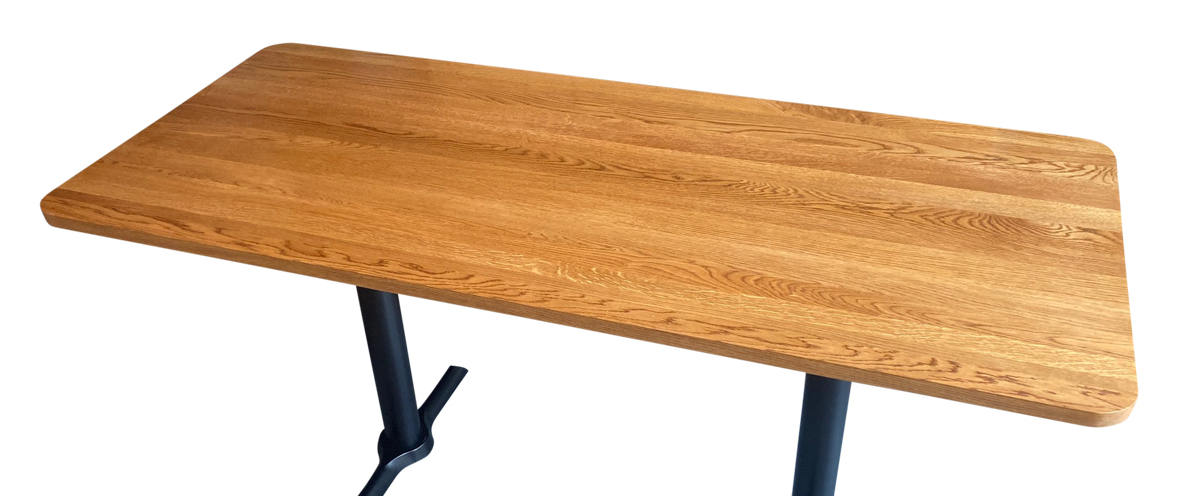
How should you specify table tops for your hotel restaurant or lounge?
Start by writing the use case, not the material, because hotel restaurant and lounge tops fail through poor fit, weak fixing, unsuitable cleaning routines and awkward repair plans. We specify the surface around daily service first, then choose size, shape, thickness, finish and base details that support it.
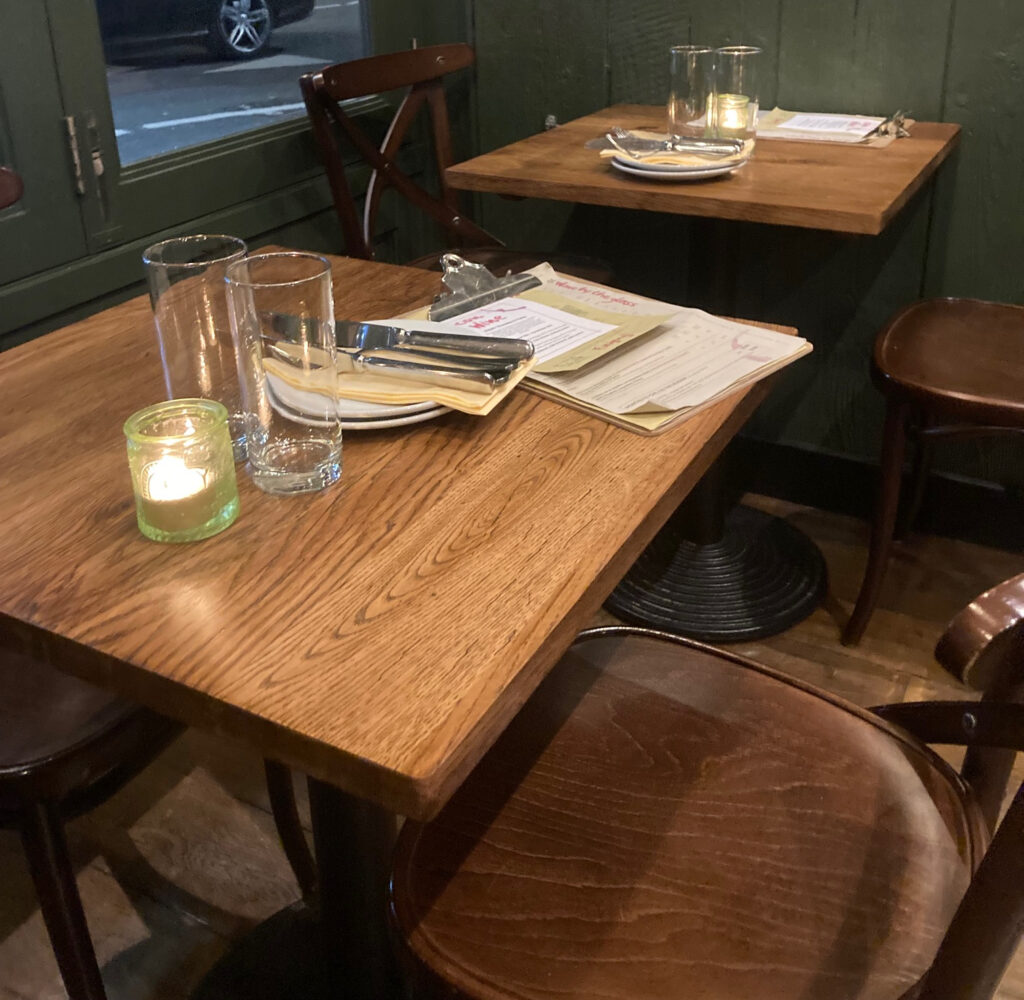
Specify the use case before the material
A table top fails in the details nobody sees on a sample board. Appearance matters, but the working specification has to say how the top is fixed, cleaned, repaired and used.
Vague phrases such as “commercial grade” do very little unless the hospitality table top specification names the real requirements. A hotel restaurant, a bar and a lounge all put different pressure on a surface. Dining tables deal with plates, cutlery and regular wipe-downs. Bar tables take drinks service and shorter turnover. Lounge tables meet laptops, bags, mixed-height seating and guests who may sit for longer.
BS EN 15372:2023 is the current British Standard covering strength, durability and safety requirements for non-domestic tables, as set out by the British Standards Institution, or BSI. We do not treat that as a substitute for a good fit-out brief, but it is a useful reminder that hotel restaurant table tops and hotel lounge tables belong in a non-domestic setting.
Shape, edge and base choice all follow from the use case. A soft radius corner can make sense where circulation is tight. A sharper rectangular plan can work where tables need to line up cleanly for dining service. Once the service pattern is clear, the rest of the specification stops being guesswork.
Test the solid wood spec properly
“Solid oak” is a material description, not a complete commercial table top specification. For solid wood restaurant table tops, we want the spec to name the thickness, construction, finish, edge profile and fixing method before anyone signs off a sample.
Solid wood can work well in a hotel restaurant or lounge because it can be repaired and kept in use for years. Poorly specified wood gives you the opposite problem. A top that is fixed too tightly, finished for the wrong cleaning routine or ordered with the wrong edge detail becomes a maintenance issue from day one.
Name the thickness and finish
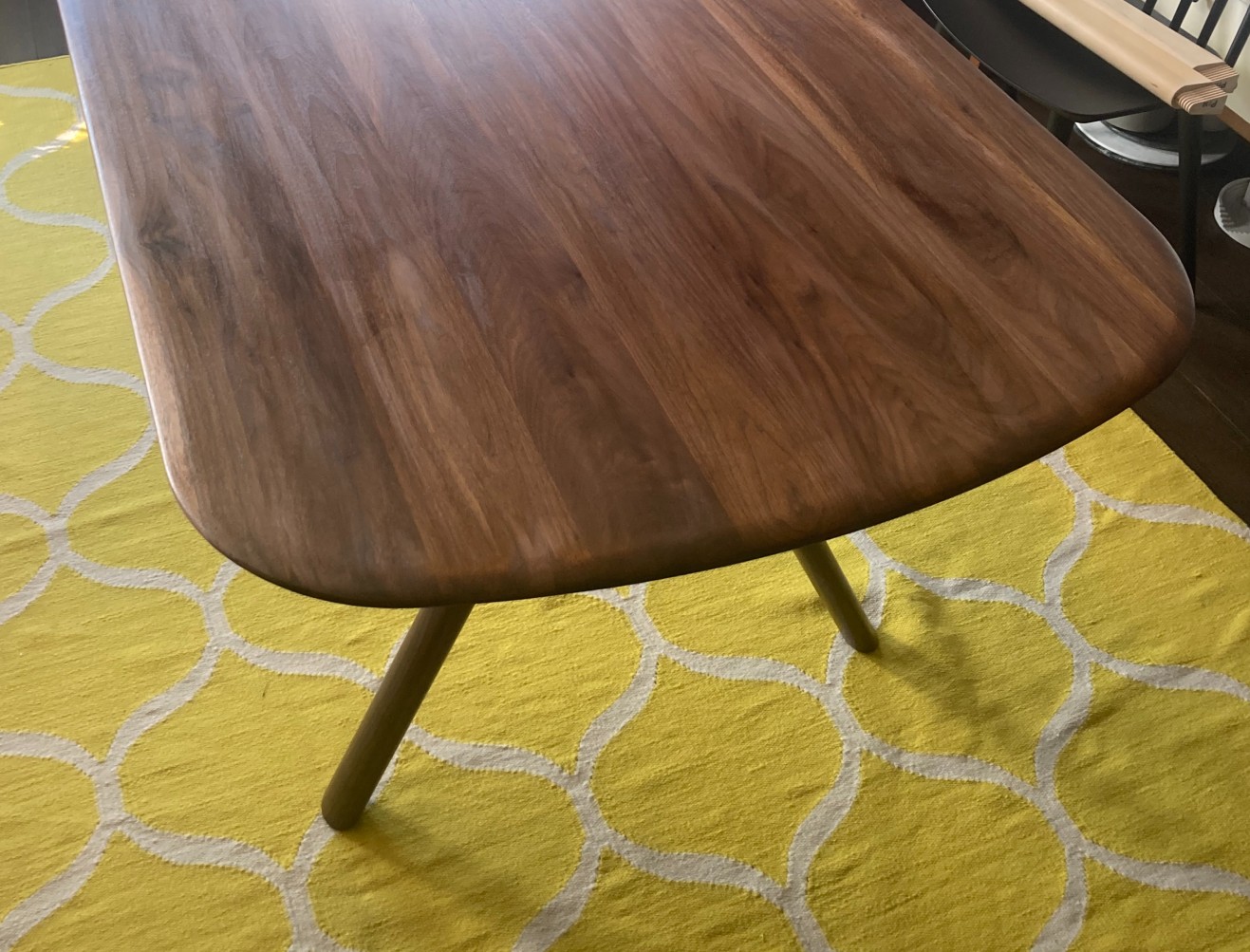
At Tablemaker, we normally specify hospitality table tops as 24mm solid oak with a food-safe hardwax oil finish. Hardwax oil is a finish that soaks into the surface and leaves a protective coating that can be cleaned and maintained, rather than a brittle film that has to be stripped from the whole top when a small area is marked.
That does not make the surface immune to every stain, heat mark or cleaning product. The practical advantage is repair. A ring, scratch or worn patch can be spot-repaired without taking the whole top back to bare timber, which changes the long-term maintenance decision for commercial oak table tops.
Construction belongs in the same conversation. Full stave construction means the top is built from solid strips running the full length. Kiln dried timber means the moisture level has been reduced before making, which reduces the risk of movement later. Those details sound technical, but they are what separate a vague oak top from a working hospitality surface.
Allow the wood to move
Wood moves across the grain as moisture levels change. Cupping is the plain name for a top bending across its width, and it is one of the problems we try to prevent before the top reaches your site.
Straightening bars are fitted across the grain to help keep a wide top flat. They matter most when a solid wood top is mounted onto a base or frame that could otherwise pull against natural movement. A fixing method that clamps the top too rigidly can create the very problem the base was meant to avoid.
Edge detail also belongs here, because comfort and wear sit at the edge. Rounded edges and soft corners are easier to live with in busy hospitality spaces, while bevelled edges can reduce the visual weight of a thicker top. The right choice depends on how the table is handled, cleaned and passed during service.
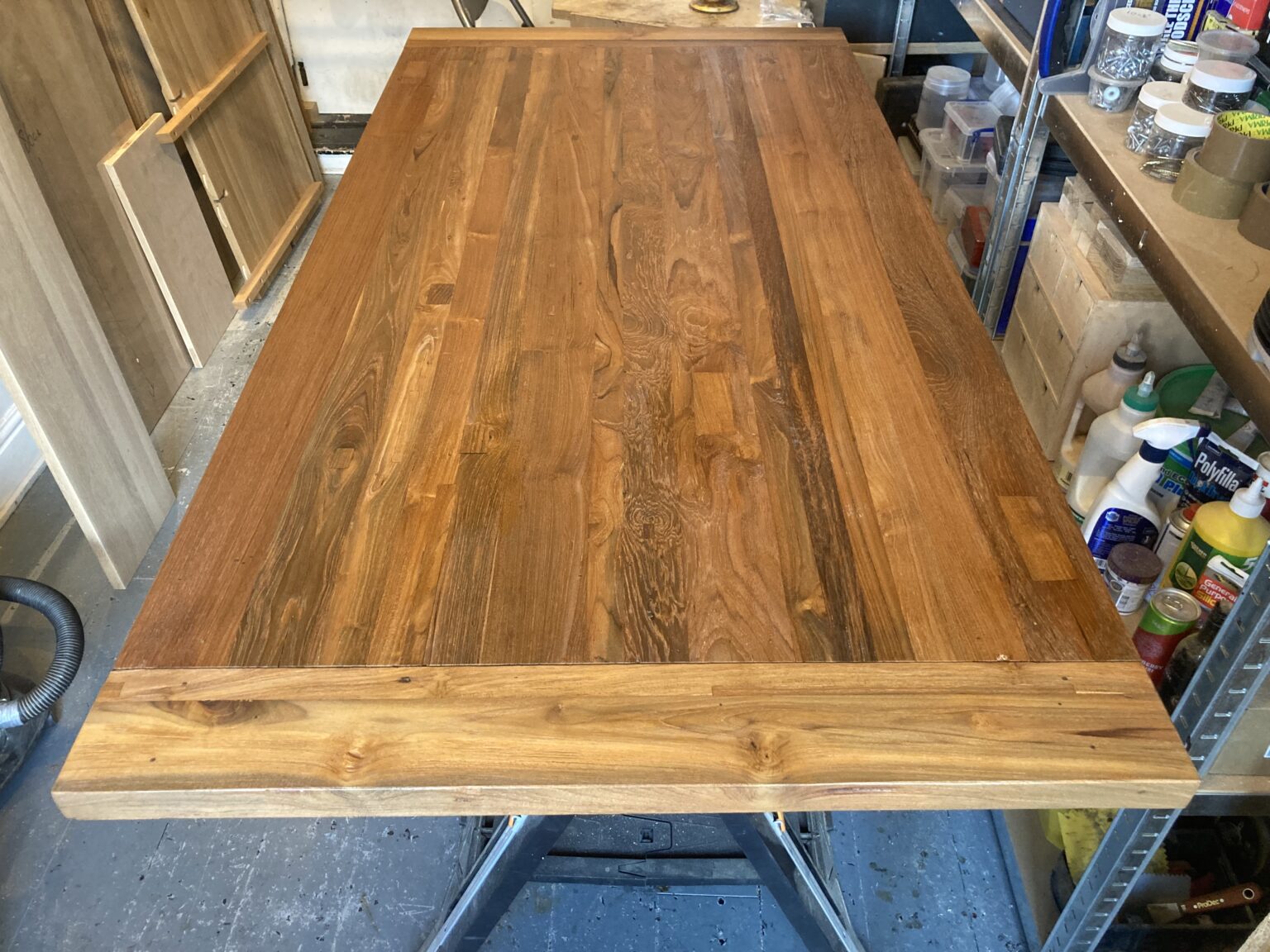
Keep the base plate, screw position and overhang in the same project file as the top dimensions. That makes replacement easier if you need to order more later.

Match the top to the base and layout
A hotel refurbishment often keeps the existing table bases and replaces only the tops. The risk is rarely the colour match first. The bigger risk is a top that overhangs badly, fixes through the wrong points or makes a stable base feel unsteady.
We check the base plate, screw position, base footprint and likely overhang before treating a replacement top as straightforward. Pedestal bases need enough top support, and four-leg frames need fixing points that make sense for the new shape. If the base was already near its limit, a larger or heavier replacement top will not improve it.
Round restaurant table tops can improve movement around a tighter plan, because there are no corners projecting into the route. Rectangular tops work better where you need straight runs, wall positions or flexible grouping. Square and oval tops sit between those uses, so the right answer comes from the layout rather than personal preference.
Sizing also needs to account for the chair, too. As a rough planning guide, allow about 50cm of table width per person, with more room for wide chairs. Lounge settings need a separate check because lower seating, laptops and bags change how guests use the table surface.
Cable notches deserve a brief mention for lounge and work-style areas. They make sense where a table top will support laptops or charging points, but they are unnecessary clutter on most dining tables. A clean replacement spec says which tops need that detail and which do not.
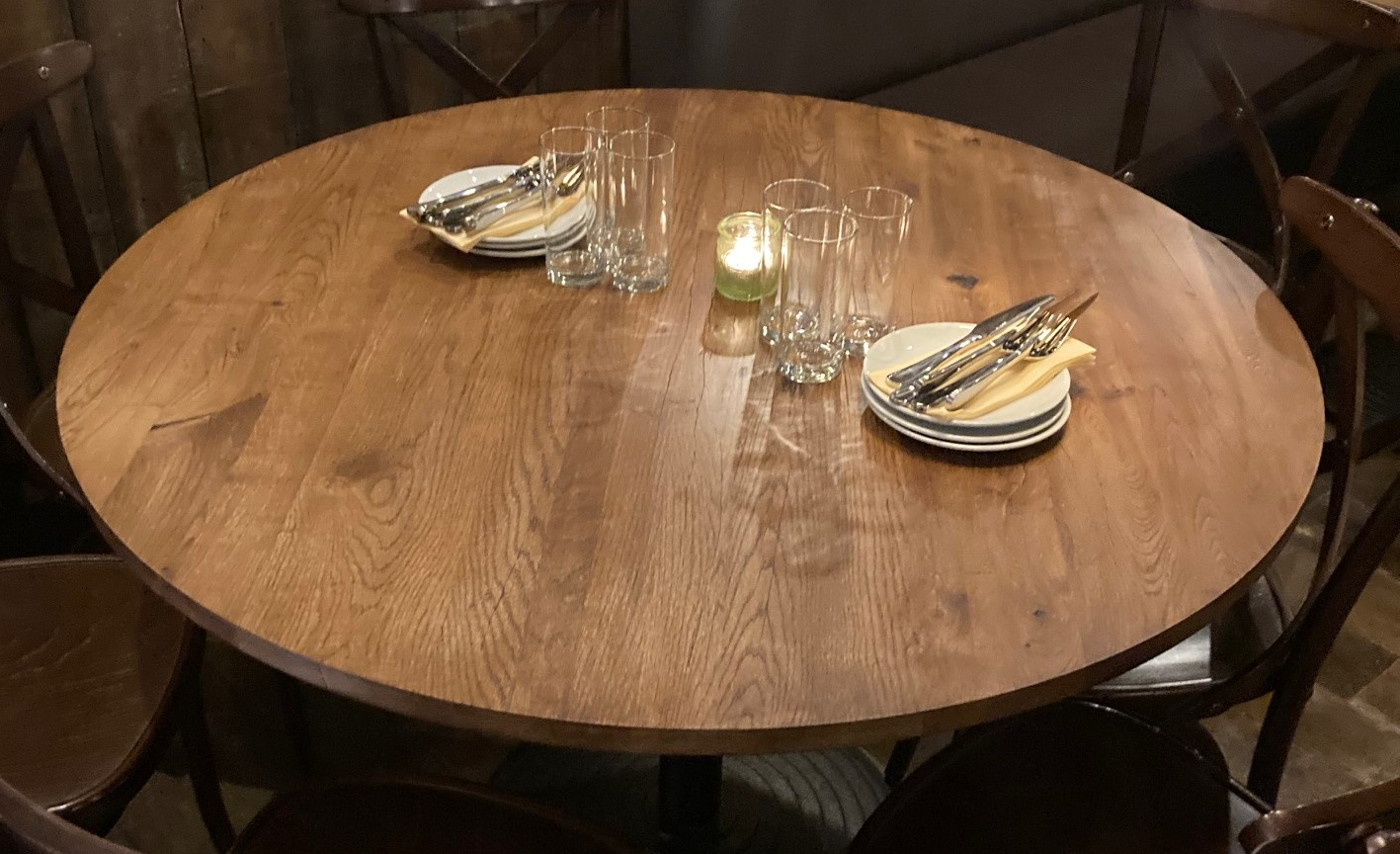
Build cleaning and repair into the finish
The best finish for restaurant table tops is the one that works with your real cleaning routine and can be maintained after marks appear. A showroom wipe test tells you very little unless it matches the products and frequency used on site.
GOV.UK food hygiene guidance says food businesses should set up a cleaning schedule and record, including what is cleaned or disinfected, how often it is done and which products are used. That makes the finish part of the operational specification. We want the table top care guidance checked against the venue’s actual wipe-down routine before sign-off.
Disinfectant choice matters too. GOV.UK advises checking labels for the British and European standard codes BS EN 1276 or BS EN 13697, because not every product deals with bacteria and viruses in the same way. The furniture question is narrower: will the chosen surface and finish cope with the approved products your team uses?
Repairability should sit beside cleaning, because daily use will mark any working surface eventually. Hardwax oil restaurant tables give you a practical route for localised wear, rings and scratches. Sealed surfaces can be simple to wipe, but local repair is a different question, so the maintenance plan needs to be decided before the order is placed.
Match the finish to the cleaning products already used on site before sign off. A surface that wipes well in theory can still fail in daily use if the maintenance routine is wrong.
Confirm the ordering spec in writing
When the specification is clear, the table top decision becomes much easier to judge. You are no longer approving a nice sample. You are approving a working surface with agreed dimensions, fixing, finish and care requirements.
Use a written hospitality table top checklist before ordering:
- The specification should state the exact dimensions and shape for each table top, including whether it is square, round, rectangular or oval.
- The thickness should be named, along with the material and construction, so “oak top” does not stand in for the full decision.
- The edge profile and corner shape should be confirmed in words, especially where guest circulation is tight.
- The base compatibility should be checked against the fixing plate, screw positions, base footprint and overhang.
- The finish colour and care guidance should match the cleaning schedule and the products used by the venue.
- The order record should cover future replacement planning, including samples or finish swatches kept with the project file.
At Tablemaker, we make commercial table tops to exact dimensions in square, round, rectangular and oval shapes, with custom edge details such as square edges, rounded edges, bevelled edges, soft radius corners and cable notches where the use case calls for them. That level of detail gives the buyer, designer and workshop the same reference point.
Once the hidden details are named, the table top stops being an uncertain finish choice. You can look at the base, the cleaning routine and the approval record, then see exactly where the specification is strong and where it still needs tightening.
Questions we get asked about hospitality table tops
Are solid wood table tops suitable for hotel restaurants?
Solid wood table tops are suitable for hotel restaurants when the specification covers thickness, finish, edge detail and fixing. The top has to be treated as a working hospitality surface, not just as an oak board.
What finish works best on wooden restaurant tables?
A food-safe hardwax oil finish is a practical option because it is cleanable and repairable. The finish still needs to be checked against the cleaning products and care routine used by your venue.
Can you replace restaurant table tops and keep the same bases?
Replacement tops can work with existing bases if the base plate, fixing points, overhang and stability are checked first. A top that fits visually can still wobble or strain the base if those details are wrong.
What edge profile is best for commercial table tops?
Rounded edges and soft radius corners are usually easier in busy hospitality spaces where guests and staff pass close to the table. Square or bevelled edges can work well where the layout gives enough clearance.
Why do wooden table tops move after installation?
Wood moves across the grain as moisture levels change. Good construction, suitable fixing and straightening bars help manage that movement, especially on wider solid wood tops.
This is general information, not professional advice.