

Are solid wood restaurant tables worth it?
Yes, solid wood restaurant tables are worth it if you want a surface that can be repaired, refinished and made to fit your room and bases. We would avoid them if you need a fully hands-off surface, harsh cleaning every day, or a short, low-cost fit-out.
Many buyers look first for the hardest restaurant table top material. We think the better question is what happens after the first scratches, spill marks and worn patches appear.
Solid wood earns its keep when you treat the top as a working surface. It needs the right finish, sensible cleaning, correct fixing to the base and sizing that suits service. If those things are missing, the spend is harder to justify.
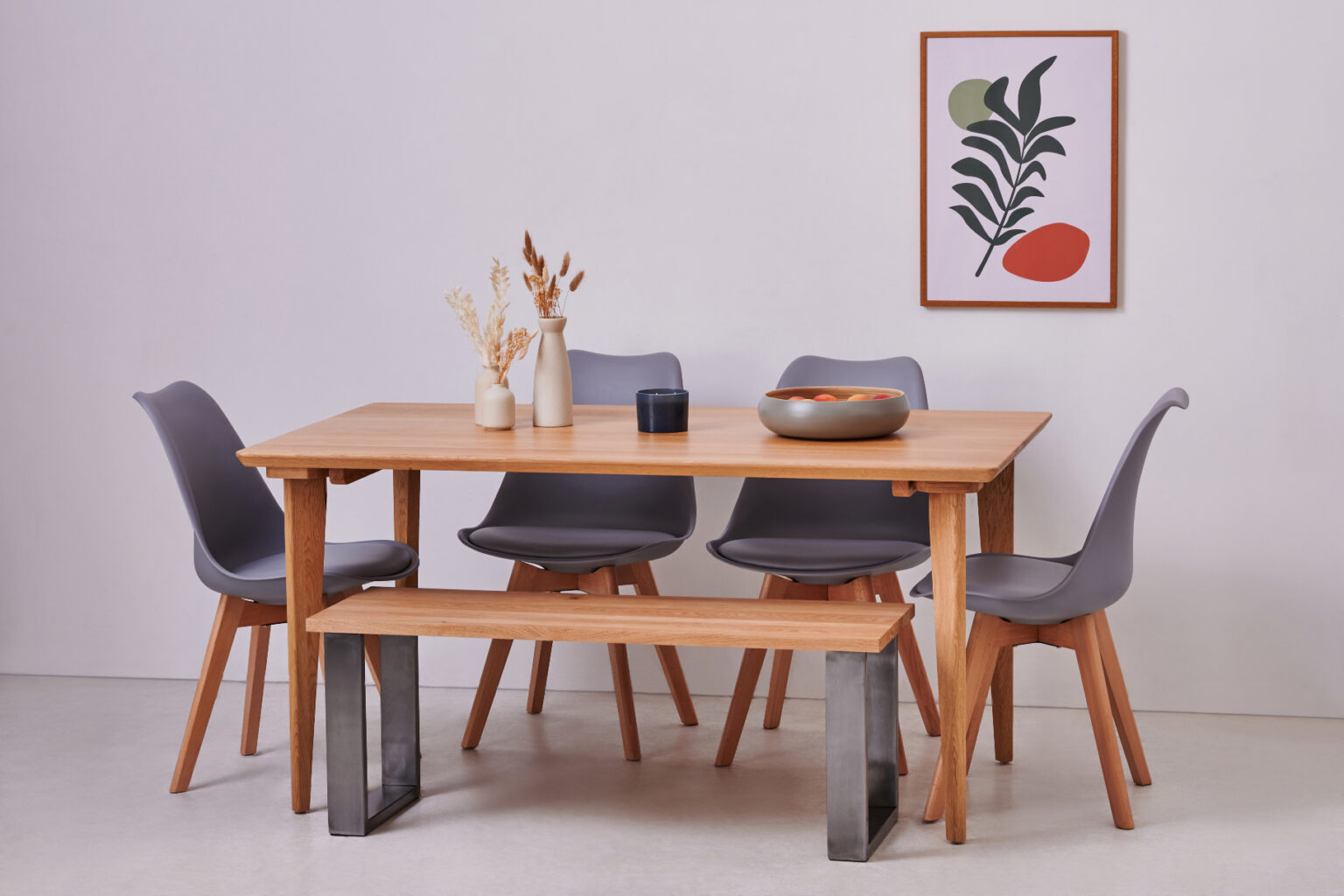
The real comparison is repairability, not just durability
Durability in a restaurant has two sides: how well a surface resists damage, and how well it can be put right after damage. Solid wood stands out because wear does not have to mean replacement.
A scratched corner, a dulled patch where plates are dragged, or a finish that has worn thin near the edge are all normal dining room problems. At Tablemaker, we use solid wood and repairable finishes because a busy venue needs furniture that can be worked on later. It should not be treated as finished forever on day one.
Here is the practical comparison we use with restaurant buyers.
| Material | What it is good at | What to watch | Best fit |
|---|---|---|---|
| Solid wood | A real timber surface that can be sanded and re-oiled repeatedly | It needs sensible cleaning and correct fixing to the base | Venues that want repairable restaurant tables and visible timber |
| Laminate | Simple daily wiping and a wide range of looks | Repairs depend on the product and type of damage | Operators who want low-touch surfaces above timber feel |
| Veneer | A timber look with a thin real wood surface layer | Sanding is limited, and a failed finish can expose the thin layer beneath | Lower-wear areas or projects where appearance matters more than future refinishing |
| MDF or chipboard based tops | Useful in some budget or standardised fit-outs | The surface layer does most of the work, so deep repair is limited | Shorter fit-outs or rooms where replacement is part of the plan |
A thin veneer can look good at first, but once the finish fails, sanding back is limited. Solid wood table tops for restaurants change the calculation because the surface has material to work with. You can plan a sand and re-oil instead of planning a full set of replacement tops.
The finish must match real restaurant cleaning
Between covers, staff wipe tables fast, often with food spills, drink rings and crumbs still on the surface. A wood finish has to cope with that normal service, but no finish should be treated like armour.
Hardwax oil is a finish made from oils and waxes that protects the surface while keeping the timber visible. It is our standard finish for tables and table tops, and we apply a minimum of two coats as standard. That gives the timber a practical surface for ordinary restaurant use.
Cleaning matters. We advise mild detergent, such as soapy water, for hardwax oil or varnished table tops. Harsh chemicals and abrasive rubbing can wear down the finish, which is where some sticky or patchy tables begin to feel like a bigger problem than they needed to be.
Sticky wooden restaurant tables usually point to residue, a tired finish, or the wrong cleaning product for the surface. The fix depends on the cause, so we look at the finish first rather than blaming the timber. Good cleaning habits protect the finish without turning staff routines into a woodworking lesson.
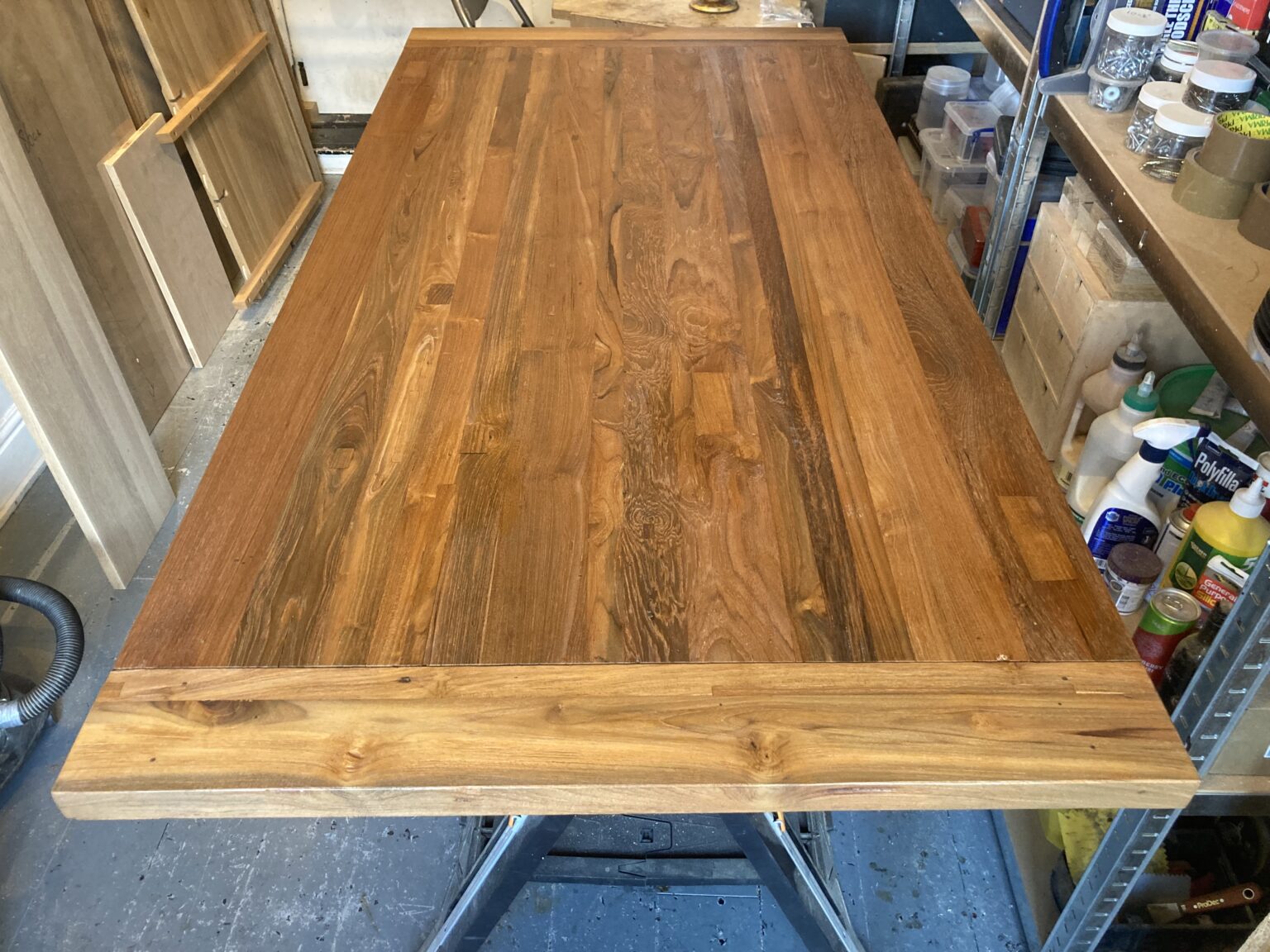
If your dining room uses existing bases, check the fixing points before you order. A solid wood top needs a fixing method that allows for timber movement.

The build matters as much as the timber
A solid wood top can look right when it leaves the workshop and still give trouble later if the build or fixing is wrong. Wood moves with the room, so the aim is to control that movement and allow for it in the way the top is made and fitted.
BS EN 15372:2023 is the current British Standard for strength, durability and safety requirements for non-domestic tables, published by BSI on 31 January 2024. We treat that as a useful buying signal, not a promise about finish wear, ageing or chemical resistance.
Wood movement is normal
Wood movement means timber responds to moisture in the air. The USDA Forest Service, Forest Products Laboratory explains that wood moisture content tends to come into balance with the relative humidity around it, which is why a restaurant dining room matters as much as the timber species.
Cupping is when a table top bends across its width. Good drying, careful storage and sensible construction reduce the risk, but no honest maker should tell you solid wood has stopped behaving like wood.
Straightening bars help wide tops stay flatter
Straightening bars are bars fitted across the grain to help reduce cupping in a wide solid wood top. They do not freeze the top in place. They support it while still letting the timber move in a controlled way.
Full stave construction means the top is made from solid strips of timber running the full length of the table. In our workshop, Tablemaker uses details such as full stave construction, kiln dried timber and straightening bars because wide commercial table tops need more thought than a small domestic top.
The base must suit the top
A restaurant table top and base work as one piece of furniture. If you reuse existing bases, the question is whether the top can be screwed down. The fixing method has to suit solid timber.
Rigid fixing across the grain can cause trouble because the top still needs room to move. Replacement table tops are a good option when bases are sound, but the base pattern, fixing points and top size need to be checked before you order.
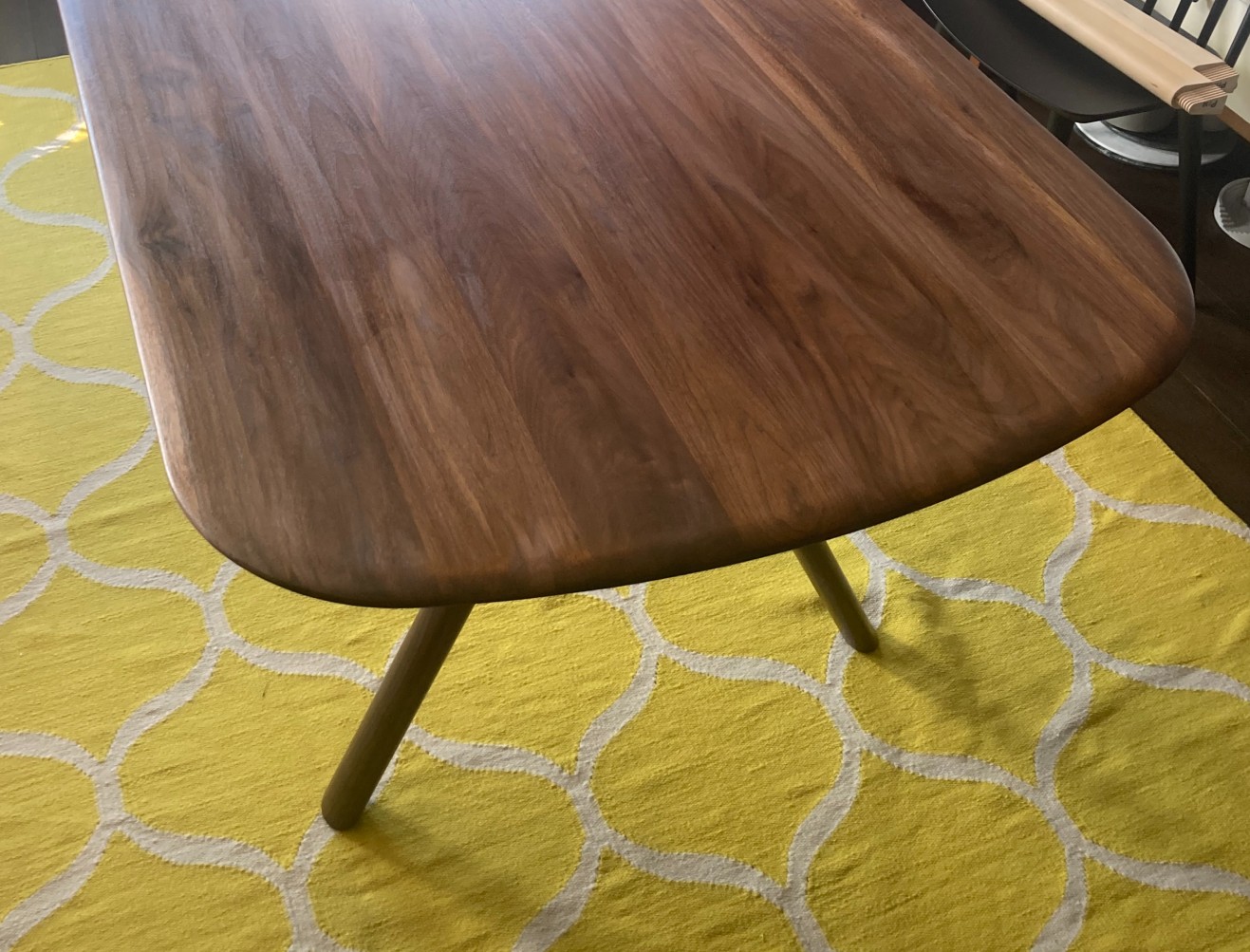
The right size protects service and spend
Your dining room is a working space, so the table has to earn every bit of floor it takes. Most people measure the top and forget the chairs, the staff route, and the awkward corner that always catches someone during service.
Made-to-measure restaurant table tops make solid wood more useful because they can solve fit-out problems that standard sizes leave behind. A replacement top can refresh a room when the bases are still sound. A rounded corner can make a tight route easier to live with. A different edge profile can make wiping and guest comfort feel less clumsy.
We make sizes in 1cm increments, which matters when a run of two-tops, four-tops or a communal table has to fit an exact wall length. As a rough guide, allow about 50cm of table width per person, with more needed for wide chairs. That figure is a starting point, because your chair shape and service style still affect what works.
Solid wood becomes easier to justify when it fits the room and the base properly. A good top in the wrong size is still the wrong table.
For busy service, ask how the finish will be refreshed after wear appears. A repairable finish is easier to live with when the first marks show up.
The better long-term choice is the one you can maintain
The better buy is the table top you can keep in service without pretending wear will never happen. Solid wood restaurant tables are worth the cost when the surface can be refinished, the finish suits your cleaning routine, and the base lets the top behave properly.
Before buying solid wood tables for a busy restaurant, we would check the following points:
- Ask how the top is finished. Hardwax oil is repairable, but staff still need to clean it with the right products.
- Check how future wear is handled. A supplier should be able to explain sanding, re-oiling and any downtime in plain terms.
- Look under the top. Straightening bars and fixing points tell you a lot about whether the maker has thought about movement.
- Match the top to the base. Existing bases can work well, provided the fixing method suits solid timber.
- Be honest about cleaning. If your routine depends on aggressive chemicals or abrasive scrubbing, another surface may be the cleaner commercial choice.
One buying approach treats tables as a day-one surface: choose what looks easy, use it hard, then replace it when the room starts to look tired. The other treats the table top as maintainable working furniture, with a finish, construction and size chosen for real service. In a busy dining room, the second approach gives you more control over what happens after the first signs of wear appear.
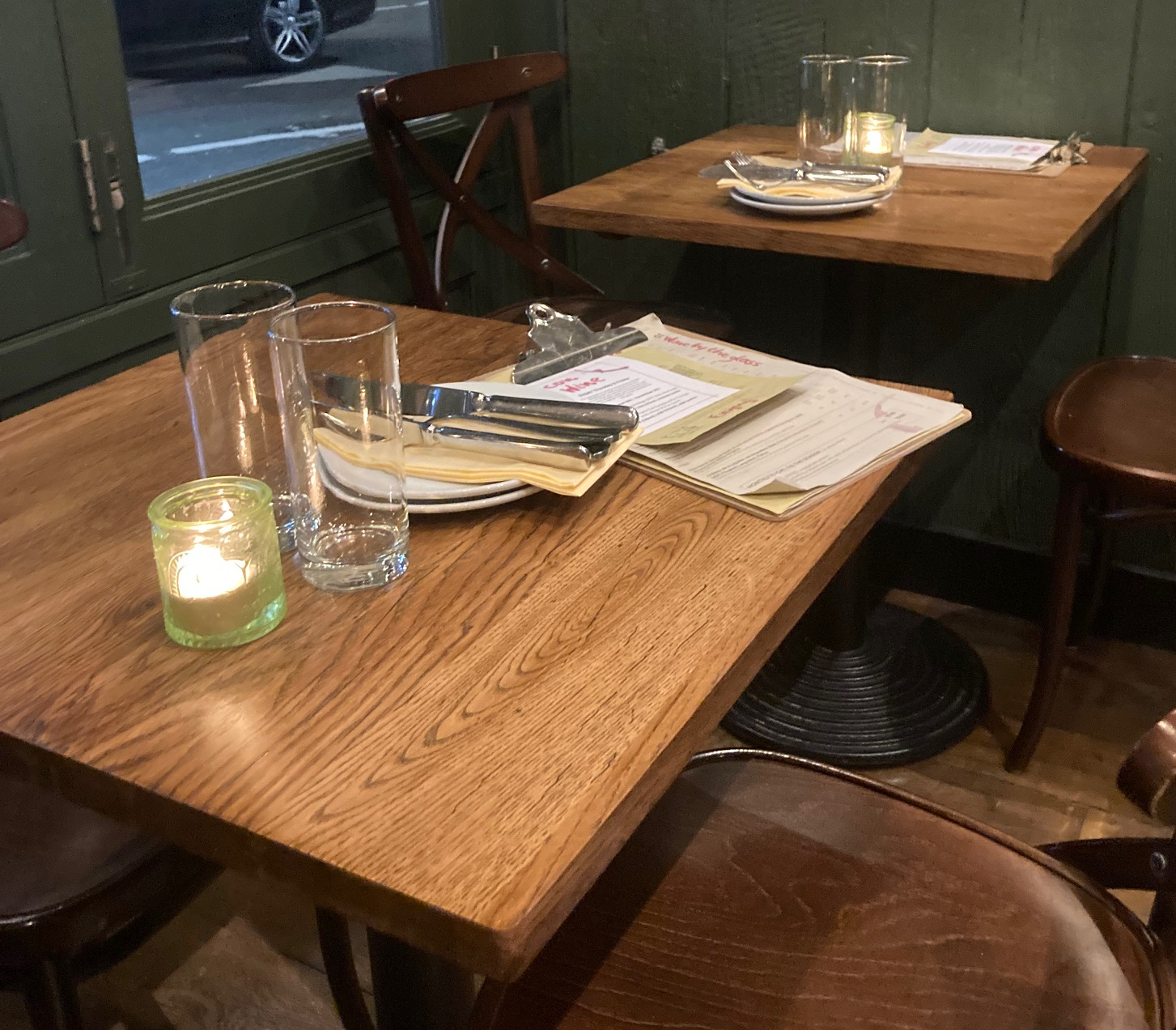 Cafe / restaurant table tops
Questions we get asked about solid wood restaurant tables
Can solid wood restaurant table tops be fitted to bases we already have?
Yes, solid wood tops can be fitted to existing bases if the base is stable and the fixing method suits timber movement. We always want to know how the base supports the top before treating replacement tops as a simple swap.
Why do wooden restaurant tables feel sticky after cleaning?
A sticky surface can come from cleaning residue, a worn finish, or a product that does not suit the table finish. The right fix starts with identifying whether the problem sits on the surface or in the finish itself.
Does hardwax oil need re-oiling in a restaurant?
Hardwax oil is repairable, so worn areas can be refreshed when service has marked the surface. The timing depends on wear, cleaning routine and how visible the tables are in the room.
Are veneer table tops durable enough for a restaurant?
Veneer can work in the right setting, but its thin wood layer limits how much sanding can be done later. For heavy daily wear, solid wood gives you more material to repair.
Do all solid wood restaurant tops need straightening bars?
Wide solid wood tops benefit from construction that deals with cupping, and straightening bars are one way to help the top stay flatter. The need depends on the size, design and base arrangement.
This is general information, not professional advice.