
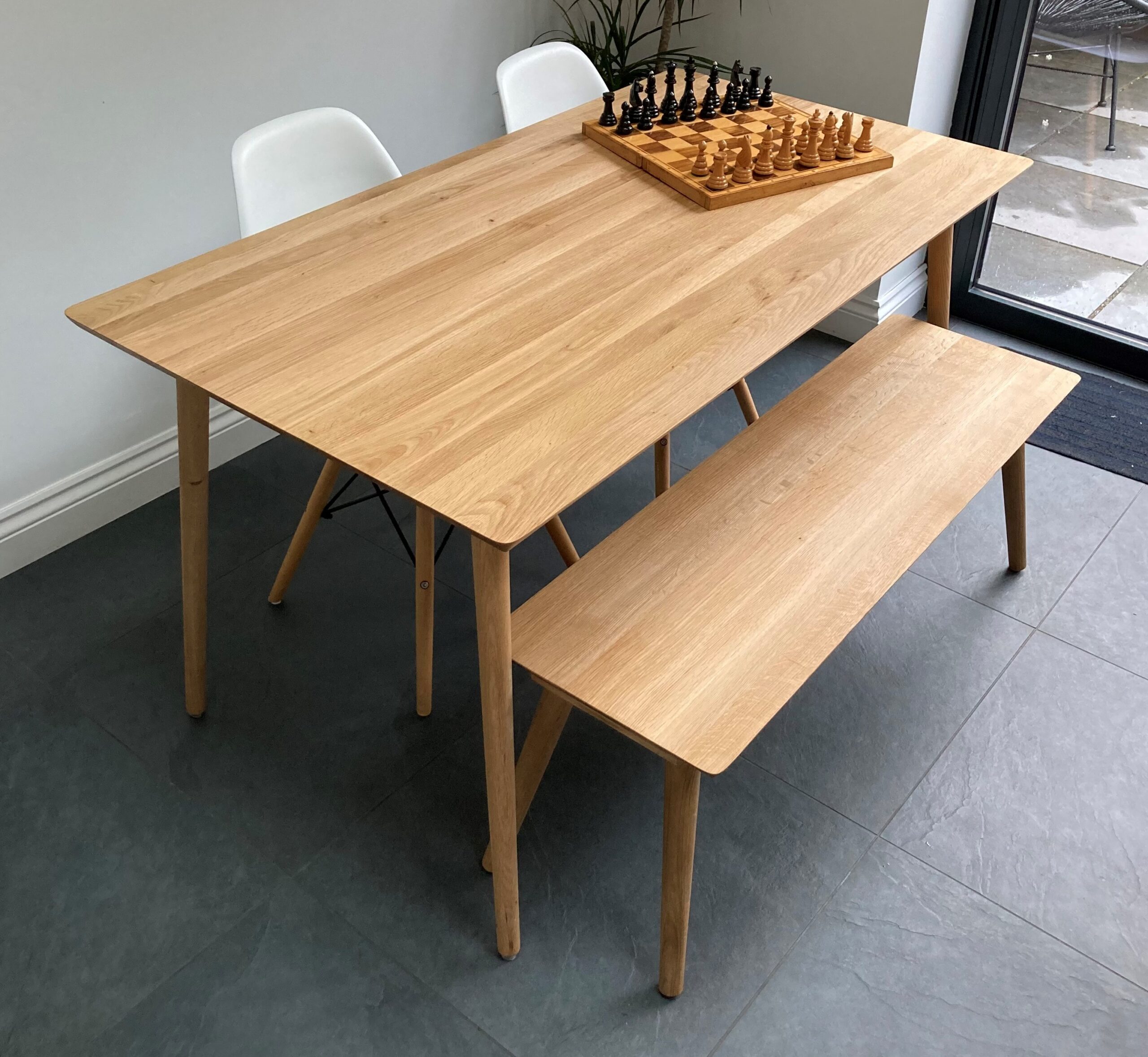
What should you check before ordering a custom table top online?
You should check the exact size, shape, material, finish, support method, delivery details, care needs, workshop approach, and the terms for returns or adjustments. A custom table top can work brilliantly in daily life, but only if it suits the room, the base, and the way you plan to use it.
Table of Contents
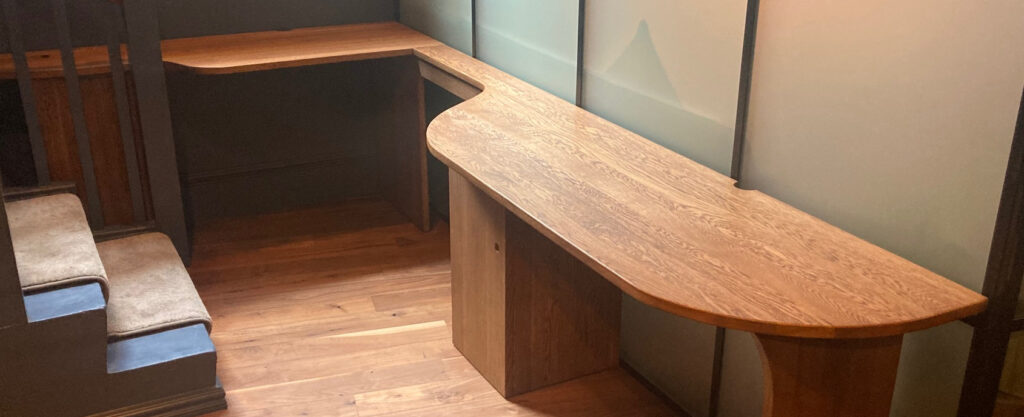
What are the exact dimensions and shape required for your space?
Size comes first because a table top that looks right on a product page can feel completely wrong once it arrives. Length and width matter, but so do legroom, walking space, overhang, and how the top sits on its base.
Start with the room, not the table. Measure the footprint you can genuinely give up, then look at circulation around it. Furniture measurement guides often suggest leaving enough clearance for chairs and movement, and that basic principle is far more useful than copying a standard size.
A few checks make measuring for table top orders much safer:
- Measure the available floor area, including doors, radiators, skirting boards, and window ledges.
- Measure the base separately if you already own one, including fixing points and how much overhang you want.
- Check chair pull-out space and traffic flow, especially in dining rooms and narrow home offices.
Shape changes how a top behaves in a room. A rectangular top usually uses space efficiently, whereas a round top can soften tight corners and improve movement in compact areas. Oval shapes can offer similar seating capacity with a gentler footprint, which means that they often suit routes between kitchen and garden doors.
One common mistake is relying on a rough estimate. A top that is just a few centimetres too deep can reduce chair clearance enough to make a room feel awkward every day. Readers comparing custom table top size options should also think ahead. If the table may move house, switch rooms, or sit on a different base later, flexible proportions often age better than highly exact but restrictive ones.
What material and finish are best suited to your intended use?
A family dining table, a desk for daily work, and a café table top do not face the same demands. Material and finish need to match use, cleaning habits, and your tolerance for visible wear.
Solid wood table tops appeal to many buyers because they can usually be repaired and refinished over time. Veneered or engineered surfaces can suit some settings, but damage to the top layer is harder to correct once it becomes noticeable. That difference matters most on surfaces that see repeated wiping, laptop use, spills, or knocks.
Here is a simple way to think about durable table materials:
- Solid wood: repairable, characterful, and responsive to humidity and temperature changes.
- Veneer: visually neat and often stable, but less forgiving if scratched deeply or chipped at an edge.
- Engineered surfaces: practical in some environments, though the feel and ageing pattern differ from real timber.
Finish matters just as much as species. Hardwax oil is often chosen for solid wood because it protects the surface while remaining maintainable. Tablemaker uses this approach for practical reasons, especially on high-use tops where future touch-ups are part of sensible ownership rather than a sign of failure.
Some buyers assume a harder timber automatically means a carefree surface. Oak, ash, and walnut each have strengths, yet no wood is immune to heat marks, standing water, or impact. Waterproof claims also need caution. Most furniture finishes are water resistant to a degree, but that is different from being unaffected by neglect.
Cleaning and maintenance of table tops should shape your decision before you buy. If you want a surface that can be refreshed after years of use, solid wood with a repairable finish usually makes more sense than a surface that looks uniform on day one but offers little scope for renewal later.
How will the table top be mounted or supported?
Support is easy to overlook until something wobbles, twists, or fails to line up. Table top mounting affects stability, comfort, and the long-term condition of the wood.
If you already have a base, check its width, depth, fixing pattern, and weight capacity before choosing a top. A wide top on a narrow pedestal can feel unstable, and a desk top compatibility issue can appear even where the measurements seem close enough at first glance.
Keep these points in mind before attaching table top to base:
- Confirm whether the top arrives undrilled or pre-drilled.
- Check where the fixing points on your frame actually sit.
- Make sure the base supports the top across the right span.
- Look at cable routing, monitor arms, or sit-stand frame movement if the top will be used as a desk.
Undrilled tops often give more flexibility, particularly for buyers fitting an existing frame. That is why some workshops, including Tablemaker, supply desk tops this way by default. It allows the fixing layout to match the base you already have instead of forcing the wood to suit one generic pattern.
Straightening bars and sensible fixing methods also play a part in how a top behaves over time. Wood moves naturally with seasonal changes in moisture, so the support system needs to allow for that rather than fight it. A poorly supported top can cup or strain around fixings, especially if someone screws it tightly into an incompatible frame and hopes for the best.
Pro Tip: Choosing a top with a repairable finish can make touch-ups and future refinishing much simpler as your needs change.
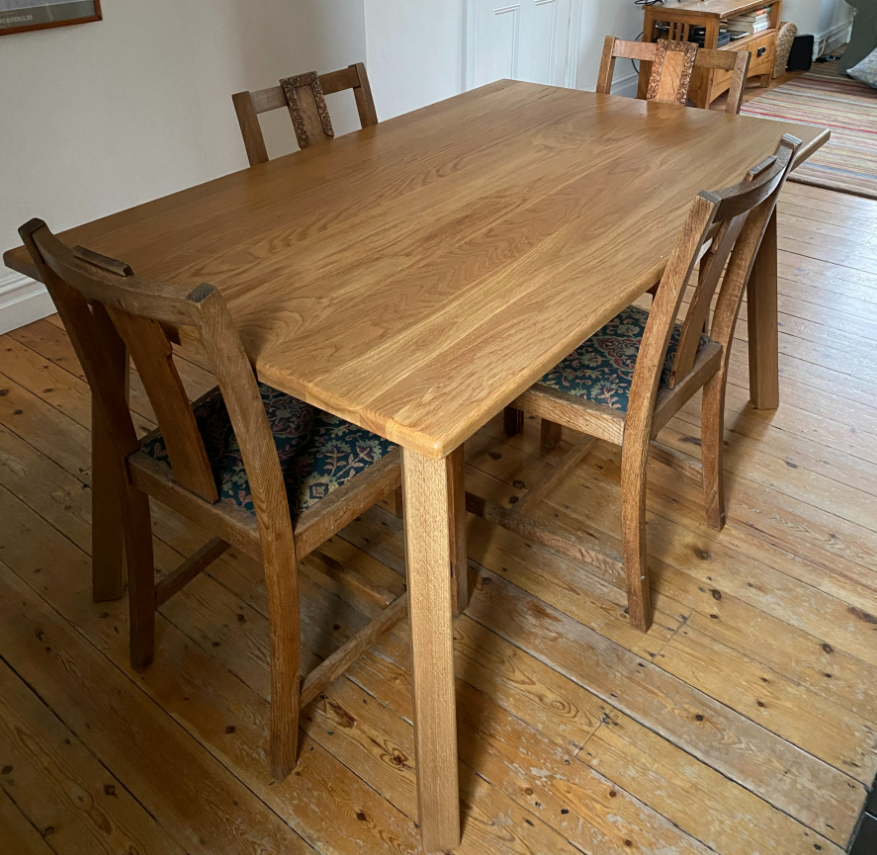
Pro Tip: When measuring for a custom table top, always account for access routes like stairways and doorways to avoid delivery challenges.
What are the lead times, delivery options, and installation requirements?
Made-to-order furniture follows a different timetable from warehouse stock. Production time, dispatch, transport, and installation all need separate attention.
Workshop production schedules vary, and faster is not always simpler. A bespoke top still needs timber selection, machining, sanding, finishing, drying time, packing, and safe handling. Even where lead times are relatively short, they should be read as part of a process rather than a countdown to a parcel.
Before delivery day, look at the order in sequence. First comes production. Next comes dispatch planning and slot allocation. After that, the practical question is whether the packaged top can actually get into the property and be installed without damage.
Access causes more trouble than many buyers expect. A stair turn, narrow hallway, flat entrance, or awkward parking arrangement can matter just as much as the table top dimensions. Packaging protects the piece, but it also increases overall bulk, so the item you carry indoors is larger than the finished top itself.
Confirm these points before the order arrives:
- Estimated lead time and whether finishing time is included.
- Delivery method, including kerbside or room-of-choice arrangements if relevant.
- Package size and weight.
- Whether you need tools, two people, or a particular fixing kit for installation.
Some tops are straightforward to fit, whereas others, especially larger desk tops or commercial pieces, need a clear plan and a second pair of hands. A little preparation on access, lifting, and fixings can turn delivery from a stressful interruption into a brief practical task.
What are the care, maintenance, and repair considerations?
A custom top should be judged over years, not just on arrival. Surface care matters because timber responds to use, light, heat, and moisture in ways that are normal rather than alarming.
Daily maintenance is often simpler than people fear. Most solid wood surfaces do well with a soft cloth, a mild cleaner suitable for the finish, and quick attention to spills. Pooled water, very hot cookware, and harsh chemical sprays tend to cause more harm than ordinary wear.
Scratches and marks are part of life with any working surface. The useful difference with many solid wood tops is repairability. Refinishing wood surfaces can often reduce the visibility of stains, scuffs, and minor surface damage, especially where a maintainable finish has been used from the start.
A common myth is that premium furniture should be maintenance free. Real wood does not work that way. It earns its place through longevity, repair potential, and the ability to age well with sensible care. Hardwax oil maintenance guides often make this feel far less complicated once the routine becomes familiar.
Long-term ownership also includes adaptation. A top may later need light sanding, a fresh coat of finish, or even resizing in some cases. That prospect is one reason many buyers choose solid timber over disposable alternatives, because the surface can keep serving the room even after habits and layouts change.
What are the workshop’s credentials and approach to bespoke work?
The phrase bespoke can mean anything from minor size tweaks to genuine made-to-measure work. A good workshop explains what it actually does, how it builds, and where the practical limits sit.
Training and experience matter, but so does transparency. A credible maker should be able to describe timber choice, construction method, grain direction, fixing logic, and how the top is intended to be used. Those details are not decorative language. They show whether the workshop thinks like a furniture maker or simply like a retailer.
Useful signs of custom furniture expertise include:
- Clear information about timber movement and stability
- Honest discussion of what can and cannot be changed
- Sensible joinery and support details, including straightening bars where appropriate
- Evidence that the workshop can adapt tops for existing bases, awkward spaces, or special use cases
Readers looking at a bespoke table top maker should also pay attention to how problems are handled. A workshop-led business usually speaks plainly about constraints such as thickness, span, weight, cable access, or mounting points. Full-stave construction, kiln-dried timber, and a practical approach to grain selection all point to care in the making rather than surface-level customisation.
That is the difference worth noticing. A well-run woodworking workshop does not promise every idea without qualification. It shows how the top will function in real use, from the first fitting to the fifth year of wear.
Request a Custom Table Top Consultation
Speak with our experts to discuss your space, style, and practical needs. Receive clear, tailored advice for your next table top project.
Book a ConsultationWhat are the terms for returns, adjustments, and aftercare?
Custom table top returns are often treated differently from stock items, so the small print matters. Buyers should know before ordering what happens if the measurements are wrong, the colour feels different from expected, or an adjustment becomes necessary after delivery.
UK consumer rights for custom goods can differ from the rights attached to standard off-the-shelf purchases. That does not mean bespoke orders exist outside all protection, but it does mean assumptions can create frustration. The safest approach is to read the policy in plain language and match it against the order details you approve.
Clarify these points before payment:
- Whether made-to-order items can be returned at all, and in what circumstances.
- Whether resizing or other post-delivery adjustments are offered.
- What aftercare covers, including finish advice or remedial support if a manufacturing issue appears.
- How quickly any delivery damage or order discrepancy must be reported.
Aftercare for bespoke furniture is about practical responsibility on both sides. A careful buyer checks the specification and keeps records of agreed measurements. A careful workshop explains what is custom, what is standard, and what support remains available once the top is in use. That shared clarity matters most when something needs attention later.
Why asking the right questions leads to a better long-term outcome
Ordering custom table tops online works best when the questions are specific. Size, support, finish, delivery, and aftercare are all connected, so a weak decision in one area can affect the rest.
Thoughtful questions do more than prevent mistakes. They reveal whether the piece will suit your room, your habits, and the base or frame you already own. They also reveal whether the workshop understands furniture as something used every day rather than admired from a distance.
A good custom order tends to feel calm once it arrives. The top fits the space, the mounting makes sense, the finish suits the job, and the maintenance feels manageable. That kind of outcome rarely comes from guesswork. It comes from asking enough of the right questions before the wood is ever cut.
Explore Our Solid Wood Table Tops
Browse our range of handcrafted solid wood table tops in various finishes. Find inspiration for your home or office.
View Table Tops
Tablemaker
55 High St, London N8 7QB
02083416334
HVQM+58 London