
How do you find a good table maker near you and avoid ordering the wrong table?
A good table maker is easier to spot when you look beyond location and focus on materials, construction, workshop practice, and clear communication. The best approach is to find a maker who works with solid wood confidently, explains how the piece will be built, answers practical questions about sizing and maintenance, and shows evidence of real workshop experience rather than retail presentation alone.
Table of Contents
Understanding what makes a good table maker
A good table maker is not simply someone who can produce a table that looks right in a photograph. A skilled table maker understands how timber behaves, how joinery affects daily use, and how a piece can be maintained years after delivery. That knowledge matters most once the table is in a real home, used for meals, work, spills, heat, and constant contact.
Quality woodworking is usually visible in practical details rather than decorative language. A table that can be sanded and refinished has a very different lifespan from one that relies on a thin surface layer. Solid wood vs. Veneer is a useful starting point here. Solid timber can often be repaired over time, whereas a damaged veneer surface gives you far fewer options.
Several signs point to genuine bespoke furniture expertise:
- Clear information about timber species, thickness, and construction
- A willingness to explain joinery methods in plain terms
- Evidence that the workshop regularly works with solid wood, sheet materials
- Practical advice about movement, care, and refinishing
- Repairability built into the design, including sensible fixings and serviceable finishes
Membership of organisations such as the British Woodworking Federation, or links with guilds or associations for furniture makers, can be helpful signals, although they are not a guarantee on their own. Local workshops with good standards often show their competence through consistency, honesty, and a clear grasp of workshop practices. If a maker can explain why a top is built a certain way, and what that means for longevity, you are usually dealing with someone who knows the job properly.
How to search for table makers near you
Searching for a table maker near me works best when proximity is treated as one factor, not the main one. A local furniture workshop is useful because visits, measurements, and follow-up support may be easier, but the nearest option is not automatically the best fit for your project.
A practical search usually starts with a few channels at once:
- Use Google Maps to identify nearby makers, then look closely at whether they appear to manufacture furniture or simply sell it.
- Search local business directories for joinery workshops, cabinet makers, and bespoke furniture makers.
- Check the British Woodworking Federation and similar trade bodies for members in your area.
- Ask for recommendations from local architects, interior designers, or tradespeople who regularly work with fitted spaces and custom pieces.
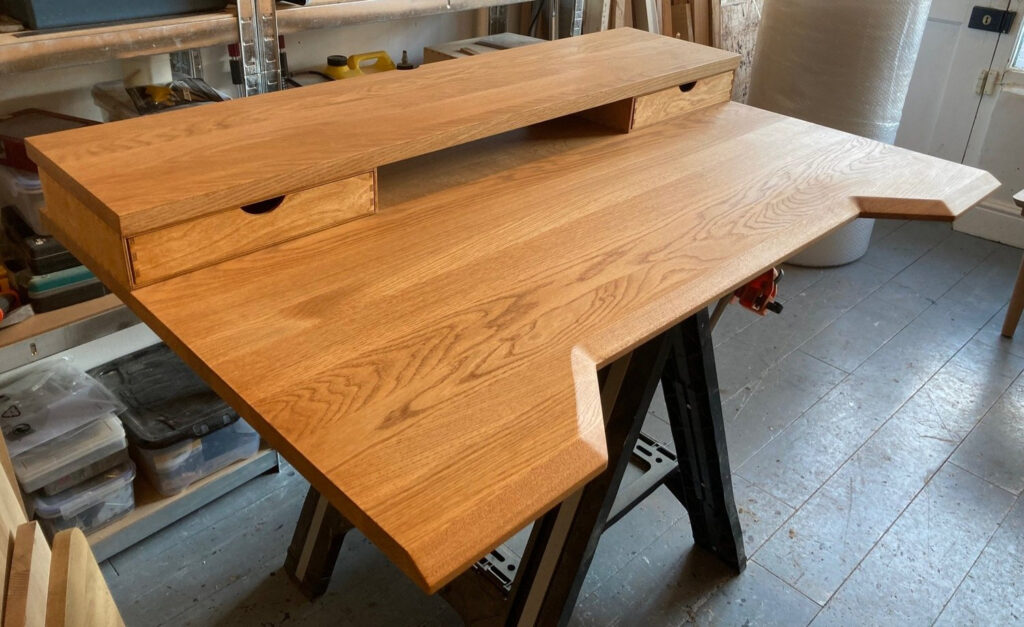
Reviews can help, although they need careful reading. A short comment about friendly service tells you less than a detailed note on delivery accuracy, material quality, or how a workshop handled a sizing issue. Photos are also worth examining. A working studio often shows benches, clamps, timber stock, and work in progress. A retail showroom may look polished, but it does not always tell you where or how the tables are actually made.
If a workshop visit is possible, take it. Seeing a maker’s setup can tell you a great deal about scale, materials, and standards. If an in-person visit is impractical, a video call can still reveal whether the business has a real making space and whether the person speaking to you understands the technical side of the order.
Someone searching for a bespoke table maker in London, Manchester, Bristol, or any other location should aim to verify one simple point early on: does this business genuinely make tables, or does it mostly source, retail, or outsource them? That distinction often shapes the whole experience.
Pro Tip: Always ask to see in-progress workshop photos or live video to verify authentic table making and materials.
Pro Tip: Request care and maintenance instructions specific to your chosen finish to prolong your table’s appearance.
What to look for in workshop practices and materials
Once you have a shortlist, the next step is to look at how each workshop actually builds its pieces. Good workshop standards are rarely flashy. They show up in the timber choice, the construction logic, and the way the maker talks about long-term use.
Solid wood table construction deserves careful attention. Full-stave timber tops, where the visible surface is made from substantial lengths of solid wood, generally offer better repair potential than furniture built around thin decorative skins. That does not mean every solid top is identical, because timber quality, drying, grain direction, and support details all affect table top durability.
Kiln-dried timber matters because wood continues to respond to moisture in the air. Drying does not stop movement completely, but it reduces the risk of severe instability from the start. Grain direction matters for similar reasons. A competent maker chooses and arranges boards with movement in mind, instead of treating timber as if it were inert.
Surface finish is another practical point. A hardwax oil finish is widely used because it protects the wood while remaining easier to refresh than many thick film finishes. In everyday terms, that can make scratches, wear marks, and local repairs less troublesome over the life of the table.
Some useful things to ask about or look for include:
- Whether the timber is kiln-dried
- How the maker manages wood movement across wider tops
- Whether straightening bars or similar supports are used where appropriate
- How the top is fixed to allow seasonal movement
- What finish is applied and how it is maintained
Straightening bars are a good example of a detail that sounds technical but has a simple purpose. They help resist cupping across the width of a top, particularly on larger surfaces, and they can be especially useful where the table or desk will face changing temperatures or regular use. Removable fixings can matter too, especially if the top may need future refinishing, adaptation, or mounting to a different base.
Transparency counts for a lot here. A workshop that can explain timber grading standards, material sourcing, and joinery details in straightforward language is usually easier to work with than one that relies on vague claims about quality. You do not need a lecture on carpentry, but you should come away knowing why one construction choice was made instead of another. That can be the difference between a top that stays practical for years and one that becomes awkward after a single house move.
Questions to ask before placing an order
The right questions are less about catching a maker out and more about making sure both sides are discussing the same object. Size, lead time, finish, and fixing details all affect whether the finished table suits the room and the way you plan to use it.
A clear question set can keep the process grounded:
- What timber are you using, and is the top solid wood throughout? A simple answer here tells you a lot about durability, repair options, and visual character.
- How will the table top be constructed? Ask about thickness, board layout, support bars, and how movement is allowed for.
- Can you make the size I need exactly, or are there fixed increments? This matters in tight rooms, banquette seating, alcoves, or when matching an existing base.
- Will this top work with my current frame or legs? Compatibility is not automatic, especially for sit-stand desks, pedestal bases, or metal frames with specific fixing points.
- What finish do you apply, and how should I maintain it? You need to know how the surface behaves with heat, spills, and daily cleaning.
- What is the lead time, and is the piece made to order? Production model affects both timing and flexibility. A workshop making in-house can often explain where your piece sits in the queue.
- Can the table be refinished or repaired later? That question gets straight to the issue of lifespan.
- What happens if access is difficult or the room has awkward dimensions? Delivery and installation details matter more than many buyers expect.
- Are drilling, mounting points, or cable cut-outs included if needed? Desk tops and custom table tops often depend on these details.
- Do you offer adaptations or restoration later on? Workshops with a long-term view tend to think differently about how a piece is built.
Tablemaker is one example of a workshop-led approach where sizing flexibility, solid wood construction, and compatibility with existing bases can form part of the conversation. Even if you choose a different maker, that level of practical clarity is worth expecting.
Book a Workshop Consultation
Arrange a meeting with our experienced team to discuss your ideas and see our materials and process up close.
Schedule a VisitCommon misconceptions and how to avoid them
Buyers often come to bespoke furniture with assumptions borrowed from retail shopping. Custom work follows a different logic, and a few common misunderstandings can lead to poor decisions if they go unchallenged.
Myth: All solid wood is the same. Fact: Timber species, drying, board selection, thickness, and construction methods all affect performance. Oak, ash, walnut, and other hardwoods each behave differently, and two oak tops can still differ sharply in stability and feel depending on how they are made.
Misconception around price and timing can also distort the search. Custom does not always mean excessive delay or an unrealistic budget. Some workshops keep lead times relatively short because they control production directly and focus on a clear range of materials and methods. Others may take longer because of order volume, design challenge, or specialist finishing. The important point is to ask how the piece is made and scheduled, instead of assuming one answer fits every maker.
Another frequent mistake concerns bases. Any table top will not fit any base. Weight distribution, fixing points, overhang, thickness, and span all matter. A dining top that looks fine on trestles may behave very differently on a central pedestal, and a desk top for a sit-stand frame needs special attention to mounting and support.
Maintenance is often misunderstood too. Solid wood does need sensible care, but that does not mean a table becomes high-maintenance. Day-to-day cleaning is usually straightforward, and many marks can be reduced or repaired with the right finish system. The main issue is knowing what the finish is and following the maker’s care guidance instead of treating every wood surface the same. A lightly used home office desk and a restaurant table will never have identical maintenance needs.
The value of long-term relationships with your table maker
Imagine a dining table that fits perfectly when it arrives, then needs attention years later after family use, a move, or a change of base. A workshop that knows how the piece was made can often advise on refinishing, resizing, or adapting it for a new setting far more effectively than a retailer with no link to the build.
That is where an ongoing relationship becomes practical. Repairable tables reward continuity. If a top was built with sensible materials and serviceable fixings, a maker may be able to sand out wear, refresh the finish, alter the dimensions, or prepare the top for different legs. Those are useful options in ordinary life, particularly when homes and working patterns change.
Some makers also handle restoration or modifications to existing furniture. Tablemaker, for example, operates in a part of the market where custom sizing, standalone tops, and later adaptations can all be part of the same long-term conversation. That approach makes sense for anyone buying a table as a working object rather than a short-lived purchase.
A good workshop relationship is therefore less about loyalty in the abstract and more about continuity of knowledge. The person who understands the timber, the finish, and the fixing method is often the best person to advise on what the table can become next, whether that means a simple refinish or a full change of use.
Looking ahead: how informed choices lead to better tables
The best table purchases usually come from clear thinking before the order is placed. Once you understand how a maker works, what the timber is doing, and how the table will be used in your own space, the decision becomes calmer and far more precise.
British furniture making traditions still matter here, although modern workshop practices have made custom work more accessible and better suited to present-day homes. A table can now be measured for a narrow kitchen, made for an existing metal base, or prepared for a sit-stand frame without losing the material honesty that makes solid wood worth choosing in the first place.
Choosing a table maker is therefore partly about location, but mostly about judgement. A good maker gives you enough information to buy with confidence and enough practical thought to live with the piece well. That is what turns a table from an object you ordered into one that continues to make sense years after it arrives.
Request a Bespoke Table Quote
Tell us about your space and needs for a tailored estimate on a custom-made table.
Get My Quote
Tablemaker
55 High St, London N8 7QB
02083416334
HVQM+58 London