
How to Standardise Mixed Tables in One Venue (So It Looks Intentional, Not Random)
How can you make mismatched tables look intentional within one venue?
By coordinating elements such as material, height, surface finish and layout, it is possible to create cohesion without replacing all tables. The goal is to guide the eye through visual consistency, making mixed tables appear deliberate and functional.
Table of Contents
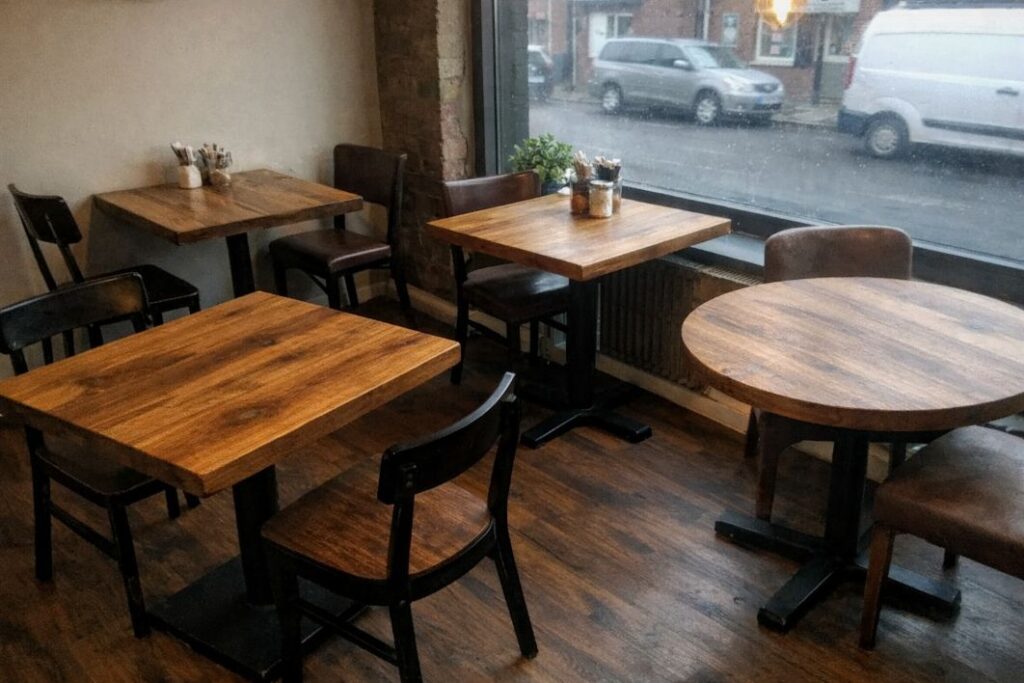
An AI photo of commercial-grade solid oak tables
Understand Why Mixed Tables Happen in the First Place
Mismatched tables are more common than most venue owners would like to admit. They tend to surface over time, especially in spaces that grow, adapt or shift their offering.
Some typical reasons for a mixed table line-up include:
- Inherited furniture from previous tenants or pre-opening purchases
- Expansion phases that added tables without revisiting design choices
- Piecemeal replacement following damage or increased footfall
- Budget constraints requiring reuse of what is available
- Layout experiments in response to customer flow or seasonal changes
Left unchecked, these changes create a visual patchwork that feels unintentional. Tablets vary in height, colour, scale or finish, and the result resembles improvisation rather than composition.
By contrast, intentional mismatching can be functional and attractive, but only when it follows a visual logic. That logic does not require identical tables throughout, but it does rely on consistency in the right places.
Choose a Visual Anchor That Unifies the Space
Even with different shapes or styles, a repeated design cue can bring clarity to the room. The aim is not uniformity, but recognisable cohesion.
Common visual anchors include:
- Consistent timber tone: Choosing tables in the same wood species or shade helps tie together variations in structure.
- Matching finishes: A uniform oil or lacquer finish across tables makes the surface feel considered, even if the bases differ.
- Similar leg colour or material: Powder-coated black steel legs, for example, can run across multiple styles and still feel coherent.
- Edge profiles: A simple square edge or soft rounded finish repeated across tables will subtly link pieces together.
- Unified table height: Discussed in the next section, but visually relevant when deciding anchors.
Lighting and flooring also affect how well these anchors hold. Tables placed below the same pendant or against the same floor material often read as related. Choose one primary visual connector, then build from there.
Pro Tip: Use a pendant light centred over each table group to draw visual boundaries in mixed table layouts.
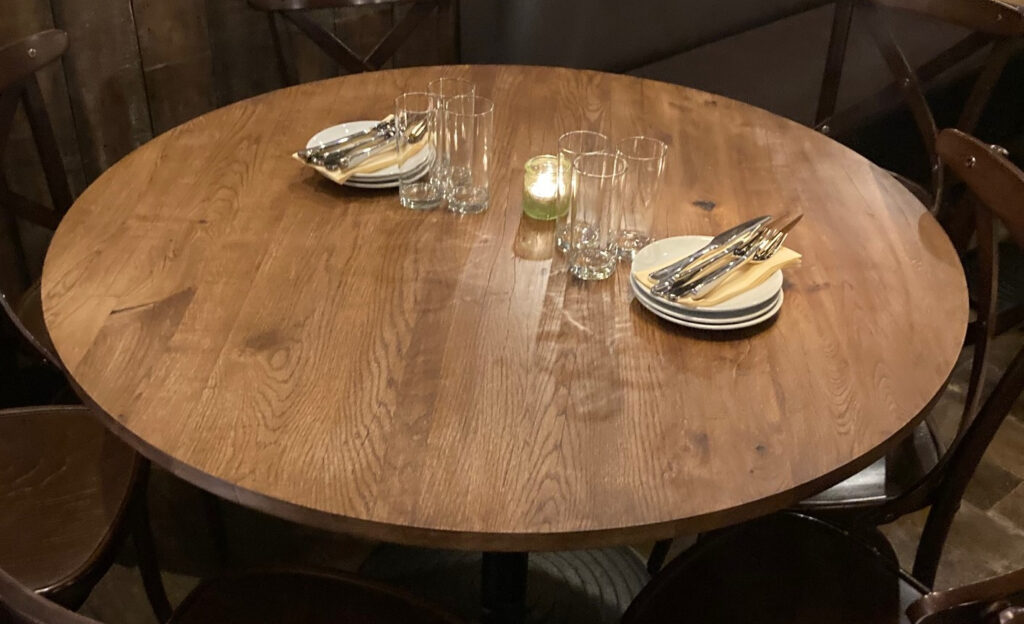
Pro Tip: Always compare tabletop sheen levels under venue lighting before committing to a finish.
Standardise Table Heights and Proportions
Height mismatches do more than interrupt visual rhythm. They create functional problems. Guests may struggle to share food or move between surfaces smoothly. Staff may find cleaning or layout shifts more difficult.
To prevent this:
- Measure all existing tables from floor to top surface. A 2cm difference may seem minor but becomes obvious when tables are adjacent.
- Assess top thicknesses to balance visual proportions. A thick top on one side and a slim one opposite can look awkward in communal settings.
- Use discreet risers or adjust bases to align heights. Many cafes and restaurants retrofit feet or select custom bases to correct this.
- Consider bespoke tops made to match legacy bases. Workshops such as Tablemaker can produce solid wood tops sized and proportioned to fit families of different structures while equalising height and overhang.
Even if styles vary, consistent dimensions create usability and visual unity.
Use a Consistent Surface Material or Finish
Uniform surface material does much of the visual work in a mixed-table environment. Even if legs or shapes vary, our eyes register the continuous plane of a tabletop first.
Points to consider:
- Use a single wood species for all surfaces. Oak is a common choice for its durability and tonal adaptability across settings.
- Stick to one finish sheen. Whether matt or satin, the same level of light reflection across tops helps avoid a jumbled look.
- Refinish existing tops where possible. Hardwax oils can be stripped and reapplied across different pieces, creating a shared finish even on previously mismatched items.
- Install made-to-measure tops on existing bases that differ. Solid wood tops from workshops such as Tablemaker can unify varied tables while retaining useful features like cable grommets where needed.
- Watch for uneven wear. Highly used surfaces may dull over time. A periodic refinishing cycle keeps tone and sheen consistent.
Matching tops across tables, even if subtle in difference, is one of the most effective strategies for cohesion.
Group Tables by Function or Zone
Spatial grouping is just as important as appearance. A well-zoned layout creates rhythm and avoids chaos.
Some grouping strategies include:
- By table size or seating: Keep two-seaters separate from communal styles where possible.
- By use pattern: If some tables are primarily for laptop users and others for diners, separate these zones to match their furniture styles.
- By visual similarities: Cluster tables with matching tops or legs closer together.
- By layout orientation: Tables facing the same direction or lined up in consistent ways will read as intentionally placed.
- Allowing space between style shifts: Visually different tables can sit closer together if separated by planters, rugs or aisle space.
Sketching a plan of your venue can help to visualise these zones. Grouping by use as well as style often brings both practical and aesthetic clarity.
Plan a Table Refresh with Experts
Get tailored guidance on how to unify your table layout using finishes and custom pieces without full replacement.
Book a ConsultationRepeat Key Details Across Different Tables
Visual repetition works best in small doses. The average guest may not consciously notice each table leg or bevel, but the overall impression of harmony depends on these cues.
Repeatable details include:
- Edge profiles: A rounded edge or flat chamfer used across several tables is quietly effective.
- Corner radii: Uniform rounded corners give safety and consistency, especially when pushing tables together.
- Leg angles or materials: Metal frames, turned wood or tapered legs, and identical, and create rhythm.
- Top thickness: A uniform thickness looks cohesive even if the tables vary in size.
- Hardware finish: Using black steel brackets or brushed brass bolts across tables ties disparate styles together.
Workshops can often replicate these details if given an example or sketch. Matching every detail is unnecessary, but repeating one or two across the set increases visual unity without overdesign.
Use Lighting and Accessories to Tie It All Together
Furnishings do not exist in isolation. The surrounding objects can help support cohesion even if the tables themselves differ.
Some accessories that create unity:
- Overhead pendant lights centred over table groupings help define zones.
- Identical placemats or runners across different tables offer surface consistency.
- Coordinated seating such as matching chairs or upholstered benches softens visual variety in the tables.
- Rugs under certain clusters signal grouping and dampen acoustic difference.
- Shared tableware or serving vessels offer a unifying layer on the surface itself.
Accessories should not mask or overwhelm mismatched elements. Their purpose is to bridge gaps and reinforce what is already coherent, not distract from inconsistencies.
By planning your layout through function and visual logic, even a varied collection of tables can feel composed and purposeful. Cohesion often depends less on what the tables are, and more on how they are used, arranged and framed.
Custom Table Tops for a Cohesive Look
Bring consistency to your seating with made-to-measure solid wood tops designed to fit your existing bases.
Explore Custom Tops
Tablemaker
55 High St, London N8 7QB
02083416334
HVQM+58 London