
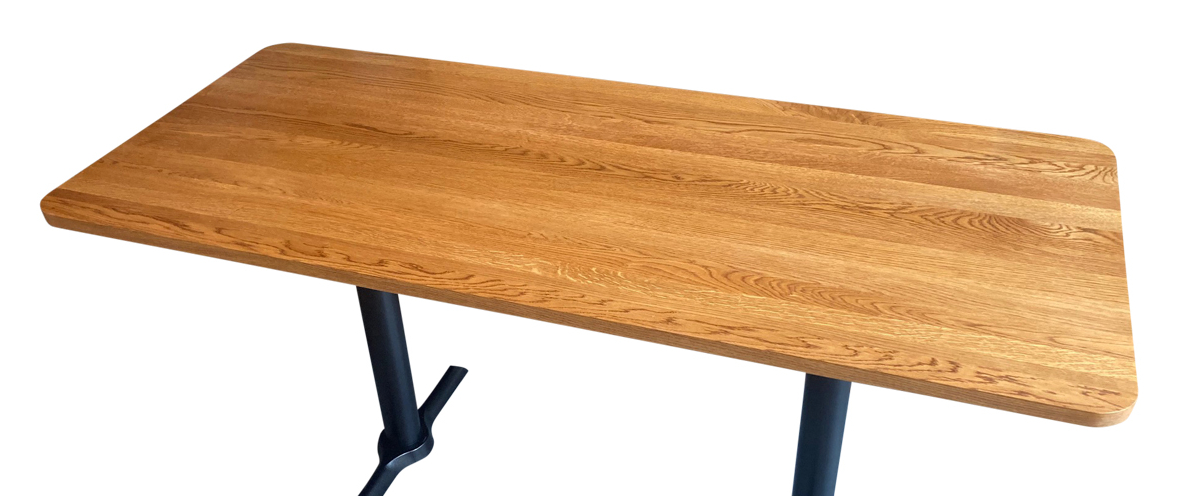
When should you place your restaurant table order?
Order once the seating plan, table sizes, bases and finish are signed off, and before final snagging. For many made-to-order solid oak tops, production averages 2 to 4 weeks, but your real deadline also has to allow for approval, delivery, storage and the soft opening.
A good table order starts with the date you need the room to work, which may be staff training or a soft opening before the public launch. If the tables arrive on the launch day, the timing is already too tight.
Many first-time operators treat tables as a finishing touch. In practice, restaurant table order timing sits closer to procurement because the tops affect layout, service routes, bases and delivery planning.
We look at the order date as the point where the specification is safe to make. That gives the workshop enough detail to build accurately and gives your team enough time to receive the order properly.
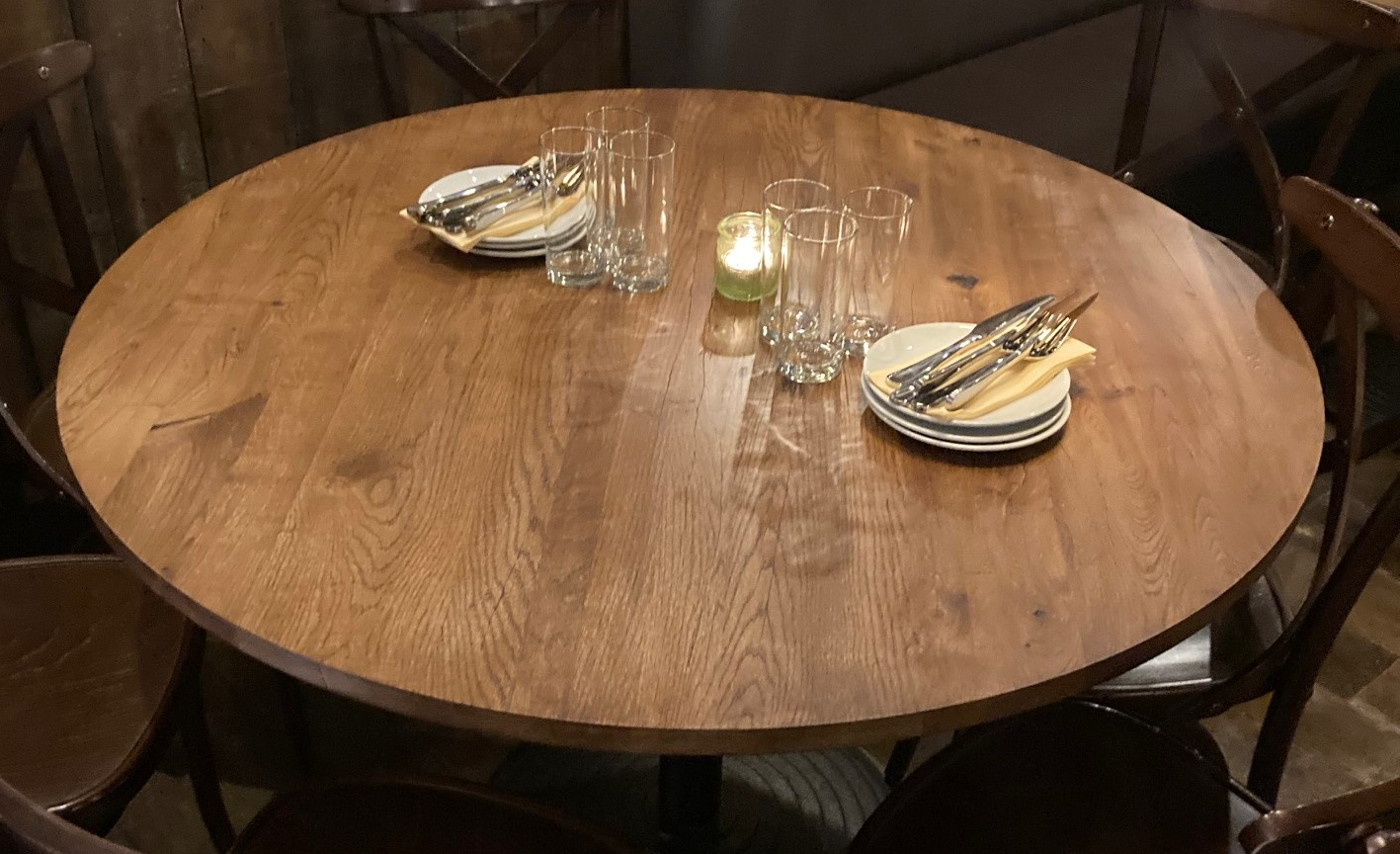
Order before the room looks finished
The floor is nearly done, the walls are still being touched up, and the table sizes are still being debated. That is a normal fit-out moment, but it is a risky point to start making basic table decisions.
The table order belongs in procurement, not in the final snagging week. Procurement before site work can include furniture and bespoke joinery, and made-to-order items can take several weeks, so the table plan needs to sit inside the fit-out programme rather than trail behind it.
Production lead time covers the making of the table tops. It does not absorb every decision that has to happen first, such as checking the seating plan, confirming bases or approving the order details. New restaurant opening furniture also arrives into a live site, so delivery has to make sense alongside other trades and handover dates.
Work backwards from the first day the room must function. If staff need to practise service before launch, the tables need to be in place before then. If snagging is still active, the delivery window needs enough room for protection, access and any small adjustments on site.
For made-to-order restaurant table tops, the useful deadline is the signed-off order date. Once that is fixed, the restaurant fit-out table lead time becomes a planned part of the job rather than a compressed final-week problem.
Final measurements make made-to-order safer
Accurate measurements make custom restaurant table tops useful because the workshop can build to the room, the bases and the way you serve. At Tablemaker, we can make restaurant table tops in 1cm increments, which helps only when the working layout has already been checked.
Before approving the order, work through the sequence in a calm order:
- Confirm the working layout from the real room, including doors, counters and service routes.
- Fix the quantity and restaurant table sizes from that layout, then check the mix of two-tops, four-tops and any larger shared tables.
- Match each top to its base. Existing restaurant table bases need checking for fixing points, footprint and balance.
- Choose the shape, edge profile, corner shape and finish. These details affect both daily use and the final order confirmation.
- Check delivery constraints, including access through the building and where the tops will be held before use.
- Approve the order confirmation. Made-to-specification tables cannot be returned for a size misjudgement, and the confirmation lists the measurements and options before work starts.
Most people measure the room and forget the chair movement or the base footprint. That is where made-to-measure restaurant tables can go wrong if the order is rushed.
The approval step protects the opening schedule as much as the finished fit. Once the table size sign-off is done, production can start with fewer assumptions and less last-minute correction.
Take a photo of each base with a tape measure beside the fixing points before you approve the order. It gives you a quick record if the same base is reused on a later site.

Delivery needs a holding plan
A table can be ready before the site is ready. That sounds useful until the delivery team reaches a building with wet works still active, limited access or nobody free to receive the goods.
The table below compares tables arriving before the site is ready with tables arriving too close to opening.
| Timing problem | What the table plan should settle |
|---|---|
| Tables arrive before the site is ready | Secure storage, staged delivery and who receives the goods |
| Tables arrive too close to opening | Buffer for delivery, assembly, snagging and staff setup |
A proper restaurant furniture delivery plan covers access, secure storage, damage prevention and who signs for the goods. Suppliers can deliver before a restaurant site is ready, so delivery management and protection need agreeing when the supplier is chosen, not when the courier is outside.
Table delivery before opening also has to fit the way the product arrives. Tables usually arrive with legs detached, fixings included and simple assembly, which helps with doorways and tight routes, but someone still has to manage the delivery and put the right pieces in the right place.
Staged furniture delivery is useful when the room is close to handover and storage on site is limited. If the tables are needed for training, soft opening or final setup, the holding plan should say exactly where they go between arrival and use.

Outdoor and volume orders need extra slack
When the order includes outdoor seating, old bases or several sites, the table deadline needs more room. These parts of the job change the quantity, the fixing details or the approval chain.
Pavement seating can change the quantity
Outdoor restaurant tables on a public pavement can depend on the permitted footprint. GOV.UK pavement licence guidance says that in England a pavement licence can allow removable furniture, including tables and chairs, on certain highways beside eligible food and drink premises, subject to the relevant process and the local authority licensing team’s decision.
That matters for pavement seating tables because the approved space may change the size or number of tables that make sense. Order too early and you may own the wrong mix for the frontage.
Existing bases can change the top
Reusing bases is sensible when the frames are sound and fit the room, but the top still has to suit the base. Fixing position, table size and balance all need checking before production.
Commercial table tops can be made to fit an existing base, which is one reason final measurements matter. A small assumption can repeat across every table in the room.
Volume orders need earlier agreement
A bulk restaurant table order puts more pressure on approval because repeated details multiply fast. Finish, edge and corner choices need settling before the workshop schedule is fixed.
Samples and finish swatches can be ordered early, and trade pricing is available for commercial and volume orders. Those early decisions let your team compare finishes without forcing the final quantity before the layout is safe.
Agree who has authority to approve any table change before suppliers are contacted. Keep that name with the order notes so site comments do not become conflicting instructions.
A signed-off table plan beats a late scramble
Some teams wait until the room looks complete and then order tables under pressure. A better route is to sign off the table plan while procurement is active, after the layout is checked and before the fit-out reaches its last rush.
A signed-off table plan gives the opening team control, not another last-minute decision. It gives the workshop a clear specification, gives the fit-out team a delivery plan and gives the restaurant team furniture that matches the way the room has to work.
Made-to-order is strongest when the decisions are settled. With solid wood restaurant tables, the gain comes from ordering table tops made to the right sizes, for the right bases, with a finish that suits daily service.
At Tablemaker, we treat a commercial table order as a set of practical constraints to solve, including size, use, bases and delivery. The late scramble buys speed on paper; the signed-off plan buys fit, control and a calmer opening setup.
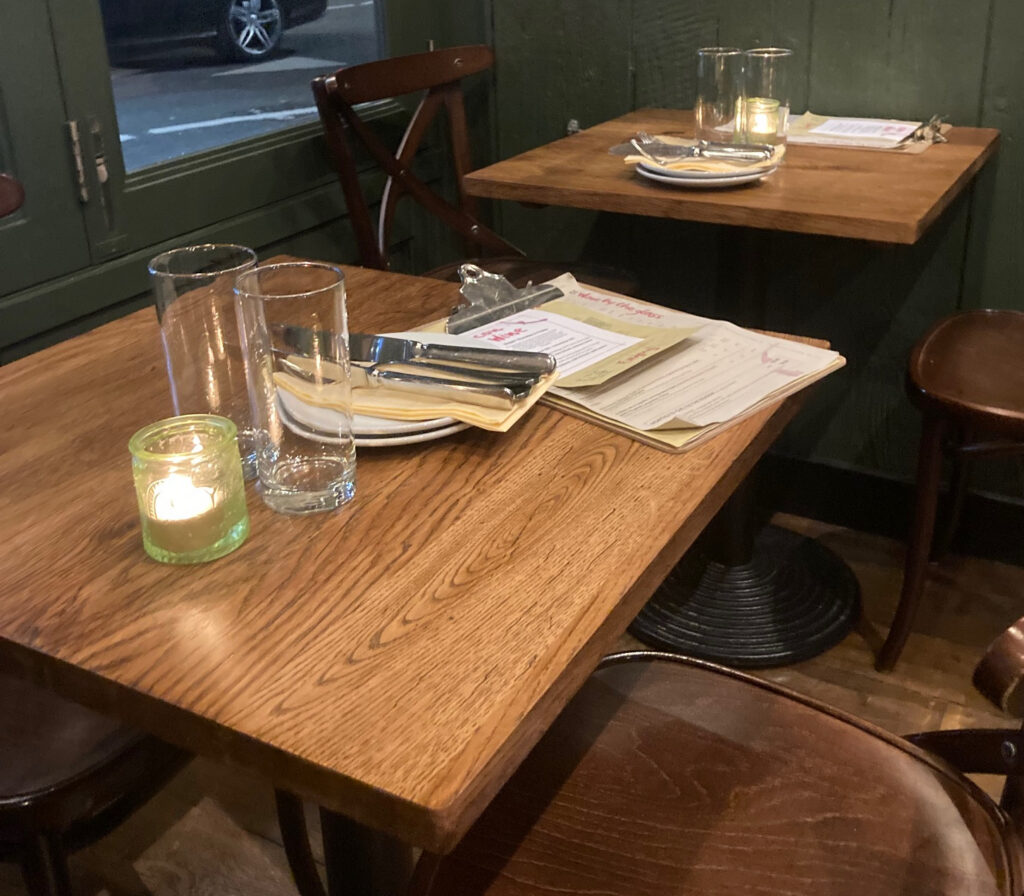
Questions we get asked about restaurant table orders
Can we order just table tops for a restaurant?
Yes. We make commercial table tops as products in their own right, so they can be paired with bases you already have or with bases chosen for the new layout.
Can solid oak restaurant tables be repaired later?
Solid oak can be sanded and refinished many times. A repairable surface matters in a restaurant because daily use marks furniture faster than a domestic dining room.
Is hardwax oil suitable for restaurant table tops?
Hardwax oil is our standard finish. It is water resistant, food safe, easy to clean and easy to repair, which makes it practical for solid wood tops used every day.
Should we choose samples before finalising the table sizes?
Yes, samples and finish swatches can be dealt with early. That lets you settle the look and feel of the finish while the fit-out team confirms the final layout.
Can you make tables in non-standard sizes?
Yes. We make sizes in 1cm increments, which is useful for awkward layouts, narrow rooms and existing bases where a standard size leaves wasted space.