
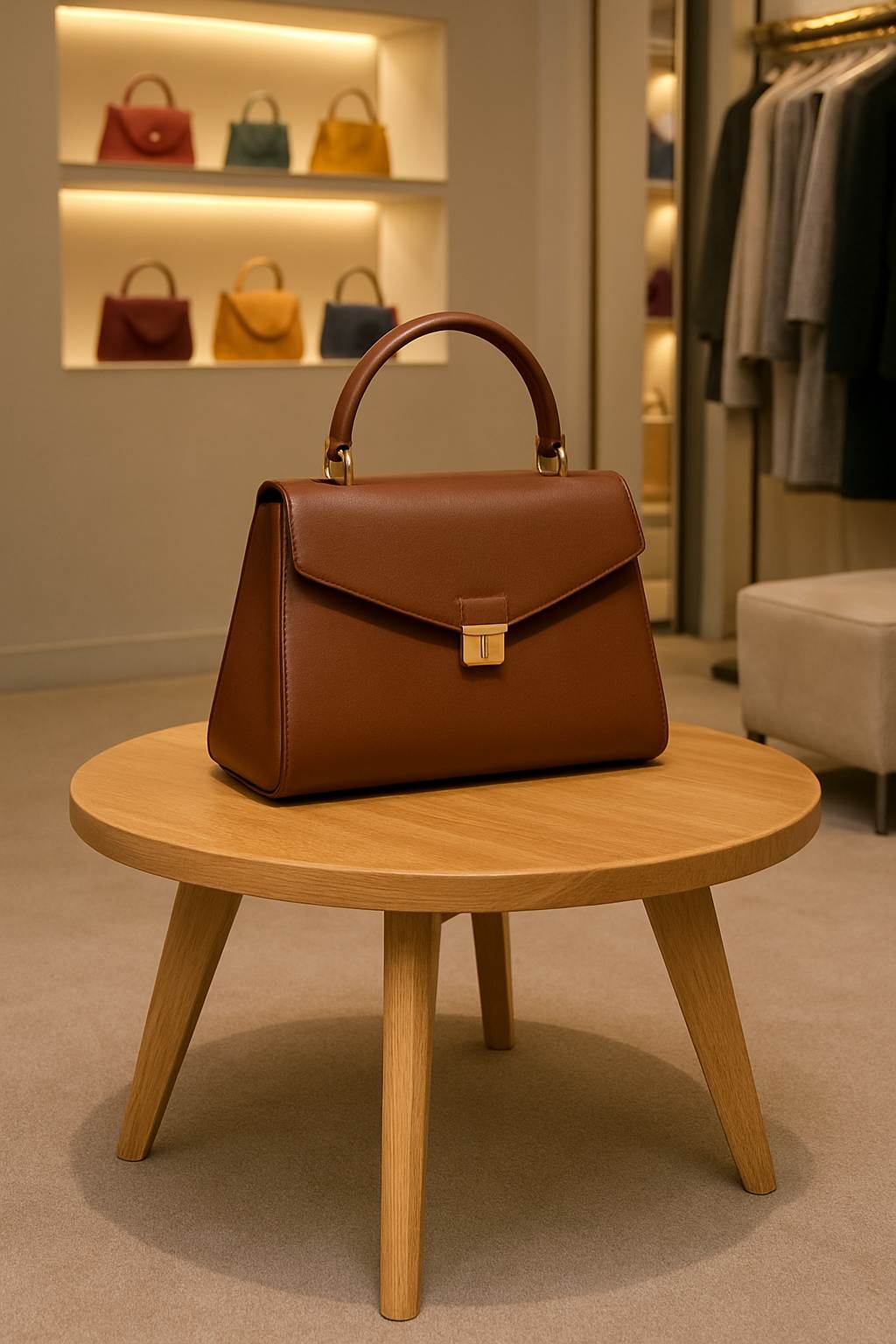
What should you check first when buying display tables for your shop floor?
We check four things first: what the table will hold, where customers will stand, how staff will restock it, and how the surface will cope with daily use. Style still matters, but a good display table has to work in the layout before it earns floor space.
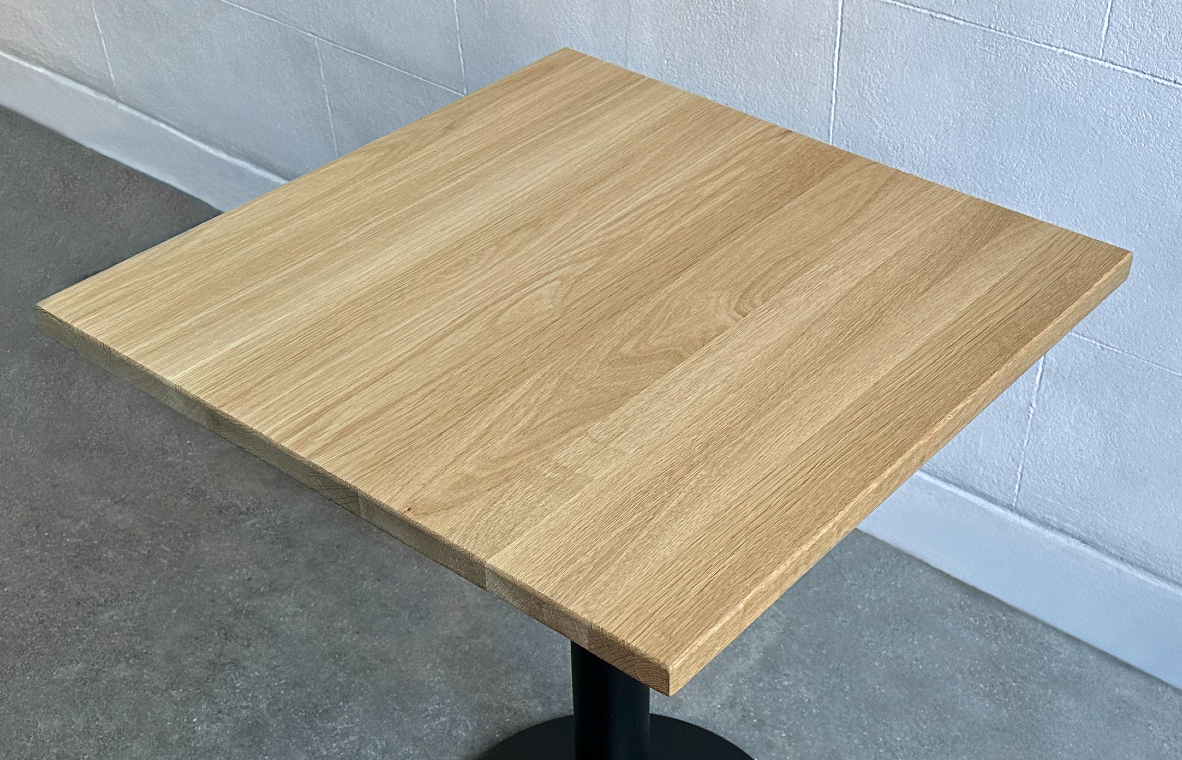 Square cafe table top
Start with the job the table has to do
Use comes before appearance. A table for folded clothing needs different reach and surface space from one for ceramics, samples, boxed goods or accessories. The same shop floor display furniture can look right in a refit plan and still get in the way once stock, baskets and staff movement are added.
A useful retail display table buying guide starts by cutting out poor fits early. Before comparing finishes, run through the basics in this order:
- Product type. Heavy goods need a stable base and a surface that will not mark too easily. Small items may need tiers, trays or a raised edge.
- Footprint. One large feature table can dominate the floor. Smaller tables or nesting tables can give you more ways to change the layout.
- Customer route. Look at where people pause, turn and browse. A good table should not pinch the route through the shop.
- Staff access matters as much as customer access. Restocking should not mean squeezing between a corner and a rail.
- Surface wear. Think about cleaning, repeated handling and how the top will look after daily use.
- Future changes. A table that works for one range may need to suit a new product size later.
That first pass turns choosing shop display tables into a layout decision, which is the right place to start.
Space around the table is part of the table
Suppose a table fits the measured gap on your plan. Once customers stand beside it and products overhang the edge, the usable route can shrink fast. The table footprint is not the working footprint.
Approved Document M Volume 2, which supports Building Regulations 2010 Part M, gives a useful planning benchmark of at least 1200mm unobstructed width for corridors and passageways. That figure is a planning guide, not one fixed legal aisle width for every shop. Real requirements depend on the premises, the layout and the risk assessment.
Access also sits in the wider context of the Equality Act 2010, so accessible retail display needs to be treated as normal shop planning. Corners, doorways, queue points and staff restocking routes all matter because they are where a table can make movement harder.
Safety belongs in the same conversation. The Health and Safety Executive says retailers must assess slip and trip risks and take reasonable precautions, so unstable furniture, blocked routes and awkward table legs cannot be brushed aside as minor details. Walk the route with the table position marked out before ordering the size.
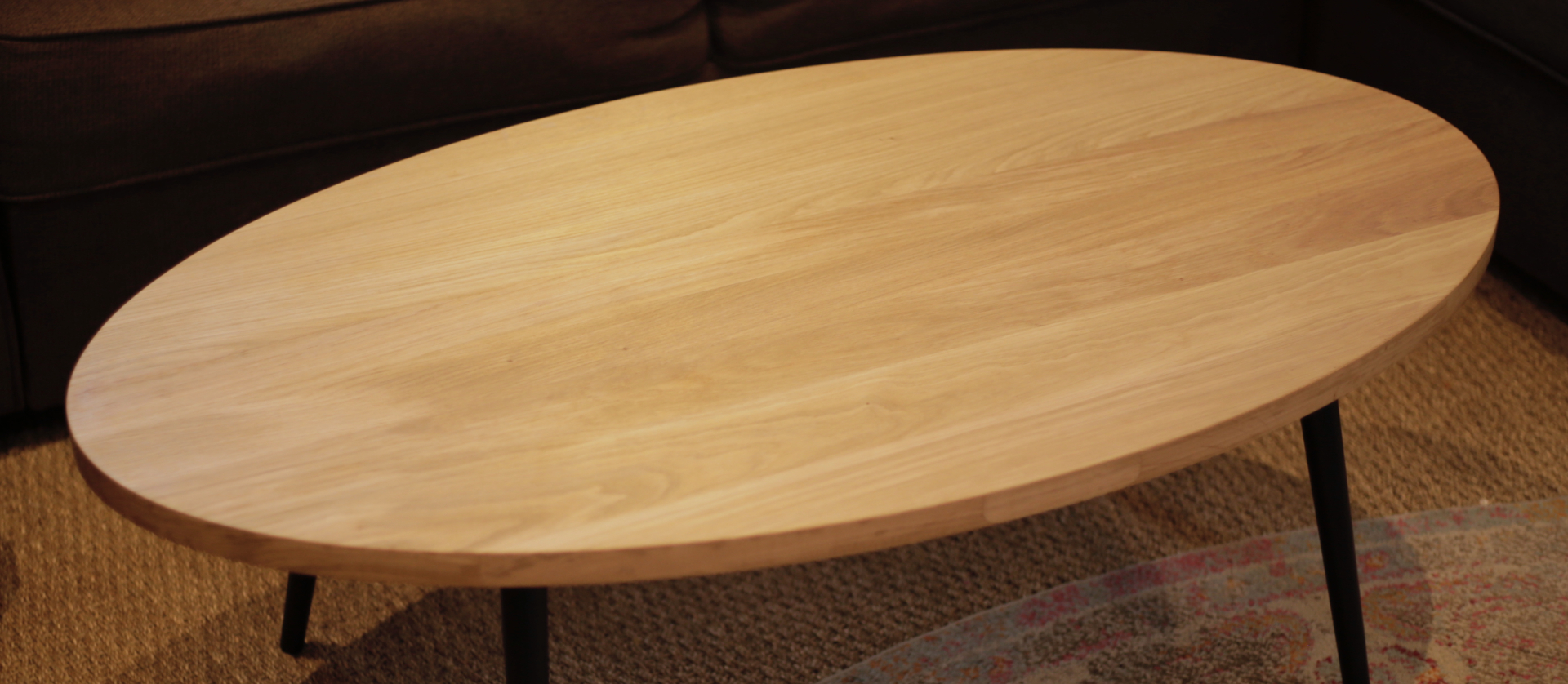 Oval coffee table top
Check the table with the customer route marked out on the floor before you place the order. A table that fits on the plan can still block movement once stock and people are both in the space.

Size, height and shape follow the stock
Start with where the customer’s hand needs to go. Width affects circulation, depth affects reach, height affects browsing, and shape affects how people move around the display.
Size follows stock and reach
A useful answer to what size retail display table to buy starts with the product, not the empty floor area. Folded clothing can sit in neat stacks, but boxed goods and samples need room for people to pick them up and put them back without disturbing the whole display.
Depth is the measurement that gets missed most. If a customer cannot reach the centre of the table comfortably, that space becomes dead display area. Height is similar. There is no universal best height for a shop display table because the right level depends on the product, customer reach and how staff handle the stock.
Small shop display tables need extra discipline. A compact table that leaves a clean route will usually work harder than an oversized centrepiece that looks good only when nobody is moving around it.
Shape follows route and base
Round and oval tops can soften routes where people pass close to the table edge. Rectangular tops give clear display lines and often suit a central feature table, but they need enough space at the corners. Square tops can work well where customers approach from several sides.
Base choice changes the answer again. A top with too much overhang can make a table feel unstable, even when the surface itself is well made. If you are replacing a worn top on an existing base, check that the base sits sensibly under the new shape and that the fixing points can do their job.
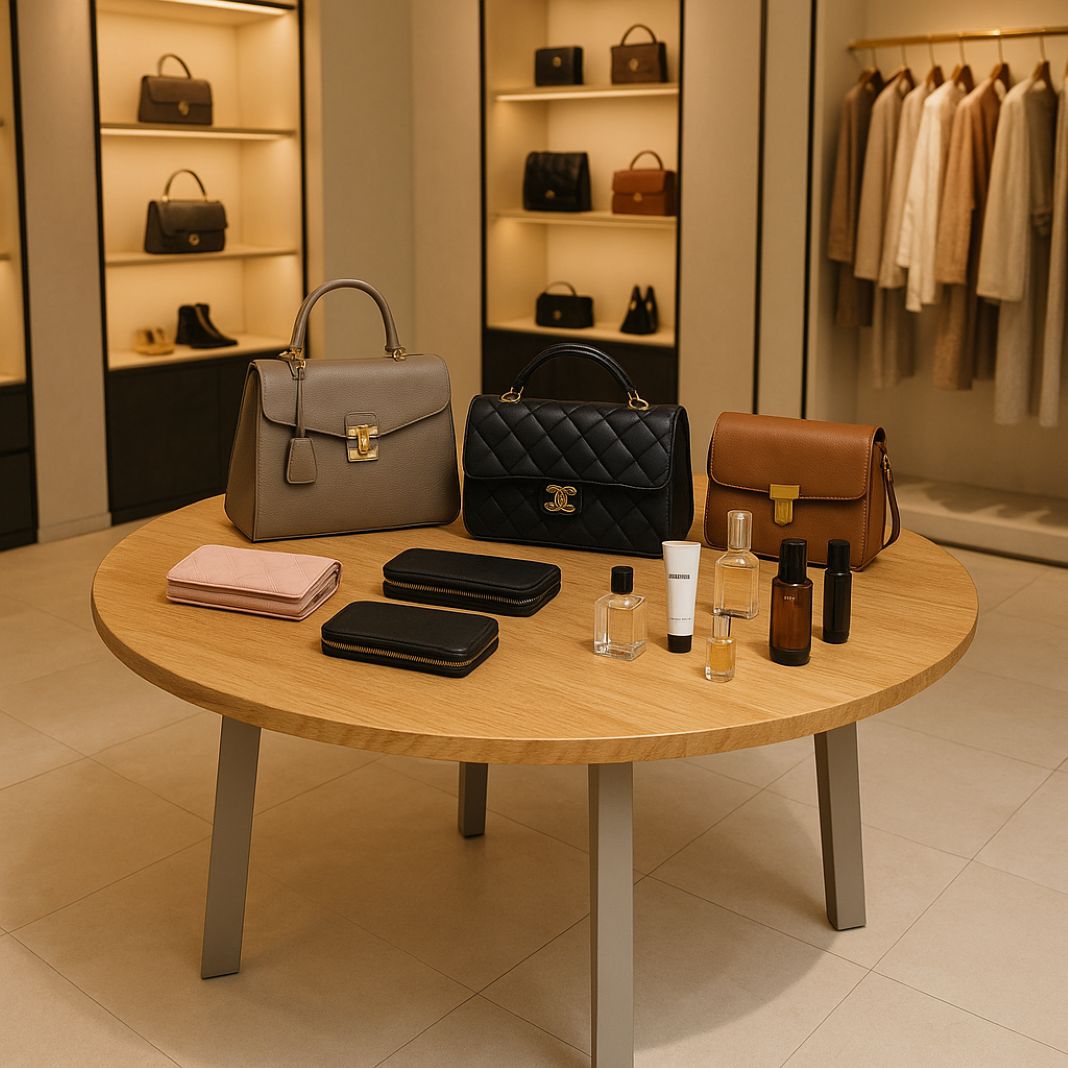 Round retail display tables for shops – Illustrative Image
Material and finish decide how the surface will age
Material choice is a trade-off between cleaning, repair, weight, product type and the look of the shop. Solid wood suits many retail settings, but metal, glass, acrylic and laminate all have places where they make more sense.
| Material | Where it works well | Limit to check |
|---|---|---|
| Solid wood | Good where you want a repairable surface, made-to-measure sizing and a top that can be refinished. | Needs a suitable finish and sensible care. It is not the right answer for every display. |
| Metal | Useful for framed fixtures, industrial-style displays and hard-working bases. | The top surface may still need a separate insert or cover, depending on the stock. |
| Glass | Works for protected display or where visibility through the fixture matters. | Edges, cleaning and weight need careful thought on a live shop floor. |
| Acrylic | Useful for small risers, clear display pieces and lightweight visual layers. | Surface marking can be more noticeable on clear pieces. |
| Laminate | Practical where wipe-clean use matters more than repair over years. | Damaged edges and worn surfaces are harder to bring back cleanly. |
At Tablemaker, we do not use medium-density fibreboard, chipboard or veneered board for tops because those surfaces are hard to sand back properly. Our focus is solid wood where repair and refinishing matter, especially for commercial table tops that need to keep working after regular shop use.
Hardwax oil is our standard finish for solid wood tops. Hardwax oil is a surface finish that is water resistant, food safe and repairable, so a marked area can be lightly sanded and recoated. The right finish is the one that matches your cleaning routine and the way the table will be handled.
If you are reusing an old base, confirm the overhang from every side before choosing the top shape. Too much overhang can make the table feel unstable even when the base itself is sound.
Stability and repairability are the long-term tests
When a display table starts to wobble after repeated restocking, the cause is often the relationship between the top, base, fixings and floor. Blaming the top alone can send you in the wrong direction.
A stable retail display table needs the surface and base to work together. Overhang matters because a wide top on a narrow base can feel wrong in use. Fixings matter because a loose connection will show up every time stock is moved. The floor matters too, especially in older retail spaces where levels vary.
Check these practical points before you commit:
- Base stability first. Put the base where it will stand and test it without stock.
- Look at the overhang from every side, especially if customers can lean or press near the edge.
- Fixing points. A replacement table top needs a sensible way to connect to the base.
- Plan delivery access early. A table that cannot reach the shop floor has failed before it starts.
- Think about repair. A top that can be sanded, resized or refinished gives you more options after a layout change.
For retail environments, Tablemaker supplies made-to-measure table tops in square, round, rectangular and oval shapes, with commercial sizes listed from 60cm to 280cm in length and 35cm to 115cm in width. Most orders are made and delivered within two to four weeks, depending on workload, which helps when a refit or display change needs a practical lead time.
Over the next 12 to 24 months, the harder test will be adaptability: product ranges will change, reused bases will stay in service, and tighter shop layouts will put more pressure on display furniture that can be repaired instead of replaced.
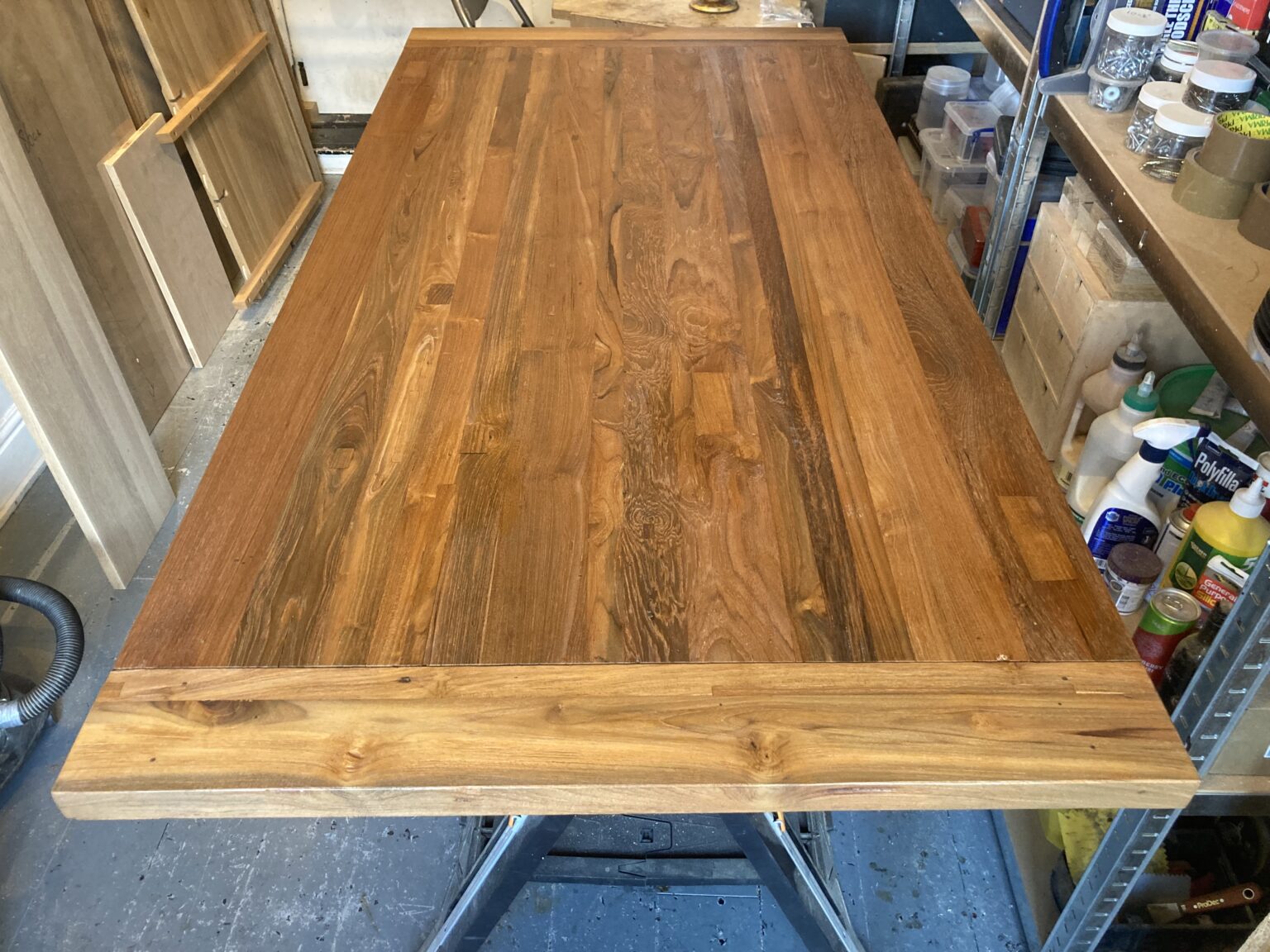
Questions we get asked about shop display tables
Can we reuse the base from an old shop display table?
Yes, if the base is stable, the proportions still make sense and the new top can be fixed securely. We check overhang, fixing positions and the way the table will be used before treating an old base as a good starting point.
Are nesting display tables useful for small shops?
Nesting display tables can work well where the layout changes often or where a single large table would block movement. They also let you split stock into smaller groups without committing the whole floor to one central fixture.
Is a solid wood top suitable for food displays?
A solid wood top with a food safe finish can suit some food-related displays, but the right answer depends on cleaning needs and the type of goods being shown. For heavy wet use, another surface may be more practical.
What finish colour should we choose for a retail display table?
Our commercial oak tops can be finished in clear, warm or dark hardwax oil. The better choice depends on your shop fit-out, the type of products displayed and how visible day-to-day marks will be on that colour.
Can a made-to-measure table top be returned if the size is wrong?
Made-to-measure orders cannot be returned because of a size misjudgement. We list measurements for approval before work starts, so the safest approach is to check the top size, base size and access route before confirming.
This is general information, not professional advice.