

How to Compare Quotes for Solid Wood Table Tops When Every Supplier Specs Differ
How can you fairly compare quotes for solid wood table tops when specifications vary?
To compare quotes meaningfully, you must first understand what each supplier is actually including. Differences in wood type, construction, finish, and compatibility can all affect pricing. A quote for a solid wood top is only as useful as the details it contains, and misleading or missing specifics are common.
Table of Contents
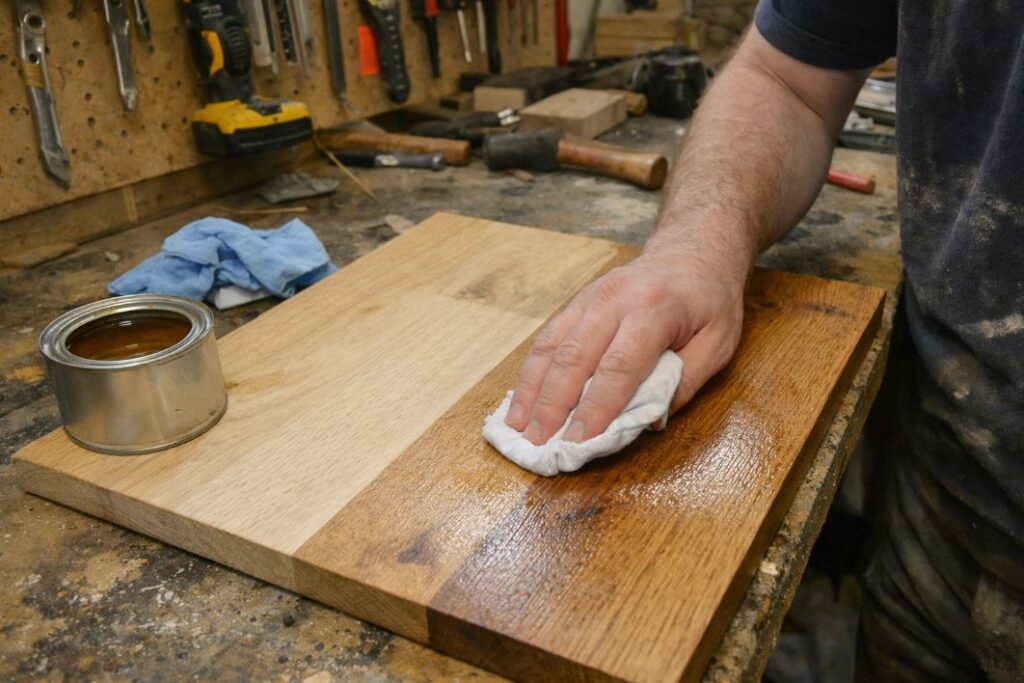
An AI photo of a commercial-grade solid oak table in a workshop
Clarify What Each Quote Really Includes
The term “solid wood” is often used broadly, but not always accurately. Some quotes refer to full-stave solid timber, while others might include finger-jointed panels, edge-glued lamellas or even veneers over MDF. These differences are substantial but not always obvious on a quote.
It is also common for certain items to be left out of initial pricing. These may include:
- The type of finish (and whether it is included)
- Mounting details such as pre-drilled holes or bracket compatibility
- Delivery and packaging charges
- Straightening bars or other reinforcement features
Additionally, quoting formats vary. Workshops may itemise construction, sanding, and finishing stages, while retailers might offer flat pricing without detail, making comparisons feel opaque.
Understanding the following key elements when reviewing a quote will help:
- Wood type and grade: Higher-grade hardwoods cost more but offer better consistency and behaviour over time
- Construction method: Full-stave boards are typically stronger and more stable than finger-jointed or laminated alternatives
- Finish specification: Some suppliers offer lacquer, while others use repairable oils
- Mounting preparation: Undrilled tops provide flexibility but may be quoted differently
- Delivery terms: Look for lead times, packaging care, and courier type
Without this information, a cheaper quote may appear attractive but miss key functionality or longevity.
Consider Wood Type and Longevity
Material choices play a central role in both cost and performance. Oak tends to be a popular default for good reason, but suppliers may quote for different hardwoods that look similar yet behave quite differently.
Here’s a practical comparison:
- Oak: Dense, stable, and widely available. Can be sanded down and refinished multiple times. Suited to surfaces experiencing frequent use.
- Ash: Similar looks to oak but with slightly more movement. Still hardwearing, but not always as dimensionally stable.
- Walnut: Visually striking and softer under pressure. Carries a premium price but is more prone to dents and surface wear.
Also worth checking are timber sourcing and environmental claims. FSC certification or assurance of kiln-drying matters for both sustainability and structural behaviour. Moisture levels in the timber should be matched to indoor environments to reduce seasonal movement.
Understand How Thickness and Construction Affect Stability
A thicker top may look more substantial but is not always the better option if stability is overlooked. Solid wood moves over time in response to temperature and humidity changes, and thicker tops are heavier and more prone to cupping without proper support.
Key factors to look for in the quote:
- Straightening bars: These help stabilise large surfaces and reduce warping risk. Some are wood, others metal, and they may be removable for alternate mounting setups.
- Grain orientation: Boards with mismatched grain can twist or split over time. Good workshops align grain direction for functional rather than aesthetic reasons.
- Joinery method: Full-stave construction uses continuous planks across the depth of the table. Finger-jointed or laminated boards piece together shorter cuts, often at lower cost but sometimes with greater movement.
Tablemaker, for example, uses full-stave oak with integrated straightening solutions to reduce these risks without permanently locking in mounting methods.
Pro Tip: Always request moisture level data for the timber to ensure it suits indoor use and avoids seasonal warping.
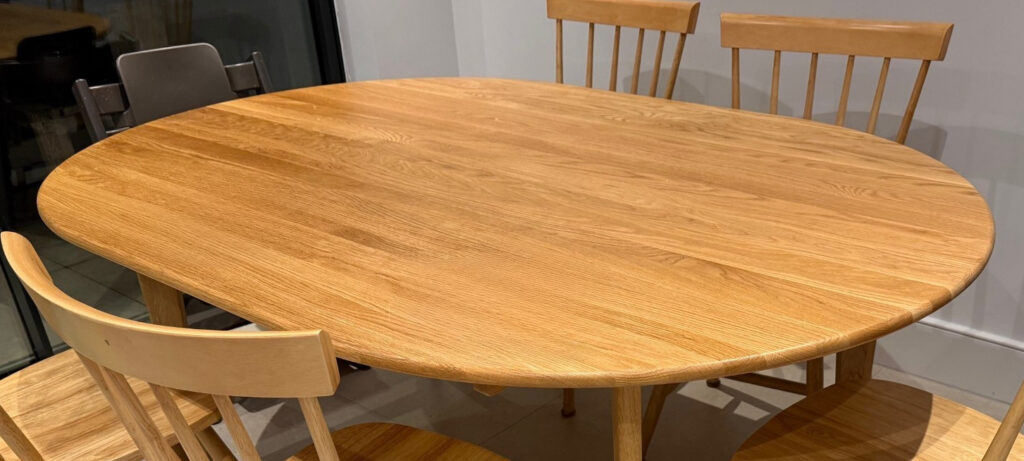
Pro Tip: Clarify if straightening bars are removable or fixed, especially for adjustable frame setups.
Factor in Finish Type and Maintenance
The surface finish affects both first impressions and long-term upkeep. A quote that omits this detail leaves a large gap in understanding.
Two common finishes:
- Hardwax oil: Allows the wood to breathe while providing a natural, repairable surface. Good for domestic settings where occasional sanding and re-oiling is manageable.
- Lacquer or polyurethane: Offers a harder barrier-like finish which prevents stains but may crack or chip under contact. Harder to repair locally.
For real-life use, consider how the table will be cleaned, what type of wear it will face, and whether refinishing is something you are comfortable with. Coffee stains, pen marks and surface scratches are all more manageable when the finish allows local repair.
Quotes should be clear on whether the finish is included, which product is used, and whether maintenance guidance is provided.
Check for Mounting Compatibility and Undrilled Options
Not all quotes mention how the top is intended to be mounted, which is a leading cause of post-purchase frustration. A table top that arrives drilled or braced in an incompatible way can require return or costly modification.
Questions worth asking:
- Will the top come undrilled, allowing me to choose how it is fixed?
- If drilled, are the patterns compatible with standard fixed or adjustable frames?
- Are reinforcing bars included? If so, can they be repositioned?
- Is there enough underside clearance to allow for frame brackets or electronics?
Tablemaker supplies desk tops undrilled unless otherwise requested. This offers flexibility for fitting to a wide range of configurable frames including sit-stand systems. Quotes that account for mounting constraints up front will save time and potential disappointment later.
Consider Lead Time and What It Implies
A shorter lead time might sound appealing, but it’s worth understanding how that timeline reflects the supplier’s process.
Made-to-order production in small workshops typically allows better material control and less batch processing, even if lead times are longer than off-the-shelf items. For example:
- 2 to 3 weeks: Often manageable for made-to-measure tops, assuming the workshop controls its schedule and materials.
- Same-week dispatch: May indicate warehouse stock or prefabricated options. Check whether the item is finished or whether wood movement has been allowed for.
Speed is not inherently a red flag, but it is important to understand whether the piece is genuinely being made to your specification or allocated from existing inventory. Some finishes, such as hardwax oil, require time to cure before shipment. Timelines can also affect delivery expectations and coordination with other trade work.
Request a Custom Table Top Quote
Share your dimensions and finish preferences to receive a tailored quote based on real material and construction choices.
Get a Custom QuoteThink About Repairability and Future Use
A table top worth investing in should not be treated as disposable. Yet many quotes say little about how the surface can be maintained, refreshed or adapted years from now.
Solid hardwood surfaces, particularly oak, and can usually be sanded, re-oiled, or resized if constructed with that future in mind. In contrast, veneered or pre-lacquered alternatives may resist wear for a time, but do not allow for meaningful repair.
Useful things to check in the quote:
- Can the surface be refinished if marked or scratched?
- Are the finish products available for purchase or touch-up?
- Are mounting and stability components removable or adaptable?
- Will the supplier offer future refinishing, resizing or restoration?
Tablemaker’s approach treats a table as a functional, changing part of a space, not a fixed styling element. Quotes that reflect long-term usability add clarity to the purchase decision and can reduce total replacement costs over time.
Final Thought
Comparing quotes for solid wood table tops is not about chasing the lowest figure. It is about getting a clear picture of what is being offered, how it will behave over time, and whether it fits your particular space and function. By asking the right questions and understanding what affects price and performance, buyers can make confident, informed decisions that serve them well for years.
Speak with a Tablemaker Specialist
Discuss your space and requirements with one of our experts to ensure accurate quoting and practical fit.
Book a Consultation
Tablemaker
55 High St, London N8 7QB
02083416334
HVQM+58 London