
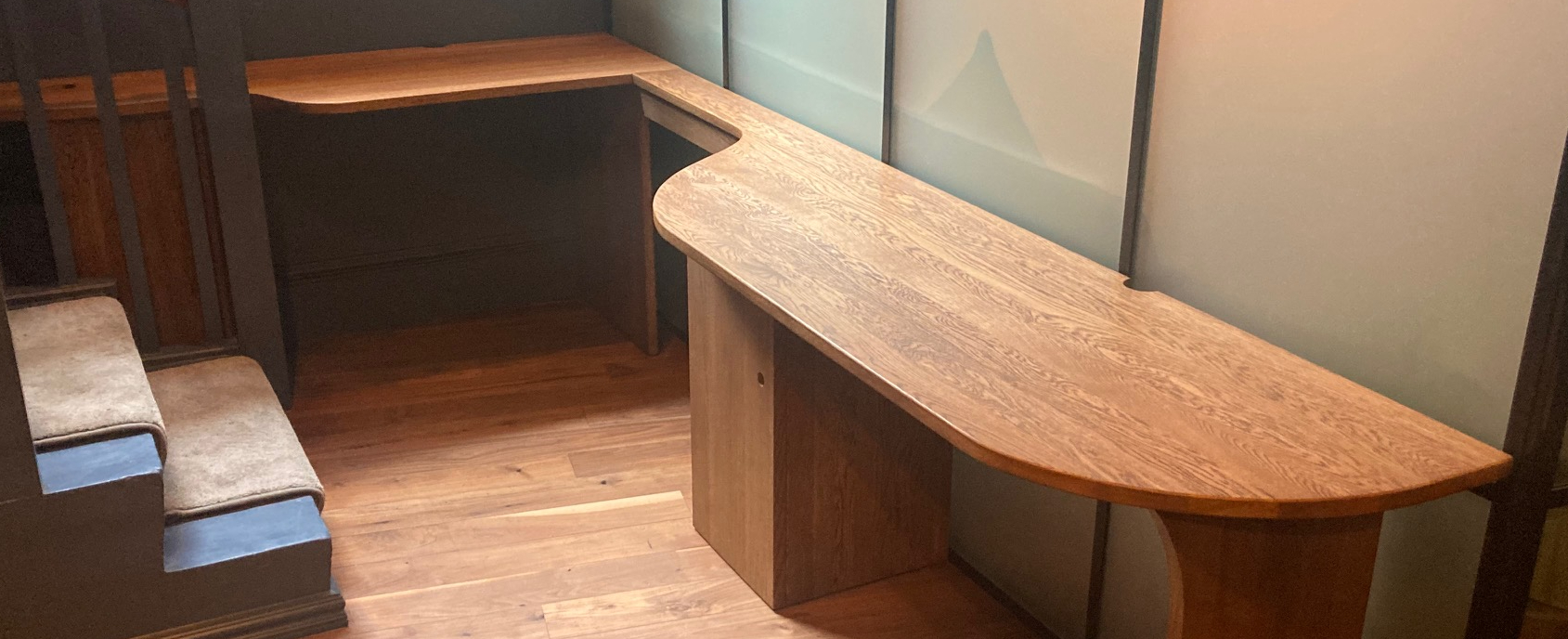
How much should you budget for a custom solid wood desk top in the UK?
A custom solid wood desk top in the UK will often cost a few hundred pounds for a simpler made-to-measure piece, with larger sizes, thicker tops, premium hardwoods and extra features pushing the price higher. The final figure usually comes down to material, dimensions, construction, finish, and how much adaptation is needed for your space or frame.
Two desk tops can look broadly similar in a photo and still sit in very different price brackets. One may be made from thinner boards with limited size options, while another may use full-stave solid hardwood, careful grain selection, kiln-dried timber and a finish that can be repaired years later.
Table of Contents
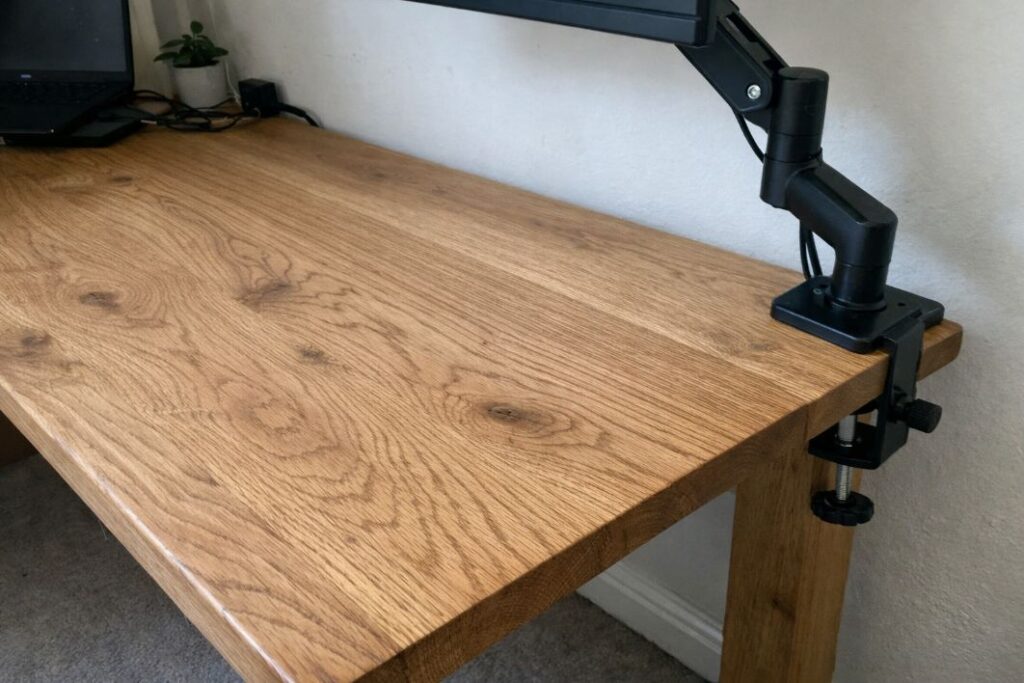
What determines the cost of a custom solid wood desk top?
Price usually becomes easier to understand once you separate the main factors. A workshop is not pricing a rectangle of wood alone. It is pricing the timber, the labour, the machining, the finishing, and the practical decisions that make the top work in daily use.
Key factors affecting desk top price include:
- Wood species and grade. Oak is often a common reference point in UK custom desk top pricing, but walnut, ash and other hardwoods can shift the cost up or down depending on availability, appearance and board quality.
- Size and thickness. A longer, more detailed or thicker desk top uses more timber and often needs more care in selection, handling and finishing.
- Construction method. Full-stave solid wood construction, attention to grain direction and details that account for wood movement usually add labour.
- Finish. Hardwax oil finishing is widely used because it protects the surface and can be maintained over time, but it still adds preparation and application time.
- Custom features. Cable cut-outs, corners shaped to fit alcoves, edge profile changes and compatibility with a particular base all affect labour.
- Production model. UK woodworking workshops that make to order may price differently from sellers offering standard stock sizes with limited changes.
Timber grading standards also matter, even if they are not obvious from a product photo. Boards with cleaner grain, fewer visual marks or better colour consistency may cost more at source. Sizing increments can play a part too, especially where a workshop offers close dimensional flexibility rather than forcing buyers into a handful of preset widths.
All of those choices combine to shape what impacts cost of a solid wood desk, which means that the price is usually a practical outcome of specification rather than an arbitrary mark-up.
Typical price ranges for custom solid wood desk tops in the UK
Anyone trying to budget for UK custom desk top costs usually wants a usable range, not a vague shrug. Although workshops vary, broad price bands can still help you place your project in context.
A smaller made-to-measure solid wood desk top in a common hardwood such as oak may sit at the lower end of the market. Mid-range prices often cover larger dimensions, better timber selection, thicker tops or more finishing work. Premium pricing is more common once unusual sizes, richer hardwoods, complex shaping or highly specific joinery enter the brief.
Here is a practical guide to price brackets for custom desk tops:
- Around £200 to £400: often smaller or simpler made-to-measure tops in standard thicknesses, usually with fewer custom details.
- Around £400 to £800: commonly where many solid oak desk tops in useful home office sizes begin to sit, especially once finishing is included.
- Around £800 and above: often larger formats, thicker sections, premium hardwoods, detailed shaping, or desk tops made for demanding commercial or specialist home setups.
A straightforward desk top for a standard frame at roughly 120cm by 60cm will usually cost less than a 180cm by 80cm top with rounded corners, cable access and a particular edge detail. Cost per square metre is a helpful mental guide, but it never tells the whole story because machining and finishing time do not rise in a perfectly even line with size.
Delivery can also alter the total. Some UK furniture workshops include finishing as standard but charge separately for delivery, particularly across wider delivery zones or for heavier tops that need more careful handling. Fitting is less commonly included unless the order involves a full desk rather than the top alone.
Pro Tip: Ask your workshop if the desk top comes undrilled to ensure compatibility with your chosen frame and mounting method.
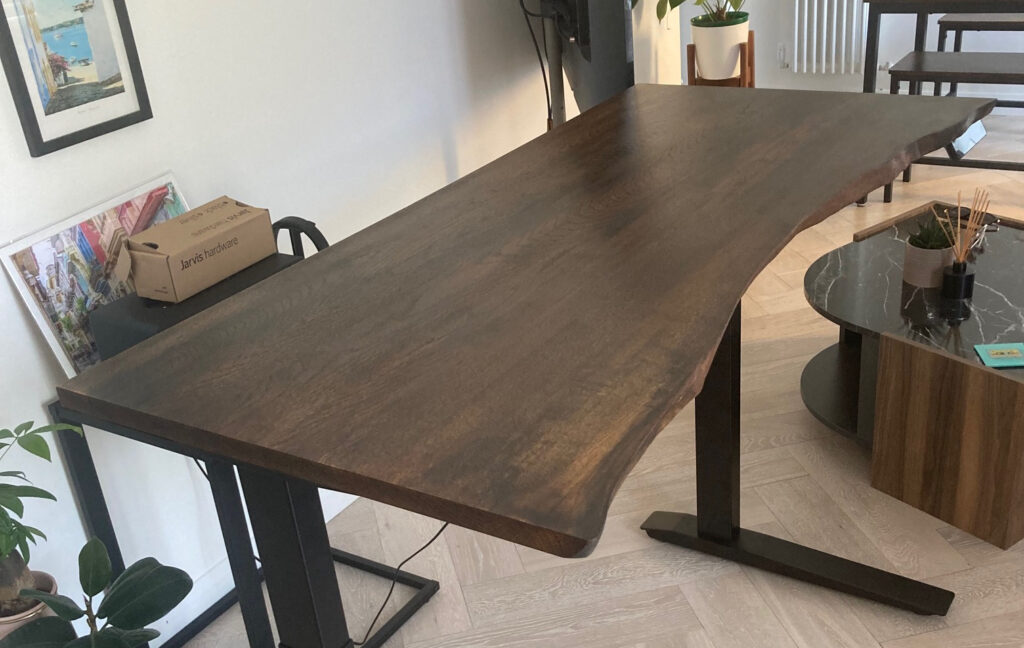
Pro Tip: Opt for a maintainable hardwax oil finish if you want to refinish your desk yourself in future years.
How material choice affects price and longevity
Material has one of the biggest effects on both cost and lifespan. A desk top is a working surface, so the wood needs to cope with laptops, writing, cups, changing humidity and the occasional knock.
Oak is often treated as the benchmark because it balances durability, repairability and price in a way that suits many households and workplaces. Ash can offer a lighter look and may sit in a similar or slightly different pricing position depending on supply. Walnut usually costs more because the timber itself is dearer and the visual character is often part of the appeal. Beech can be practical and hard-wearing, though availability and workshop preference vary.
A simple comparison helps:
- Oak: durable, widely used, repairable, generally a solid middle ground on price
- Ash: pale in tone, strong, often chosen for a cleaner visual feel
- Walnut: darker, richer in colour, usually more expensive
- Beech: tough and functional, sometimes selected for utility-focused worktops and desks
Solid wood also behaves differently from veneered or engineered alternatives. Veneered boards can look good and may cost less, but the repair options are usually more limited once the surface is worn through or damaged. A solid hardwood top can generally be sanded and refinished, which extends service life.
At Tablemaker, material choice is usually tied to use rather than fashion. That approach matters because a desk used eight hours a day needs a different sort of resilience from one that sees occasional weekend admin.
Sourcing deserves a mention as well. Buyers who care about FSC certification or timber from well-managed suppliers may find that ethical sourcing influences cost, though workshops differ in how they present this. Over time, the long-lasting desk top materials tend to be the ones that can take wear, accept maintenance and still look at home after several room changes.
Customisation options and their impact on cost
Picture a desk top for a spare room office with a sloping wall, a radiator nearby and a sit-stand frame already bought. In that sort of setup, the value of customisation becomes obvious very quickly.
Some options add only a little to the price, while others involve more design time, machining or hand finishing. Common custom desk top features include:
- Cable cut-outs or grommet holes for tidier cable management
- Radius corners or shaped edges for tighter spaces
- Specific edge profiles that change the look and feel of the top
- Sizing adjustments to fit alcoves, bay windows or existing bases
- Straightening bars fitted across the grain to help manage movement
- Underside preparation for sit-stand desk compatibility or unusual frames
Straightening bars are a good example of a feature that affects cost for a practical reason. They add material and labour, but they also support stability across wider tops. Mounting flexibility matters too, especially where a desk top is being paired with legs or frames bought elsewhere.
Finish choices can alter price as well. A standard hardwax oil finish is often simpler than a more specific tint or a finish schedule adjusted for heavy commercial use. Adaptation work also takes time. A rectangular top made in standard dimensions is quicker to process than one that must dodge skirting, fit around a pillar or align with a shared office bench system.
The best way to think about add-ons for custom desk tops is by use, not by feature count. A cable cut-out that clears a daily frustration may be worth far more than a decorative detail that changes little once the desk is in place.
Request a Custom Desk Top Quote
Get a personalised estimate for your ideal solid wood desk top. Share your measurements and preferences, and receive guidance from our team.
Get My QuoteComparing bespoke workshops and mass-market alternatives
A mass-market desk top and one from a bespoke workshop may both solve the same basic problem, but they often do it in different ways. One usually aims for standardisation and quick stock availability. The other tends to focus on fit, material quality and adaptation.
The practical differences often look like this:
- Made-to-order sizing versus a limited set of fixed dimensions
- Solid wood construction versus mixed-material build-ups in some retail products
- Better compatibility with existing frames, including sit-stand bases
- More scope for refinishing and repair later on
- Longer lead times in some cases, but with closer control over specification
Ready-made retail options can suit buyers who need something quickly and whose dimensions are straightforward. They may also work well in lower-use settings. By contrast, a workshop-made top tends to make more sense where the frame is unusual, the room is awkward, or the user wants a surface that can be maintained rather than replaced.
Some UK bespoke furniture makers also offer restoration or refinishing support after purchase, which changes the long-term equation. Tablemaker, incidentally, is part of a group of workshop-led businesses that build around those practical constraints, including exact sizing, undrilled tops and compatibility with existing bases.
Viewed purely at the till, retail may seem cheaper. Viewed over ten years of use, repairs, moves and setup changes, workshop vs retail desk tops can tell a different story.
Lead times, delivery, and what to expect
Timing matters, especially if the desk is for a new home office or a replacement for something that has already failed. Made-to-order desk top timelines in the UK are usually shaped by workshop capacity, timber preparation, finishing time and delivery planning.
Some workshops can turn around standard custom sizes within a few weeks, particularly if production is kept in-house. More unusual commissions may take longer, especially where timber selection, shaping or commercial quantities are involved. Delivery times for solid wood desk tops also vary by region and courier method.
A sensible way to prepare is to work through the practical points before the desk top arrives:
- Measure the frame or base carefully, including fixing points and overhang.
- Check access through doors, staircases and tight corners.
- Confirm whether the top arrives undrilled, prefinished, or with any mounting hardware.
- Clear a safe area for unpacking, lifting and inspection.
- Allow time to position the top properly before attaching it to the frame.
Undrilled tops are common because they allow greater compatibility with different leg systems and sit-stand frames. That flexibility is useful, although it does mean the buyer may need to plan fixing points with more care. A heavy hardwood top can also require two people to move safely, particularly in larger sizes.
Delivery communication is worth watching closely. A made-to-order item often needs a more specific handover than a flat-pack parcel, especially where access is awkward or delivery windows are tight. Once the top is in place, giving the finish a little time to settle into ordinary use can be sensible, particularly if the workshop has supplied fresh hardwax oil finishing.
The true value of a custom solid wood desk top: beyond the price tag
A desk top earns its keep slowly. Most people do not judge it by day one alone. They judge it after long work sessions, house moves, changing equipment and the first signs of wear.
That is where value starts to separate from upfront spend. A repairable top can be refreshed instead of thrown out. A well-sized top can move from one frame to another. A surface finished in a maintainable oil can recover from marks that would permanently spoil thinner materials.
Long-term value often comes from three things:
- The ability to refinish the surface after years of use
- The flexibility to adapt the top to a different frame or room
- The fact that solid wood usually ages with more character than disposable sheet materials
Furniture restoration practices in the UK have always rested on the idea that useful objects deserve another life. A custom solid wood desk top fits neatly into that way of thinking. It can remain practical through changes in layout, equipment and working habits, which is something a lower initial price does not always capture.
A common misconception is that custom automatically means indulgent. In many cases, it simply means the dimensions, material and details were chosen with enough care that the desk keeps working long after the novelty of buying it has passed.
Book a Material Consultation
Unsure which hardwood suits your workspace best? Arrange a relaxed consultation for advice on materials, finishes, and care.
Schedule Consultation
Tablemaker
55 High St, London N8 7QB
02083416334
HVQM+58 London