

How to choose table tops for a café fit-out when you’re working with a tight budget
What should you prioritise when choosing café table tops on a tight budget?
Start with durability, cleanability and the right size for your layout. A café table top has to cope with spills, repeated wiping, heavy daily use and constant chair movement, so the best budget choice is usually the one that lasts well, fits your space properly and does not create avoidable replacement costs later.
Table of Contents
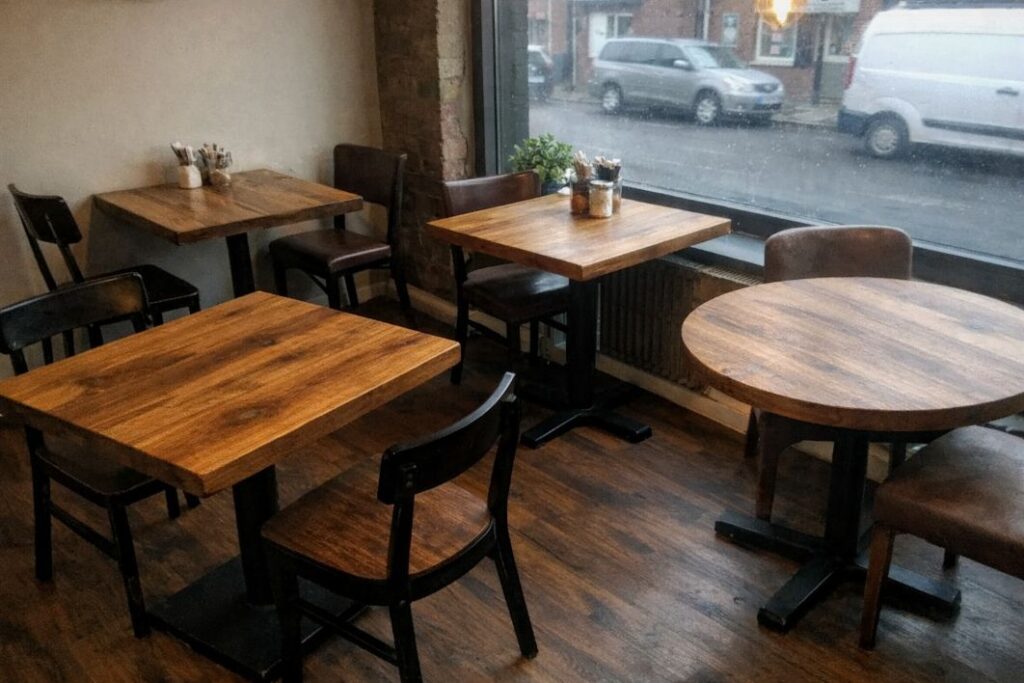
Understanding the real demands of café table tops
A busy café table top has a harder life than most domestic furniture. Coffee drips, food spills, hot cups, wet cloths and frequent disinfecting all affect the surface day after day.
Domestic expectations can mislead buyers here. A top that looks good in a showroom may still struggle in a hospitality setting if it marks easily, swells at the edges or shows wear after repeated cleaning. Commercial table tops need to do ordinary jobs exceptionally well.
Common pressures include:
- repeated wiping with cleaning products
- knocks from cups, trays and chairs
- surface scratches from crockery and bags
- stains from coffee, tea, juice and food oils
- constant turnover across breakfast, lunch and afternoon service
Health and safety regulations and general hospitality industry standards also shape the decision. Surfaces need to be practical to clean and presentable throughout service, because a damaged or sticky table does not simply look tired. It can affect customer confidence in the space.
Premature replacement is where tight budgets often unravel. A cheap top that needs replacing after a short period can cost more in labour, disruption and lost consistency across the room than a slightly better one that keeps going.
Setting a realistic budget: what to expect and where to compromise
A sensible café fit-out budget for table tops should account for the full life of the item, not just the invoice price. Upfront cost matters, but so do delivery, fitting, maintenance and the chance of needing replacements before the rest of the fit-out has aged.
Some compromises are easier to live with than others. A simpler edge detail or a more standard size may reduce cost without changing day-to-day performance very much. A weaker core material or a finish that struggles with regular cleaning can be a more expensive compromise in the long run.
A practical way to think about spend is this:
- protect budget for the surface material and finish
- be careful about going too thin if the top will see heavy use
- save money through standard shapes, simpler detailing and batch ordering where possible
VAT, installation costs and any adjustments to existing bases should also be included early. UK hospitality supply norms vary by maker and specification, so broad budgeting works better than chasing a single low headline figure that may not include everything.
Lower spend can still be sensible if the room has a short lease, lighter trade or a very clear refurbishment cycle. Even in those cases, the table top still needs to be fit for daily service, because the cheapest option on paper can become the most expensive one on the floor.
Pro Tip: Opt for standard table top sizes and shapes to access lower prices without reducing quality or function.
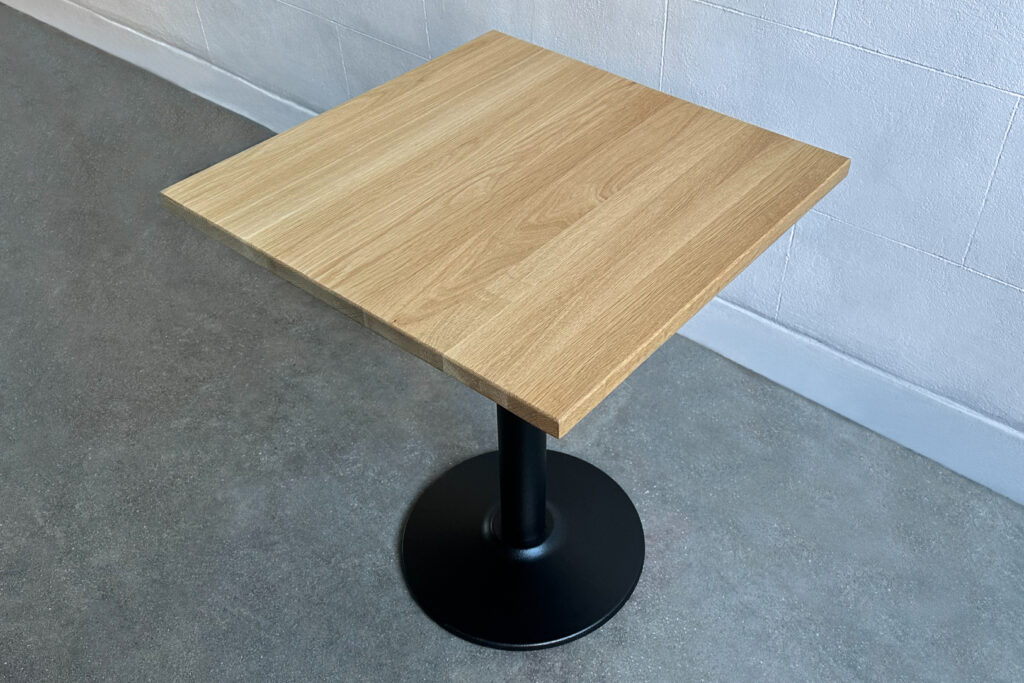
Pro Tip: Prioritise a finish that stands up to strong cleaning products and daily spills to avoid premature replacements.
Material options: pros, cons, and budget implications
Material choice affects appearance, lifespan, maintenance and repair options more than almost any other decision. For most cafés, the right answer depends on service intensity, interior style and whether you expect to repair or replace tops over time.
A quick comparison of common table top materials
Material | Typical strengths | Typical drawbacks |
Budget note
|
|---|---|---|---|
Solid wood | Repairable, can be refinished, warm appearance | Can move naturally with humidity, needs suitable finish and maintenance | Higher upfront cost, better long-term potential in some settings |
Veneered MDF | Neat appearance, often lower cost than solid wood | Limited repairability once veneer is damaged | Can work well if wear is moderate and edges are protected |
High-pressure laminate | Hardwearing, easy to wipe, often stain resistant | Harder to repair invisibly if chipped or badly damaged | Often strong value for high turnover spaces |
Chipboard-based tops | Low initial cost | More vulnerable to moisture damage, edge failure and shorter service life | Budget-friendly at first, but replacement risk is higher |
Solid oak and other solid hardwoods appeal to cafés that want a natural surface with a longer life cycle. They can be sanded and refinished, which means wear does not always equal replacement. That repairability is one reason workshops such as Tablemaker focus on solid wood for high-use surfaces where longevity matters.
Laminate remains a practical option for many budget-led projects. A good laminate top can cope well with regular wiping and high turnover, especially where speed of cleaning is a top priority. The trade-off is usually in repair, because once the surface or edge is badly damaged, the fix is often less straightforward.
Veneered MDF sits in the middle for some fit-outs. It can look smart at a lower cost than solid wood, but severe scratches, swelling or edge damage can shorten its useful life. Perceived value and actual durability do not always match, which is why the use case matters more than the first impression.
If environmental considerations are part of the brief, it is worth checking sourcing information and whether timber products carry recognised certification such as FSC. Material honesty also matters. A café that expects years of hard use usually benefits from choosing a surface that can age, be maintained or be renewed without pretending to be something it is not.
Sizing and space planning: getting the most from limited square footage
Small cafés often lose money through poor sizing rather than expensive materials. A top that is too deep can choke circulation. One that is too small may increase turnover pressure because customers feel cramped and trays overhang the edge.
Seat count matters, but comfort and staff movement matter too. UK café layout guidelines and accessibility standards vary by setting, yet the underlying principle is steady: people need enough room to sit, serve and pass each other without constant friction.
Awkward corners, banquette seating and reused metal bases can all change what size makes sense. A made-to-measure approach is sometimes worth the extra thought, particularly if one or two non-standard tops can stop a whole room from feeling compromised. Tablemaker is often relevant in that kind of scenario, where fitting the top to the space or an existing base is the practical issue.
A few sizing checks go a long way:
- match the top to the base so the overhang feels stable and balanced
- leave realistic circulation space for staff carrying trays
- think about how chairs tuck in when tables are not in use
- allow for cleaning access around walls, benches and windows
Thickness also changes the feel of a room. A very thick top can look heavy in a small café, whereas an overly thin one may feel less substantial or suit fewer bases. Shared benches, wall-fixed seating and modular layouts all benefit from careful dimensions, because one misplaced depth measurement can affect every table in the row.
Future rearrangement deserves attention as well. Square and smaller rectangular tops tend to give more flexibility if covers rise and fall during the week, especially in cafés that switch between solo workers, pairs and quick lunch trade.
Construction details that matter on a budget
Good construction is about what the table top does over time, not how many decorative details it carries. In a café, money is usually better spent on structure, stability and a repairable finish than on features that change the look but not the lifespan.
For solid wood, grain direction, timber dryness and methods used to reduce movement are all worth understanding. Wood naturally responds to changes in humidity, so a top needs to be built with that behaviour in mind. Kiln-dried timber and sensible construction choices can reduce the likelihood of warping, cupping or stress around fixings.
The most useful features to prioritise are:
- A stable substrate or well-prepared solid timber.
- A finish suited to regular cleaning and touch-ups.
- Sensible thickness for the span, base and level of use.
- Adaptable fixing details if the top may need to work with different bases later.
Straightening bars are one of those details that sound technical but have a simple purpose. They help keep a solid wood top flatter across the grain. In practical terms, that can matter more than an elaborate edge profile, because a top that sits flat and feels solid is easier to live with every day.
Full-stave construction, removable fixing methods and hardwax oil finishes can all add long-term value in the right setting. What matters is whether the detail supports service life. Decorative flourishes rarely compensate for a weak core or a finish that degrades under constant wiping.
Book a Consultation
Speak with an expert about choosing the right table top for your project and ensure you get a solution built to last.
Book a ConsultationMaintenance, cleaning, and longevity: planning beyond the first year
The first year often hides problems because everything still looks new. By the second or third year, cleaning habits and finish choice start to show more clearly.
Repeated use of harsh chemicals, soaking wet cloths or abrasive pads can shorten the life of many surfaces. A top described as easy-care still benefits from the right routine, because no finish is immune to poor treatment.
A simple maintenance plan should cover:
- Daily wiping with suitable cleaning products and a cloth that is clean rather than saturated.
- Fast removal of standing liquid around joints and edges.
- Regular checks for chips, worn finish or loose fixings.
- Occasional touch-up or refinishing where the material allows it.
Solid wood offers one clear advantage here. If the surface becomes tired, local repairs or refinishing may restore it without replacing the whole top. Hardwax oil finishes are often chosen for that reason, since they can be maintained in stages instead of forcing a full replacement at the first sign of wear.
Staff routines matter just as much as material selection. If one shift sprays strong cleaner directly onto every table and another leaves water sitting after mopping, surface life will vary no matter how good the product is. Small habits, repeated every day, shape the repair cycle more than most buyers expect.
Common pitfalls and how to avoid them
Budget pressure tends to produce the same mistakes again and again. Most are avoidable once you look past the first price.
- Choosing a domestic-grade top for commercial use. Busy cafés need surfaces that can cope with repeated cleaning and daily turnover.
- Ignoring the base. A top that does not suit the existing pedestal, leg spread or fixing pattern can wobble or look undersized.
- Buying by appearance alone. Some finishes photograph well but show scratches, edge damage or staining very quickly in service.
- Forgetting repair options. A lower-cost top with no realistic repair path can become a short-term purchase.
- Overfilling the room. More tables do not always mean more usable covers if customers and staff cannot move comfortably.
Base compatibility is a particularly common issue in refurbishments. A reused base may save money, but only if the new top matches its weight, fixing points and proportions. The same applies to inflexible sizing. Saving a little by forcing a standard top into an awkward space can leave dead corners, poor circulation or unstable seating arrangements.
Another trap is treating all commercial furniture costs as if they stop at purchase. Maintenance time, future refinishing, storage of spares and the possibility of replacing one damaged top rather than a full set all affect value in practice.
Rethinking value: why the right table tops save money over time
Good value in a café fit-out is rarely about finding the lowest starting price. It is about choosing a surface that suits the way the business actually runs, from the morning clean-down to the hundredth wipe of the day.
A repairable top, a sensible size and a finish that copes with regular cleaning can all reduce spend over years of use. Circular economy principles and sustainable furniture thinking support that approach, because keeping a table top in service for longer is often better than replacing a cheaper one again and again.
The strongest budget decisions usually come from a clear order of priorities: durability first, fit second, appearance third. Once those are in place, a café can still look distinctive. More importantly, the room keeps working under pressure, which is what a tight budget needs most.
Request a Custom Quote
Get a tailored quote for contract grade table tops designed for your commercial or shared space needs.
Request a Quote
Tablemaker
55 High St, London N8 7QB
02083416334
HVQM+58 London