

What makes a table top “contract grade” and do you actually need one?
What does “contract grade” really mean for a table top, and is it always necessary?
A contract grade table top is generally made and specified for heavier, more frequent use than a standard domestic one. That usually means closer attention to durability, stability, finish performance, maintenance, and suitability for a commercial setting such as a café, office, or hospitality venue. You do not always need one. The right choice depends on how often the surface will be used, how it will be cleaned, what it will sit on, and whether it needs to be repaired over time.
Table of Contents
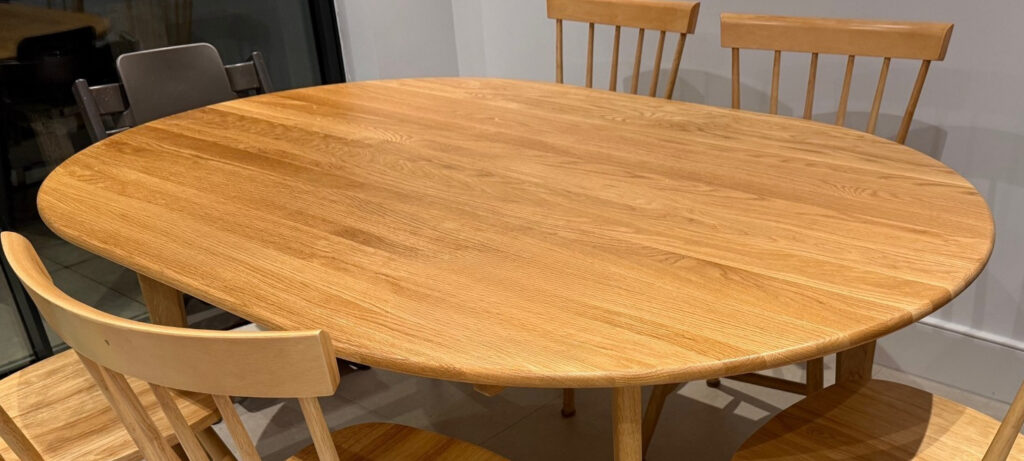
What Does “Contract Grade” Really Mean for Table Tops?
Picture a dining table in a quiet flat and compare it with a café table used from breakfast through to closing time. Both may look similar on day one, yet the demands placed on them are completely different. That difference is where the phrase “contract grade” starts to matter.
In plain English, contract grade usually refers to furniture intended for commercial use, where wear is higher and expectations around consistency, safety, and performance are tighter. In procurement documents, a contract specification may refer to testing, materials, finish performance, fire compliance in wider furniture categories, or suitability for a particular usage environment. For table tops, the focus is often on durability, stability, cleanability, and compatibility with repeated use.
A simple way to think about it is this:
- Domestic furniture is generally made for private homes with lighter and less predictable use.
- Contract furniture is generally specified for workplaces, hospitality furniture, and shared settings where use is frequent and maintenance cycles are planned.
- “Contract grade” does not mean indestructible. It usually means the item is better suited to a demanding environment.
Industry bodies such as the British Standards Institution and FIRA are often part of this conversation because standards and testing frameworks shape how products are assessed. Even so, the phrase itself can be used loosely in marketing. Some contract furniture suppliers use it carefully, linked to specification and performance. Others use it as a general quality signal, which can blur the line between a genuine contract standard and a vague commercial claim.
That is why the label matters less than the details behind it. A table top either suits its setting or it does not, whether the room is a hotel breakfast area or a family kitchen used all day for meals, homework, and laptop work.
Key Features That Define a Contract Grade Table Top
A genuine contract grade table top is usually defined by how it is built, finished, and expected to age under pressure, not by a badge or a product name.
What to look for
- Material choice: Solid hardwood and well-made engineered constructions tend to outperform flimsy boards in high-use settings. The right answer depends on budget, weight, maintenance, and the look required.
- Construction: Stable build methods, sensible grain orientation, and reinforcement where needed all matter. On solid wood tops, straightening bars can help reduce the risk of cupping across the width.
- Surface finish: A finish for commercial use needs to cope with repeated wiping, spills, and abrasion. Repairability also matters because a finish that can be refreshed may extend the life of the top.
- Joinery and fixing logic: A strong top still needs an appropriate way to attach to a base. Poor mounting can shorten the life of an otherwise good surface.
- Long-term serviceability: The best durable table tops are often the ones that can be cleaned, maintained, and refinished without replacing the whole piece.
Solid wood contract tops are often chosen because they can be repaired. A veneered or laminated surface may work well in some commercial use table tops, particularly where consistency and cost control are priorities, but once the surface is badly damaged, repair options can be limited. Hardwood tops, by contrast, can often be sanded and refinished if the construction allows for it.
Construction quality is where many superficial claims fall apart. Full-stave construction, sensible board selection, and reinforcement across the grain all deal with real timber behaviour rather than pretending movement will not happen. In workshop-led production, including the approach used by Tablemaker, straightening bars are part of that logic because they support stability without treating wood as a static material.
Finish choice deserves equal attention. Hardwax oil is often valued on repairable surfaces because local wear can be refreshed more practically than on some film-forming finishes. That does not make every oiled top a contract product, but it does show how maintenance planning and material choice are linked.
In other words, a contract grade top should solve problems before they appear on the surface, whether that problem is wobble on a busy restaurant base, edge wear from constant chair movement, or a patchy finish after repeated cleaning.
Pro Tip: Check your maintenance routines before specifying a finish to ensure surfaces remain presentable with realistic cleaning and repairs.

Pro Tip: Consider the compatibility between your chosen table top and base so fixing points, overhang, and weight are balanced for long-term stability.
When Is Contract Grade Necessary, And When Isn’t It?
The answer sits somewhere between obvious and situational. Some environments clearly need contract specification needs to be met. Others simply need a well-made top suited to daily life.
Take a hospitality venue first. A café or restaurant table may see dozens of users a day, regular cleaning with commercial products, constant movement of crockery, and a higher chance of knocks around the edges. In that setting, high-use surfaces need stronger thinking around finish performance, stability, and ease of maintenance. Commercial offices and shared breakout areas often fall into the same category, especially where furniture is used by many people and maintained on a schedule.
Now compare that with a domestic household where a table is used for dinner in the evening and little else. A full contract standard may be unnecessary there. The owner might value timber character, repairability, or a particular thickness more than heavy-duty commercial performance. Over-specification can add cost and weight without adding much practical value.
A grey area appears in homes that function like shared workspaces. Large families, open-plan kitchens, rented properties, and home offices with long daily use can put a table top under real strain. In these cases, commercial vs domestic table tops stop being a neat split. A domestic buyer may benefit from commercial thinking, especially if the table doubles as a desk, project surface, and dining table across the week.
Workspace designers often face a similar judgement call. A meeting table used a few times a week has different demands from a hot-desk surface in constant use. One needs presence and stability. The other may need tougher maintenance planning and easier future refinishing.
The useful question is not whether contract grade sounds better. The useful question is whether the table top matches the rhythm of its actual life, including cleaning, movement, loading, and the likelihood of repair a few years from now.
Practical Considerations Before Choosing a Contract Grade Table Top
Labels and materials matter, but practical fit decides whether a top works well once it arrives.
Before choosing, it helps to look at the full setup rather than the surface alone. A contract top that does not suit its base, fixings, room layout, or maintenance routine can still become an awkward choice.
- Check size and base compatibility. A top needs the right overhang, weight distribution, and fixing points for the base beneath it. This matters even more if you are reusing an existing frame or pedestal.
- Think about mounting early. Some tops are supplied undrilled so installers can match them to different bases and hardware. That gives flexibility, but it also means fixing plans should be settled before installation day.
- Consider maintenance cycles. A repairable timber top may suit spaces where periodic refinishing is realistic. A lower-maintenance surface may be preferable where upkeep will be minimal or outsourced.
- Review lead time against the project schedule. Made-to-order pieces can offer better fit and material quality, but they still need to align with opening dates, office moves, or renovation programmes.
- Account for awkward constraints. Radiators, uneven walls, cable access, and unusual base dimensions all affect whether a standard size works or a custom size table top is the better route.
Sizing flexibility can be especially useful for projects that sit between off-the-shelf and fully bespoke. That is one area where a maker such as Tablemaker can be relevant, particularly for tops produced in fine size increments or adapted to suit existing frames.
Furniture installers will usually care about details that buyers sometimes miss, including fixing access, screw length, expansion allowance, and whether the base allows the top to move as timber naturally responds to the room. Maintenance professionals look at the same table from a different angle. They want to know how easy the surface will be to clean, refresh, and keep presentable after years of use.
Planning ahead here is less about perfection and more about avoiding a mismatch between a good top and the way the room actually functions.
Book a Consultation
Speak with an expert about choosing the right table top for your project and ensure you get a solution built to last.
Book a ConsultationThe Real-World Value of Contract Grade, Beyond the Label
A table top rarely proves its worth in a showroom. It proves it after months of wiped spills, dragged plates, laptop chargers, sunlight, heating cycles, and the small knocks that come with ordinary use.
That is why contract grade value is best judged through longevity and repair cycles rather than status. Furniture repair specialists often see the same pattern repeatedly. A surface may have sounded impressive on paper, yet the finish cannot be refreshed, the top was poorly matched to its base, or the construction did not suit the room. Another top may have aged more gracefully simply because its specification matched the job.
British Standards and related guidance can support better decisions, but no label replaces careful reading of the details. Specification matters more than terminology. Thickness, substrate, fixing method, finish type, timber stability, and future maintenance all tell you more than a phrase printed in a catalogue.
The most useful way to think about contract vs standard is fit for purpose. Some commercial spaces need a true contract approach because downtime, replacement, and visible wear all carry a cost. Some homes benefit from the same level of thinking because the table works hard every day. Other settings need something simpler, provided the choice is honest about its limits.
A good table top does not need to sound invincible. It needs to wear well, accept maintenance, and remain serviceable as needs change. That is often the difference between a surface that is merely specified and one that still makes sense years later.
Request a Custom Quote
Get a tailored quote for contract grade table tops designed for your commercial or shared space needs.
Request a Quote
Tablemaker
55 High St, London N8 7QB
02083416334
HVQM+58 London