

What to do if your solid wood table has a white ring or heat mark
What should you do first if a solid wood table has a white ring or heat mark?
Start by identifying whether the mark sits in the finish or has gone into the wood itself. Most pale white rings are caused by moisture or heat trapped in the finish, which means that gentle treatment may improve them. Avoid harsh cleaners, abrasive scrubbing, and improvised internet fixes until you know what kind of mark you are dealing with.
A white ring on a wood table can look alarming, especially if it appears suddenly after a hot mug, a damp glass, or a serving dish has been left in place. In many cases, the timber underneath is still sound. The visible mark often sits in the furniture finish rather than deep in the solid wood.
That distinction matters. A heat mark on a table may appear chalky, cloudy, or pale because heat or moisture has affected the top layer. A darker mark usually suggests a different problem, such as liquid that has moved further in, or a stain that has reacted with the wood.
Here is a simple way to think about the most common surface blemishes:
- White or cloudy ring: usually moisture or heat trapped in the finish
- Slightly dull patch: often a change in sheen caused by heat, friction, or cleaning products
- Dark mark: more likely to involve more detailed staining, water ingress, or a reaction in the wood itself
Solid wood reacts differently from veneered boards because it is a natural material with visible grain, changing moisture levels, and a finish that can often be renewed. A hardwax oil finish, for example, tends to be more repairable than a thick surface coating, although it can still show heat and moisture marks if the conditions are right.
Many people assume these marks are permanent. Some are stubborn, and some do need restoration work, but a surprising number improve with careful treatment and a little patience, especially when the problem has not gone beyond the finish.
Table of Contents
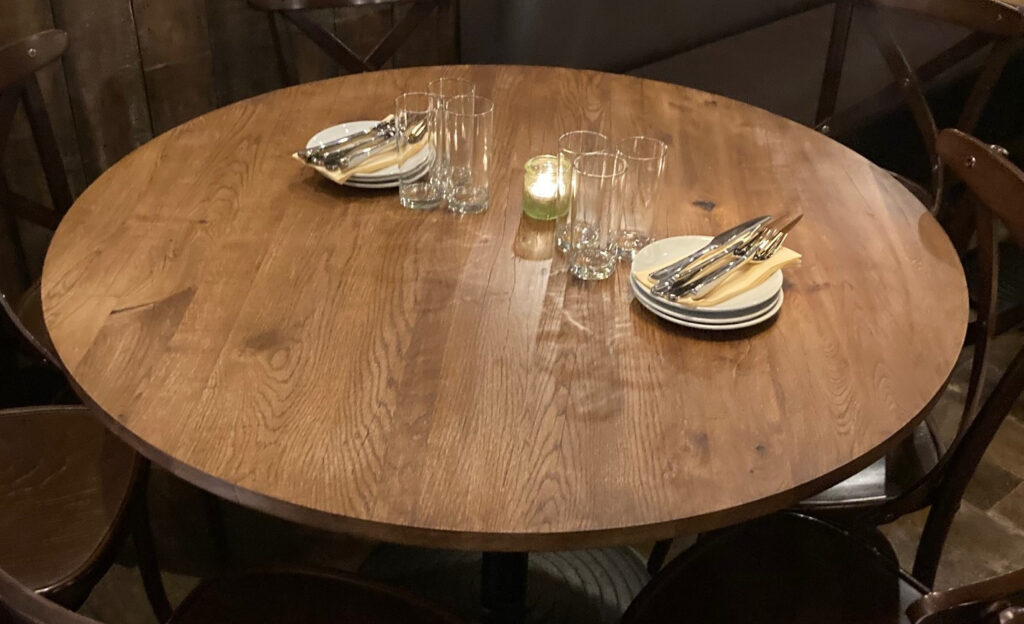
Immediate steps: what not to do
The fastest way to worsen a small table surface stain is to attack it too aggressively.
- Do not scrub with a scouring pad, stiff brush, or abrasive cream
- Do not apply bleach, strong household cleaners, or solvent-based products
- Do not hold a hairdryer or other direct heat source close to the mark
- Do not keep rubbing with oil or polish in the hope that more product will hide it
- Do not mix several DIY remedies one after another without stopping to assess the result
Abrasion can strip the finish unevenly. Chemical cleaners can react with oils, lacquers, and polyurethane in ways that are hard to reverse. Direct heat can dry one area too quickly and leave a larger patch than the original ring.
Online advice often skips an important detail, namely that different finishes respond differently. A method that improves one tabletop may damage another. Restraint is usually the most useful first response, particularly if the mark is fresh and confined to a small area.
Assessing the mark: identifying severity and finish type
Before trying to remove a white ring from wood, take a minute to inspect the surface properly in good daylight. Look across the top from an angle as well as from above. A shallow mark often appears milky or dull only in reflected light, whereas more detailed damage may remain obvious from every angle.
A simple assessment can be done in stages:
- Check the colour. White or pale marks often suggest trapped moisture or heat in the finish. Brown, black, or grey marks may indicate more detailed staining.
- Feel the surface lightly with clean fingertips. If the area feels smooth, the issue may be in the finish alone. If it feels rough, sunken, or raised, the finish may have been disturbed more significantly.
- Observe the edges of the mark. Soft, cloudy edges usually point to a surface issue. Sharp outlines can appear where heat or moisture has been concentrated in one spot.
- Think about the cause. A hot mug, warm takeaway container, or damp vase gives useful clues. Knowing what sat there often tells you whether you are dealing with heat, moisture, or both.
Finish type affects what you can safely do next. A few broad cues can help:
Hardwax oil usually leaves the wood looking natural and close to the grain, with a low to soft sheen. Local repair is often more straightforward because the finish penetrates rather than forming a thick plastic-like layer on top.
Lacquer or polyurethane often creates a more sealed surface. That finish can resist spills well, but visible heat damage may look more obvious because the affected patch contrasts with the intact coating around it.
If you are unsure, avoid assuming. A table made from solid wood may still have any number of furniture finishes on top. Some workshop-made pieces, including many from Tablemaker, use hardwax oil because it protects the timber while remaining repairable over time.
Home treatment is most suitable when the mark is pale, localised, and clearly superficial. Once the colour turns dark or the finish feels physically damaged, a gentler home approach may not be enough.
Pro Tip: Test any home remedy on a small, inconspicuous area before tackling the main mark to avoid spreading damage.
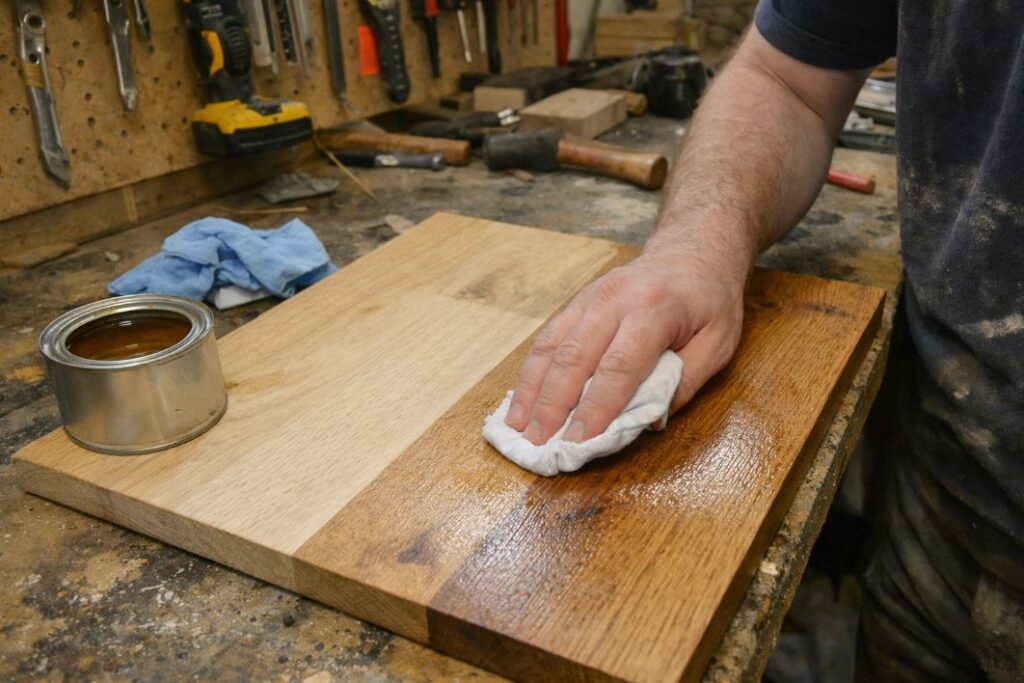
Pro Tip: Regularly refresh hardwax oil finishes to increase resistance against heat and moisture marks on frequently used tables.
Gentle home remedies for white rings and heat marks
Small white rings and light heat marks often respond best to one careful method at a time. Stop after each attempt and inspect the surface before doing anything else. Rushing from one remedy to the next can turn a minor blemish into a broader repair job.
One commonly used approach is gentle heat through a cloth. Place a clean, dry cotton cloth over the mark, then use a household iron on a low setting with no steam for a few seconds at a time. Lift the cloth, check the result, and repeat only if the mark is improving. The aim is mild heat transfer, not prolonged heating.
Keep the iron moving and never let it sit in one place. If the surface becomes hot to the touch, pause and let it cool fully before reassessing.
Another low-risk option for a faint mark is light buffing with a soft cloth. Sometimes a cloudy patch is less severe than it first appears, especially if it is a change in sheen rather than a true stain. Gentle circular buffing can help you see whether the finish is actually damaged or simply dulled.
For stubborn but still pale rings, some people use a tiny amount of non-gel toothpaste on a soft cloth. The key word is tiny. Rub very lightly over the affected area, then wipe clean and dry the surface. Toothpaste works by very mild abrasion, so it should be treated as a limited test, not a full polishing routine.
Baking soda is sometimes mixed with a drop or two of water to make a mild paste, but caution matters here. Even gentle abrasion can alter the sheen if you overwork one patch. Use the least pressure possible and stop if the area starts to look uneven.
Signs that a remedy is helping include a gradual reduction in cloudiness, softer edges around the ring, or a return of the original sheen. Signs to stop include roughness, increased dullness, a larger pale patch, or any change in colour beyond the original mark. Those details suggest that the finish needs a more controlled repair.
When to seek professional help or restoration
If a mark remains unchanged after careful home treatment, a professional assessment may be the wiser move.
Certain signs point to a problem that goes beyond a simple surface haze:
- The mark is dark brown, black, or grey rather than white
- The finish feels cracked, bubbled, sticky, or visibly worn through
- The affected area is large or sits in a prominent central part of the table
- Several remedies have already been tried and the surface now looks uneven
- The table has sentimental, financial, or practical value that makes experimentation a poor trade
Professional wood table repair usually starts with inspection under proper light, followed by a decision about whether the finish can be blended locally or whether the area needs sanding and refinishing. On solid wood, that process is often possible in a way that would be harder on thin veneers or composite boards.
A workshop-led repair may involve gentle surface preparation, colour matching where needed, and a fresh finish coat that suits the original appearance. If the tabletop uses hardwax oil, local refinishing can sometimes be relatively contained. If it has a heavier lacquered finish, the repair may need broader blending so the sheen looks consistent across the top.
For bespoke makers and restorers, including teams such as Tablemaker, the aim is usually practical rather than cosmetic perfection at any cost. A good repair respects the material, the grain, and the way the table is used day to day.
Book a Professional Table Assessment
Arrange an expert evaluation of your solid wood table for tailored repair advice and restoration solutions.
Book AssessmentPreventing future white rings and heat marks
A solid wood table benefits from the same kind of routine care as any hardworking surface in a busy home. The goal is not to keep it untouched. The goal is to reduce avoidable damage that comes from heat, standing moisture, and repeated friction in the same spots.
A few habits make a real difference:
- Use coasters under cold or hot drinks, especially if condensation is likely
- Place mats or trivets under serving dishes, mugs, and pans
- Dry spills promptly instead of letting moisture sit on the finish
- Rotate decorative objects occasionally so one area does not age differently from the rest
- Add felt or protective pads under ceramics, vases, and heavy accessories
Maintenance matters as well. Hardwax oil finishes often benefit from occasional refresher care, particularly on dining tables and desks that see daily use. A worn finish is more likely to show marks because moisture and heat meet less resistance at the surface.
One common myth says that solid wood is too delicate for ordinary life. That is not really the issue. Solid wood is durable, but it still responds to its environment, and a little attention keeps that response within manageable limits. A coaster under a mug is a small habit, yet it can spare you from a much larger patch of remedial work later.
Why solid wood tables remain repairable and worth caring for
A white ring or heat mark can make a table feel spoiled in the moment, especially if the top has been looked after for years. Even so, one blemish rarely means the piece is ruined. Solid wood remains one of the few furniture materials that can be refreshed, refinished, and repaired repeatedly across its life.
That is a meaningful difference. A full-stave solid wood top has depth, real grain, and enough substance to tolerate sensible restoration. Surface damage can often be addressed in stages, from light buffing and local refinishing through to more thorough sanding if needed.
By contrast, thinner manufactured surfaces may offer less room for correction once the top layer is compromised. Repairability is part of the value of solid wood, alongside its weight, feel, and the way it ages with use.
Thoughtful care does not preserve a table in a museum state. It keeps the finish working, keeps marks from becoming worse than they need to be, and leaves open the option of repair when everyday life leaves its trace. A pale ring on the surface is often just that, a surface event, and solid wood gives you more ways to respond calmly and effectively.
Request a Quote for Table Restoration
Receive a detailed quote for repairing or refinishing your wood table using professional techniques and quality materials.
Get a Quote
Tablemaker
55 High St, London N8 7QB
02083416334
HVQM+58 London