

How to tell if your dining room can actually fit the table you want
How do you know if a dining room can truly fit your chosen table?
You know by measuring usable space rather than headline room dimensions, then allowing for chairs, movement, doors, radiators and everyday traffic flow. A table that fits on paper can still feel cramped in practice, so the safest approach is to test its footprint in the room before deciding.
Table of Contents
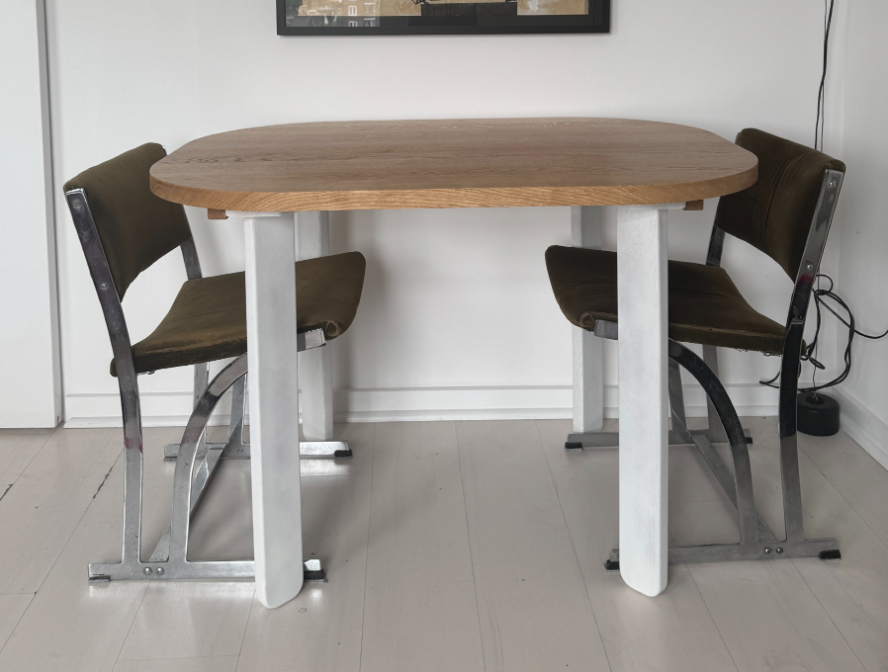
Understanding your dining room’s true dimensions
Measuring a dining room sounds simple, but usable space is rarely the same as the full floor area shown on a plan.
Many UK homes have small irregularities that affect layout more than people expect. Alcoves can narrow one side of the room, skirting boards can change how close furniture sits to a wall, and a radiator behind a chair can remove space that seemed available on paper. Open-plan rooms can be just as awkward, because walkways between the kitchen, garden doors and living area still need to stay clear.
Estate agent measurements can be helpful as a starting point, but they are not enough for furniture planning. Those figures often describe overall room dimensions rather than the area a table can genuinely occupy once obstructions are taken into account.
Common obstacles include:
- inward-opening doors that need swing space
- radiators and pipework along the wall
- bay windows, chimney breasts and alcoves
- window sills that limit table position
- uneven walls or corners that are not fully square
- skirting boards that stop furniture sitting flush
A simple floor plan helps, but walking the room with a tape measure tells you more. Measure wall to wall, then measure again between the points where furniture can actually sit. In older properties especially, the second number is often the one that matters.
Calculating the space needed for table and chairs
A table rarely causes problems when nobody is using it. The trouble starts once chairs are pulled out and people begin moving around.
Picture an ordinary weeknight meal. One person gets up for water, another shifts their chair back, and someone else passes behind them carrying plates. A dining room layout has to work in motion, not just in a showroom-style still image.
Use these checks as a practical guide:
- Measure the table size itself, including the widest and longest points.
- Add chair depth on each side where seating will go.
- Allow extra room for chairs to pull back comfortably.
- Leave circulation space if somebody needs to walk behind a seated diner.
- Check the room again with doors open and nearby furniture in place.
Bench seating changes the calculation slightly. A bench can tuck under the table more neatly than chairs, which saves some space when it is not in use. Even so, people still need room to sit down and stand up, so a bench does not remove the need for clearance.
Shape matters as well. Rectangular tables usually suit narrower rooms because they follow the line of the space. Round tables soften movement around corners and can work well in squarer rooms, but their footprint sometimes surprises people because the widest point is constant from every angle. A table that seats six in theory can still feel tight if the chair spacing is mean or the legs interrupt where people want to sit.
That is one reason made-to-order sizing can be useful. Workshops such as Tablemaker offer dimensions in finer increments, which means that a modest adjustment in width or length may improve dining comfort without changing the character of the table.
Pro Tip: Take time to live with a taped-out table footprint in your dining room to experience real movement and flow before ordering.
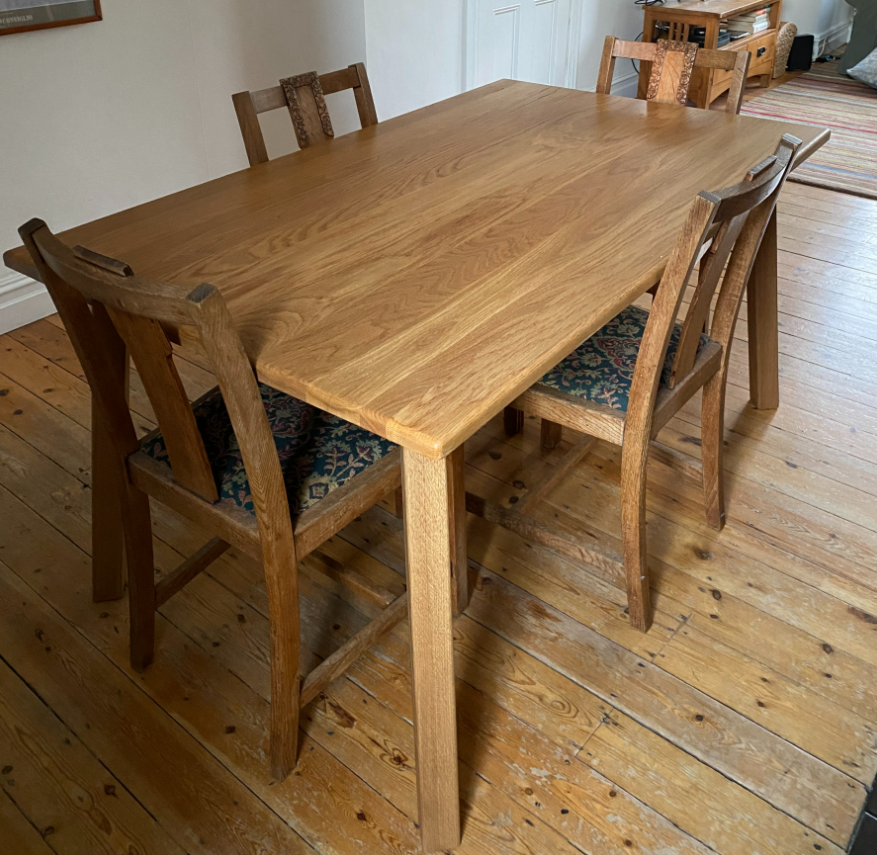
Pro Tip: Consider bench seating or extending tables for flexible use in rooms that serve different purposes during the week.
Testing table sizes before you buy
Mark the table on the floor before you commit to it.
A physical mock-up is often more revealing than any digital planner. Masking tape works well for this, and newspaper or flattened cardboard can help you picture the mass of the top itself. Once the footprint is on the floor, add chairs or dining chairs of a similar size and live with the arrangement for a day or two.
Try this in a simple sequence:
- Mark the exact table footprint with masking tape.
- Position chairs, stools or spare dining chairs around it.
- Walk the normal routes through the room, including to doors and cupboards.
- Sit down, stand up and pull chairs back fully.
- Leave the outline in place for a few days to see how the room feels during ordinary use.
Some surprises appear immediately. A table that looked fine by width may block a natural path to the garden. A round top may clip the edge of a sideboard. A rectangular table may fit well until the end chairs are in use. Those moments are useful because they happen before money is spent, not after delivery.
Digital room tools can help with rough planning, but they often flatter a layout by presenting it from above and without the mess of daily movement. Tape on the floor is less glamorous, yet it gives a more honest answer.
Factoring in everyday use and special occasions
Most people buy a dining table with two lives in mind. One is the everyday version, where the table serves routine meals, homework, laptops or cups of tea. The other appears at birthdays, Christmas or a crowded Sunday lunch.
Problems usually start when the occasional version dictates everything. A larger table may seat extra guests once or twice a year, but it can dominate the room every other week. If chairs need to stay half tucked in, or if somebody has to edge sideways past the corner each day, the compromise is constant.
Flexible seating often solves this more gracefully. Benches can free up circulation when not in use. Folding chairs can be stored elsewhere and brought out only when needed. An extending table can make sense if the room has enough spare space when opened, plus somewhere sensible to keep extra leaves or chairs. A bespoke maker may also adapt length, width or overhang to suit a room that needs more precision than standard sizes allow.
Daily comfort deserves more weight than occasional capacity. A table that serves four people easily every day is usually the better fit than one that squeezes in six on a regular basis and leaves the room feeling pinched.
Book a Table Sizing Consultation
Get specialist advice on the ideal table size for your dining room and ensure a comfortable fit.
Arrange a ConsultationCommon pitfalls and misconceptions about table fit
A few table sizing myths appear again and again, and they tend to lead to the same regrets.
- Myth: If the table fits within the room dimensions, it fits. Reality: Chairs, movement and obstructions are part of the footprint too.
- Myth: Open-plan space gives unlimited flexibility. Reality: Walkways still need to remain clear between zones, especially near kitchens and patio doors.
- Myth: Online planners show exactly how the room will feel. Reality: Screen layouts rarely capture chair pull-out, door swing or the sense of visual bulk.
- Myth: Any six-seater works the same way. Reality: Leg placement, top shape and width can change how many people sit comfortably.
- Myth: A table can sit right against a radiator or wall until guests arrive. Reality: Furniture tends to stay where it is placed, and cramped layouts become daily habits.
Visual weight matters too. Solid wood tables often look calmer and more grounded than lighter materials, but they can also feel more substantial in a small dining area. That does not make them unsuitable. It simply means that thickness, leg design and proportion deserve attention alongside raw measurements.
When bespoke sizing makes sense
Sometimes the room is the problem, and sometimes standard sizes are.
An awkward bay, a narrow passage behind chairs, built-in seating, or an existing base you want to keep can all make off-the-shelf dimensions frustratingly close but never quite right. In those cases, bespoke sizing is less about luxury and more about solving a practical puzzle.
Situations where made-to-measure is often worth considering include:
- unusual room shapes or chimney breast restrictions
- a need to match an existing table base or frame
- built-in benches or banquette seating
- tight widths where a few centimetres make a real difference
- requirements for a specific thickness or top shape
- rooms with fixed features such as radiators or shelving
A workshop such as Tablemaker can adjust size, proportion and construction details for spaces that fall between standard options. That might mean trimming width to preserve circulation, refining overhang for better seating, or producing a top to suit a frame you already own. The value lies in resolving the exact fit of the room, not in making the table larger for its own sake.
Repairable materials also matter here. A solid wood top made to suit a difficult space can continue working for years because it can be refinished, adapted or paired with a different base later on.
Rethinking table fit: Why proportion and flow matter more than size
The best dining table is rarely the biggest one you can squeeze in. The better choice is usually the one that leaves the room feeling balanced, usable and easy to move through.
Proportion changes how a space feels long after the excitement of choosing a table has faded. A top that suits the shape of the room, keeps circulation clear and leaves enough air around the chairs will seem more settled from the start. People notice that quality in simple ways. The room feels calmer, meals feel less cramped, and everyday movement stays natural.
Restraint often produces the stronger result. A slightly smaller table with better flow tends to serve a home more faithfully than a larger one chosen for occasional maximum capacity. Once you measure honestly, test the footprint and think about how the room works on an ordinary Tuesday, the right size usually becomes much easier to recognise.
Explore Custom Dining Tables
Browse a curated range of made-to-order table options designed for your unique space and needs.
View Custom Tables
Tablemaker
55 High St, London N8 7QB
02083416334
HVQM+58 London