

What wood should a table top be made from if it’s going to get heavy daily use?
What makes a wood table top suitable for heavy daily use?
A table top for heavy daily use needs more than an attractive grain or a hard surface. It should cope with frequent contact, spills, knocks, cleaning, and shifting weight, while remaining stable enough to stay flat and repairable enough to recover from wear over time.
Heavy use usually points to hardwoods with good stability, sensible construction, and a finish that can be maintained rather than replaced. The right choice depends on where the table sits, how it is used, and how much visible wear is acceptable.
Table of Contents
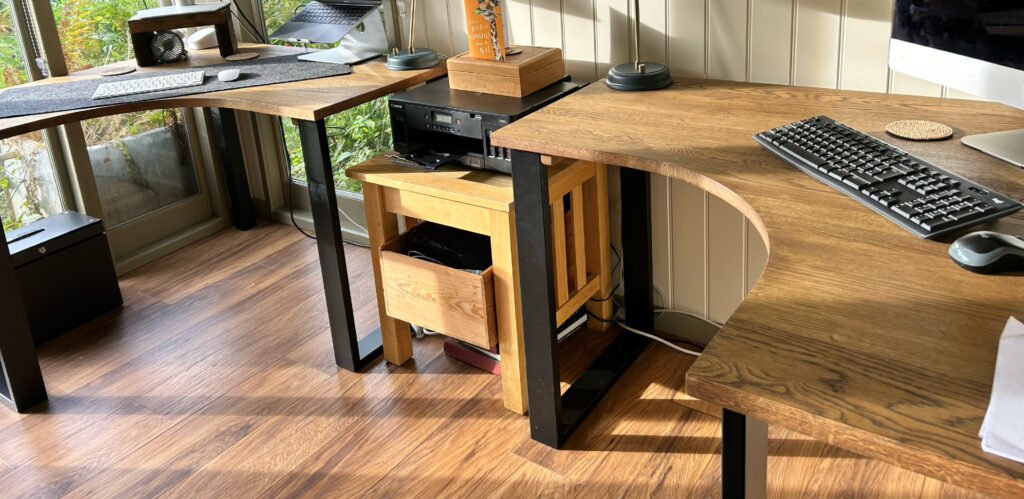
Understanding heavy daily use
Heavy daily use sounds straightforward, but it covers very different situations. A kitchen table used for family meals, schoolwork, and grocery bags faces one pattern of wear. A shared office desk has another. A café table in the hospitality sector may see constant wiping, hot cups, dragged chairs, and moving objects from morning to night.
Several settings fall under the same label:
- Domestic use with constant activity, including children, laptops, plates, and cleaning sprays
- Shared workspace use with repeated contact, keyboard wear, cable movement, and frequent repositioning of equipment
- Commercial use with steady turnover, food and drink exposure, and stricter cleaning routines linked to workplace regulations or hospitality guidance
Many people assume heavy use means dramatic damage. In practice, daily wear and tear is often more ordinary than that. Surface wear builds from repeated wiping, mugs placed in the same spot, keys dropped without thinking, and bags or boxes slid across the top. Accidental damage matters too, although routine friction often leaves the clearest long-term mark.
Standards and guidance from bodies such as the British Standards Institution can shape expectations around furniture performance and workplace suitability, but the most useful starting point is still the real pattern of use. A table that sees three careful meals a day has different demands from one that is cleaned dozens of times and used by different people every hour. That distinction matters before any wood species enters the conversation.
Key qualities of a table top for heavy use
Choosing a durable wood for tables starts with the right criteria. Hardness matters, but it is only one part of the picture.
Durability and hardness
The Janka hardness scale is often mentioned in hardwood discussions, and it can be useful as a rough guide to dent resistance. Even so, a harder wood does not automatically make a better heavy-duty table top. Daily performance also depends on grain, thickness, construction, and finish.
A very hard surface may still show scratches. A slightly less hard timber may wear more gracefully and be easier to repair.
Stability
Wood moves with changes in humidity. That movement is normal, but poor stability can lead to cupping, twisting, or gaps if the material is not properly selected and dried. Kiln-drying helps reduce excess moisture before manufacture, which gives the table top a better starting point.
For frequent use, stability is as important as surface toughness. A top that stays flatter in changing conditions usually feels better in service and ages with fewer problems.
Repairability
High-use surfaces benefit from being repairable table surfaces rather than disposable ones. Solid wood can usually be sanded and refinished when wear becomes too obvious, which means that scratches, stains, and minor dents do not always mark the end of the table’s useful life.
That matters more with years of use than on day one. A good table top should be able to recover from living, working, and eating.
Finish and protection
Protective finishes influence how a table copes with moisture, grease, hand oils, and cleaning. Hardwax oil finishes are often chosen because they offer surface protection while remaining easier to refresh than thick film finishes that can chip or peel.
Finish choice also affects the feel of maintenance cycles. Some surfaces hide marks well but are awkward to patch. Others ask for occasional care, yet reward it with simpler refinishing and a more natural repair route.
Pro Tip: Choose a finish that matches your willingness to maintain and periodically refinish the surface, not just the look you prefer on day one.
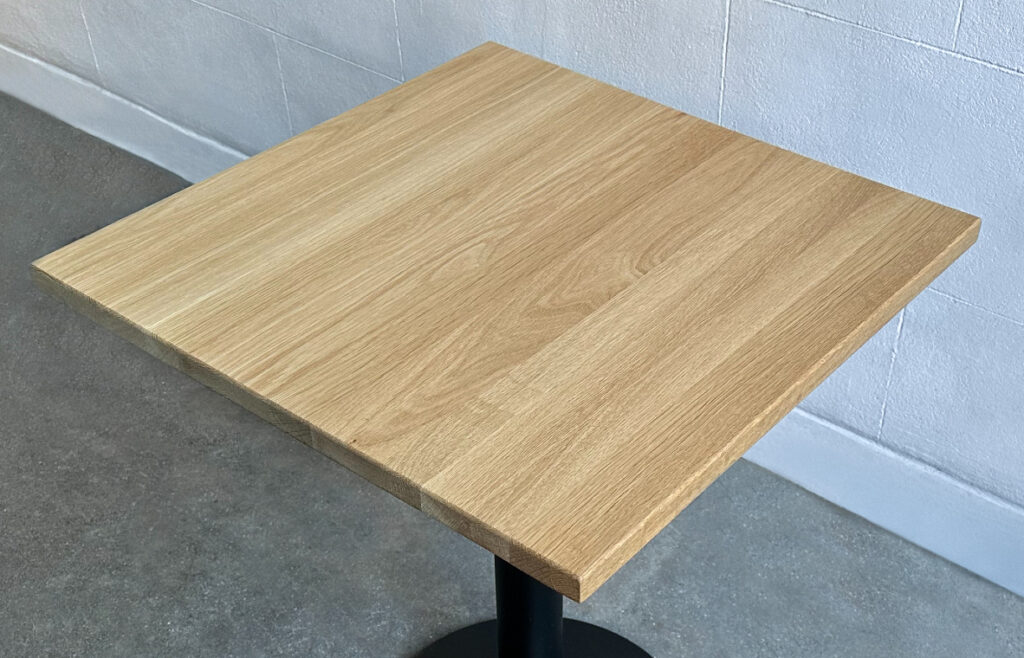
Pro Tip: Inspect for proper kiln-drying and grain orientation before purchase to reduce future movement and stability issues.
Comparing common woods: pros and cons for heavy use
No single species suits every room or every workload. The best wood for a table top depends on the balance between toughness, stability, appearance, and how willing you are to accept visible character as the surface ages.
- Oak: A common choice for solid wood surfaces because it combines good hardness, solid stability, and strong repair potential. Solid oak also works well across dining tables, desks, and commercial tops. Its grain is usually visible, which can help mask minor wear, though some people prefer a quieter look.
- Ash: European ash is tough, practical, and often a little lighter in appearance than oak. Its grain can be lively, and that can either suit a busy room or feel too active depending on taste. Under frequent use, ash generally performs well if the construction is sound.
- Walnut: American walnut is often chosen for its darker colour and calmer visual tone. It is typically softer than oak or beech, so it may pick up dents more readily in high-traffic table use. Many people still choose it for desks and dining tables because the appearance is distinctive and the surface remains repairable.
- Maple: Maple can be hard and hard-wearing, with a smoother, finer grain than oak or ash. It often suits cleaner-lined interiors and practical work surfaces. Colour consistency can appeal, although some users find that wear shows more clearly on paler woods.
- Beech: Beech is a capable hardwood with good hardness and a long history in furniture making. It can work well for frequent use, though movement has to be managed carefully through proper drying and construction.
Softwoods are usually less suitable for a scratch-resistant table top in hard service. Pine and similar timbers can work in lower-impact domestic settings, but they tend to dent and mark more quickly. Some people like that softness and patina. Others find it frustrating within a few months.
Hardness alone can also mislead. A wood that ranks well on paper may still disappoint if the grain is poorly arranged, the boards are badly joined, or the finish is unsuited to food and drink exposure. Workshops such as Tablemaker tend to favour full-stave hardwood construction for that reason, pairing the timber choice with sensible sizing and build decisions instead of relying on species alone.
Timber grading standards and responsible sourcing, including FSC-certified material where relevant, add another layer. They do not guarantee perfect performance, but they can support more consistent quality and traceability.
Construction methods that matter
A table top is only partly defined by species. Build quality often decides whether a stable hardwood stays stable once it is in daily use.
Full-stave, finger-jointed, and veneer
Full-stave solid wood construction uses longer, wider lengths of timber across the top. Many people prefer it for strength, appearance, and future refinishing.
Finger-jointed tops use shorter sections joined together. They can still be serviceable, but the visual rhythm is busier, and quality varies with execution.
Veneered boards place a thin wood layer over a core such as MDF or plywood. They can look neat and stay relatively stable, but deep repairs are limited because the surface layer is thin.
Grain direction
Grain direction affects both appearance and movement. Boards selected and arranged with care tend to behave more predictably over time. Poor grain matching can make movement harder to control, particularly on wider tops exposed to changing room conditions.
Straightening bars and fixings
Straightening bars, whether timber or metal, are fitted across the grain to reduce cupping and support panel stability. They do not stop wood movement altogether, because nothing can do that, but they can help keep a top flatter in service.
Removable fixings matter too. A construction method that allows parts to be adjusted, refinished, or remounted gives the table more useful life, especially if the top is paired with an existing base or a sit-stand frame.
Drying and moisture control
Kiln-dried timber gives the maker a more reliable starting point. If the moisture content is poorly managed before a top is built, movement problems may show up later as the table settles into its room.
British woodworking standards and sound joinery techniques exist for good reason. They reflect the fact that wood is a live material even after manufacture, and daily use tends to expose shortcuts quickly.
A few practical checks can reveal a lot:
- Ask whether the top is solid wood, veneer, or another build type.
- Look for signs that wood movement has been considered, including grain orientation and straightening support.
- Check whether the fixing method allows for seasonal movement and later repair.
That construction logic is often what separates a handsome top that lasts from one that begins to misbehave after a winter of heating and a summer of open windows.
Book a Table Top Consultation
Discuss your needs with our wood specialists and get tailored advice for choosing the right table top.
Arrange a ConsultationMaintenance, repair, and longevity
Years of use expose the true value of a table top. A surface that can be cleaned sensibly, repaired locally, and refinished when needed usually gives better long-term service than one that must be replaced once damage builds up.
Routine care is often simple. Daily cleaning solid wood usually means a soft cloth, a mild cleaner suited to the finish, and restraint with water. British cleaning guidance for interior surfaces generally leans in that direction anyway, because harsh chemicals can damage both the finish and the timber beneath.
Periodic refinishing is different from ordinary cleaning. Once a top shows dull patches, shallow scratches, water marks, or ingrained wear, sanding and re-oiling may restore the surface. Hardwax oil manufacturers often provide maintenance advice for this exact reason, since these finishes are meant to be renewed rather than stripped away completely every time.
Minor damage is rarely the end of the story. A ring mark from a mug, a scuff from a monitor stand, or a light dent from dropped cutlery can often be reduced or removed during surface refinishing. Professional restoration services may be useful for heavier damage, though many small issues are manageable if the table is solid wood and the finish is compatible with touch-ups.
A few habits make a noticeable difference:
- Wipe spills promptly, especially around joints and edges
- Avoid aggressive sprays, bleach-based cleaners, and abrasive pads
- Use suitable protectors under hot dishes, heavy equipment, or objects with rough bases
Neglect causes more trouble than ordinary wear, yet over-maintenance can be just as unhelpful. Constant polishing with unsuitable products or repeated wet cleaning can leave a surface patchy and tired. A long-lasting table top usually benefits from calm, regular care instead of constant intervention.
Repairability also changes how people live with wood. Small marks stop feeling like permanent defects when the surface can be renewed in the future. That shift in mindset often makes solid timber a more practical choice than it first appears.
The bigger picture: rethinking table tops for real-world use
People often search for one perfect answer, but choosing table top wood rarely works that way. The strongest decision usually comes from matching the timber, construction, and finish to the actual pattern of use.
Oak may suit a busy family kitchen because it balances toughness, stability, and repairability. Walnut may still be right for a heavily used desk if appearance matters and a few dents are acceptable. Beech, ash, or maple may fit better in settings where colour, grain, or wear pattern matters as much as hardness. The trade-offs are real, and that is normal.
A useful way to think about the choice is this:
- How much contact will the surface see every day?
- What kind of damage is most likely, including spills, abrasion, or knocks?
- Do you want a top that stays pristine-looking, or one that can age well and be refinished?
Those questions usually lead to a better answer than a simple hardness ranking. Heavy daily use asks for realism, not perfection. The best table top wood is the one that can take ordinary life seriously, remain serviceable through wear, and still make sense years after the first marks appear.
Request a Bespoke Table Quote
Explore your options for a hardwearing, custom-made table designed for daily life or business use.
Request a Quote
Tablemaker
55 High St, London N8 7QB
02083416334
HVQM+58 London