

What to look for when buying an unfinished oak table top in the UK
What should you check before buying an unfinished oak table top in the UK?
You should check what “unfinished” actually includes, the grade and quality of the oak, the thickness and stability of the top, whether the size suits your base or space, and how much surface preparation and finishing work will still be needed. Delivery, handling, installation, and future maintenance also matter because a solid oak top is heavy, moves naturally with changes in moisture, and is meant to last for years rather than weeks.
Table of Contents
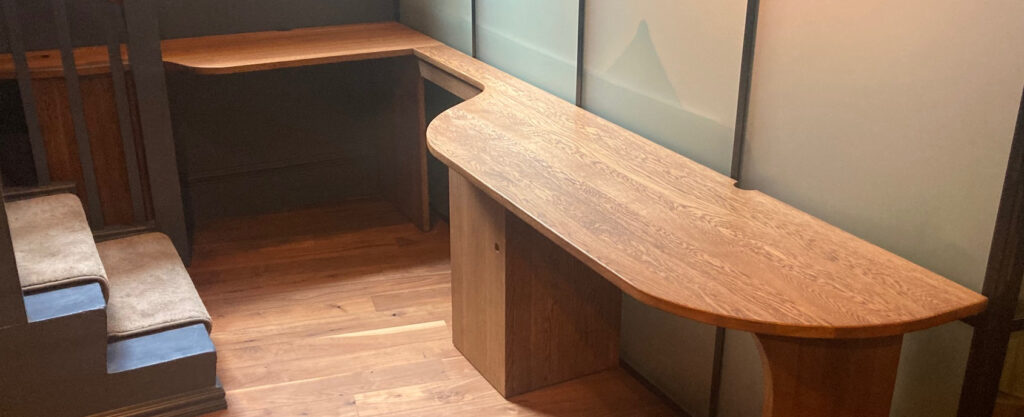
Understanding what “unfinished” really means
A common misunderstanding starts with the word itself. Someone sees “unfinished oak table top” and assumes it is ready to install and use the same day, when in many cases it still needs final sanding, cleaning, oiling, or another protective finish before daily use.
In practice, unfinished, pre-finished, and raw oak are close in meaning but not always identical. Furniture makers, woodworking workshops, and timber suppliers may use these labels slightly differently, so the product description matters more than the headline term.
- Unfinished oak usually means the top has been made and sanded to a usable level, but no protective finish has been applied.
- Pre-finished oak usually means oil, lacquer, or another treatment has already been added in the workshop.
- Raw oak can mean a very lightly prepared surface, or simply oak with no finish at all, so the level of surface prep may vary.
Buyers should also check what is excluded. An unfinished top may not include fixing holes, mounting hardware, edge softening beyond a simple detail, or any stain protection. That affects how soon the top can be fitted and how carefully it must be handled before finishing.
Assessing oak quality and grade
The oak itself matters more than polished wording in a listing. Terms such as prime oak, character oak, and rustic oak can be useful, but they only help if you know what you are looking at.
Prime oak tends to have a cleaner, more even appearance with fewer knots and less visible variation. Character oak usually includes more natural features, including knots, colour shifts, and stronger grain variation. Rustic oak often shows these features more openly, including sapwood and a less uniform surface pattern.
A visual inspection should focus on a few practical points:
- Look at the grain direction and whether the boards sit together in a coherent way.
- Check for knots, splits, or filler, and decide whether they suit the room and intended use.
- Notice any sapwood, which is lighter in colour and may be included by design rather than by accident.
- Ask whether the top is solid oak throughout or built with another core beneath the surface.
- Read the grading language carefully, because one maker’s “character” may look quite different from another’s.
European and American oak can also differ in tone and grain, though either can work well if properly selected and dried. British Standards and timber grading bodies exist, but product photos and clear workshop information often tell a buyer more than a broad grade label alone.
A dining table for a busy family kitchen may suit character oak beautifully because marks and movement in tone feel natural there, whereas a meeting table or desk might call for a calmer grain pattern and fewer visual interruptions.
Thickness, stability, and structural considerations
Thickness changes both the look and the behaviour of an oak top. A slim profile can feel neat and restrained, but a thicker top often gives more visual weight and may feel better suited to larger spans or heavier bases.
Stability depends on more than thickness alone. Kiln-dried timber, sensible grain selection, and sound construction all matter because solid wood responds to moisture in the air. That movement is normal, but the top should be built in a way that manages it sensibly.
When comparing options, pay attention to these details:
- Whether the top is made from full-stave solid wood or narrower sections joined together
- Whether straightening bars are fitted across the underside
- Whether the timber has been kiln-dried
- Whether the maker explains how the top should be mounted to allow natural movement
- Whether the weight suits the base and the room where it will be installed
A very thick top is not automatically better. More mass means more weight, which affects delivery, lifting, and the type of frame underneath. Shorter spans can work well at moderate thicknesses, especially if the construction is thoughtful. By contrast, a wide desk top on a sit-stand frame needs careful attention to rigidity and load.
Some workshops, including Tablemaker, use straightening bars as a practical way to reduce cupping across the width of a top. That kind of detail is worth noticing because it shows the maker has considered how the piece will behave after it leaves the bench, not just how it looks in a photo.
Pro Tip: A final pass with fine sandpaper and a tack cloth before finishing can enhance the smoothness and appearance of your oak table top.
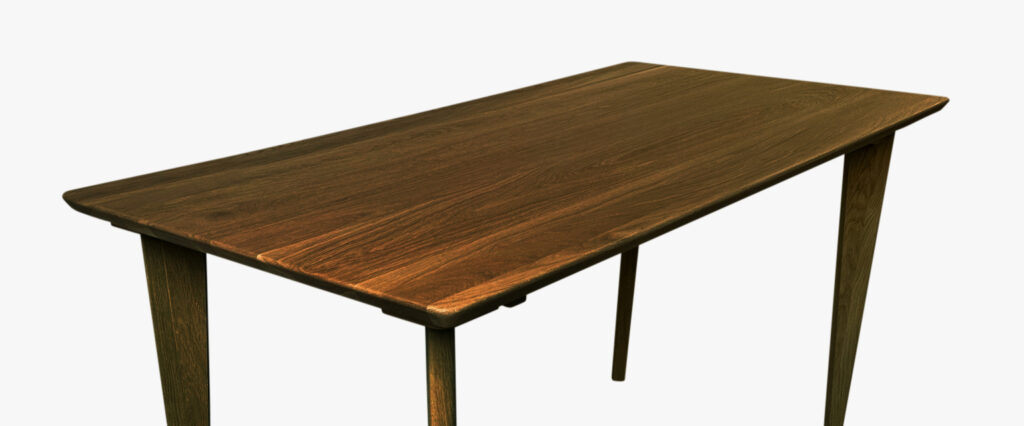
Pro Tip: For tops on adjustable frames, always allow clearance for natural wood movement when securing the fixings to prevent cracking or cupping over time.
Sizing, compatibility, and customisation
Getting the size right is where many buying mistakes begin. A top can be beautifully made and still be wrong for the room, the chairs, or the base already waiting for it.
Start with the base, not the top. Measure the fixing points, the spread of the legs, and the amount of overhang you want on each side. Once those numbers are clear, the overall size becomes much easier to judge.
If you are ordering for an existing frame or pedestal, work through the decision in order:
- Measure the maximum length and width the room can take.
- Measure the base itself, including fixing plates and support rails.
- Decide how much overhang is needed for seating comfort and appearance.
- Check whether the top will be drilled or supplied undrilled.
- Confirm thickness, because some frames have limits on screw length or load.
Desk tops for sit-stand frames need extra care. The frame manufacturer may state a recommended width, depth, and weight range, and those figures should not be ignored. An undrilled top is often useful because it allows the mounting holes to match the frame precisely.
Awkward spaces also benefit from made-to-measure sizing. Alcoves, bay windows, banquette seating, and hospitality interiors often need dimensions that standard retail furniture does not cover. Tablemaker’s made-to-order approach is relevant here because small size increments can make the difference between a top that merely fits and one that works properly with the space around it.
Surface preparation and finish options
An unfinished oak top is not the same thing as a finished top waiting to be wiped down. Buyers should expect some level of preparation before the surface is ready for daily use, especially if the top will be used for dining, working, or commercial service.
“Ready to finish” usually means the timber has already been machined and sanded to a workshop standard. Even so, the surface may still need a final light sand, dust removal, and careful inspection around edges, corners, and joints before any oil or lacquer goes on.
Common finish options include:
- Hardwax oil, which gives a natural look, reasonable stain resistance, and a surface that can usually be repaired locally
- Lacquer, which can provide stronger surface sealing, though repair is often less smooth if damage occurs
- Wax, which is usually softer and less suited to hard daily wear on a table top
- Stain followed by a protective topcoat, if a darker or more specific tone is wanted
Finish choice affects both appearance and upkeep. Hardwax oil is popular on oak because it leaves the grain looking like wood rather than plastic, and repairs can be more manageable after scratches or wear. Lacquer may suit some settings well, especially where a more sealed feel is preferred. A purely decorative finish with little protection can leave a buyer doing remedial work sooner than expected.
Edge details need attention too. A square edge, eased edge, chamfer, or radius each changes how the piece feels in daily use, particularly on desks where forearms rest against the front.
Order your made-to-measure oak top
Find the perfect unfinished oak table top tailored to your space with expert advice and precision sizing.
Start your custom orderPracticalities: delivery, handling, and installation
Solid oak is heavy, and unfinished oak needs careful handling from the moment it arrives. Delivery lead times can vary depending on whether the top is made to order, held in stock, or sent by a furniture delivery service rather than a standard parcel network.
Before delivery day, make sure the route into the property is clear. Hallways, stair turns, narrow doorways, and lifts all matter, especially with longer tops. Packaging should protect the surface, but no wrapping can compensate for dragging a heavy slab across a hard floor or leaning it in a damp garage for several days.
Once the top arrives, the sequence matters:
- Inspect the package and surface promptly.
- Move the top with enough people for its size and weight.
- Store it flat and indoors, away from direct heat or damp conditions.
- Apply the finish before heavy use if the product is supplied unfinished.
- Mount it in a way that allows for timber movement rather than fixing it rigidly across its full width.
Undrilled tops are common because they can suit many different bases, but that leaves the measuring and fixing to the installer. Screws that are too long can break through the surface. Fixings that clamp the timber too tightly can contribute to movement issues later. A calm installation is usually a better one than a fast one.
Longevity, maintenance, and repairability
One of the strongest reasons to choose solid oak is that it can be renewed. Surface wear, light scratches, and small stains do not always mean the top is finished in the everyday sense of the word. In many cases, they mean the surface needs attention, not replacement.
Routine care is fairly simple. Dust should be removed with a soft cloth, spills should be dealt with promptly, and harsh chemical cleaners are best avoided. A finished oak top may need occasional re-oiling or other upkeep depending on the product used and the level of wear.
Damage also tends to be more manageable on solid wood than on thinner surface materials. A cup ring, a patch of dryness near a sunny window, or a cluster of marks near a favourite seat can often be improved with local sanding and refinishing. Heavier wear may call for a full refresh of the surface, which means that long-term use does not automatically lead to long-term disappointment.
Adaptation is part of the appeal as well. A top might start life as a dining table, then move onto a new base years later, or be resized and refinished for another room. That kind of flexibility depends on the original construction and the amount of solid material available to work with, so it is worth thinking beyond the first installation.
Common misconceptions and forward considerations
Unfinished oak does not mean lower quality. It usually means one more stage remains before the top is ready for protected daily use, and that stage may be left open on purpose so the buyer can choose the finish, colour, and final feel.
Another myth is that solid wood can be maintenance-free. Oak is durable and practical, but it is still a natural material. It moves slightly, it records use, and it benefits from sensible care. Many people actually prefer that honesty once they know what to expect.
Future flexibility is another point people often overlook. An unfinished or simply finished top can suit changing needs better than a fully fixed, highly processed surface. A new base, a different room, a fresh finish, or a repair after years of use all become more realistic options when the material itself remains workable.
The best buying decision usually comes from matching the top to the job. A family dining table, a home office desk, a café table top, and a sit-stand workstation all ask for slightly different things from the same species of wood. Once you understand what unfinished oak includes, how the top is built, and what care it will need, the choice becomes far less mysterious and much more practical.
Explore our finishing services
Let us prepare and finish your oak top with professional oiling or lacquering so it is ready to use.
See finishing options
Tablemaker
55 High St, London N8 7QB
02083416334
HVQM+58 London