
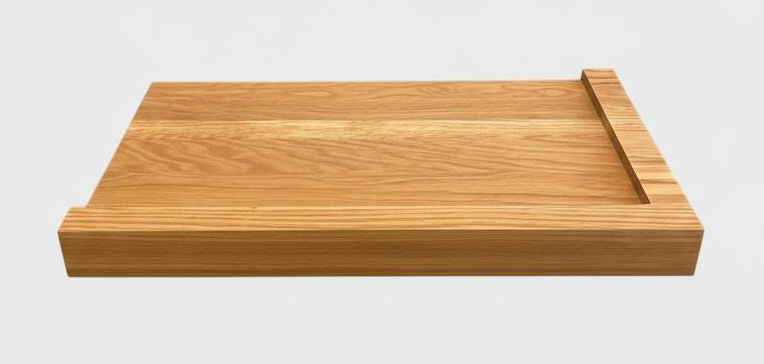
A built-up edge (sometimes called a ‘false edge’) is a technique used to make a tabletop appear thicker than it actually is.
Our standard solid oak tops are made at 24mm or 30mm thick. If you’d like a specific look — for example 27mm, 32mm, 35mm, 45mm or even 50mm+ — we can achieve this by carefully building up the underside around the perimeter of the table. When viewed from the side, the table appears to be made from a much thicker piece of solid oak.
In day-to-day use, it’s extremely difficult to tell the difference. The only way to spot it is by inspecting the underside closely.
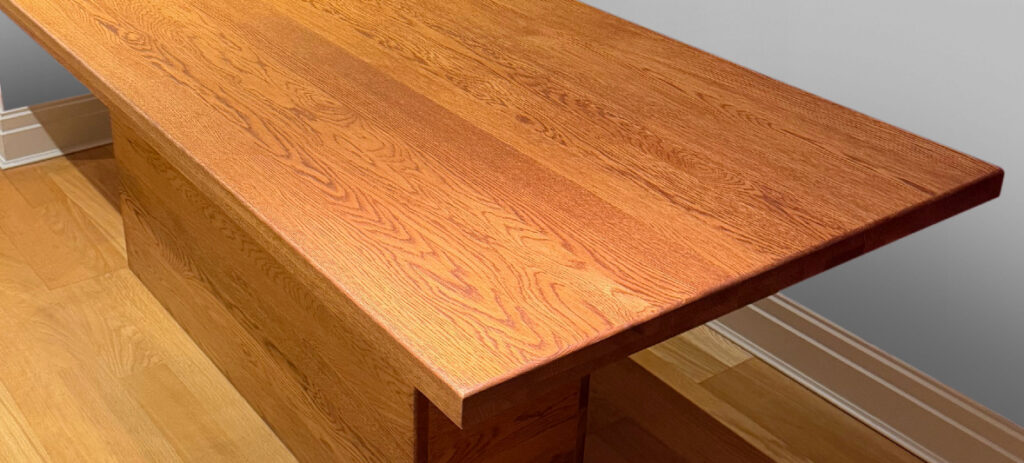
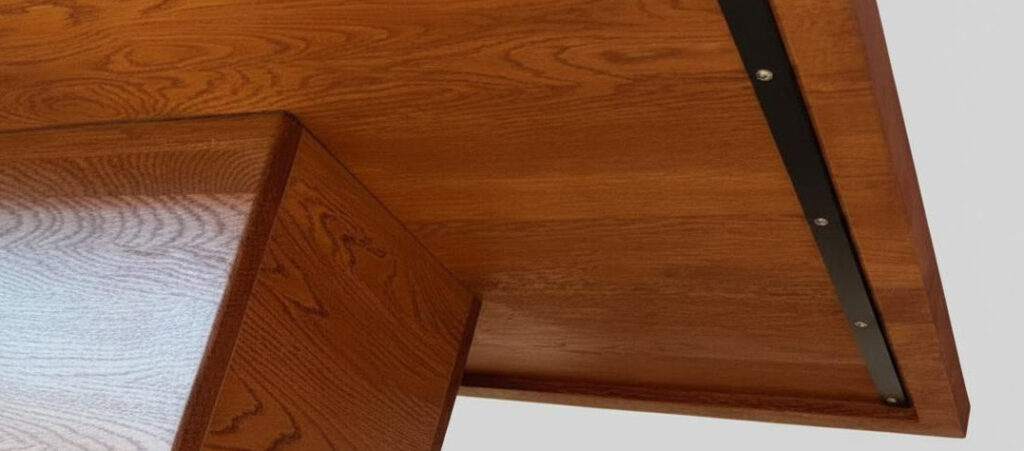
This is a widely used and well-established method in furniture making. It allows you to achieve the visual weight and presence of a thicker table, without the added cost, weight, and movement that would come with using solid timber at that full thickness.
A common giveaway on lower-quality furniture is when the end grain runs the wrong way (sideways), which can make it obvious that the thickness isn’t solid. We avoid this by using solid end grain pieces on the ends, so the table looks natural and consistent from every angle.
We take a lot of care with built-up edges — every joint is made meticulously, with close colour matching and tight glue lines, so there are no stand-out gaps or contrasts. The aim is simple: a table that looks and feels like solid wood throughout.
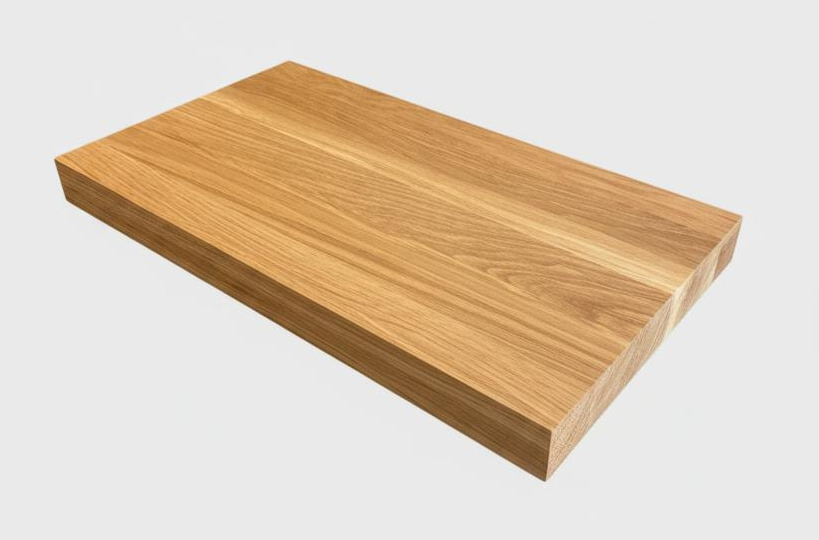
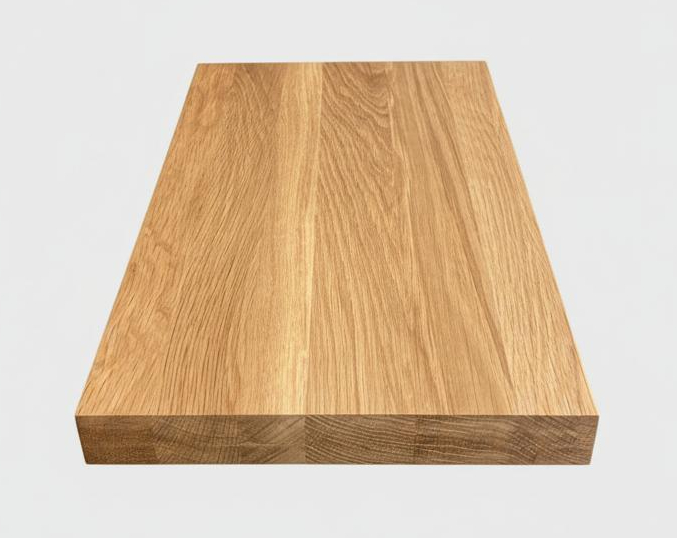
The cost of a built-up edge compared to a solid thickness (of the same or close size) varies from project to project. It depends largely on the size of the table – the amount of material required – and the time involved in making the edge (or edges if it is a multiple order, e.g. for a restaurant).
For smaller tables, it can sometimes be more cost-effective to use solid wood, as the additional labour involved in building the edge outweighs the material savings. For larger pieces, the opposite can be true — achieving the same (or similar) thickness in solid timber may require significantly more raw material, making a built up edge the more economical option.
If you have a specific size or thickness in mind that isn’t covered by our standard options, please get in touch for a quote.